When you hear the word “dominion,” what comes to mind? Maybe you think of power, control, or a king ruling over his land. In our modern world, the word can sound harsh or even aggressive. But in the Bible, the meaning of dominion is much deeper, richer, and more beautiful than you might expect.
If you are reading this, you likely want to understand what God truly meant when He gave humans “dominion” over the earth. You are not alone. Many people read Genesis and get confused. Does God want us to dominate nature like tyrants? Or is there a softer, more caring meaning hidden in the original text?
In this guide, we will explore the real dominion meaning biblical from start to finish. We will look at the original Hebrew words, how Jesus demonstrated dominion, and how this ancient concept applies to your life today. By the end, you will see that dominion is not about crushing others. It is about responsibility, care, and reflecting God’s own character.
Let us begin this journey together.
1. The First Appearance of Dominion in the Bible
To understand any biblical concept, you must go back to the beginning. The very first time the word “dominion” appears is in the book of Genesis, during the story of creation.
Genesis 1:26 – The Key Verse
“Then God said, ‘Let Us make man in Our image, according to Our likeness; let them have dominion over the fish of the sea, over the birds of the air, and over the cattle, over all the earth and over every creeping thing that creeps on the earth.’” (Genesis 1:26, NKJV)
This verse is the foundation. Here, God speaks to Himself—using the plural “Us” (often understood as a reference to the Trinity: Father, Son, and Holy Spirit). He decides to create human beings with a unique purpose. That purpose includes having dominion.
But notice the order. First, God says, “Let Us make man in Our image.” Only after that does He say, “let them have dominion.” This order is critical. Your ability to have dominion comes from your identity as an image-bearer of God. You do not earn dominion by being strong or clever. You receive it because you are made like God.
Genesis 1:28 – The Blessing of Dominion
“Then God blessed them, and God said to them, ‘Be fruitful and multiply; fill the earth and subdue it; have dominion over the fish of the sea, over the birds of the air, and over every living thing that moves on the earth.’” (Genesis 1:28)
Here, the word “dominion” is paired with “subdue.” Many readers get nervous at the word “subdue.” It sounds violent. But in the original Hebrew, the word for subdue (kabash) means to bring something into its proper order, like a farmer preparing a field for planting. It does not mean to destroy.
Important Note for Readers: The Bible gives humans a high position, but that position always comes with responsibility. Dominion is never a license for greed or abuse.
2. The Original Hebrew Words Behind Dominion
Languages matter. English words often carry baggage that the original biblical languages do not. To get the true dominion meaning biblical, we need to look at two key Hebrew words.
The Word: Radah (רָדָה)
In Genesis 1:26, the Hebrew word for “have dominion” is radah. This word is powerful, but it has a specific flavor.
| Aspect | Meaning of Radah |
|---|---|
| Literal Sense | To rule, to have authority, to tread down (like a shepherd walking ahead of sheep) |
| Common Use | Used for a king ruling justly or a shepherd guiding the flock |
| Key Nuance | Implies ruling for the good of the ruled, not exploitation |
| Contrast | Different from mashal (often means harsh, absolute rule) |
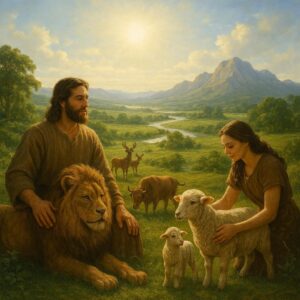
When a shepherd uses radah, he walks ahead of the sheep. He clears the path. He protects them from danger. He does not beat them or abandon them. So, when God gives you dominion, He is placing you in the role of a caring shepherd, not a cruel conqueror.
The Word: Kabash (כָּבַשׁ)
In Genesis 1:28, the word “subdue” comes from kabash. This word is stronger. It means to bring under control, to master, or to make usable.
Think of a gardener with a wild piece of land. The land has thorns, rocks, and weeds. The gardener subdues the land by removing the rocks, pulling the weeds, and planting good seeds. He does not hate the land. He is making it fruitful.
| Aspect | Meaning of Kabash |
|---|---|
| Literal Sense | To trample, to bring into bondage, to force |
| Positive Use | To conquer chaos and bring order |
| Negative Use | To oppress or mistreat (when used against humans, often condemned) |
| Context Clue | In Genesis, the context is a blessing, not a curse |
So, when God says “subdue the earth,” He is saying: “Take this raw, wild, good creation and develop it. Build gardens. Create art. Raise families. Make something beautiful.” It is a command to be productive, not destructive.
3. How Dominion Connects to the “Image of God”
You cannot separate dominion from the image of God. The two ideas are twins in Scripture. To understand one, you must understand the other.
What Is the Image of God?
The Bible says humans are made in the imago Dei (Latin for “image of God”). This does not mean we look like God physically. God is spirit. Instead, it means we reflect His character and have the ability to represent Him on earth.
Here is a simple way to think about it:
A king’s statue represents the king’s authority. Wherever the statue stands, the king’s rule is present. In the same way, wherever humans go, they represent God’s rule.
The Royal Function of Humanity
In the ancient world, when a king conquered a new land, he would place statues of himself in that land. Those statues represented his authority. They reminded the people who was in charge.
The Bible flips this idea beautifully. God does not place stone statues on earth. He places living statues—humans made in His image. And He gives them dominion. This means you are God’s representative. When you exercise true biblical dominion, you are showing the world what God is like: loving, orderly, creative, and just.
A Table: Image vs. Dominion
| Concept | What It Means | How It Relates to Dominion |
|---|---|---|
| Image of God | You reflect God’s nature | Gives you the right to rule |
| Dominion | You manage God’s creation | Gives you the job of ruling |
| Stewardship | You care for what belongs to another | Gives you the manner of ruling |
Without the image of God, dominion becomes tyranny. Without dominion, the image of God becomes passive and useless. You need both.
“So God created man in His own image; in the image of God He created him; male and female He created them.” (Genesis 1:27)
Notice that God creates male and female both in His image. Dominion is not a male-only task. It is a human task. Men and women together are called to care for creation.
4. Dominion in the Psalms: Humanity’s High Calling
The book of Psalms takes the idea of dominion and turns it into poetry. One of the most famous passages about human dominion is Psalm 8. This psalm reflects on Genesis 1 and asks a powerful question.
Psalm 8:3-8 – Awe and Responsibility
“When I consider Your heavens, the work of Your fingers, the moon and the stars, which You have ordained, what is man that You are mindful of him, and the son of man that You visit him? For You have made him a little lower than the angels, and You have crowned him with glory and honor. You have made him to have dominion over the works of Your hands; You have put all things under his feet, all sheep and oxen—even the beasts of the field, the birds of the air, and the fish of the sea that pass through the paths of the seas.” (Psalm 8:3-8)
The psalmist looks at the vast universe—the moon, the stars, the endless sky. Compared to all of that, humans seem tiny and insignificant. “What is man?” he asks. But then he remembers: God has crowned humans with glory and honor. God has given them dominion.
Key Lessons from Psalm 8
-
Dominion comes from God’s grace. You did not earn it. God freely gave it.
-
Dominion is a crown. It is a sign of dignity, not a burden.
-
Dominion covers all creation. “All things” are under human care—animals, birds, fish, and the land itself.
-
Dominion is not absolute. Humans are still “a little lower than the angels” (or “God” in some translations). You are not God. You are God’s manager.
A Helpful List: What Is “Under Your Feet” According to Psalm 8?
-
Sheep and cattle (domestic animals)
-
Beasts of the field (wild animals)
-
Birds of the air
-
Fish of the sea
-
Whatever passes through the paths of the seas (sea creatures)
Notice that the psalm does not say other humans are under your feet. Dominion is over creation, not over other people. The Bible has very strong warnings against ruling over other people harshly.
5. The Fall: How Dominion Became Distorted
Something terrible happened in Genesis 3. Adam and Eve sinned. They disobeyed God. This event is called “the Fall.” And the Fall did not remove humanity’s dominion. Instead, it corrupted it.
The Curse and the Struggle
After Adam and Eve sin, God pronounces a series of curses. Listen to what He says to Adam:
“Cursed is the ground for your sake; in toil you shall eat of it all the days of your life. Both thorns and thistles it shall bring forth for you… In the sweat of your face you shall eat bread.” (Genesis 3:17-19)
Before the Fall, dominion was joyful work. Adam named the animals and tended the garden with ease. After the Fall, dominion became hard. The ground resists human efforts. Thorns and thistles appear. Work becomes frustrating and painful.
How Sin Twists Dominion
Sin does not remove the command to have dominion. But sin changes how humans exercise dominion.
| Before the Fall | After the Fall |
|---|---|
| Dominion as loving care | Dominion as domination and control |
| Work as joyful service | Work as painful toil |
| Humans as gentle shepherds | Humans as harsh tyrants |
| Creation flourishes | Creation groans (Romans 8:22) |
Because of sin, humans began to abuse their dominion. Instead of caring for the earth, they polluted it. Instead of caring for animals, they became cruel. Instead of serving one another, they oppressed each other. This is why many people today have a negative reaction to the word “dominion.” They have only seen the fallen version.
Quote to Remember:
“The earth is the Lord’s, and all its fullness, the world and those who dwell therein.” (Psalm 24:1)
This verse keeps us humble. The earth does not belong to us. It belongs to God. We are only renters, managers, and caretakers. Our dominion is always under God’s ultimate ownership.
6. Jesus Christ: The Perfect Example of Dominion
If you want to see what true, unfallen dominion looks like, you must look at Jesus Christ. The New Testament presents Jesus as the second Adam (Romans 5, 1 Corinthians 15). Where the first Adam failed, Jesus succeeded. Jesus shows us what dominion means when it is exercised perfectly.
Jesus Has All Authority
After His resurrection, Jesus makes an incredible statement:
“All authority has been given to Me in heaven and on earth.” (Matthew 28:18)
The Greek word for authority here is exousia. It means the right to act, the power to rule, the freedom to command. Jesus has all authority. This is the ultimate expression of dominion. But how does Jesus use His authority?
Jesus Uses Dominion to Serve
Here is the shocking truth: Jesus has all power, but He uses that power to wash feet, heal the sick, feed the hungry, and die for sinners.
“For even the Son of Man did not come to be served, but to serve, and to give His life a ransom for many.” (Mark 10:45)
In the world, rulers dominate others. They use people for their own benefit. Jesus flips the script. True dominion, in the kingdom of God, looks like a towel and a basin (John 13).
A Table: Worldly Dominion vs. Jesus’ Dominion
| Aspect | Worldly Dominion | Jesus’ Dominion |
|---|---|---|
| Goal | Power for self | Good for others |
| Method | Force, fear, manipulation | Love, sacrifice, service |
| Result | Oppression and exhaustion | Freedom and life |
| Example | Caesar, tyrants, bullies | Washing disciples’ feet |
When you follow Jesus, your dominion must look like His. You do not dominate to be great. You serve to be great.
Jesus Calms the Storm (Mark 4:35-41)
One practical example of Jesus’ dominion is when He calms the storm. The wind and waves are wild, chaotic, and dangerous. Jesus stands up and says, “Peace, be still.” Immediately, the storm obeys Him.
This is radah in action. Jesus brings order to chaos. He subdues the creation, not by destroying it, but by restoring it to peace. When you exercise biblical dominion, you too should bring peace and order to the chaos around you.
7. Dominion and Stewardship: Two Sides of the Same Coin
Many Bible teachers use the words “dominion” and “stewardship” almost interchangeably. But there is a small, helpful difference. Understanding this difference will change how you live.
What Is a Steward?
In the ancient world, a steward was a manager of someone else’s property. A rich landowner would have a steward who ran the farm, managed the workers, and distributed the resources. The steward had authority (dominion), but he was still accountable to the owner.
The Parable of the Talents (Matthew 25:14-30)
Jesus tells a story about a man going on a journey. He gives three servants different amounts of money (talents). He expects them to invest and grow what he gave them. When he returns, he asks for an account.
This is a perfect picture of dominion and stewardship together.
-
Dominion: The servants had authority over the money. They could decide how to use it.
-
Stewardship: The money still belonged to the master. The servants had to give an account.
Your Dominion Stewardship Checklist
If you want to practice biblical dominion, ask yourself these questions daily:
-
Ownership: Do I remember that everything belongs to God? (Psalm 24:1)
-
Authority: Am I using my resources, time, and influence for good?
-
Accountability: Will I be happy to explain my choices to God one day?
-
Growth: Am I making the world better, more beautiful, or more fruitful?
-
Care: Am I treating people, animals, and the earth with respect?
Important Note for Readers: Stewardship does not mean passivity. A good steward is active, creative, and bold. You are not supposed to bury your talent in the ground. You are supposed to use your dominion to produce a harvest.
8. Practical Dominion: How to Live It Out Today
So far, we have talked about theology, Hebrew words, and Bible stories. But you might be asking: “What does this mean for my Monday morning? How do I actually live out biblical dominion?”
This section is practical. Here is how you can apply the dominion meaning biblical to your everyday life.
Dominion in Your Work
Your job is a primary place to exercise dominion. Whether you are a CEO, a teacher, a plumber, a mother at home, or a cashier, you have a sphere of influence.
-
Create order out of chaos. Organize the messy files. Clean the cluttered garage. Solve the confusing problem.
-
Make things better. Leave your workplace better than you found it. Plant flowers. Fix broken processes. Encourage coworkers.
-
Serve others through your work. The best work helps people. Ask yourself: “Who is being helped by what I do today?”
Dominion in Your Home
Your home is your first dominion. It is your garden to tend.
-
Care for your family. Provide for their needs. Protect them from harm. Teach them to love God.
-
Manage your resources. Use your money, time, and energy wisely. Avoid waste. Be generous.
-
Create a peaceful environment. Your home should be a place of rest, not chaos. Fix what is broken. Clean what is dirty. Create beauty.
Dominion Over Your Own Life
Before you can rule over anything else, you must learn to rule over yourself. The Bible calls this self-control.
-
Control your tongue. Speak words that build up, not tear down.
-
Control your appetites. Eat, drink, and rest in healthy ways. Do not let cravings master you.
-
Control your thoughts. Focus on what is true, noble, right, pure, lovely, and admirable (Philippians 4:8).
Dominion Over Creation (Environmental Care)
This is a sensitive topic for some, but the Bible is clear. God put humans in the garden to “tend and keep it” (Genesis 2:15). The Hebrew words are abad (to work, to serve) and shamar (to keep, to guard).
A Practical List: Small Ways to Care for Creation
-
Reduce waste. Throw away less. Reuse and recycle more.
-
Plant a tree or start a small garden.
-
Do not litter. Pick up trash when you see it.
-
Be kind to animals. Do not cause unnecessary suffering.
-
Conserve water and electricity. Treat resources as gifts, not garbage.
“The righteous man regards the life of his animal, but the tender mercies of the wicked are cruel.” (Proverbs 12:10)
Even how you treat animals is part of your dominion. A righteous person is kind to his animals.
9. Common Misunderstandings About Biblical Dominion
Over the centuries, many people have twisted the meaning of dominion. Let us clear up some common misunderstandings.
Misunderstanding #1: Dominion Means You Can Do Anything You Want
The Truth: No. Dominion is always under God’s authority. You are not a little god. You are a steward. You have limits.
Misunderstanding #2: Dominion Is Only About the Environment
The Truth: No. Dominion includes environmental care, but it also includes family, work, art, science, politics, and every area of life. The earth is the scope, but the application is universal.
Misunderstanding #3: Dominion Justifies Violence Against Nature
The Truth: No. Kabash (subdue) is about bringing order, not destruction. Violence against creation is a result of sin, not a fulfillment of God’s command.
Misunderstanding #4: Dominion Means Humans Are the Most Important, So We Can Ignore Everything Else
The Truth: Humans have a unique role, but that role is to serve creation, not to ignore it. You are the king, but a good king cares for his kingdom. He does not burn it down.
Misunderstanding #5: The Bible Commands “Dominion Theology” (Dominionism)
The Truth: There is a modern movement called “Dominion Theology” that teaches Christians should take over secular governments and institutions to prepare for Jesus’ return. Most mainstream Christians reject this view. Biblical dominion is about stewardship, not political conquest.
A Simple Comparison:
| Biblical Dominion | Dominion Theology (Dominionism) |
|---|---|
| Serve and care for creation | Take over political power |
| Based on humility and love | Often based on pride and force |
| Jesus as servant king | Jesus as conquering general (now) |
| Focus on personal responsibility | Focus on societal control |
Stay with the biblical view. Do not get distracted by extreme teachings.
10. Dominion in the New Testament Church
The New Testament does not use the word “dominion” as often as the Old Testament, but the concept is everywhere. The early church lived out a different kind of rule.
Believers as Kings and Priests
The book of Revelation gives a beautiful promise to Christians:
“And have made us kings and priests to our God; and we shall reign on the earth.” (Revelation 5:10)
In the future, when Jesus returns, His people will reign with Him. They will exercise perfect dominion over a renewed earth. But even now, believers are called to reign in life through Jesus Christ (Romans 5:17).
How the Early Church Exercised Dominion
The first Christians had no political power. They were often poor, persecuted, and hunted. Yet they exercised dominion in powerful ways:
-
They cared for the poor. The church created the first hospitals and welfare systems.
-
They valued women and slaves. In Roman culture, women and slaves had few rights. The church treated them as equals in Christ.
-
They preached the gospel. They used their voices to spread the good news, transforming hearts and cultures.
-
They lived holy lives. Their self-control and love stood out in a corrupt world.
You do not need a political office to exercise dominion. You need a heart that serves and a life that reflects Jesus.
The “Already but Not Yet” of Dominion
The Bible teaches that we already have dominion in Christ, but we do not yet see the full expression of it.
-
Already: You have authority over sin, over darkness, and over your own life through the Holy Spirit.
-
Not Yet: The world is still full of thorns, thistles, storms, and death. Full dominion awaits the new heavens and new earth.
This tension keeps us humble and hopeful. We work hard now, but we know perfection is coming later.
11. A Deep Dive Into Key Verses About Dominion
Let us look at several key Bible verses that mention dominion or related ideas. This will help you see the full picture.
Verse 1: Genesis 1:26-28 (Already covered)
Theme: Foundation of all dominion.
Verse 2: Psalm 115:16
“The heaven, even the heavens, are the Lord’s; but the earth He has given to the children of men.”
Theme: God keeps the heavens for Himself, but He has entrusted the earth to humans. This is a massive gift and responsibility.
Verse 3: Hebrews 2:5-9
This New Testament passage quotes Psalm 8. It says that God put the world to come under human authority. But right now, we do not yet see everything under human feet. Except we see Jesus. Jesus has been crowned with glory and honor.
Theme: Jesus is the fulfillment of human dominion. In Him, our dominion is secure.
Verse 4: 1 Corinthians 4:2
“Moreover it is required in stewards that one be found faithful.”
Theme: Dominion requires faithfulness, not flashy success. God looks for loyalty.
Verse 5: Romans 8:19-21
“For the earnest expectation of the creation eagerly waits for the revealing of the sons of God… because the creation itself also will be delivered from the bondage of corruption into the glorious liberty of the children of God.”
Theme: Creation is waiting for you to fully step into your dominion. When God’s children are revealed in glory, creation itself will be set free.
Verse 6: Colossians 1:16-17
“For by Him all things were created that are in heaven and that are on earth, visible and invisible, whether thrones or dominions or principalities or powers. All things were created through Him and for Him.”
Theme: Even spiritual dominions (angels, powers) were created by Jesus and for Jesus. Your earthly dominion is part of a much larger, cosmic order.
12. Applying Dominion to Technology, Art, and Culture
One exciting area of dominion is culture-making. Humans are creators because we are made in the image of the Creator God.
Technology
When you invent a new tool, write software, or build a bridge, you are exercising dominion. You are taking raw materials (metal, code, stone) and shaping them into something useful. This is radah. This is kabash.
Question to ask: Does my technology serve human flourishing? Or does it harm and control?
Art
When you paint, sing, write poetry, or dance, you are exercising dominion. You are bringing beauty out of chaos. You are reflecting God’s own creativity.
Question to ask: Does my art point to truth and goodness? Or does it celebrate decay and ugliness?
Culture
Culture is the sum total of how humans live: our laws, customs, holidays, stories, and habits. When you participate in your community, vote, teach your children, or celebrate good traditions, you are shaping culture.
Question to ask: Am I making my culture more like the kingdom of God? More just, more merciful, more joyful?
Quote: “The earth is the Lord’s, and we are His stewards. Every act of honest work, every beautiful creation, every just law is a small act of dominion that honors God.” — Anonymous
13. Frequently Asked Questions (FAQ)
Here are common questions people ask about the dominion meaning biblical.
Q1: Does dominion mean I can eat animals?
A: Yes, after the flood, God explicitly gave animals as food (Genesis 9:3). However, dominion also includes treating animals humanely. You can eat meat without being cruel.
Q2: Is dominion only for men?
A: No. Genesis 1:27-28 says God made male and female in His image and gave them both dominion. Women have equal authority and responsibility in caring for creation.
Q3: How is biblical dominion different from “having power over people”?
A: Biblical dominion is over creation (animals, land, resources), not over other humans. The Bible forbids ruling over others harshly (1 Peter 5:3). Leadership among people should be servant leadership, not dominating lordship.
Q4: Did Adam lose dominion when he sinned?
A: Adam did not lose dominion, but his dominion became cursed and difficult. Humans still rule, but now we rule in a broken world. Jesus came to restore and redeem our dominion.
Q5: What about wild animals? Do I have dominion over lions and bears?
A: In a sense, yes. You are responsible for how you interact with wild animals. However, dominion does not mean you should try to ride a lion. It means you respect them as part of God’s creation and manage your interaction wisely.
Q6: Will there be dominion in heaven?
A: Yes and no. In the current heaven (the intermediate state), we do not know. But in the new earth (the final destination), believers will reign with Christ (Revelation 22:5). Dominion is not abolished; it is perfected.
Q7: How do I start exercising better dominion today?
A: Start small. Clean your room. Be kind to a pet. Plant something. Do your work with excellence. Pray for wisdom. You do not need to save the whole world at once. Faithful dominion begins with small, daily acts.
14. Common Errors to Avoid When Teaching Dominion
If you ever teach others about dominion, avoid these common pitfalls.
Error #1: Making Dominion All About “Taking Over”
Some teachers say Christians must take over every institution—government, schools, media—by force. This is not biblical. Jesus did not take over Rome by force. He conquered through the cross.
Error #2: Ignoring Dominion Entirely
Other teachers never mention dominion. They act like the earth is evil and we should just wait for heaven. This is also wrong. God called the earth “very good.” He wants you to care for it now.
Error #3: Separating Dominion from Love
You cannot have true dominion without love. “If I have all authority but have not love, I am nothing” (paraphrase of 1 Corinthians 13). Dominion without love is tyranny.
Error #4: Forgetting That God Owns Everything
Always keep Psalm 24:1 in mind. The earth is the Lord’s. You are a tenant, not the owner. Dominion is a temporary assignment, not an absolute right.
15. Final Thoughts and a Call to Faithful Dominion
You have traveled a long way in this article. We started in Genesis with radah and kabash. We looked at Psalm 8 and saw humans crowned with glory. We watched Jesus wash feet and calm storms. We talked about your job, your home, and your heart.
So what is the dominion meaning biblical?
It is this: God’s loving command for His image-bearers to manage His creation as faithful, humble, and creative stewards for His glory and the good of others.
Dominion is not a license to be a bully. It is a calling to be a blessing.
You are not a random accident on a meaningless rock. You are a royal representative of the living God. You have been given authority—real authority—over a corner of God’s world. Use that authority well.
-
Be fruitful. Create things that last.
-
Multiply. Raise children, make disciples, grow good things.
-
Fill the earth. Spread beauty, knowledge, and justice.
-
Subdue it. Bring order out of chaos.
-
Have dominion. Rule with the heart of a shepherd, not the fist of a tyrant.
And when you fail—because you will—remember Jesus. He is the true Adam. He exercised perfect dominion. And He offers you forgiveness and a fresh start. Through His Spirit, you can get up and try again.
Go now. Tend your garden. Care for your family. Love your neighbor. And do it all as one who bears the image of God and has been given dominion for a purpose.
Conclusion (Summary in Three Lines)
1. Biblical dominion means ruling over creation as God’s image-bearer, not as a tyrant but as a caring shepherd.
2. The Fall twisted dominion into domination, but Jesus restores it through servant-hearted authority.
3. You exercise dominion daily through work, family, self-control, and environmental care, always as a steward accountable to God.
Additional Resource
For further study, we recommend the Bible Project’s video series on “Image of God” and “Stewardship.” You can find it on their official website or YouTube channel. Their animated videos clearly explain radah, kabash, and how dominion fits into the whole biblical story.
🔗 Link suggestion: bibleproject.com/explore/video/image-of-god/ (Please copy and paste into your browser).