Life moves in rhythms. Some are predictable, like the changing of leaves in autumn. Others catch us completely off guard, like a sudden storm on a sunny day. If you have ever found yourself wondering why you are in a particular season—whether it feels like a barren winter or a flourishing summer—you are not alone.
The concept of seasons runs deep in the biblical narrative. It is woven into the fabric of creation, the history of God’s people, and the promises found in Scripture. When we talk about the biblical meaning of seasons, we are not merely discussing weather patterns or agricultural cycles. We are exploring a divine framework. It is about understanding that God works in patterns, that there is a time for every purpose under heaven, and that our lives are part of a much larger story.
In this guide, we will walk through what the Bible says about seasons. We will look at the original Hebrew and Greek words, explore key stories from Genesis to Revelation, and discover how to navigate the spiritual seasons you face today. Whether you are in a season of waiting, a season of harvest, or a season of pruning, there is wisdom here for you.
What Does the Bible Mean by “Seasons”?
Before we dive into specific verses, it is helpful to understand what the Bible means when it uses the word “season.” In our modern language, we often think of the four seasons: spring, summer, autumn, and winter. But in the Scriptures, the concept is much richer.
The Bible uses two primary Hebrew words to describe seasons. The first is moadim, which refers to appointed times or sacred seasons—like festivals and holy days. The second is zeman, which points to a fixed or set time. In the New Testament, the Greek word kairos is often used to describe a specific, opportune moment, distinct from chronos, which is sequential or chronological time.
So, when we explore the biblical meaning of seasons, we are looking at:
-
Appointed times: Moments God sets aside for specific purposes.
-
Cycles of life: Patterns of sowing, growing, reaping, and resting.
-
Spiritual conditions: The internal and external circumstances God uses to shape us.
The First Mention of Seasons
The very first mention of seasons in the Bible sets the stage for everything else. In Genesis 1:14, we read:
“And God said, ‘Let there be lights in the vault of the sky to separate the day from the night, and let them serve as signs to mark sacred times, and days and years.'”
Here, the lights in the sky—the sun, moon, and stars—are given a purpose. They are not just for illumination; they are for signs and for seasons. From the very beginning, God established a rhythm. He built predictability into creation so that humanity could understand time, prepare for what is coming, and recognize His hand at work.
The Foundation: Ecclesiastes 3 and the Poetry of Time
When most people think of seasons in the Bible, their minds immediately go to Ecclesiastes 3. This passage is arguably the most famous text on the subject. Written by Solomon, a man who experienced immense wisdom, wealth, and ultimately, the emptiness of life without God, this chapter gives us a poetic framework for understanding the ebb and flow of existence.
Let us look at the text closely.
“There is a time for everything, and a season for every activity under the heavens: a time to be born and a time to die, a time to plant and a time to uproot, a time to kill and a time to heal, a time to tear down and a time to build, a time to weep and a time to laugh, a time to mourn and a time to dance, a time to scatter stones and a time to gather them, a time to embrace and a time to refrain from embracing, a time to search and a time to give up, a time to keep and a time to throw away, a time to tear and a time to mend, a time to be silent and a time to speak, a time to love and a time to hate, a time for war and a time for peace.” (Ecclesiastes 3:1-8)
This list is not just poetry; it is a revelation about the nature of life under heaven. Solomon observes that life is a series of opposites. For every action, there is an equal and opposite season.
What Ecclesiastes 3 Teaches Us About Spiritual Seasons
-
Life is a mixture: We do not get to choose all our seasons. Sometimes we are in a time of weeping, and we wish it were a time of laughing. But both are part of the human experience. Recognizing this can free us from the pressure to force a season that has not yet come.
-
God’s sovereignty: The underlying message is that God is in control of the times. We cannot always explain why we are in a season of uprooting or tearing down, but we can trust that the same God who ordains the time to plant also ordains the time to harvest.
-
Beauty in the tension: Later in the same chapter, Solomon writes that God “has made everything beautiful in its time” (Ecclesiastes 3:11). The key phrase is “in its time.” A seed in winter does not look beautiful; it looks dead. But in its time—spring—it becomes something glorious. Our seasons may not look beautiful right now, but God is working toward beauty.
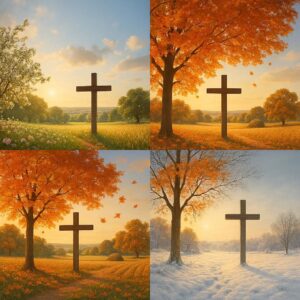
The Four Spiritual Seasons: A Biblical Overview
While the Bible does not explicitly label our lives as spring, summer, autumn, and winter, these natural cycles serve as powerful metaphors for spiritual realities. Throughout Scripture, God uses agricultural imagery to describe our relationship with Him. Understanding these four archetypes can help you identify where you are right now.
| Spiritual Season | Biblical Imagery | Key Characteristics | Scripture Reference |
|---|---|---|---|
| Spring | Planting, new growth | New beginnings, hope, vulnerability, rapid change | Song of Solomon 2:11-12 |
| Summer | Growth, fruitfulness | Hard work, abundance, exposure, long days | Proverbs 10:5 |
| Autumn | Harvest, reaping | Reward, celebration, urgency, gathering | Joel 3:13 |
| Winter | Dormancy, waiting | Stillness, reflection, hidden growth, hardship | Mark 11:20-25 |
Spring: The Season of New Beginnings
Spring is perhaps the most anticipated season. After the cold of winter, the world bursts back to life. In the Bible, spring is associated with the concept of reshit—the first, the beginning, the best.
In the Song of Solomon, we find a beautiful depiction of spring:
“See! The winter is past; the rains are over and gone. Flowers appear on the earth; the season of singing has come, the cooing of doves is heard in our land.” (Song of Solomon 2:11-12)
Characteristics of a Spiritual Spring
-
New Vision: In spring, God often reveals new visions, dreams, or directions. Things that were dormant begin to stir.
-
Vulnerability: New growth is tender. If you are in a spring season, you might feel exposed or unsure. You are starting something new, and it requires care.
-
Excitement and Energy: There is often a palpable sense of hope and energy. It feels like anything is possible.
-
Preparation: Spring is the time for planting. If you are in this season, God is likely asking you to sow seeds—in your relationships, your work, or your faith.
How to Navigate a Spring Season
Be intentional. Do not waste the energy of spring by being passive. This is a time to say “yes” to new opportunities, even if they seem small. Protect the new growth. Just as a gardener protects young shoots from frost, you need to guard your heart and your time during this vulnerable period.
Summer: The Season of Growth and Labor
Summer follows spring. It is the season of long days, hard work, and visible growth. The heat of the sun is intense, but it is necessary for the crops to mature. In the Bible, summer is often associated with diligence.
Proverbs 10:5 offers a stark warning about summer:
“He who gathers crops in summer is a prudent son, but he who sleeps during harvest is a disgraceful son.”
Characteristics of a Spiritual Summer
-
Hard Work: Summer is not a time for rest. It requires sustained effort. You are building on the seeds planted in spring.
-
Visible Progress: In summer, you can see what is growing. Your efforts become evident to others.
-
Intensity: The heat can be overwhelming. You might feel pressure, deadlines, or the weight of responsibility.
-
Exposure: Summer reveals what is really in your garden. If weeds were allowed to grow, they become obvious now.
How to Navigate a Summer Season
Summer requires endurance. It is tempting to give up when the work gets hard, but summer is the season for perseverance. Stay hydrated—spiritually speaking. Keep your connection to the Lord through prayer and scripture, because the heat can drain you. Also, be careful of pride. Summer often brings recognition, but remember that the sun that causes the growth belongs to God.
Autumn: The Season of Harvest
Autumn, or harvest time, is the climax of the agricultural cycle. It is the reason for the planting, the waiting, and the work. In the Bible, harvest is a powerful symbol of God’s blessing, judgment, and the culmination of His purposes.
Joel 3:13 uses this imagery:
“Swing the sickle, for the harvest is ripe. Come, trample the grapes, for the winepress is full and the vats overflow—so great is their wickedness!”
Characteristics of a Spiritual Autumn
-
Reaping: You finally see the return on what you sowed. This can be financial blessing, relational breakthroughs, or spiritual maturity.
-
Urgency: A harvest has a window. If you wait too long, the crop can spoil. Autumn often brings a sense of urgency to act.
-
Celebration: In the Old Testament, the Feast of Harvest (Shavuot) and the Feast of Tabernacles (Sukkot) were times of joy and gratitude.
-
Evaluation: Harvest is a time to sort the wheat from the chaff. You see clearly what worked and what did not.
How to Navigate an Autumn Season
Do not let the harvest make you lazy. The work is not over until everything is gathered. Be generous. The Old Testament law commanded farmers to leave the edges of their fields for the poor (Leviticus 19:9). In your season of harvest, look for ways to bless others. Also, be grateful. It is easy to take credit for the harvest, but gratitude keeps your heart aligned with God.
Winter: The Season of Dormancy and Waiting
Winter is the hardest season for many. The trees are bare. The ground is hard. It feels like nothing is happening. But in the biblical narrative, winter is not a waste. It is a necessary part of the cycle. It is the season of hidden roots.
Jesus Himself used a winter-like moment to teach about faith. In Mark 11, He cursed a fig tree that had leaves but no fruit. The next morning, Peter noticed the tree was withered from the roots. While this is a lesson on faith and judgment, it also shows us that what happens in the unseen root system (winter) determines the fruit in the visible season (summer/autumn).
Characteristics of a Spiritual Winter
-
Stillness: Activity ceases. God often uses winter to get us to stop striving.
-
Reflection: It is a time to look inward. What is in your heart? What needs to be pruned?
-
Hidden Growth: Just because you cannot see growth does not mean it is not happening. Roots grow deeper in winter as the plant seeks water.
-
Hardship: Winter can feel cold, lonely, and dark. It is a season of waiting for the promise.
How to Navigate a Winter Season
Do not try to force growth in winter. You will only exhaust yourself. Instead, focus on your roots. Go deeper in the Word. Build your foundation. Rest is not a sin in winter; it is a strategy. Trust that the season will change. The promise of spring is built into the cycle. God has not forgotten you; He is preparing you.
Key Biblical Stories That Illustrate Seasons
Beyond the poetic metaphors, the Bible is filled with narratives of people who experienced dramatic seasons. Their stories provide practical wisdom for us today.
Joseph: From the Pit to the Palace
Joseph’s life is perhaps the most vivid illustration of changing seasons in Scripture. He experienced a rapid succession of seasons that did not seem to make sense at the time.
-
Spring (Dreams): Joseph had dreams of greatness. He was full of hope and vision.
-
Winter (Slavery and Prison): His brothers threw him into a pit. He was sold into slavery. He was falsely accused and imprisoned. For over a decade, it seemed like nothing was happening.
-
Summer (Hard Work): Even in Potiphar’s house and in prison, Joseph worked diligently. He did not let his circumstances define his effort.
-
Autumn (Harvest): In one day, Joseph went from prison to palace. He became the second most powerful man in Egypt. The harvest came, and it was abundant.
Lesson: The time between the promise (spring) and the fulfillment (autumn) is not wasted. It is the winter and summer where God builds character.
Naomi: From Full to Empty to Full Again
The book of Ruth tells the story of Naomi, a woman who experienced a bitter season of loss. She left Bethlehem (which means “house of bread”) during a famine and lost her husband and sons in Moab. When she returned, she told the women, “Do not call me Naomi [pleasant]; call me Mara [bitter], for the Almighty has dealt very bitterly with me.”
Naomi was in a harsh winter. But through the loyalty of her daughter-in-law Ruth and the kindness of Boaz, her season changed. By the end of the book, she was holding her grandson Obed, who would become the grandfather of King David.
Lesson: Winter is not the end of the story. God can bring harvest out of the most barren circumstances.
David: The Anointed King in Waiting
David was anointed as king by Samuel when he was just a young shepherd boy. That was his spring—a divine promise. But he did not sit on the throne for many years. He spent his summer and winter running from King Saul, living in caves, and waiting. He had opportunities to force the harvest (like when he cut Saul’s robe), but he waited for God’s timing.
Lesson: The season of waiting is a test of character. David refused to take matters into his own hands. He trusted that the God who gave the promise would also bring it to pass in the right season.
The Liturgical Seasons: A Historical Perspective
For centuries, the church has observed a calendar of sacred seasons. While these are not commanded in the New Testament as a requirement for salvation, they provide a rich framework for aligning our lives with the life of Christ.
Participating in these liturgical seasons can help you practice the rhythm of the biblical meaning of seasons. Lent, for example, mirrors a spiritual winter—a time of fasting and reflection before the explosion of Easter joy. Advent mirrors a time of waiting and hope before the celebration of Christ’s birth.
Note: You do not have to belong to a specific denomination to benefit from these rhythms. You can personally observe seasons of fasting, reflection, and celebration in your own walk with God.
How to Discern Which Season You Are In
One of the most practical questions we can ask is: “How do I know what season I am in?” Discernment is key. Misreading your season can lead to frustration. If you try to harvest in winter, you will get nothing but cold hands. If you try to rest in summer, you will miss the opportunity for growth.
Here are a few signs to help you discern your current season:
Signs You Are in a Spring Season
-
You have new ideas or a new direction.
-
Old things are falling away easily.
-
You feel a surge of energy and hope.
-
You are meeting new people who align with a new vision.
-
You feel a sense of “birthing” pains—something new is trying to emerge.
Signs You Are in a Summer Season
-
You are working longer hours than usual.
-
Your responsibilities have increased.
-
You see visible results from past efforts.
-
You feel the pressure of deadlines.
-
You are tempted to cut corners or give up because the work is hard.
Signs You Are in an Autumn Season
-
You are receiving recognition or rewards.
-
You are able to pay off debts or see financial increase.
-
Relationships are solidifying.
-
You feel a sense of completion on long-term projects.
-
You have a strong desire to celebrate and share with others.
Signs You Are in a Winter Season
-
You feel alone or isolated.
-
Your prayers seem to hit the ceiling.
-
You are experiencing loss or endings.
-
You have little energy for new projects.
-
You are questioning promises God made to you in the past.
Practical Wisdom for Navigating Difficult Seasons
Let us be honest. Not all seasons feel good. While spring and autumn are exciting, winter and summer can be grueling. If you are in a season you did not choose—perhaps a season of grief, illness, or waiting—here is some practical, biblical wisdom to hold onto.
1. Accept the Season
Fighting your season only makes it harder. If you are in winter, do not try to act like it is summer. Give yourself permission to feel the cold, to slow down, to grieve. Jesus Himself wept. He did not pretend it was a time of dancing when it was a time of mourning. Acceptance is not resignation; it is acknowledging reality so that you can respond wisely.
2. Look for What God is Doing
Even in the hardest seasons, God is at work. In winter, roots grow deeper. In summer, character is forged. Paul writes in Romans 5:3-4, “We also glory in our sufferings, because we know that suffering produces perseverance; perseverance, character; and character, hope.”
Ask yourself: What is God trying to produce in me right now? If it is patience, He will give you opportunities to wait. If it is humility, He may allow situations that expose your pride.
3. Stay Connected to the Vine
In John 15, Jesus says, “I am the vine; you are the branches. If you remain in me and I in you, you will bear much fruit; apart from me you can do nothing.” This is true in every season.
In summer, you need the vine for strength to work.
In winter, you need the vine for life when you feel dead.
Your season may change, but your connection to Christ should not.
4. Serve Others
It is easy to become self-focused during difficult seasons. But one of the fastest ways to shift your perspective is to look outward. Even in prison, Paul wrote letters of encouragement. Even in famine, the widow of Zarephath shared her last meal with Elijah. Serving others keeps your heart soft and reminds you that you are part of a larger body.
5. Remember That Seasons Change
This is perhaps the most important truth. This too shall pass. Winter does not last forever. The sun will rise. The rains will come. Hold onto the promise of Ecclesiastes 3: there is a time for everything. If you are in a season of weeping, trust that a time to laugh is coming. It may not come on your timetable, but it will come according to God’s faithfulness.
The Role of Patience and Faith in Spiritual Seasons
Patience is not a popular virtue in our modern world. We want fast results, quick fixes, and instant downloads. But the biblical meaning of seasons requires patience. It requires a deep trust that God knows what He is doing.
James 5:7-8 uses the farmer as an example:
“Be patient, then, brothers and sisters, until the Lord’s coming. See how the farmer waits for the land to yield its valuable crop, patiently waiting for the autumn and spring rains. You too, be patient and stand firm, because the Lord’s coming is near.”
The Autumn and Spring Rains
In ancient Israel, there were two critical rains. The yoreh (autumn rain) came to soften the ground for planting. The malkosh (spring rain) came to mature the crop before harvest.
In a spiritual sense, we often need both rains. We need the autumn rain of God’s grace to prepare our hearts for a new season. We need the spring rain of His Spirit to bring our work to completion.
Faith in the Gap
The hardest part of any season is the gap. The gap between the promise and the fulfillment. The gap between planting and harvest. The gap between winter and spring.
Faith is what sustains us in the gap. Faith says, “I do not see the fruit yet, but I believe the seed is working.” Faith says, “I do not feel God’s presence, but I believe He is with me.”
Seasons in the Life of Jesus Christ
Jesus Himself lived in the rhythm of seasons. His earthly ministry was not a random series of events; it was a divinely orchestrated timeline.
The Hidden Years (Winter)
For about 30 years, Jesus lived in obscurity in Nazareth. We know almost nothing about this period. It was a winter season of preparation. The carpenter worked quietly while the world waited.
The Early Ministry (Spring)
His baptism and the start of His ministry marked a spring. The heavens opened. The Spirit descended. He began to preach, heal, and gather disciples. There was a surge of hope and new life.
The Peak Ministry (Summer)
The miracles intensified. The crowds grew. The conflicts with religious leaders escalated. This was the summer of hard work and intense exposure. He was constantly pouring Himself out.
The Crucifixion (Winter)
Good Friday was the darkest winter. The sun stopped shining. The Son of God cried out, “My God, my God, why have you forsaken me?” It was a time of death, despair, and apparent defeat.
The Resurrection (Spring)
But winter did not have the final word. Sunday morning came. The stone was rolled away. Spring exploded forth in the resurrection. New life conquered death.
The ultimate lesson: Jesus went through every season. He knows what your winter feels like. He knows the exhaustion of summer. And because He rose from the dead, He guarantees that our winters will eventually give way to eternal spring.
Common Misconceptions About Biblical Seasons
As we explore this topic, it is important to clear up some common misunderstandings. A wrong view of spiritual seasons can lead to frustration, guilt, or even harmful decisions.
Misconception 1: Every Season is About Me
Sometimes we think every season is primarily for our personal development. While God does use seasons to grow us, seasons are also about His glory and the good of others. Joseph’s seasons were not just about making him a leader; they were about saving nations from famine.
Misconception 2: If I Have Enough Faith, I Can Skip Winter
There is a popular teaching that suggests if you have enough faith, you will never suffer, never wait, and always be in a season of harvest. This is not biblical. Jesus, the man of perfect faith, endured suffering. Paul, the apostle of faith, experienced shipwrecks, beatings, and imprisonment. Faith does not exempt you from winter; it sustains you through it.
Misconception 3: Seasons are Punishment
Sometimes we interpret a difficult season as God’s punishment. While God does discipline His children (Hebrews 12:6), not every hardship is a consequence of sin. Job’s suffering was not punishment; it was a test. The man born blind in John 9 was not blind because of his sin or his parents’ sin; it was “so that the works of God might be displayed in him.”
Misconception 4: You Have to Stay in One Season Forever
Some people get stuck because they think, “This is just the way it is.” But seasons are meant to change. If you have been in winter for a very long time, it may be that you need to ask God for the rain of a new season. It may be time to start planting again.
How to Prepare for Your Next Season
While we cannot control the seasons, we can prepare for them. A wise person anticipates change. Here are a few ways to prepare for whatever season is coming next.
-
Stay Spiritually Nourished: You cannot face a summer or a winter on an empty tank. Regular time in the Word and in prayer builds reserves.
-
Maintain Healthy Relationships: The people around you in one season may not be the people around you in the next. But having a core group of trusted friends provides stability.
-
Manage Your Resources: Joseph prepared for seven years of famine by saving during seven years of plenty. Financially, emotionally, and spiritually, save during your good seasons for the lean ones.
-
Stay Flexible: Rigidity breaks in the wind. Hold your plans loosely. Be willing to pivot when God shows you the season is changing.
-
Keep a Journal: Writing down what God is saying to you in each season helps you see His faithfulness over time. When you enter a new season, you can look back and remember how He brought you through the last one.
A Deeper Look at Hebrew Feasts: Appointed Seasons
We cannot discuss the biblical meaning of seasons without looking at the moedim—the appointed feasts of the Lord. These were not just religious holidays; they were divinely ordained seasons that told the story of redemption.
For believers, these feasts are not required rituals, but they provide a prophetic calendar. They show us the “seasons” of God’s redemptive plan—from the cross (Passover) to the coming kingdom (Tabernacles). Living in awareness of these rhythms can deepen your appreciation for God’s timing.
Practical Exercises for Each Season
Understanding seasons is one thing; living them out is another. Here are some practical exercises to help you engage with your current season.
If You Are in Spring:
-
Write a vision: “Write the vision; make it plain on tablets” (Habakkuk 2:2). Get clear on what God is saying.
-
Take one small step: What is one thing you can do today to act on the new thing God is doing?
-
Celebrate new life: Thank God for the hope you feel. Do not take it for granted.
If You Are in Summer:
-
Set a schedule: Summer requires discipline. Block out time for work, rest, and spiritual refreshment.
-
Find an accountability partner: The heat of summer can lead to burnout or temptation. Have someone who checks on you.
-
Hydrate: Prioritize time with the Lord, even when you are busy.
If You Are in Autumn:
-
Take inventory: What has God done? Write down your blessings and lessons learned.
-
Share the harvest: Who can you bless with what you have received?
-
Prepare for rest: After the harvest comes a period of rest. Do not schedule too much too soon.
If You Are in Winter:
-
Create a “roots” routine: Instead of focusing on outward results, focus on inward depth. Read Psalms. Meditate on one verse a day.
-
Accept help: Winter can make us feel isolated. Let others support you.
-
Look for the first signs of spring: Even in the dead of winter, the bulbs are underground, preparing to bloom. What tiny sign of life do you see?
Conclusion
The biblical meaning of seasons invites us to see our lives through the lens of divine timing. From the very first chapter of Genesis, God established rhythms of light and dark, planting and harvest, rest and work. Ecclesiastes 3 reminds us that there is a time for every purpose under heaven, and the stories of Joseph, Naomi, and David teach us that God is at work in every season—even the ones we did not choose.
Whether you are experiencing a spring of new beginnings, a summer of intense labor, an autumn of abundant harvest, or a winter of quiet waiting, your season has purpose. The key is to remain connected to the Vine, to trust the Farmer who tends your life, and to remember that seasons are not permanent. They change. And through them all, God is making everything beautiful in its time.
So take a deep breath. Look around at your life. Ask the Lord: What season am I in? And how do I walk through it with You? And then, take the next step—whether it is planting, working, reaping, or resting—with the confidence that the One who ordains the seasons is with you in every single one.
Frequently Asked Questions (FAQ)
1. Does the Bible say that Christians will go through different seasons?
Yes, indirectly. While the Bible does not use the phrase “seasons of life” in a prescriptive way for believers, it repeatedly uses agricultural and temporal cycles to describe human experience. Ecclesiastes 3 is the clearest example, stating that there is a time for every activity under heaven. The lives of biblical figures like Joseph, David, and Paul also demonstrate that believers experience diverse seasons of waiting, hardship, growth, and blessing.
2. How can I tell if I am in a season of waiting from God or if I am just being lazy?
This requires honest self-reflection and prayer. A season of waiting is typically characterized by a lack of open doors despite your efforts, a sense of divine stillness, and an internal peace about being still. Laziness often involves avoidance, fear, and a lack of diligence in your current responsibilities. If you are unsure, seek counsel from mature believers who know you. Also, continue to be faithful in the small tasks in front of you; God often uses faithfulness in the present to prepare us for the future.
3. Can I pray for a season to change?
Absolutely. Scripture encourages us to pray for rain in its season (Zechariah 10:1) and to cry out to God in times of distress. You can and should pray for a change in season if you are struggling. However, pair your prayer with a posture of trust. Ask God to either change your circumstances or change your heart to endure the current season with grace. Remember Jesus in Gethsemane: “Father, if you are willing, take this cup from me; yet not my will, but yours be done” (Luke 22:42).
4. What does the Bible say about “early rains” and “latter rains”?
The early rain (yoreh) fell in autumn to prepare the ground for planting. The latter rain (malkosh) fell in spring to mature the crop before harvest. In the Bible, these rains are often used as metaphors for God’s blessing, provision, and the outpouring of His Spirit. Joel 2:23 speaks of God sending both rains as a sign of restoration. In a spiritual sense, these represent the grace we need at the beginning of a season and the grace we need to complete it.
5. Is it biblical to say “this is my season”?
The phrase “this is my season” has become popular in modern Christian culture. While it is not a direct biblical quote, the concept aligns with the biblical idea of kairos—an appointed, opportune time. If used with humility and a recognition that seasons are given by God for His purposes, it can be a helpful way to recognize and seize the moment God has placed before you. However, avoid using it in a way that implies entitlement or that ignores the needs of others.
6. How do I support a friend who is in a difficult season?
The best way is to practice presence over advice. Often, when someone is in a winter season, they do not need a sermon; they need a friend. Be like Job’s friends—initially. They sat with him in silence for seven days, which was a gift. Later, they spoiled it by giving bad advice. So, listen more than you speak. Pray with them. Offer practical help like meals or childcare. Remind them of God’s faithfulness without dismissing their pain.
7. What if I feel like I have been in winter for years?
Extended seasons of hardship can feel unbearable. If you have been in a winter for a long time, first, rule out any natural causes—like unresolved health issues, unaddressed trauma, or toxic environments. Seek wise counsel. Second, ask God if there is something He is trying to teach you that you have been resisting. Third, start looking for small acts of obedience. Sometimes, winter lingers because we are waiting for a big breakthrough, but God is asking us to take a small step of faith. Plant a small seed, even in the cold.