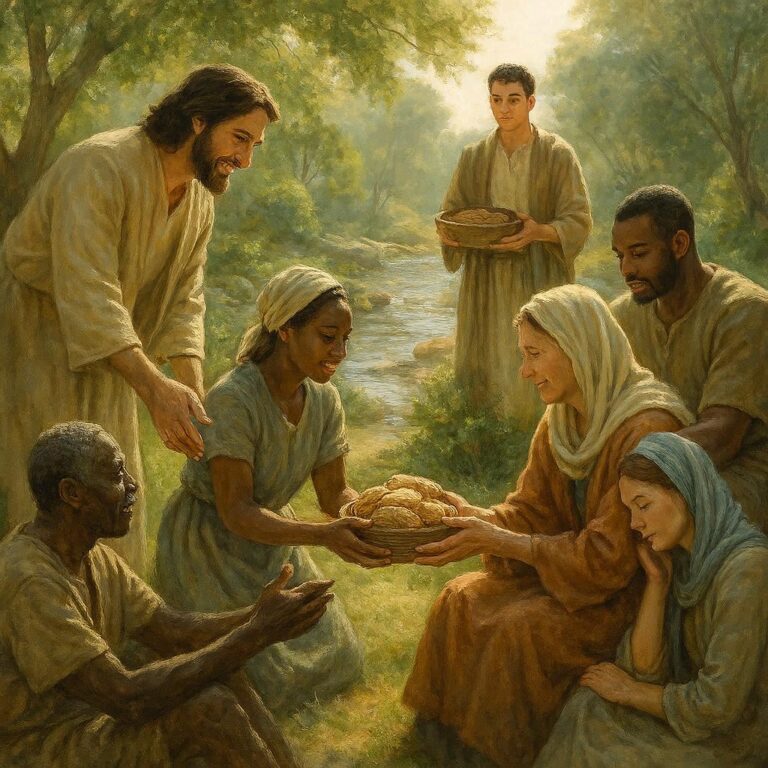
When we hear the word “fruitful,” our minds often jump to images of lush gardens, overflowing harvests, or a life bursting with success. It sounds nice, doesn’t it? Like a promise of plenty. But if you’ve spent any time reading the Bible, you know that the biblical meaning for fruitful runs much deeper than a simple promise of material wealth or a trouble-free life.
In the Scriptures, fruitfulness is a central theme, woven from the very first pages of Genesis to the final visions of Revelation. It’s a concept that speaks to our purpose, our character, and our relationship with God. It’s not just about having a lot; it’s about being something—becoming the person God designed you to be.
Whether you are feeling barren in a particular season of life, overwhelmed by the idea of “producing,” or simply curious about what God truly desires from you, understanding this ancient principle can be transformative. Let’s unpack this together, moving beyond clichés to discover a realistic, powerful, and hopeful perspective.
Fruitfulness in the Old Testament: A Foundation of Blessing
To truly grasp the biblical meaning for fruitful, we have to start at the beginning. The Old Testament sets the stage, establishing fruitfulness not as an optional extra, but as a core part of God’s design for humanity and His relationship with His people.
The First Commandment: Be Fruitful and Multiply
The very first command God gives to humanity is found in Genesis 1:28: “Be fruitful and multiply and fill the earth and subdue it.”
This is remarkable. Before there was any law, any temple, or any prophet, God’s first words to mankind were an invitation to fruitfulness. In this context, fruitfulness was about participating in creation. It was about life, growth, and stewardship. God was saying, “I have created a world full of potential. Now, go and fill it, cultivate it, and let life flourish.”
This initial command establishes that fruitfulness is part of our created identity. We were made to create, to nurture, and to see growth. It wasn’t a burden; it was a blessing—a share in the very work of God.
The Abrahamic Covenant: A Promise of Fruitfulness
Later, this theme of fruitfulness becomes the bedrock of God’s covenant with Abraham. In Genesis 12:2, God makes a promise: “I will make you into a great nation, and I will bless you; I will make your name great, and you will be a blessing.”
Here, fruitfulness takes on a communal and redemptive dimension. Abraham’s fruitfulness wasn’t just for his own benefit. He was blessed to be a blessing. His fruitfulness would impact “all peoples on earth.” This shifts the focus from individual prosperity to a purpose-driven abundance. God was creating a people through whom He would bless the entire world.
Fruitfulness as a Sign of Covenant Relationship
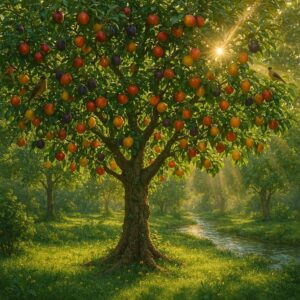
Throughout the Old Testament, fruitfulness—in terms of land, livestock, and children—was often seen as a sign of being in a right relationship with God. Conversely, barrenness was a sign of brokenness or judgment.
Consider the land of Israel itself. It was described as “a land flowing with milk and honey” (Exodus 3:8). But the prophets warned that if the people turned away from God, the land would become barren. This connection between spiritual fidelity and tangible fruitfulness is crucial. It teaches us that true fruitfulness is not a result of our own effort alone but flows from a connected, obedient relationship with the source of all life.
The Fig Tree and the Olive Tree: Symbols of Prosperity and Peace
The Old Testament uses powerful imagery to describe fruitfulness. Two of the most common are the fig tree and the olive tree.
-
The Fig Tree: Represented prosperity, peace, and personal well-being. To sit “under one’s own vine and fig tree” (1 Kings 4:25) was the ultimate picture of security and blessing.
-
The Olive Tree: Symbolized vitality, beauty, and the anointing of God’s Spirit. The olive tree was a source of light, food, and medicine. A fruitful olive tree was a sign of a life that was strong, enduring, and useful.
These symbols show that fruitfulness in the Old Testament was not just about quantity but about quality—a life of peace, security, and spiritual vitality.
The Shift in the New Testament: From External to Internal Fruit
When we move into the New Testament, the concept of fruitfulness undergoes a profound and beautiful transformation. The focus shifts from external, physical blessings to internal, spiritual transformation. The question changes from “What do you have?” to “Who are you becoming?”
John the Baptist: The First Call for Fruit
The New Testament opens with a stark call to fruitfulness. John the Baptist appears in the wilderness, preaching a message of repentance. And what does he demand as evidence of genuine change? Fruit.
In Matthew 3:8, he tells the religious leaders, “Produce fruit in keeping with repentance.” He makes it clear that merely claiming a religious heritage or performing outward rituals wasn’t enough. True repentance would result in a changed life—a life that naturally produced good fruit. This sets the stage for Jesus’ own teachings.
Jesus’ Teachings on Fruit
Jesus spoke about fruitfulness more than perhaps any other New Testament figure. For Him, fruitfulness was the unmistakable evidence of a person’s true character and their connection to God.
The Parable of the Sower
In Mark 4, Jesus tells the famous parable of the sower. A farmer scatters seed, which falls on four different types of soil. Only one soil—the “good soil”—produces a crop. Jesus explains that the seed is the “word of God” (Luke 8:11). The different soils represent the conditions of our hearts.
Here’s what’s fascinating: the fruit isn’t just about hearing the word. It’s about hearing it, understanding it, and allowing it to take root. Jesus says that the good soil “hears the word, accepts it, and produces a crop—some thirty, some sixty, some a hundred times what was sown” (Mark 4:20).
The parable teaches us that fruitfulness is directly tied to the receptivity of our hearts. A hard, shallow, or distracted heart cannot produce lasting fruit. But a heart that is open, deep, and focused on God’s word will naturally yield a harvest.
The Vine and the Branches
Perhaps Jesus’ most famous teaching on fruitfulness is found in John 15: “I am the true vine, and my Father is the gardener… Remain in me, as I also remain in you. No branch can bear fruit by itself; it must remain in the vine. Neither can you bear fruit unless you remain in me” (John 15:1, 4).
This passage is the ultimate key to understanding the biblical meaning for fruitful. Jesus makes it crystal clear:
-
He is the source. We are the branches. Fruit doesn’t come from striving; it comes from abiding. It comes from staying connected to Jesus, drawing our life, strength, and identity from Him.
-
The Father is the gardener. God actively cares for the vine. He “cuts off” branches that bear no fruit (a sobering thought) and “prunes” branches that do bear fruit so they will be even more fruitful (John 15:2).
-
Fruit is the evidence of connection. You don’t have to struggle to produce fruit. If you remain in Christ, fruit is the natural, inevitable result. Your job is not to produce; your job is to stay connected.
This redefines fruitfulness entirely. It’s not about willpower or a checklist of accomplishments. It’s about intimacy with Christ. The fruit is the overflow of that intimate relationship.
The Fruit of the Spirit: The Core of New Testament Fruitfulness
If John 15 tells us how to be fruitful, Galatians 5 tells us what that fruit looks like. In Galatians 5:22-23, Paul writes: “But the fruit of the Spirit is love, joy, peace, forbearance, kindness, goodness, faithfulness, gentleness and self-control.”
This is a revolutionary list. Notice what it does not include: money, a large church, a successful business, or a flawless reputation. The fruit that God is most interested in is the transformation of our character. It’s who we are becoming on the inside.
| The Fruit | What It Looks Like in Daily Life |
|---|---|
| Love | Choosing to act for the good of others, even when it’s inconvenient. |
| Joy | A deep, resilient gladness rooted in God, not in circumstances. |
| Peace | An inner calm and wholeness that trusts God’s sovereignty. |
| Forbearance (Patience) | Responding with grace to people who test your limits. |
| Kindness | Practical, tangible acts of compassion. |
| Goodness | Moral integrity and a desire to do what is right. |
| Faithfulness | Reliability, loyalty, and steadfastness in your commitments. |
| Gentleness | Power under control; strength expressed with humility. |
| Self-Control | The ability to say “no” to your own impulses and desires. |
This fruit is not something we can manufacture on our own. It is the “fruit of the Spirit“—it’s what grows in us as we yield to the Holy Spirit’s work in our lives. It’s the character of Christ being formed in us.
Different Types of Biblical Fruit
As we continue exploring, it becomes clear that “fruit” in the Bible is a rich metaphor that covers several aspects of a believer’s life. It’s helpful to see the different types so we don’t reduce fruitfulness to just one thing.
1. The Fruit of Character (Transformation)
This is the internal fruit we just discussed—the Fruit of the Spirit. This is foundational. Without this inward transformation, other forms of fruitfulness can become hollow or even harmful. God is first and foremost interested in making us more like Jesus. This fruit benefits us and everyone around us.
2. The Fruit of Witness (Evangelism)
In John 4:35-36, Jesus talks about the harvest of souls. “Even now the one who reaps draws a wage and harvests a crop for eternal life, so that the sower and the reaper may be glad together.” Sharing our faith and seeing others come to know Christ is a form of fruit. The Apostle Paul also refers to new believers as fruit (Romans 1:13). This fruit is about multiplication—our life and testimony leading others into a relationship with God.
3. The Fruit of Praise (Worship)
Hebrews 13:15 says, “Through Jesus, therefore, let us continually offer to God a sacrifice of praise—the fruit of lips that openly profess his name.” Our worship, our gratitude, and our verbal acknowledgment of God is considered fruit. It’s the natural response of a heart that has experienced God’s goodness. This fruit is directed upward to God.
4. The Fruit of Good Works (Practical Service)
Colossians 1:10 encourages us to “walk in a manner worthy of the Lord, fully pleasing to him: bearing fruit in every good work.” Our actions—serving the poor, helping a neighbor, doing our work with excellence, giving generously—are all forms of fruit. These are the tangible expressions of our faith. James 2:17 reminds us that faith without works is dead, meaning that genuine faith will naturally produce a harvest of good deeds.
Putting It All Together
To see the full picture, we need to embrace all these types of fruit. A person can be highly active in “good works” but lack the fruit of character, becoming a resentful or prideful servant. Another person might have beautiful praise but no fruit of witness, keeping their faith a private matter. True, holistic fruitfulness is a balanced life where character, worship, witness, and service grow together as we abide in Christ.
| Type of Fruit | Key Bible Verse | What It Represents |
|---|---|---|
| Character | Galatians 5:22-23 | Inner transformation into Christlikeness |
| Witness | John 4:36, Romans 1:13 | Leading others to faith in Jesus |
| Praise | Hebrews 13:15 | Gratitude and worship offered to God |
| Good Works | Colossians 1:10 | Tangible acts of service and love for others |
The Pruning Process: How Fruitfulness Grows
If we are going to understand the biblical meaning for fruitful, we cannot skip the part about pruning. It’s a concept that many find uncomfortable, but it’s essential for growth.
In John 15:2, Jesus says, “He cuts off every branch in me that bears no fruit, while every branch that does bear fruit he prunes so that it will be even more fruitful.”
The image is from gardening. A gardener doesn’t prune a plant to hurt it; they prune it to help it. Pruning involves cutting away parts of the plant that are dead, diseased, or simply sapping energy that could go to producing better fruit.
What Does Pruning Look Like in Real Life?
Spiritual pruning can take many forms. It often feels painful and confusing in the moment. It might look like:
-
A closed door: A job opportunity you were sure was from God falls through.
-
A removed relationship: A friendship or partnership ends, leaving you feeling isolated.
-
A period of waiting: You feel stuck in a season of silence where nothing seems to be happening.
-
Loss or suffering: You experience a setback that forces you to let go of something you were holding onto tightly.
The Purpose of Pruning
Why does God allow these difficult seasons? The purpose is always growth. Pruning:
-
Increases our capacity for fruit. By removing distractions, unhealthy dependencies, or areas of pride, God frees up our energy and focus to bear the fruit that truly matters.
-
Redirects our source. When the things we relied on are taken away, we are forced to rely more deeply on Christ, the true vine. It deepens our abiding.
-
Refines our character. The process of being pruned develops patience, humility, and a deeper trust in God’s character. It produces the fruit of the Spirit in us.
Pruning is not punishment. It’s a sign that you are a fruitful branch. The Gardener only invests time in pruning the branches that have the potential to produce more. It’s an act of love and intentional care.
Barriers to Fruitfulness: What Stops the Growth?
Just as a gardener knows what helps a plant grow, they also know what hinders it. The Bible is equally clear about the things that choke or prevent fruitfulness. Recognizing these barriers is the first step to removing them.
1. A Hardened Heart
In the Parable of the Sower, the seed that fell on the path was snatched away. This represents a heart that is closed off to God’s word. Pride, cynicism, or a stubborn refusal to listen can make our hearts like a well-trodden path where no seed can penetrate.
2. Shallowness
The seed that fell on rocky ground sprouted quickly but withered under the sun because it had no root. This represents those who respond to God with initial enthusiasm but have no depth. When trouble or persecution comes because of their faith, they quickly fall away. Fruitfulness requires going deep—developing strong roots of prayer, study, and community.
3. The Cares of the World
The seed that fell among thorns was choked. Jesus explains the thorns: “the worries of this life, the deceitfulness of wealth, and the desires for other things” (Mark 4:19). This is perhaps the most common barrier for many of us. We get so consumed by the busyness, the financial pressures, and the pursuit of other pleasures that there is simply no room for God’s word to take root and grow. Fruitfulness is choked out by a crowded life.
4. Relying on the Flesh
As we saw in John 15, we cannot bear fruit by ourselves. Trying to produce fruit through our own effort, striving, and willpower is like a branch trying to produce grapes without being attached to the vine. It leads to burnout, frustration, and counterfeit fruit that doesn’t last. True fruitfulness comes from abiding, not from striving.
| Barrier | Description | Biblical Example |
|---|---|---|
| Hardened Heart | Closed off, proud, or cynical towards God’s word. | The Pharisees who rejected Jesus’ teachings. |
| Shallowness | Emotional response without deep roots of faith. | Those in the parable who fell away when trouble came. |
| Cares of the World | Distracted by worries, wealth, and other pursuits. | The rich young ruler who chose his possessions over Jesus. |
| Relying on the Flesh | Striving to produce fruit through human effort alone. | The Galatians who tried to be justified by the law. |
A Realistic Look at Seasons of Fruitfulness
One of the most honest and hopeful things about the Bible is that it acknowledges life has seasons. Not every season looks like a harvest festival. Understanding this can save us from a lot of guilt and confusion.
The Season of Waiting
There are times when nothing seems to be happening. You are praying, you are trying to abide, but you see no visible fruit. This can feel like barrenness. But the Bible is filled with characters who experienced long seasons of waiting before fruit appeared.
-
Abraham waited decades for the promised son, Isaac.
-
Joseph spent years as a slave and a prisoner before seeing the fruit of his leadership.
-
David was anointed king as a teenager but spent years fleeing from Saul before he took the throne.
These waiting seasons are not wasted. They are often when our deepest roots are formed. They are seasons of preparation, trust, and hidden growth. The fruit is coming, but it’s growing underground first.
The Season of Pruning
As we discussed, pruning is an active season of growth, even if it feels like loss. It’s a season of God’s direct intervention to remove what is hindering your long-term fruitfulness. It’s a season to trust the Gardener’s hand.
The Season of Harvest
This is the joyful season where you see the tangible results of abiding. It’s a time of celebration, gratitude, and sharing. But the harvest season is also a time for stewardship. What do you do with the fruit? You use it to bless others, to honor God, and to invest in the next cycle of growth.
Wisdom for Each Season
Ecclesiastes 3:1 reminds us, “There is a time for everything, and a season for every activity under the heavens.” Your job in a season of waiting is to remain faithful and continue abiding. Your job in a season of pruning is to surrender and trust. Your job in a season of harvest is to be generous and grateful.
Fruitfulness is not about frantic activity in every season. It’s about staying connected to the Vine through every season, trusting that the Gardener knows exactly what you need for the ultimate harvest.
How to Cultivate a Fruitful Life: Practical Steps
Understanding the biblical meaning for fruitful is one thing; living it out is another. Here are practical, realistic steps to cultivate fruitfulness in your daily life, based on the principles we’ve explored.
1. Prioritize Abiding
This is the non-negotiable starting point. Before you do anything for God, you need to spend time with God. Abiding means remaining in His presence. It’s not about a legalistic list of devotions, but about cultivating a continuous, conversational relationship.
-
Practical Tip: Set aside a few minutes each day to simply sit with Scripture. Read a passage (like John 15) slowly and ask: “What does it mean for me to remain in you today?” Don’t just study; connect.
-
Remember: Abiding is about relationship, not performance.
2. Welcome the Gardener’s Work
Instead of resisting or resenting difficult seasons, try to see them as God’s hand at work. When you face a closed door or a painful loss, ask God: “What are you pruning? What are you trying to grow in me? What do I need to let go of?”
-
Practical Tip: Keep a journal during challenging seasons. Write down what you’re feeling, and then write down what you think God might be saying to you through it. Look for patterns of where He might be redirecting you.
3. Cultivate Heart Soil
Remember the parable of the sower. Fruitfulness depends on the condition of your heart. You can’t change your heart overnight, but you can cultivate it.
-
Ask for a soft heart: Pray daily, “Lord, keep my heart soft and receptive to your word.”
-
Remove thorns: Identify the “worries, riches, and pleasures” that are choking your spiritual life. This might mean setting boundaries on your phone, simplifying your schedule, or reevaluating your financial priorities.
4. Focus on the Fruit of the Spirit
Make the internal fruit your primary target. Instead of obsessing over external results (like how many people you’re influencing), ask yourself daily: “Am I growing in love? Am I experiencing joy? Am I responding with patience?”
-
Practical Tip: Pick one aspect of the Fruit of the Spirit each month. Focus on it. Ask a trusted friend to pray with you about it. Look for opportunities to practice it.
5. Stay in Community
We don’t bear fruit in isolation. A branch connected to the vine is also connected to other branches. You need the support, encouragement, and accountability of other believers. They can help you see blind spots, pray for you in seasons of pruning, and celebrate with you in seasons of harvest.
-
Practical Tip: Be an active part of a local faith community. Share your journey with a few trusted people. Don’t try to be fruitful alone.
Common Misconceptions About Biblical Fruitfulness
Over the centuries, some ideas about fruitfulness have become distorted. Let’s clear up a few common misconceptions to keep our understanding healthy and biblical.
Misconception 1: Fruitfulness = Financial Prosperity
This is a popular but incomplete view. While God does bless some with financial resources, the Bible never promises that all believers will be wealthy. As we saw, the primary fruit the Bible emphasizes is character, not cash. Jesus Himself was poor. The apostles were often persecuted and in need. Reducing fruitfulness to a bank account misses the point of spiritual transformation.
Misconception 2: Fruitfulness Means Being Busy for God
Many of us equate activity with fruitfulness. We think that if our calendars are full of church events, Bible studies, and volunteer work, we are bearing fruit. But Jesus said, “Apart from me you can do nothing” (John 15:5). It is possible to be very busy and very unfruitful if that busyness is not flowing from a place of abiding. Fruitfulness is about being before it is about doing.
Misconception 3: Fruitfulness is Instant
We live in a world of instant gratification, but spiritual fruit takes time. A farmer doesn’t plant a seed and expect a harvest the next day. Growth is a process. Don’t be discouraged if you don’t see dramatic results immediately. Faithfulness in the small, daily acts of abiding will yield a harvest in due time.
Misconception 4: If I’m Not Fruitful, God is Disappointed in Me
This is perhaps the most damaging misconception. God is not a harsh taskmaster waiting to condemn you for not producing enough. He is the loving Gardener who patiently cares for the vine. If you feel unfruitful, the answer is not to try harder in your own strength. The answer is to turn back to the source. He promises that if you remain in Him, fruit will come. His love for you is not based on your output.
Note for the Reader: If you are in a season where you feel barren, fruitless, or dry, please know that you are not alone. Many faithful people throughout Scripture experienced the same. Your current lack of visible fruit does not define your worth or your standing with God. The Gardener sees you. Keep your face turned toward Him, even if you feel like a barren branch. He is faithful to bring life in His time.
Conclusion
The biblical meaning for fruitful is a beautiful, multi-layered concept that reveals God’s heart for His people. It begins with the first command to multiply and culminates in the call to abide in Christ, the true vine. We’ve seen that true fruitfulness is not about financial prosperity or frantic activity, but about the slow, steady, and supernatural work of God transforming our character, our witness, our praise, and our service. It’s a process that involves seasons of waiting and pruning, all designed to make us more like Jesus. Ultimately, fruitfulness is the natural result of a life deeply rooted in Him—a life that blesses others and brings glory to the Gardener who tends to us with unwavering love.
Frequently Asked Questions (FAQ)
1. What is the main difference between fruitfulness in the Old and New Testaments?
The Old Testament often linked fruitfulness to tangible blessings like land, family, and prosperity as a sign of covenant faithfulness. The New Testament shifts the focus to internal transformation, emphasizing the Fruit of the Spirit and fruitfulness as the natural result of abiding in Christ, regardless of external circumstances.
2. Does being fruitful mean I will never experience hardship?
No. In fact, the Bible teaches that pruning (a form of hardship) is essential for greater fruitfulness (John 15:2). Hardship is not a sign of unfruitfulness but can be a tool God uses to deepen our character and our reliance on Him.
3. How can I tell if I am bearing the “Fruit of the Spirit”?
Look at your natural reactions. When you are stressed, do you respond with patience or anger? When you are wronged, do you respond with gentleness or retaliation? The Fruit of the Spirit becomes evident in the small, everyday moments of life. Ask trusted friends or family for their honest perspective—they often see our fruit more clearly than we do.
4. What should I do if I feel like I am in a “barren” season?
First, don’t panic or assume God is angry with you. Use this time to go back to the basics of abiding. Increase your time in prayer and Scripture, focusing not on asking for things, but simply on being in God’s presence. Consider if there are any “thorns” (worries or distractions) that need to be removed. Remember that even a season of waiting is a season where roots can grow deep.
5. Is it possible to bear the wrong kind of fruit?
Yes. The Bible warns against “bad fruit” (Matthew 7:17-20). This is fruit that does not come from a heart rooted in God. It could be actions done for selfish ambition, religious activities without love, or the “works of the flesh” listed in Galatians 5:19-21. The only way to ensure we bear good fruit is to remain connected to the true vine, Jesus Christ.
Additional Resource
For a deeper dive into the spiritual discipline of abiding, which is the core of fruitfulness, we highly recommend the classic work:
-
Resource: Abide in Christ by Andrew Murray.
-
Link: https://www.ccel.org/ccel/murray/abide (A free online version available at the Christian Classics Ethereal Library)