When exploring the Bible, one of the most profound and frequently discussed concepts is that of Moral Law. At its heart, Moral Law refers to the timeless, universal principles of right and wrong revealed by God. It’s the ethical backbone of the scriptures, outlining the character and will of God for human conduct. Unlike ceremonial or civil laws specific to ancient Israel, Moral Law speaks to the fundamental duties humans have toward God and each other. This guide will delve into its origins, purposes, and enduring relevance, providing a clear and comprehensive understanding for anyone seeking to grasp this cornerstone of biblical teaching.
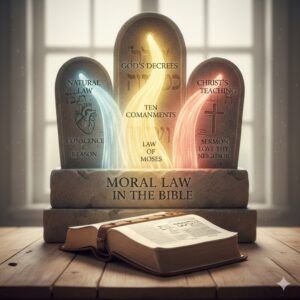
The Threefold Division of Biblical Law
To truly understand Moral Law, it’s helpful to see how theologians and scholars often categorize the laws found in the Old Testament, particularly in books like Exodus, Leviticus, and Deuteronomy. This traditional threefold division helps clarify which parts of the Law are considered eternally binding moral principles and which were context-specific.
| Law Category | Primary Purpose | Key Examples | Contemporary Application |
|---|---|---|---|
| Moral Law | To reveal God’s holy character and define universal right and wrong. | The Ten Commandments (Exodus 20). | Considered universally binding and reflective of God’s eternal nature. |
| Ceremonial Law | To govern the worship, rituals, and religious life of ancient Israel. | Sacrifices, dietary laws, festival observances (e.g., Leviticus 1-7). | Fulfilled in Christ; not binding on Christians but instructive. |
| Civil/Judicial Law | To administer the societal and political life of the nation of Israel. | Penalties for crimes, property laws (e.g., Exodus 21-23). | Specific to the ancient theocracy; principles of justice remain instructive. |
This table illustrates that Moral Law is distinct. It is not about cultural ritual or national governance but about foundational morality rooted in God’s own nature.
The Cornerstone: The Ten Commandments
The most famous and condensed expression of Moral Law is the Decalogue, or the Ten Commandments, found in Exodus 20:1-17. They serve as the central case study for understanding God’s moral standards.
-
You shall have no other gods before me. (Authority)
-
You shall not make for yourself a carved image. (Worship)
-
You shall not take the name of the Lord your God in vain. (Reverence)
-
Remember the Sabbath day, to keep it holy. (Rest and Worship)
-
Honor your father and your mother. (Authority and Family)
-
You shall not murder. (Sanctity of Life)
-
You shall not commit adultery. (Sanctity of Marriage)
-
You shall not steal. (Sanctity of Property)
-
You shall not bear false witness. (Sanctity of Truth)
-
You shall not covet. (Sanctity of the Heart)
As the theologian J.I. Packer succinctly stated, “The moral law is God’s design for human living, his blueprint for human happiness, and his prescription for how to love him and our neighbor.” The first four commandments outline our duties toward God (love, worship, reverence), while the final six outline our duties toward other people (respect, protection, honesty).
The Purpose and Function of Moral Law
Why did God give Moral Law? Its functions are multifaceted, serving as a mirror, a restraint, and a guide.
-
A Mirror of God’s Character: Moral Law is a reflection of who God is—holy, just, truthful, and faithful. It shows us what matters to Him.
-
A Revealer of Sin: Perhaps one of its primary roles is to show us our own shortcomings. It acts like a spiritual mirror, making us aware of our inability to meet God’s perfect standard on our own. As the Apostle Paul wrote in Romans 3:20, “For by works of the law no human being will be justified in his sight, since through the law comes knowledge of sin.”
-
A Restraint on Evil: In society, the moral principles embedded in the law (e.g., prohibitions against murder, theft) help curb sinful behavior and promote order and justice.
-
A Guide for the Believer: For those who have a relationship with God, the Moral Law is not a means of salvation but a joyful path for living a life that pleases Him. It shows us how to love God and love our neighbor (Matthew 22:37-40).
Important Note: A common misunderstanding is that the Moral Law is a ladder to earn God’s favor or salvation. The Bible is clear that salvation is by grace through faith in Jesus Christ, not by law-keeping. The Law shows us our need for a Savior; it is Christ who fulfills the Law and offers us forgiveness and new life.
Moral Law in the New Testament: Fulfilled, Not Abolished
The arrival of Jesus Christ brought profound clarity to the role of the Moral Law. He did not come to discard it but to fulfill and deepen its meaning.
In the Sermon on the Mount (Matthew 5-7), Jesus repeatedly says, “You have heard that it was said… but I say to you…” He internalizes the Law, showing that its demands go beyond external actions to the attitudes of the heart. Anger is linked to murder, lustful intent to adultery. He culminates this by summarizing the entire Law and the Prophets with the twin commands to love God utterly and to love your neighbor as yourself.
The New Testament epistles reaffirm the ongoing relevance of Moral Law for ethical living. The Ten Commandments are repeatedly echoed as standards for Christian conduct (e.g., Romans 13:8-10, Ephesians 4:25-28). The ceremonial and civil aspects are seen as fulfilled in Christ, but the moral principles are upheld and even intensified by the power of the Holy Spirit working in believers.
Practical Application for Today
So, what does Moral Law mean for us in the 21st century? It is far from an irrelevant ancient code.
-
It Provides a Universal Moral Framework: In a world of relative ethics, the Moral Law offers an objective foundation for human dignity, justice, and societal flourishing.
-
It Guides Personal Integrity: It challenges us to live with honesty, faithfulness, respect for life and property, and contentment.
-
It Shapes Our Relationship with God: It directs us to give God His rightful place, worship Him sincerely, and set aside time for rest and reflection.
-
It Informs Our Love for Others: The command to love is made practical through the moral principles of not stealing from, lying to, or harming our neighbor.
Helpful List: Key Takeaways on Biblical Moral Law
-
It is Universal: Applicable to all people across all times.
-
It is Rooted in God’s Nature: It reflects who He is.
-
It is Summarized in Love: Love for God and love for neighbor.
-
It is Fulfilled in Christ: He met its perfect standard on our behalf.
-
It is Guiding for Believers: A path for grateful obedience, not a means of salvation.
Conclusion
Biblical Moral Law is the enduring expression of God’s holy character and His design for human relationships. Centered on the Ten Commandments and fulfilled in the life and teaching of Jesus Christ, it reveals our need for grace while providing a timeless guide for loving God and others. It transcends its ancient context to offer profound wisdom for ethical living, personal integrity, and a flourishing society, remaining an essential reference point for anyone seeking to understand the moral foundation of the Bible.
Frequently Asked Questions (FAQ)
Q: Are Christians still required to keep the Ten Commandments?
A: Christians are not justified (made right with God) by keeping the Commandments, but they are sanctified (grow in holiness) by seeking to obey them out of love for Christ. Jesus said, “If you love me, you will keep my commandments” (John 14:15). The Holy Spirit empowers believers to live out this moral law.
Q: How is the “Sabbath” command part of Moral Law?
A: The moral principle behind the Sabbath is the universal human need for regular rest, worship, and acknowledgment of God as our provider. The specific day and strict regulations (Saturday) were part of the ceremonial law for Israel. In the New Testament, the focus shifts to a perpetual “Sabbath rest” in Christ (Hebrews 4:9-10) and many believers observe a day of worship and rest on Sunday, commemorating Christ’s resurrection.
Q: What’s the difference between “moral” laws like “do not murder” and Old Testament “ceremonial” laws like not eating shellfish?
A: Moral laws are grounded in God’s eternal character (e.g., His value for life). Ceremonial laws were temporary, symbolic ordinances for Israel that pointed forward to Christ and were fulfilled by Him. Their purpose was to set Israel apart as a nation and teach spiritual truths about purity, sacrifice, and redemption.
Q: If we can’t keep the Moral Law perfectly, what’s the point?
A: The Law’s inability to save us is precisely the point. It drives us to our need for a Savior. As the Apostle Paul explains, the Law was our “guardian until Christ came” (Galatians 3:24). Its purpose is to lead us to faith in Jesus, who kept the Law perfectly on our behalf and offers us forgiveness and a new heart to desire and follow God’s ways.