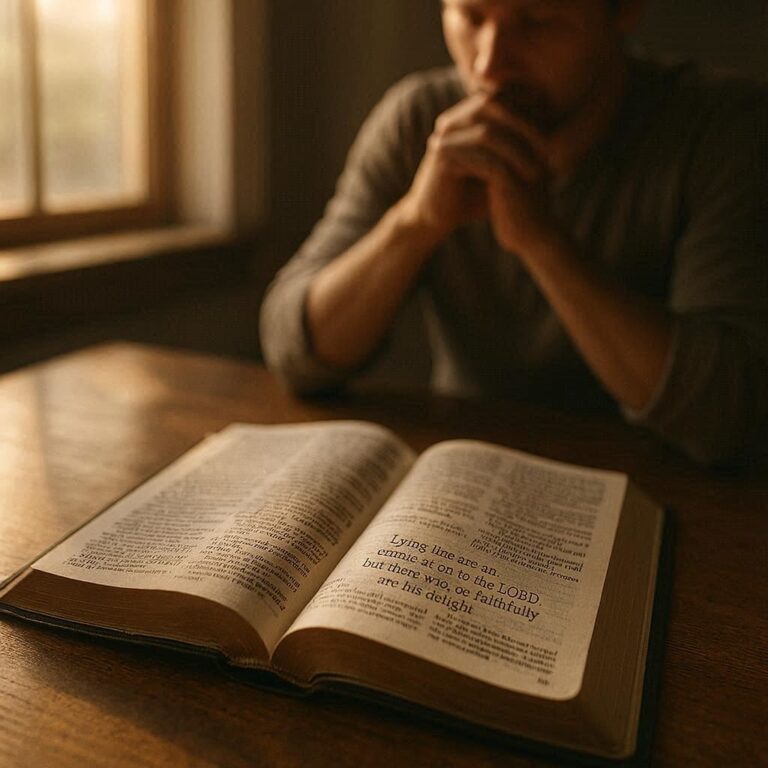
Life has a way of throwing us into seasons of confusion. You might be facing a decision with no clear right answer. You might be watching world events unfold and feel a sense of unease you can’t explain. Perhaps in your quiet moments, a feeling of being trapped or lost settles over you.
In those moments, you are experiencing something the Bible addresses directly: perplexity.
This isn’t just a fancy old word we find in scripture. It is a very real human emotion. Understanding what the Bible means by “perplexity” can change how you navigate your own confusing seasons. It moves you from a place of panic to a place of purpose.
In this guide, we will explore the deep meaning of perplexity in the biblical context. We’ll look at the original languages, see how key figures handled it, and discover the path from confusion to clarity.

Defining Perplexity: More Than Just Being Confused
When we use the word “perplexed” today, we usually mean we are confused or puzzled. “I am perplexed by these instructions,” we might say. It’s a mental state.
In the Bible, however, the concept runs much deeper. It touches the heart, the spirit, and our circumstances.
The Modern vs. Biblical Definition
Let’s look at a simple comparison to see the difference.
| Aspect | Modern Definition | Biblical Definition |
|---|---|---|
| Primary Meaning | Confused, puzzled, or bewildered. | A state of distress, anxiety, or being at a loss, often due to external circumstances or spiritual trial. |
| Root Cause | Lack of information or understanding. | Feeling trapped, hopeless, or abandoned by God in the face of overwhelming trials. |
| Duration | Usually temporary; solved by an explanation. | Can be a prolonged season of testing and spiritual growth. |
| Focus | The Mind (Intellectual). | The Spirit (Existential and Relational). |
In modern terms, you might be perplexed by a magic trick. In biblical terms, you are perplexed when you feel like you are in a dead-end situation with no way out and no hope in sight.
The Original Hebrew and Greek Words
To truly grasp the meaning, we need to look at the words the biblical authors actually used. Language carries the culture and the weight of meaning.
The Hebrew Context: Mebukah and Distress
In the Old Testament, the concept of perplexity is often linked to words denoting confusion, turmoil, and distress. A key Hebrew word associated with this state is מְבוּכָה (mebukah) .
This word means confusion, perplexity, or a state of being stirred up. It appears in contexts of war, judgment, and chaos. For example, in Ezekiel 22:22, it is used to describe the turmoil of a city under siege. It’s not just that the people don’t understand what’s happening; they are caught in a whirlwind of events they cannot control. It’s a national and personal calamity that leaves them reeling.
The Greek Context: Aporeó and Being “Without a Way”
In the New Testament, the Greek verb ἀπορέω (aporeó) is the key to understanding perplexity. This word is rich with imagery.
-
“A” (ἀ) is a prefix meaning “without” or “not.”
-
“Poros” (πόρος) means “a way,” “a passage,” or “a means of passing.”
Literally, aporeó means “to be without a way.” It paints a picture of someone walking down a path and suddenly arriving at a dead end. There is a river with no bridge, a cliff with no crossing, or a wall with no gate. You cannot go forward, and you feel you cannot go back.
So, when the Bible speaks of being perplexed, it means feeling trapped. It is the emotion of hitting a wall and realizing you have no resources, no plan, and no visible solution. It is the feeling of being “at a loss.”
Where Does Perplexity Appear in the Bible?
The Bible is honest about the human experience. It doesn’t hide the fact that even the faithful face moments of utter confusion and distress. Let’s look at some key passages.
Old Testament References: A Curse and a Consequence
In the Old Testament, perplexity is often presented as a consequence of turning away from God. It is a state of confusion that God allows as a form of discipline, meant to bring His people back to Him.
One of the clearest examples is found in Deuteronomy.
Deuteronomy 28:20:
“The Lord will send on you curses, confusion, and rebuke in everything you put your hand to, until you are destroyed and come to sudden ruin because of the evil you have done in forsaking him.”
Here, “confusion” (often translated as “perplexity” or “panic” in other versions) is a direct result of disobedience. It affects every aspect of life. When the people relied on their own wisdom and turned from God’s law, their foundation crumbled, and confusion reigned.
Key New Testament Passages: The Experience of the Faithful
The New Testament shifts the focus. Here, perplexity is not just a punishment for the wicked; it is a genuine experience for the faithful, including the greatest missionary who ever lived: the Apostle Paul.
2 Corinthians 4:8: “Perplexed, but not in despair”
This is the most famous verse on the topic. Paul writes:
“We are hard pressed on every side, but not crushed; perplexed, but not in despair; persecuted, but not abandoned; struck down, but not destroyed.”
Look at the parallel structure. Paul admits to being “perplexed” (aporeó). He is admitting that he often felt like he was at a dead end. He didn’t have all the answers. He didn’t always see the next step.
But, he says, he is “not in despair.” The Greek word for “despair” here is exaporeó (ἐξαπορέω). Remember our prefix ek means “out of.” So exaporeó literally means “to be utterly without a way, to have no way out.”
Paul is making a powerful distinction:
-
Perplexed (aporeó): I don’t see the way out.
-
Not in Despair (exaporeó): But I know God does.
Paul is saying, “My situation looks like a dead end. My human perspective can’t find a path. But I am not utterly forsaken. I am not completely without resources, because my resource is God.”
Luke 24:4: The Women at the Empty Tomb
“While they were wondering about this, suddenly two men in clothes that gleamed like lightning stood beside them. In their fright the women bowed down with their faces to the ground, but the men said to them, ‘Why do you look for the living among the dead?'”
The women came to the tomb to anoint a dead body. They found the stone rolled away and the tomb empty. The Gospel of Luke says they were “wondering” about this. Other translations say they were “greatly perplexed” (aporeó).
They were at a complete loss. This event shattered their reality. Their beloved Rabbi was dead, and now His body was gone. They had no framework to understand a resurrection. They were trapped in their grief and confusion until the angels appeared with the message: “He is not here; he has risen!”
Their perplexity was the doorway to the greatest miracle in history.
The Root Causes of Perplexity: Why Do We Feel This Way?
Understanding why perplexity happens helps us respond to it correctly. The Bible points to several root causes.
1. Human Limitation and Finite Understanding
We are not God. Our knowledge is limited, and our perspective is tiny. We see only a sliver of the tapestry, while God sees the whole picture.
Isaiah 55:8-9:
“For my thoughts are not your thoughts, neither are your ways my ways, declares the Lord. As the heavens are higher than the earth, so are my ways higher than your ways and my thoughts than your thoughts.”
When God works in ways we don’t expect, it can create perplexity. We pray for one outcome, and God provides another. We expect Him to act in a certain way, and He does something completely different. Our finite minds hit a wall trying to comprehend His infinite plan.
2. The Consequences of a Fallen World
We live in a world broken by sin. Sickness, death, natural disasters, injustice, and conflict are all part of this fallen reality. These things often make no sense. They create situations of profound perplexity.
-
Why did that good person die young?
-
Why did that natural disaster destroy a community?
-
Why does injustice seem to prevail?
These are questions born of perplexity. They arise because the world is not as it should be. Our spirits, designed for a perfect world, are confused and distressed by the brokenness we see.
3. Spiritual Warfare and the Enemy’s Tactics
The enemy, Satan, is called the “father of lies” (John 8:44). His goal is to create confusion, doubt, and despair. He wants you to feel trapped and without a way out.
He whispers lies in your ear:
-
“God has abandoned you.”
-
“There is no hope for your situation.”
-
“You must have done something wrong to deserve this.”
-
“You are stuck here forever.”
These lies fuel perplexity. They twist our perception of reality and make us doubt the character and promises of God. His goal is to push you from being perplexed (without a way) to being in despair (utterly without hope).
Famous Biblical Figures Who Experienced Perplexity
The Bible is filled with real people who faced moments of deep perplexity. Their stories are preserved to encourage us and teach us how to respond.
Job: The Suffering of the Righteous
Job is the quintessential example of human perplexity. He was a righteous man who lost everything—his children, his health, and his wealth. His friends came and offered simplistic explanations, insisting he must have sinned.
But Job knew he hadn’t committed any great sin to deserve this. He was utterly perplexed. He cried out to God, demanding an explanation. He felt trapped, confused, and abandoned. For 37 chapters, Job wrestles with his perplexity, and God doesn’t give him the answers he seeks. Instead, God gives him Himself. Job learns to trust the Creator even when he cannot understand the creation.
The Psalmist: When Feelings Don’t Match Faith
The book of Psalms is a raw and honest journal of faith. Again and again, the psalmists express feelings of confusion and abandonment.
Psalm 42:5:
“Why, my soul, are you downcast? Why so disturbed within me? Put your hope in God, for I will yet praise him, my Savior and my God.”
The psalmist is dialoguing with his own soul. He is acknowledging his downcast and disturbed state (a form of perplexity). He feels distant from God. But he doesn’t stay there. He preaches to himself. He commands his soul to hope in God. He chooses to remember past faithfulness in the midst of present confusion.
Mary and Martha: When Jesus Seems Late
In John 11, Mary and Martha send word to Jesus that their brother Lazarus is dying. They know Jesus can heal him. They have faith in His power. But Jesus deliberately delays His arrival. By the time He gets to Bethany, Lazarus has been dead and buried for four days.
Both sisters meet Him with the same words, full of love and confusion: “Lord, if you had been here, my brother would not have died” (John 11:21, 32).
They were perplexed. They couldn’t understand why the One they loved and trusted would let them suffer this way. They felt trapped in their grief. But Jesus’ delay wasn’t a lack of love; it was a set-up for an even greater miracle: the resurrection of their brother. Their perplexity gave way to a deeper revelation of Jesus as the “Resurrection and the Life.”
Perplexity vs. Doubt: A Crucial Distinction
It is very important to understand the difference between perplexity and doubt. They are often confused, but the Bible treats them differently.
Important Note: Perplexity is a state of being confused by circumstances. Doubt is a state of being skeptical of God’s character or Word.
Here is a simple breakdown of the differences:
| Feature | Perplexity | Doubt |
|---|---|---|
| Focus | “I don’t understand this situation.” | “I’m not sure I can trust God in this situation.” |
| Root | Limited human perspective. | A wavering faith. |
| Emotion | Distress, feeling trapped, sadness. | Skepticism, uncertainty, unbelief. |
| Biblical Example | John the Baptist in prison (Luke 7:19-20). He was confused about Jesus’ mission because he was in chains. He sent messengers to ask, “Are you the one who is to come, or should we expect someone else?” | “Doubting Thomas” (John 20:24-25). He refused to believe the other disciples’ testimony of the resurrection unless he saw physical proof. |
| God’s Response | Compassion and comfort, often providing perspective or simply His presence. | Gentle rebuke and an invitation to believe. “Stop doubting and believe” (John 20:27). |
Perplexity is a crisis of the mind. Doubt is a crisis of the will. It is possible to be perplexed without doubting God’s goodness, just as Job did.
The Purpose of Perplexity: Why Does God Allow It?
If God loves us, why does He allow us to feel trapped and confused? The Bible reveals that perplexity is not purposeless. It serves a vital function in our spiritual development.
1. To Drive Us Away from Self-Reliance
As long as we have a way out, we tend to rely on ourselves. When we are “not perplexed,” we feel in control. We have a plan. We have the resources.
Perplexity strips all of that away. When you are aporeó—without a way—you finally come to the end of your own abilities. This is a gift. It forces you to stop looking at your own map and start looking to the Guide.
Proverbs 3:5-6:
“Trust in the Lord with all your heart and lean not on your own understanding; in all your ways submit to him, and he will make your paths straight.”
Perplexity teaches us not to lean on our own understanding. When our understanding fails, we have no choice but to lean on Him.
2. To Deepen Our Dependence on God
When self-reliance is stripped away, dependence on God can grow. Paul understood this connection perfectly. He pleaded with God to remove a “thorn in his flesh,” but God’s answer was no.
2 Corinthians 12:9-10:
“But he said to me, ‘My grace is sufficient for you, for my power is made perfect in weakness.’ Therefore I will boast all the more gladly about my weaknesses, so that Christ’s power may rest on me. That is why, for Christ’s sake, I delight in weaknesses, in insults, in hardships, in persecutions, in difficulties. For when I am weak, then I am strong.”
Perplexity is a “difficulty.” It is a place of weakness. And it is in that very place that Christ’s power becomes most evident. We stop striving in our own strength and start resting in His.
3. To Build Endurance and Character
Just as physical exercise tears muscle fibers to make them stronger, the mental and spiritual “exercise” of perplexity builds our spiritual muscles.
Romans 5:3-4:
“Not only so, but we also glory in our sufferings, because we know that suffering produces perseverance; perseverance, character; and character, hope.”
The process works like this:
-
Suffering/Perplexity: We face a situation that is confusing and painful.
-
Perseverance: We are forced to endure. We keep trusting God even when we don’t understand.
-
Character: This consistent trust shapes who we are. We become people of proven faithfulness.
-
Hope: This process produces a confident hope that is not shaken by circumstances, because we have learned firsthand that God is faithful.
Practical Steps: How to Respond to Perplexity (According to the Bible)
Knowing that perplexity has a purpose is helpful, but we also need to know what to do when we are in the middle of it. Here is a practical, biblical guide.
Step 1: Acknowledge Your Feelings Honestly to God
The first step is not to pretend you are fine. Look at the Psalms. The writers constantly poured out their true feelings to God—anger, confusion, fear, and despair. God is big enough to handle your honesty.
Prayer for the Perplexed:
“Lord, I am completely lost. I look at my situation and I see no way out. I don’t understand what You are doing, and I feel trapped. Please help my unbelief. Help me to see You in this darkness.”
Step 2: Preach the Truth to Your Soul (Not Listen to Your Feelings)
Your feelings are real, but they are not always true. When you are perplexed, your feelings will scream, “You are trapped! God has forgotten you! There is no hope!”
You must actively counter those lies with God’s truth.
-
When you feel trapped, remind yourself: “God is my refuge and strength, an ever-present help in trouble” (Psalm 46:1).
-
When you feel abandoned, remind yourself: “Never will I leave you; never will I forsake you” (Hebrews 13:5).
-
When you feel hopeless, remind yourself: “‘For I know the plans I have for you,’ declares the Lord, ‘plans to prosper you and not to harm you, plans to give you hope and a future'” (Jeremiah 29:11).
This is the “armor of God” (Ephesians 6) for the mind. You are taking captive every thought and making it obedient to Christ (2 Corinthians 10:5).
Step 3: Wait Actively on the Lord
Waiting is not passive. It is not sitting around doing nothing. Biblical waiting is an active posture of hope and service.
Isaiah 40:31:
“But those who hope in the Lord will renew their strength. They will soar on wings like eagles; they will run and not grow weary, they will walk and not be faint.”
To “hope” here means to wait with expectation. While you wait for clarity, keep doing the next right thing. Love your family. Do your work with integrity. Serve in your church. Stay faithful in the small things while you wait for God to move in the big things.
A Helpful List: What to Do When You Feel Perplexed
When the confusion hits, keep this checklist handy.
-
Pause: Don’t make rash decisions based on panic. Take a breath.
-
Pray: Be brutally honest with God about how you feel.
-
Process: Talk to a trusted, mature Christian friend or mentor. Don’t isolate yourself.
-
Proclaim: Speak Scripture out loud. Remind yourself of God’s promises.
-
Praise: Put on worship music. Thank God for who He is, not just for what He does. Praise shifts your focus from the problem to the Problem-Solver.
-
Proceed: Take the next logical, faithful step in front of you, even if it feels small.
Peace That Defies Logic: The Antidote to Perplexity
Is there an antidote to the feeling of being trapped and confused? The Bible says yes. It offers a peace that doesn’t depend on our circumstances being resolved. It’s a peace that exists in the middle of the storm.
Philippians 4:6-7:
“Do not be anxious about anything, but in every situation, by prayer and petition, with thanksgiving, present your requests to God. And the peace of God, which transcends all understanding, will guard your hearts and your minds in Christ Jesus.”
This is the perfect prescription for perplexity.
-
The Problem: Anxiety (the fruit of perplexity).
-
The Prescription: Prayer, petition, and thanksgiving (thanking God in the confusion, not for it).
-
The Promise: The peace of God, which surpasses all understanding (it doesn’t have to make sense to your confused mind!), will guard your heart and mind.
This peace is a supernatural sentinel. It stands watch over your heart and mind, preventing panic and despair from taking over. It allows you to be perplexed in your circumstances but not crushed in your spirit.
From Perplexity to Praise: A Journey of Faith
The biblical narrative consistently shows that perplexity is not the end of the story. It is a chapter. It is a valley on the way to the mountain.
Think of the women at the tomb. They were deeply perplexed, wondering who had taken Jesus’ body. Their confusion and grief were real. But that very moment of perplexity was the prelude to the glorious news of the resurrection. Their perplexity gave way to joy, worship, and a mission to tell others.
Think of Paul. He was perplexed often—beaten, shipwrecked, imprisoned, abandoned by friends. From a human perspective, his life was a series of dead ends. But from a divine perspective, each “dead end” was a doorway to a new region, a new church, a new letter of Scripture. His perplexity became a platform for God’s power.
Your perplexity can do the same. The situation that feels like a trap is often the very place where God wants to meet you in a new and profound way. It is where your own resources end and His begin. It is where your self-confidence is replaced with God-confidence.
Conclusion
So, what does perplexity mean in the Bible? It means being at the end of your rope, facing a wall you cannot climb, and staring into a fog you cannot see through. It is the honest human experience of feeling lost, trapped, and confused.
But for the believer, it is never the final word. The Bible redefines perplexity not as a sign of God’s absence, but as a potential catalyst for deeper faith. It is the space where we stop relying on our own understanding and learn to trust the One who holds the map. It is the place where we discover that even when we have no way, God is the Way.
Frequently Asked Questions
1. Is it a sin to be perplexed?
No, being perplexed is not a sin. It is a human emotion and a natural response to difficult or confusing circumstances. The Bible records many faithful people, like Job and the Apostle Paul, experiencing perplexity. What matters is how you respond to it—whether you turn to God in trust or turn away in bitterness and doubt.
2. What is the difference between being perplexed and being anxious?
Perplexity is often the root, and anxiety is the fruit. Perplexity is the state of being “without a way,” feeling trapped by your circumstances. Anxiety is the emotional and physical distress that results from that feeling—the worry, the fear, the racing heart. The biblical solution addresses both: trust in God’s sovereignty (addressing the root of perplexity) and prayer with thanksgiving (addressing the fruit of anxiety).
3. How long does a season of perplexity last according to the Bible?
The Bible doesn’t give a specific timeline. For some, like the women at the tomb, it lasted a few hours. For others, like Job or Joseph (who spent years in prison for a crime he didn’t commit), it lasted for months or years. The purpose is not the duration, but what is produced in you during that time: perseverance, character, and hope (Romans 5:3-4).
4. Can God use my perplexity for good?
Absolutely. This is a central theme of the Bible. God is a master at redeeming difficult situations. He uses your seasons of being “without a way” to teach you dependence on Him, to build your character, and to prepare you for future ministry. Your experience of God’s faithfulness in a time of perplexity becomes a testimony that can help others who are going through similar struggles (2 Corinthians 1:3-4).
5. What should I pray when I feel utterly confused and lost?
You can pray the honest prayers of the Psalms. A simple, powerful prayer is: “Lord, I am perplexed, but I choose not to despair. I don’t see a way out, but I know You are the Way. I don’t understand Your plan, but I trust Your heart. Please give me Your peace that surpasses my understanding, and guard my heart and mind in Christ Jesus. Amen.”