The quest for the perfect baby name is one of the most significant and profound decisions an expectant parent will face. For many, a name must be more than just a label; it must carry depth, heritage, and a foundational meaning that will inspire the child throughout their life. The Bible, a cornerstone of Western civilization and religious tradition, remains an unparalleled source for such names. Yet, the current landscape is dominated by the timeless, but overwhelmingly common, choices—the Noahs, Jacobs, Sarahs, and Rebeccas. These names, while beautiful and historically rich, often fail to satisfy the modern parent’s desire for distinctiveness. They seek a name that whispers tradition rather than shouts convention.
This comprehensive guide is dedicated to unearthing the hidden gems—those unique baby names with deep and powerful biblical meanings that have often been overlooked. We will venture beyond the major figures and well-trodden genealogies into the minor narratives, geographical locations, and abstract concepts rooted in scripture. The goal is to provide a curated list of choices that offer the same spiritual and historical resonance as the classics, but with an unmistakable air of exclusivity and individuality. Choosing one of these names is not merely selecting a word, but embracing a rich, personal narrative for your child.
The Methodology of Discovery: Where to Find the Uncommon
The Bible, in its expansive narratives across 66 books, is a colossal repository of names. To find the unique options, one must apply a specific methodology, moving away from the primary narrative arcs.
Minor Prophets and Obscure Genealogies
A common starting point for distinctive names is often the lineage lists—the detailed, sometimes tedious, catalogs found in books like Chronicles, Genesis, and Nehemiah. These lists contain figures who, while essential for establishing heritage, have minimal narrative roles, thus preserving their names from over-saturation. Similarly, the books of the minor prophets (like Obadiah, Zephaniah, or Habakkuk) offer names that carry significant, powerful meanings yet are rarely adopted. For example, Obadiah means “servant of the Lord,” an honorable title, but the name itself is seldom used today.
Locations, Concepts, and Lesser-Known Characters
The Bible is rich with powerful, evocative geographical names that make for unique personal names. Unlike common place names such as Jordan, these are often more obscure, like Bezer (a city of refuge) or Shiloh (a place of peace). Furthermore, a profound area of exploration involves names derived from significant biblical concepts or descriptive titles of God. Names like Chayim (life), derived from the Hebrew word used in the creation narrative, or Eliezer (my God is help), a name carried by Moses’ son, are potent with meaning but rarely heard on contemporary playgrounds. It is in these less-explored corners—the poetic prose, the songs, and the historical records—that truly singular options reside.
Section I: The Distinguished & Masculine
Many parents are searching for a masculine name that conveys strength, faithfulness, and a link to ancient history, without resorting to the pervasive popularity of names like David or Daniel. The Old Testament provides a wealth of such choices, often found in the stories of the divided kingdom or the periods of restoration.
Names from the Prophetic and Kingly Lines
To find names from the powerful, kingly lines that are still unique, we must look at figures who reigned briefly or whose stories are less central. Consider Jedidiah, the name given to Solomon by the prophet Nathan, meaning “beloved of the Lord.” It possesses a noble sound and a beautiful meaning, yet it is distinct from Solomon itself. Similarly, Zimri, meaning “my music, my praise,” was a commander in the Israelite army and offers a sharp, modern-sounding alternative to traditional names.
The Untapped Pool of Exile and Return
The books of Ezra and Nehemiah, chronicling the return of the Jewish people from Babylonian exile, are especially fertile ground for unique names. The people of the return needed names that spoke of hope, resilience, and rebuilding—qualities highly desirable in a modern name. Benaiah, meaning “Yah has built,” was a powerful leader and warrior, but the name carries an intrinsic message of restoration and divine support. Another compelling choice is Amos, a straightforward name meaning “carried” or “burdened,” belonging to a minor prophet who spoke powerfully about justice. Its simplicity and strength make it an excellent, underutilized option.
| Name | Origin | Biblical Association | Meaning | Uniqueness Score (1-5, 5 being most unique) |
| Tiras | Genesis 10:2 | Son of Japheth, grandson of Noah | Unknown/Desire | 5 |
| Kish | 1 Samuel 9:1 | Father of King Saul | Bow; Power; Hard | 4 |
| Zillah | Genesis 4:19 | Wife of Lamech | Shadow; Protection | 3 |
| Hoshea | Numbers 13:16 | Original name of Joshua | Salvation | 4 |
| Manoah | Judges 13:2 | Father of Samson | Rest; Resting Place | 4 |
Section II: The Elegant & Feminine
The Bible offers many feminine names that exude grace and strength beyond the well-known matriarchs like Esther or Ruth. Parents seeking names with a lyrical quality and powerful meaning will find plenty of inspiration in the stories of the judges, the poems, and the parables.
Names from the Judges and Unsung Heroines
The book of Judges features powerful women whose names often go unnoticed. Jael is one such name, meaning “mountain goat.” While its direct meaning is rustic, her story is one of fierce bravery and strategic intelligence. The name is short, memorable, and possesses a strong, decisive sound. For a softer option, consider Adah, meaning “ornament” or “to pass over.” Adah appears early in Genesis and offers a delicate, vintage feel that is highly distinctive.
Biblical Place Names with Poetic Sound
Some of the most beautiful and unique feminine names are derived from biblical locations that hold profound, poetic significance. Kinneret is an ancient name for the Sea of Galilee, a name that rolls off the tongue beautifully and evokes images of peaceful waters and lush landscapes. Similarly, Shifra (or Shiprah), a name meaning “beautiful” or “to be fair,” belonged to one of the Hebrew midwives who defied the Pharaoh—a name of quiet heroism and moral courage.
The Significance of Abstract Concept Names
Naming a daughter after a spiritual concept is a growing trend, and the Bible is the ultimate source. Names such as Keziah, meaning “cinnamon” or “cassia,” was one of Job’s daughters. It is an aromatic, evocative name, symbolizing sweetness and value. Mahala, another of Job’s daughters, means “sickness” or “praise” (depending on the root), but is often interpreted to mean ‘tenderness’ in modern usage. These names are not just labels; they are poetic metaphors that grant a subtle, sophisticated air.
Section III: Gender-Neutral and Versatile Options
The modern trend towards versatile, gender-neutral names aligns perfectly with a less-explored category of biblical names: those derived from locations, geographical features, or conceptual entities. These names often have a strong, grounding quality suitable for any child.
Territorial and Architectural Names
Names based on cities, regions, or even architectural features are intrinsically gender-neutral. Arnon, a river in Moab, means “rushing stream” and suggests movement, fluidity, and life. It is short, masculine-leaning but perfectly usable for a girl. Tirzah, meaning “she is my delight,” is another versatile place name. While linguistically feminine, its strong sound and association with a beautiful city in the Old Testament make it an appealing choice for modern parents.
Names Derived from Heavenly or Spiritual Themes
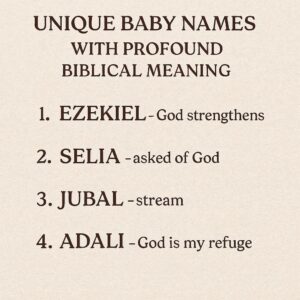
Names that invoke broader spiritual concepts are inherently neutral. Jubal, meaning “stream” or “joy,” was the ancestor of all who play the harp and flute, making it a name for a creative soul. Zion, meaning “highest point,” is already gaining popularity, but it remains a profound and versatile name, evoking a sense of elevation, refuge, and sacredness. These names transcend typical gender boundaries, placing emphasis on the spiritual trait or historical significance rather than a specific character’s gender.
The Responsibility of the Name: Meaning Over Sound
The enduring power of a biblical name lies not in its popularity, but in its meaning. The ancient Hebrews believed a name defined a person’s character and destiny; a person’s name was their reputation. Therefore, when choosing a unique biblical name, one must delve into the original Hebrew and Greek roots, as the meaning can be far more complex than a simple English translation. For instance, Abner means “my father is a light,” a beautiful and noble declaration. The responsibility, therefore, is to choose a name with a narrative—a personal story that the child can later learn and embrace. By selecting a name like Shaphan (“coney” or “rock badger,” a scribe who found the Book of the Law), the parent is giving the child a unique narrative of diligence and discovery. This deep connection to scripture elevates the name from a simple identifier to a lifelong mission statement.
Conclusion: A Name That Echoes Through Time
Choosing a unique biblical name is an act of profound love, bridging ancient history with a child’s modern identity. By moving beyond the most familiar figures, parents can endow their children with names like Jedidiah, Shifra, or Amos—names that are both distinctively beautiful and profoundly rich in spiritual heritage. These hidden gems offer a powerful narrative, ensuring the child carries a title that not only stands out but also echoes a timeless story of faith, strength, and purpose.
FAQs (Frequently Asked Questions)
Q1: How can I be sure the meaning of a biblical name is accurate?
A: Always consult reliable, scholarly sources and lexicons (like Strong’s Concordance or Koehler-Baumgartner Lexicon) that trace the names back to the original Hebrew or Greek roots. Simple baby name websites can sometimes offer popularized but inaccurate definitions.
Q2: Are obscure biblical names difficult for a child to wear?
A: This depends on the specific name. Names that are difficult to pronounce or spell may require extra patience. However, many unique names, like Tiras or Jael, are short, phonetically simple, and easily memorable, making them distinct but not burdensome.
Q3: Can a biblical place name be used as a personal name?
A: Absolutely. This is a common practice. Names like Eden, Shiloh, Zion, and Carmel (meaning “garden-land”) are excellent examples. The key is to choose a place name with positive or poetic connotations.
Q4: Should I worry about the character’s story if the name is obscure?
A: It’s wise to do a quick background check. While most minor characters have brief, neutral roles, you want to ensure your chosen name isn’t associated with a figure known primarily for a negative action (e.g., King Jeroboam).