In the hushed, golden light of a late autumn afternoon, a flicker of movement catches your eye. A squirrel, a bundle of russet fur and boundless energy, darts along a fence post. It pauses, sits upright, and with deft, nervous paws, manipulates an acorn, its eyes bright with a primal intelligence. For a moment, you are transfixed. This is a scene played out in countless backyards and city parks across the world, so common that we often dismiss it as mere background noise in the theater of nature. But what if this everyday encounter is something more? What if the squirrel is not just a simple creature of instinct, but a vibrant spiritual messenger, a furry little guru carrying profound lessons for our own lives?
The squirrel, in its essence, is a living paradox. It is a creature of intense, focused labor, yet it moves with a playful, almost joyous agility. It is a master of gathering and saving, yet it lives a life of apparent spontaneity. It is grounded, yet it spends its life in the heights of the trees. It is this very duality that makes the squirrel such a rich and compelling spiritual symbol. To understand the squirrel is to understand the art of balance—the balance between work and play, between saving for the future and living fully in the present, between cautious planning and trusting in the abundance of the universe. This article will serve as your comprehensive guide, a deep and detailed exploration into the soul of this remarkable creature. We will journey through its symbolic meanings, uncover its lessons as a spirit guide, and learn how to integrate its timeless wisdom into the frantic, modern human experience. Prepare to see the common squirrel in a light you never have before.
Chapter 1: The Universal Symbol of Preparation – Gathering for the Soul’s Winter
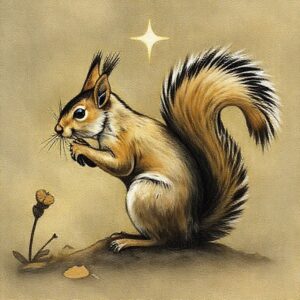
The most immediate and universally recognized symbolism of the squirrel is that of preparation and foresight. This is not a casual hobby for the squirrel; it is a matter of survival. The relentless gathering of nuts, seeds, and berries during the plentiful autumn months is a direct and intelligent response to the impending scarcity of winter. This behavior is a powerful metaphor for our own spiritual and practical lives.
The Spiritual Act of Gathering: On a metaphysical level, the squirrel teaches us the importance of building our inner reserves. What are the “nuts” we need to gather for our soul’s winter? These are not material possessions, but rather the intangible resources that sustain us through periods of darkness, doubt, and hardship. They include:
-
Knowledge and Wisdom: Just as the squirrel gathers acorns, we must gather insights, lessons, and understanding. This comes from reading, studying, engaging in deep conversations, and reflecting on our experiences. Every piece of knowledge is a seed that can sprout into a solution during a future challenge.
-
Emotional Resilience: The squirrel doesn’t wait for the first snowflake to start its work. Similarly, we must cultivate emotional strength during times of peace and happiness. Practices like mindfulness, gratitude journaling, and therapy are ways we “store” emotional stability for when we face grief, stress, or anxiety.
-
Spiritual Connection: A consistent spiritual practice—whether it be prayer, meditation, or time in nature—is like storing spiritual sustenance. It builds a connection to something greater than ourselves, a source of comfort and guidance that we can draw upon when we feel spiritually barren.
The Lesson of Timing and Cycles: The squirrel is exquisitely attuned to the natural cycles of the Earth. It does not fight the coming of winter; it prepares for it. This teaches us to honor the cycles in our own lives. There are seasons for intense activity and gathering (like the squirrel’s autumn), and there are seasons for rest, introspection, and drawing upon our stored resources (like the squirrel’s winter). Fighting against these natural rhythms leads to exhaustion and despair. The squirrel spirit encourages us to ask: Am I in a season of gathering or a season of resting? Am I preparing for the next phase of my life, or am I ignoring the signs of change?
The Hidden Work: It is estimated that squirrels recover only about 70-80% of the nuts they bury. The rest are forgotten, often sprouting into new trees. This is a beautiful aspect of the squirrel’s symbolism: the preparation you do for yourself often has unintended, positive consequences for the world around you. Your personal growth, your stored knowledge, and your emotional resilience don’t just benefit you; they allow you to be a better parent, partner, friend, and contributor to your community. The work you do in the shadows to better yourself ultimately plants seeds for a forest of future blessings, both for you and for others.
Chapter 2: The Dance of Abundance and Thrift – A Lesson in Resource Management
The squirrel presents us with a fascinating dichotomy. It lives in a world of apparent abundance, surrounded by a forest full of potential food. Yet, it operates with a principle of thrift and conservation. This dance between abundance and thrift is a masterclass in spiritual and practical resource management.
Trust in Abundance vs. Fear of Scarcity: The squirrel does not gather out of a place of lack or fear. Its activity is not frantic or anxious; it is purposeful and confident. It trusts that the forest will provide the nuts, and its role is to participate in that cycle. This teaches us a crucial lesson: we can prepare for the future from a mindset of trust in universal abundance, rather than from a mindset of fear of scarcity.
When we operate from fear, our hoarding becomes toxic. We become greedy, possessive, and unwilling to share. We see the world as a pie of limited size, and we must grab our piece before someone else takes it. This energy contracts us and cuts us off from the flow of generosity.
When we operate from trust, our preparation becomes an act of co-creation with the universe. We believe that there is enough for everyone, and that by wisely managing our resources, we align ourselves with this natural abundance. The squirrel shows us that it is possible to be both a diligent saver and a being who trusts in the endless provision of life.
The Wisdom of Balanced Consumption: Squirrels are active, high-metabolism creatures. They need to eat frequently. Their caches are not just for deep winter; they are for tomorrow, next week, and the lean months. This reflects a balanced approach to consumption. They do not eat everything they find immediately (gluttony), nor do they save everything and never enjoy the fruits of their labor (miserliness).
This translates to our use of energy, time, and money. Are we burning ourselves out by consuming all our energy reserves without rest? Are we hoarding our money to the point where we cannot enjoy its benefits? Or are we, like the squirrel, finding a rhythm—working diligently, saving wisely, but also allowing ourselves to enjoy the present moment and the resources we have gathered?
The Squirrel’s Balance – Scarcity Mindset vs. Abundance Mindset
| Aspect | Scarcity Mindset (Misinterpretation of Squirrel) | Abundance Mindset (True Squirrel Wisdom) |
|---|---|---|
| Motivation for Action | Fear, anxiety, worry about not having enough. | Trust, confidence, participation in nature’s cycles. |
| Relationship to Resources | Hoarding, greed, inability to share. | Wise management, conservation, understanding of enough. |
| View of the Future | Pessimistic, expecting the worst. | Prepared, but optimistic and trusting. |
| Energy | Contractive, stressful, heavy. | Expansive, purposeful, light. |
| Impact on Community | Creates isolation and competition. | Can foster community and unintentional growth (forgotten seeds). |
Chapter 3: The Agility of Spirit – Navigating Life’s Treetops
Watch a squirrel traverse its environment. It leaps across seemingly impossible gaps, runs head-first down tree trunks, and navigates the thin, swaying branches at the very top of the canopy with breathtaking confidence. This physical agility is a direct symbol for mental, emotional, and spiritual agility.
Navigating Change and Challenge: Life constantly presents us with “gaps”—sudden job loss, relationship changes, health issues, or unexpected opportunities. The squirrel spirit teaches us how to approach these gaps. It doesn’t freeze at the edge of a branch; it calculates, gathers its energy, and leaps. We are encouraged to cultivate this same faith in our own abilities. It’s about trusting our instincts, using our accumulated knowledge and resources (our “gathered nuts”), and taking calculated leaps of faith.
Perspective and Higher Ground: Squirrels spend most of their time in the trees, giving them a vantage point that ground-dwelling creatures lack. This symbolizes the importance of gaining a higher perspective on our problems. When we are mired in the details of a difficult situation, we can feel trapped. The squirrel asks us to “climb a tree”—to step back, meditate, seek counsel, or simply take a break to gain a broader view. From this elevated perspective, the path forward often becomes clearer, and obstacles that seemed insurmountable from the ground reveal themselves as manageable.
Balance and Sure-Footedness: The ability of a squirrel to balance on a telephone wire is a marvel. This translates to the spiritual lesson of finding our center amidst chaos. Our modern lives are a constant balancing act between work and home, social obligations and personal time, our needs and the needs of others. The squirrel spirit guide teaches us to find our inner equilibrium, to plant our feet firmly on our core values, and to adjust gracefully to the shifting winds of circumstance without losing our footing.
Chapter 4: Playfulness as a Spiritual Practice – The Squirrel’s Unseen Lesson
Perhaps the most overlooked, yet most vital, aspect of squirrel symbolism is playfulness and joy. Observe a group of young squirrels chasing each other in spirals up and down a tree trunk. This is not practice for gathering food or escaping predators; this is pure, unadulterated play. In the midst of their serious work of preparation, they make time for levity and social connection.
The Vitality of Levity: In our driven, goal-oriented culture, play is often seen as unproductive, a waste of time. The squirrel refutes this notion entirely. Play is what keeps the spirit light and the mind nimble. It reduces stress, fosters creativity, and strengthens social bonds. The squirrel teaches us that a life devoted only to work and preparation, without the counterbalance of joy, is a life out of balance. It is a sure way to spiritual burnout.
The Social Dimension: Squirrels are not entirely solitary. Their playful chases and interactions are a form of community building. This reminds us that our journey of preparation and navigating life’s challenges is not meant to be walked alone. We need connection, camaraderie, and the simple, joyful exchange of energy with others. Play is a language of connection that transcends the practicalities of life.
Integrating Work and Play: The squirrel doesn’t schedule “playtime” for 5 PM on a Friday. Its play is interwoven with its work. A burst of energetic chasing might be followed by a period of focused gathering. This is the ultimate lesson: to infuse our necessary tasks with a spirit of lightness and enjoyment. Can we find the fun in our daily chores? Can we approach our responsibilities with the energetic, playful curiosity of the squirrel? This shift in attitude can transform drudgery into a dance.
Chapter 5: The Squirrel as a Spirit Animal and Totem
When the squirrel scurries into your life as a spirit animal or totem, it carries a specific and powerful set of attributes for you to embody. To have the squirrel as your guide is to be called to a life of purposeful action balanced with heartfelt joy.
If the Squirrel is Your Spirit Animal, You Likely:
-
Are naturally prudent and good with planning and resources.
-
Have a strong connection to your home and family, and a desire to provide for them.
-
Are energetic, busy, and sometimes have trouble sitting still.
-
Possess a quick, agile mind that can adapt to new situations.
-
Have a playful, mischievous side that emerges when you feel safe.
-
May sometimes struggle with anxiety about the future or a tendency to “hoard” things, emotions, or energy.
The Squirrel Totem’s Call to Action: When the squirrel totem is active in your life, it is asking you to:
-
Get Your House in Order: It’s time to organize, plan, and prepare. This could be a financial audit, stocking your pantry, or simply getting your calendar sorted. The squirrel energizes these tasks.
-
Balance Your Budgets: This isn’t just about money. It’s about your energy budget, your time budget, and your emotional budget. Are you over-extended? Are you saving enough energy for yourself? The squirrel prompts a review.
-
Lighten Up: If you’ve been all work and no play, the squirrel appears to remind you of the critical importance of joy. Go for a fun outing, engage in a hobby, or simply be silly for a while.
-
Take a Leap of Faith: Is there an opportunity requiring a “leap”? The squirrel gives you the confidence to trust your instincts and make the jump, knowing you have the agility to land on your feet.
-
Gain Perspective: If you’re stuck in a problem, the squirrel totem encourages you to climb to a higher vantage point. Step away, meditate, or seek a broader view to find your solution.
Chapter 6: Squirrel Encounters, Omens, and Messages
A squirrel crossing your path is rarely an accident. It is a moment of intersection between the mundane and the spiritual, a chance to receive a message. The context of the encounter is key to its interpretation.
Common Encounters and Their Potential Meanings:
-
A Squirrel Crossing Your Path: This is a classic omen. It is generally a positive sign, reminding you to be prepared for an opportunity or a challenge that is coming your way. Pay attention to your plans and resources.
-
A Squirrel Staring at You: When a squirrel stops its frantic activity to lock eyes with you, it is a powerful moment of connection. It is asking you to see the message. It might be telling you to pause in your own busyness and consider the balance in your life. What are you not seeing in your rush?
-
A Squirrel Chattering at You: This often feels like a scolding. Spiritually, it can be a wake-up call. Are you being wasteful with your energy, time, or resources? Is someone in your life “chattering” at you, and you’re not listening? It’s a message to pay attention to something you’ve been ignoring.
-
Seeing a Squirrel Gathering Nuts: A direct and unambiguous message to focus on preparation. It’s time to save money, store energy, or gather knowledge for a future endeavor.
-
Watching Squirrels Play: A beautiful reminder to inject more joy and lightheartedness into your day. Your spirit is craving play and social connection. Don’t dismiss this need as frivolous.
Chapter 7: Squirrel Symbolism in Dreams – A Subconscious Cache
Dreams of squirrels are messages from our subconscious, using the rich symbolism of this creature to highlight aspects of our waking lives that need attention.
Common Squirrel Dream Scenarios:
-
Dreaming of a Gathering Squirrel: Your subconscious is highlighting themes of preparation, security, and provision. You may be feeling anxious about an upcoming event and your ability to handle it. Alternatively, it could be affirming that you are on the right track with your plans.
-
Being Chased by a Squirrel: This strange dream can point to anxiety about small, nagging responsibilities that you feel are “chasing” you. These are tasks you’ve been avoiding, and they are creating underlying stress.
-
A Squirrel Hoarding/Vast Stores of Nuts: This can have two meanings. Positively, it can symbolize a feeling of being spiritually and materially rich and secure. Negatively, it can warn against greed, miserliness, or an inability to enjoy the fruits of your labor.
-
A Playful Squirrel: A wonderful dream symbol! It indicates that your inner child is asking to come out and play. You need more fun, creativity, and lightheartedness in your life.
-
A Dead Squirrel: As with all death symbols in dreams, this rarely signifies a literal death. It more likely symbolizes the end of a cycle of relentless preparation or anxiety. It may indicate that a period of lack or hardship is over, and a new season of abundance is beginning.
Chapter 8: Cultural and Mythological Perspectives Across the Globe
The squirrel’s symbolism is not monolithic; it takes on different shades of meaning in various cultural contexts, adding depth to our understanding.
-
Norse Mythology: In the great world tree, Yggdrasil, the squirrel Ratatoskr runs up and down the trunk. His role is that of a messenger—but a mischievous one. He carries insults between the eagle at the top and the serpent, Nidhogg, at the roots. Here, the squirrel symbolizes gossip, mischief, and the stirring of conflict. It’s a cautionary aspect, reminding us that our busy-ness can sometimes be used to carry toxic messages and create drama.
-
Native American Traditions: Among many tribes, the squirrel is seen as a keeper of stores and a practical planner. It is respected for its foresight and industry. In some stories, it is a clever trickster figure, using its agility and wit to outsmart larger, stronger animals, teaching lessons about using one’s brains over brute force.
-
Celtic Lore: The squirrel was associated with the Celtic goddess Medb, a queen of great ambition and energy. It was seen as a creature of activity, prophecy, and fierce independence. Its red fur connected it to the energy of fire and action.
-
Eastern Symbolism (China/Japan): While not as prominent as some other animals, the squirrel’s association with storing nuts links it to themes of thrift, abundance, and family prosperity. Its energetic nature is also seen as a sign of an active, busy, and vibrant life.
Chapter 9: Applying Squirrel Wisdom to Modern Life
How do we take these ancient, symbolic lessons and apply them to our 21st-century existence? The squirrel’s wisdom is remarkably relevant.
-
Digital Hoarding vs. Wise Curation: We are all “squirrels” in the digital forest, gathering endless information, emails, and files. The squirrel spirit asks us to curate wisely. What digital “nuts” are truly valuable? What is just clutter?定期清理你的数字存储,就像松鼠不会保存腐烂的坚果一样。
-
Energy Management in a Hustle Culture: We live in a society that glorifies burnout. The squirrel teaches cyclical energy management. Work intensely in your productive “autumn” seasons, but honor your “winters” by resting and replenishing. Avoid the trap of constant, unsustainable output.
-
Financial Prudence with a Generous Heart: The squirrel model is the perfect antidote to impulsive consumerism. It encourages us to save and invest (gather), live within our means (conserve), but also to allow for joy and generosity (play and the forgotten seeds). Create a budget that reflects this balance.
-
Staying Agile in a Changing World: The job market, technology, and social norms are shifting faster than ever. The squirrel’s agility teaches us to be lifelong learners, to be willing to pivot, and to take calculated risks by “leaping” to new opportunities.
-
Prioritizing Play for Mental Health: In a world saturated with bad news and high stress, the squirrel’s lesson of play is a form of radical self-care. Schedule time for unproductive joy. It is not a luxury; it is as essential for your spiritual health as gathering is for your material security.
Conclusion: The Integrated Wisdom of the Squirrel
The squirrel is a master of balance, teaching us to prepare diligently for the future without succumbing to fear.
It is a guide to joyful living, showing us how to weave play and lightness into the fabric of our necessary work.
Ultimately, it reminds us to trust in life’s abundant cycles, to stay agile in our journey, and to plant seeds for a forest we may never see, but from which all may benefit.
Frequently Asked Questions (FAQs)
Q1: Is seeing a squirrel a good omen?
A: Generally, yes. A squirrel sighting is most often a positive reminder to be prepared, stay balanced, and remember to find joy in your activities. It signifies that you have the resources and agility to handle what’s coming.
Q2: What does it mean if a squirrel is my spirit animal?
A: It means you are likely a natural planner, provider, and organizer. You are energetic and agile-minded, but you must be mindful not to become anxious about the future or forget to play and enjoy the present moment.
Q3: What is the difference between squirrel symbolism and other hoarding animals?
A: While animals like pack rats also gather, the squirrel’s symbolism is uniquely balanced with play, agility, and trust. Its hoarding is not driven by fear but by intelligent participation in natural cycles. The “forgotten seeds” aspect also adds a layer of unconscious generosity not found in other symbols.
Q4: The squirrel in Norse myth is a gossip. Does that negate its positive meanings?
A: Not at all. It adds a dimension of caution. It reminds us that our busy energy and communication can be used for good or ill. The squirrel spirit asks us to be mindful of the messages we carry—are we spreading gossip and conflict, or are we sharing useful information and joy?
Q5: How can I honor the squirrel spirit in my daily life?
A: You can honor it by:
-
Creating and reviewing a budget or savings plan.
-
Organizing your living or work space.
-
Taking a leap of faith on a project you’ve been considering.
-
Scheduling time for pure, unproductive fun.
-
Spending time in trees or parks, observing nature’s cycles.
-
Practicing balancing your work commitments with your need for rest and play.