Close your eyes. Imagine a scent that is at once exotic and familiar, a fragrance that does not merely linger in the air but seems to weave through the very fabric of your being. It is a scent that is intensely floral, yet undeniably creamy and rich—a top note of dazzling, almost narcotic sweetness that gracefully descends into a deep, resonant, and balsamic base. This is the aroma of Cananga odorata, the Ylang Ylang flower. For centuries, this blossom, native to the tropical rainforests of Southeast Asia, has been more than just a source of perfumery’s most cherished notes. It has been a sacred key, a botanical guide on the spiritual path, revered for its unparalleled ability to unlock the chambers of the human heart, soothe the restless mind, and awaken the soul to the frequencies of love, joy, and profound inner peace.
To encounter Ylang Ylang in a spiritual context is to engage with one of nature’s most potent allies for emotional and energetic healing. Its spiritual meaning is as complex and multi-layered as its fragrance profile. It is the plant of the broken-hearted and the ecstatic lover, the panicked soul and the serene meditator. This article is a journey into the very essence of this “flower of flowers,” exploring its historical roots, its profound connection to our energetic anatomy, and its practical application as a catalyst for spiritual growth. We will delve beyond the simplistic label of “aphrodisiac” to uncover its true role as a master alchemist, capable of transmuting the densest of human emotions into the golden light of consciousness and compassion. Prepare to understand why, across cultures and spiritual traditions, Ylang Ylang is known as the Scent of the Soul.
2. A Botanical Symphony: Origins, History, and Etymology
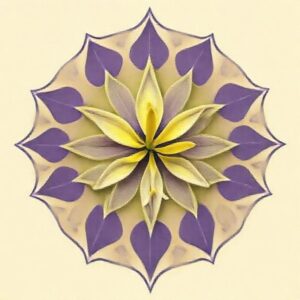
Ylang Ylang (pronounced ee-lang ee-lang) derives its name from the Tagalog phrase “ilang-ilang,” which translates to “rare” or “uncommon.” Some linguists also interpret it as “wilderness,” a nod to its natural, untamed habitat in the Philippines, Indonesia, and surrounding archipelagoes. The tree itself is a vision of tropical abundance, reaching skyward with long, drooping branches adorned with large, graceful leaves. Its flowers are the true marvels—long-petaled, twisting, and vibrant, ranging from a pale, buttery yellow to a deep golden hue, resembling the twisted claws of a celestial creature or a cascade of fragrant stars.
The journey of Ylang Ylang from a local botanical treasure to a global spiritual and aromatic staple is a fascinating tale. While it has been used for generations in Southeast Asia in traditional ceremonies—often strewn on the beds of newlyweds or used to anoint the body after ritual cleansing—it was the arrival of European explorers and perfumers in the 19th century that catapulted it to international fame. Its intoxicating scent became a cornerstone of the burgeoning perfume industry, most famously as a key component in the iconic Chanel No. 5, where it provides the deep, sensual, floral-heart note that defines the fragrance.
The traditional method of harvesting and distilling Ylang Ylang is a labor of love and precision. The flowers must be picked by hand at dawn when their scent is most potent. They are then subjected to a careful steam distillation process that can last for over 15 hours. This process yields different “grades” of oil:
-
Extra: The first and finest distillation, possessing the lightest and most delicate scent.
-
First: A high-quality oil from the early stages.
-
Second: A standard, well-rounded oil.
-
Third: A heavier, richer oil from the later stages of distillation.
-
Complete: A blend of all distillations, representing the full spectrum of the flower’s aroma.
From a spiritual perspective, this grading system is symbolic. The “Extra” grade, with its ethereal top notes, connects to the higher, spiritual dimensions of the heart—divine love and universal compassion. As we move to the “Third” and “Complete” grades, the oil grounds this energy, connecting it to the physical, sensual, and manifest aspects of love. This makes Ylang Ylang a uniquely holistic essence, capable of bridging heaven and earth within the human experience.
3. The Anatomy of a Scent: Decoding Ylang Ylang’s Complex Fragrance
To understand Ylang Ylang’s spiritual power, one must first appreciate its olfactory complexity. It is not a simple, one-dimensional floral scent. Perfumers classify it as a heart note with tremendous tenacity, and its aroma profile is a symphony of contrasting yet harmonious molecules.
The initial impression is a burst of sweet, fruity, and banana-like notes, thanks to compounds like methyl benzoate and benzyl acetate. This is the scent of immediate joy, of a childlike, unburdened heart. This quickly melds into the core of the fragrance: a rich, creamy, and intensely floral character, often compared to jasmine and neroli, but with a unique, custard-like indole quality that gives it depth and sensuality. This is the scent of the mature, open heart—vulnerable, nurturing, and receptive. Finally, the dry-down reveals a warm, balsamic, and slightly woody base, contributed by sesquiterpenes like germacrene and cadinene. This is the grounding, stabilizing energy of Ylang Ylang—the scent of a love that is enduring, patient, and rooted in reality.
This olfactory journey—from euphoric top notes to a deep, resonant base—mirrors the very spiritual journey it facilitates. It guides the soul from a fleeting, euphoric happiness (the top notes) to a deep, abiding state of inner peace and grounded compassion (the base notes). It teaches us that true spiritual opening is not just about peak experiences but about integrating those experiences into the very foundation of our being.
4. The Heart Chakra Emissary: Ylang Ylang and Anahata
In the subtle energy systems of the body, particularly within the Yogic and Tantric traditions, the heart chakra, or Anahata, is the center of our universe. It is the bridge between the lower, more earthly chakras (root, sacral, solar plexus) and the higher, spiritual chakras (throat, third eye, crown). Anahata governs our capacity for love—in all its forms. This includes self-love, romantic love, familial love, compassion for others, and ultimately, unconditional, divine love.
When Anahata is balanced and open, we experience emotional stability, empathy, forgiveness, and a deep sense of connection to all living things. We are able to give and receive love freely. When it is blocked or imbalanced, we may experience a host of emotional and spiritual ailments: jealousy, loneliness, fear of intimacy, co-dependency, an inability to grieve, or a hardened, defensive heart.
Ylang Ylang is universally recognized as one of the most powerful aromatic allies for the heart chakra. Its vibrational frequency resonates almost perfectly with the energy of Anahata. How does it work?
-
Energetic Unblocking: The frequency of Ylang Ylang is believed to “loosen” stagnant energy trapped in the heart center. Think of a knot being gently untied. It doesn’t force it open; it coaxingly relaxes the constriction, allowing the natural flow of prana (life force) to resume.
-
Frequency Alignment: Its scent acts as a tuning fork for the heart. By inhaling it or applying it to the heart center, we are essentially retuning our own energetic body to the frequency of love, harmony, and acceptance.
-
Emotional Resonance: The very experience of its beautiful scent evokes feelings of pleasure, safety, and warmth. This positive emotional response is a direct signal to the psyche and the energy body that it is safe to open, to feel, to be vulnerable.
Using Ylang Ylang in meditation, placed over the heart center, is a direct method of communicating with Anahata. It whispers to the heart, “It is safe to feel. It is safe to love. It is safe to be.”
5. Beyond the Heart: Ylang Ylang’s Influence on the Entire Chakra System
While its primary domain is the heart chakra, Ylang Ylang’s influence ripples throughout the entire energetic system, demonstrating its role as a master harmonizer.
-
Sacral Chakra (Svadhishthana): Its deeply sensual and creamy aspects have a direct impact on the sacral chakra, the center of creativity, pleasure, and sexuality. It helps to heal shame and guilt associated with the body and sensuality, reintegrating healthy passion into the open heart. This is the foundation of its reputation as an aphrodisiac—it doesn’t simply stimulate lust, but connects physical intimacy to genuine emotional and heart-centered love.
-
Solar Plexus Chakra (Manipura): The solar plexus is the seat of our personal power, will, and self-esteem. Anxiety and fear are often rooted here. Ylang Ylang’s potent calming and anxiolytic properties help to soothe an overactive or “burned out” solar plexus, reducing the frantic energy of worry and allowing for a more confident, calm expression of self.
-
Crown Chakra (Sahasrara): The highest, most spiritual notes of Ylang Ylang, especially in the “Extra” grade, have a subtle but discernible effect on the crown chakra. By first opening the heart, it clears the pathway for energy to rise upwards. A heart filled with love and devoid of blockages is the most fertile ground for spiritual connection and cosmic consciousness.
In this way, Ylang Ylang acts as an energetic unifier. It ensures that the opening of the heart is supported by the passion of the sacral, the stability of the solar plexus, and the guidance of the crown, creating a holistic and integrated spiritual awakening.
6. The Emotional Alchemist: Transforming Fear, Grief, and Anxiety into Joy
Perhaps the most profound spiritual gift of Ylang Ylang is its role as an emotional alchemist. Alchemy, in a spiritual context, is the process of transforming base metals (heavy, dense emotions) into gold (consciousness, love, and light). Ylang Ylang is a master of this art.
On Fear and Anxiety:
Modern life is a breeding ground for low-grade, chronic anxiety and fear. This state keeps the nervous system in a constant state of “fight or flight,” which energetically constricts the heart. Ylang Ylang contains compounds that have been studied for their calming and sedative effects. Spiritually, it is like a gentle, maternal hand on a fevered brow. It doesn’t erase the source of anxiety but changes our relationship to it. It creates an expansive, soft field of energy around the heart, making fear feel less consuming and overwhelming. It teaches the soul to “breathe through” the anxiety, transforming panic into mindful presence.
On Grief and Sadness:
Grief is the natural emotional response to loss, but when it becomes stuck, it can create a permanent block in the heart chakra, manifesting as depression, emotional numbness, or an inability to form new connections. Ylang Ylang is a sacred companion for the grieving heart. It does not force happiness. Instead, it creates a safe, nurturing container in which grief can be fully felt and processed. Its energy is one of unconditional holding. It says, “I am here with you in your pain. You are not alone.” By allowing the grief to move through the heart without resistance, it ultimately facilitates healing and the eventual return to a state of open-heartedness.
The Alchemical Process:
-
Recognition: The scent brings a gentle awareness to the suppressed emotion.
-
Release: Its relaxing properties allow the physical and energetic body to let go of the tension holding the emotion in place.
-
Transmutation: The high-frequency vibration of the oil interacts with the low-frequency vibration of the emotion, effectively “up-leveling” it. Fear becomes alertness, grief becomes compassionate understanding, and anxiety becomes excited anticipation.
-
Integration: The transformed energy is then integrated back into the being as wisdom and strength, no longer as a wound.
7. Sacred Union: Ylang Ylang as an Aphrodisiac and a Conduit for Divine Love
The reputation of Ylang Ylang as an aphrodisiac is legendary, but its spiritual function in this realm is often misunderstood. It is not a mere chemical stimulant. Its power lies in its ability to create sacred union—first within the self, and then with another.
Inner Union:
True intimacy with another begins with intimacy with oneself. Ylang Ylang fosters self-love and self-acceptance. By healing heartache and soothing self-criticism, it allows an individual to come into a state of wholeness. When we are whole and filled with self-love, we approach relationships from a place of abundance, not lack or neediness. This is the foundation for healthy, sacred partnership.
Union with Another:
In a relationship context, Ylang Ylang works on multiple levels:
-
Energetic Harmonization: It can help to harmonize the energy fields of two people, dissolving barriers and fostering a sense of deep connection and empathy.
-
Sensual Reconnection: By linking the open heart (Anahata) with the center of pleasure (Svadhishthana), it transforms physical intimacy from a purely carnal act into a deeply connective, heartfelt, and even spiritual experience. It infuses sensuality with soul.
-
Releasing Past Hurts: For couples dealing with past betrayals or resentments, Ylang Ylang can soften the hardened edges of the heart, making forgiveness and vulnerability possible.
Union with the Divine:
At its highest octave, Ylang Ylang is a conduit for Divine Love, or Agape. This is a love that is unconditional, limitless, and impersonal. Meditating with Ylang Ylang can facilitate a profound experience of being loved by the universe, by God, by Source—whatever one’s spiritual orientation may be. It opens the heart to receive this boundless love and to become a vessel for radiating it out into the world. In this state, one realizes that the ultimate spiritual union is the merging of the individual soul with the infinite ocean of love that is the cosmos.
8. The Dream Weaver: Enhancing Intuition and Connecting to the Subconscious
The heart is not only the seat of emotion but also a powerful center of intuition. There is a concept known as the “intelligent heart,” which suggests that the heart has its own complex neurological network and intuitive wisdom that often surpasses the linear logic of the brain. Ylang Ylang, by quieting the mind and opening the heart, directly enhances our access to this intuitive faculty.
Furthermore, its sedative and calming properties make it an excellent ally for dream work and accessing the subconscious. The subconscious mind speaks in symbols, emotions, and sensations—the very language of the heart. Applying a drop of Ylang Ylang to the temples, third eye, or heart before sleep can:
-
Promote more vivid and memorable dreams.
-
Facilitate lucid dreaming.
-
Allow for deeper processing of the day’s events or unresolved emotional material.
-
Open a channel for guidance from the higher self or the subconscious to emerge symbolically in dreams.
In this role, Ylang Ylang acts as a psychopomp—a guide for the soul as it travels into the inner landscapes of the psyche. It ensures that these journeys are safe, fruitful, and ultimately healing.
9. Rituals and Practical Applications: Integrating Ylang Ylang into Your Spiritual Practice
Theory is beautiful, but practice is power. Here are detailed ways to weave the spiritual magic of Ylang Ylang into your daily life.
Anointing and Perfumery:
Create a sacred, personal perfume to carry the energy of Ylang Ylang with you throughout the day.
-
Recipe: Heart-Opening Anointing Oil
-
1 tablespoon of a carrier oil (like Jojoba or Sweet Almond)
-
5 drops of Ylang Ylang Essential Oil
-
2 drops of Sandalwood Essential Oil (for grounding)
-
1 drop of Rose Absolute (for divine love – optional, as it is expensive)
-
Mix in a small glass roller bottle. Anoint your heart center, wrists, and behind the ears each morning as a ritual of setting an intention for open-hearted living.
-
Meditation and Pranayama:
-
Heart-Centered Meditation: Place a drop of Ylang Ylang in your palms, rub them together, cup them over your nose, and take several deep, slow breaths. Then, place your hands over your heart center. Visualize a soft, emerald green light emanating from your heart, growing with each inhalation of the scent. Sit in this expanded, loving space for 10-20 minutes.
-
Loving-Kindness (Metta) Practice: Use Ylang Ylang to enhance the traditional Metta meditation. As you repeat the phrases, “May I be happy. May I be safe. May I be healthy. May I live with ease,” inhale the scent of Ylang Ylang, allowing it to embed these wishes deep into your energetic field.
Sacred Bathing Ceremonies:
A bath with Ylang Ylang is a powerful ritual for emotional release and self-love.
-
Instructions: Draw a warm bath. Mix 5-10 drops of Ylang Ylang essential oil with a tablespoon of full-fat milk or honey (this disperses the oil safely in the water). Light a candle. As you sink into the water, set an intention to release what no longer serves your heart. Feel the water and the scent enveloping you, holding you, and washing away emotional burdens.
Space Clearing and Energetic Protection:
Ylang Ylang’s high vibration makes it excellent for clearing stagnant or negative energy from a room and replacing it with a frequency of love and peace.
-
DIY Spiritual Room Spray:
-
2 ounces of distilled water
-
1 ounce of vodka or witch hazel (as an emulsifier)
-
15 drops of Ylang Ylang
-
5 drops of Frankincense (for purification and elevation)
-
5 drops of Lemon (for clarity)
-
Shake well and spray around your home, meditation space, or bedroom to reset the energy.
-
10. Ylang Ylang in World Traditions and Spiritual Systems
The spiritual use of Ylang Ylang is not confined to one tradition. Its influence is global, though its interpretations are culturally specific.
-
Southeast Asian Traditions: In its native lands, the flowers are woven into leis and garlands used to honor guests, deities, and during wedding ceremonies. They are seen as a blessing of happiness, prosperity, and harmonious relationships. The practice of strewing the flowers on the marital bed is a direct invocation of its harmonizing and aphrodisiac properties.
-
Ayurveda: In the Indian science of life, Ylang Ylang is considered Sattvic—promoting purity, harmony, and clarity of mind. It is used to balance excess Vata and Pitta doshas, which are associated with anxiety, dryness, and irritability. Its sweet, heavy, and unctuous qualities are used to soothe the nervous system and pacify the heart.
-
Traditional Chinese Medicine (TCM): From a TCM perspective, Ylang Ylang moves Qi (vital energy), particularly when it is stuck in the chest, manifesting as emotional constraint or physical tightness. It also has a grounding effect, anchoring the spirit (Shen) which can become unsettled due to stress or shock.
-
Western Esotericism and Aromatherapy: Modern spiritual aromatherapy, pioneered by figures like Marguerite Maury, solidified Ylang Ylang’s role as a key essence for treating emotional distress, restoring self-confidence, and facilitating a connection between the physical and spiritual planes.
11. A Comparative Analysis: Ylang Ylang and Other Spiritual Essences
Understanding Ylang Ylang’s unique role is enhanced by comparing it to other heart-centered essences.
Spiritual Essences for the Heart Chakra
| Essential Oil | Primary Spiritual Focus | Scent Profile | Best Used For |
|---|---|---|---|
| Ylang Ylang | Alchemical Transformation of Emotions; Sacred Union | Sweet, intense, creamy, exotic, sensual | Transforming grief/fear, connecting heart and sensuality, deep emotional release, calming anxiety. |
| Rose Otto | Unconditional Divine Love; Deep Heart Healing | Soft, rich, honeyed, deeply floral, classic | Healing profound heartache and trauma, connecting to the Divine Feminine, cultivating self-love. |
| Neroli | Inner Child Healing; Lightness of Heart | Bright, citrusy, floral, honeyed, slightly bitter | Releasing past childhood wounds, alleviating panic, bringing joy and lightness to a heavy heart. |
| Bergamot | Self-Acceptance and Joy | Fresh, citrusy, sunny, slightly spicy | Easing self-judgment, shame, and depression; helping the heart to feel safe expressing itself. |
| Jasmine | Confidence in Love; Spiritual Ecstasy | Intensely floral, exotic, heady, warm | Inspiring confidence, attracting love, fostering spiritual optimism and passionate engagement with life. |
As the table shows, while Rose offers the purest frequency of divine love, Ylang Ylang is the master of the process—the dynamic work of transmuting the shadows that block that love. It is more active and catalytic than Rose, making it ideal for when the heart is in a state of turmoil or disconnection.
12. Scientific Corroboration: What Modern Research Says About Ancient Wisdom
While science cannot measure the “heart chakra,” it can measure physiological and psychological responses that correlate with spiritual experiences. Research on Ylang Ylang provides fascinating support for its traditional uses.
-
Blood Pressure and Heart Rate: Multiple studies have shown that inhalation of Ylang Ylang essential oil can lead to a significant decrease in blood pressure and heart rate. This parasympathetic response is the physical counterpart to the spiritual experience of a calm, open heart. A constricted, anxious heart often manifests in elevated blood pressure; Ylang Ylang directly addresses this.
-
Cortisol Reduction: Cortisol is the primary stress hormone. Research indicates that Ylang Ylang can reduce serum cortisol levels, explaining its profound anti-anxiety and relaxing effects. A calm body is a prerequisite for a receptive and spiritually open heart.
-
EEG Brain Activity: Studies using electroencephalography (EEG) have shown that Ylang Ylang increases alpha brain waves. Alpha waves are associated with a relaxed, meditative, and calm yet alert state of mind—the ideal state for heart-centered meditation and spiritual practice.
This scientific evidence does not negate the spiritual meaning of Ylang Ylang; it grounds it. It shows that the “feeling” of an open heart has a real, measurable, physiological basis that Ylang Ylang directly influences.
13. Conclusion: The Eternal Blossom of the Heart
Ylang Ylang is far more than a component of perfume or a simple relaxant. It is a spiritual technology encoded in a flower, a sacred gift from the tropics to the human soul. Its journey from a golden blossom in the rainforest to a vital tool for heart-centered awakening is a testament to its profound and timeless power. It teaches us that to open the heart is not a act of weakness, but the ultimate act of spiritual courage. It guides us in the sacred alchemy of turning our deepest pains into our greatest strengths, and in doing so, it helps us remember our true nature: beings of love, connected to each other and to the divine source of all that is. Let its scent be your guide back to the eternal blossom within your own heart.
14. Frequently Asked Questions (FAQs)
Q1: Can Ylang Ylang be used if I have a history of severe heartbreak or trauma?
A: Yes, but with care. Ylang Ylang is excellent for this, but it can bring up deep-seated emotions quickly. It’s often advisable to start with a low dilution (1%) and use it in a supportive setting, perhaps alongside a therapy or meditation practice. For very deep trauma, a gentler oil like Rose or Neroli might be a better starting point before introducing the more catalytic energy of Ylang Ylang.
Q2: I find the scent of Ylang Ylang too strong or overwhelming. What does this mean?
A: A strong negative reaction can be an indicator of a resistant heart chakra. The intensity of the fragrance may be confronting to a heart that is used to being closed or protected. Try blending it with a grounding oil like Sandalwood or Patchouli, or a citrus oil like Bergamot to “lighten” it. Alternatively, you can diffuse it in a well-ventilated area so the scent is more subtle.
Q3: Is there a difference spiritually between the different grades of Ylang Ylang oil?
A: Absolutely. As discussed, the “Extra” grade, with its lighter, sweeter top notes, is more suited for meditative, high-heart work and connecting to divine love. The “Complete” or “Third” grade, with its deeper, richer base notes, is more grounding and better for working with the physical body, sensuality, and deeply rooted emotional patterns. For most spiritual practices, a high-quality “First” or “Complete” grade offers a beautiful, balanced spectrum.
Q4: How does Ylang Ylang differ from synthetic fragrance oils in spiritual practice?
A: Synthetic fragrance oils mimic the scent but lack the living, vibrational intelligence of the plant. Spiritual work relies on the subtle energy and life force of the plant, which is captured in a pure, natural essential oil through distillation. Synthetic oils have no therapeutic or energetic value and can sometimes contain chemicals that are disruptive to our sensitive endocrine and energetic systems.