Have you ever found yourself abruptly awake, the digital clock casting a faint, cerulean glow in the pre-dawn darkness, the numbers 4:00 AM staring back at you? In that moment, the world is suspended in a profound silence, a stark contrast to the day’s cacophony. Your first instinct might be frustration—a groan for lost sleep, a anxious mind racing about the day ahead. But what if this recurring phenomenon is not a sleep disorder to be cured, but a sacred invitation to be answered? What if your soul, unshackled by the distractions of the waking world, is trying to communicate with you in this hallowed stillness?
Waking up at 4 AM is a global spiritual phenomenon, a thread woven through the tapestry of countless traditions, from the ancient Vedic seers to mystical Christian monks. It is known as the “Brahma Muhurta,” the “Hour of God,” or the “Witching Hour”—a time when the veil between the physical and spiritual realms is believed to be at its thinnest. This is not a mere coincidence of circadian rhythms; it is a cosmic appointment. This extensive article will serve as your definitive guide to understanding this mysterious call. We will journey through its scientific and psychological underpinnings, delve deep into its rich spiritual heritage across cultures, and provide you with a practical, transformative blueprint to not just endure this early wake-up call, but to embrace it as the most potent tool for spiritual growth, creative explosion, and profound inner peace. Prepare to see the 4 AM hour not as a loss of sleep, but as a gain of soul.
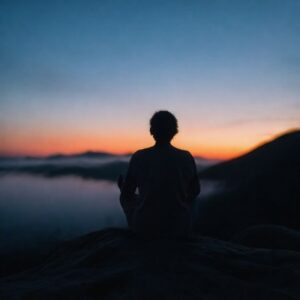
1. Introduction: The Universal 4 AM Wake-Up Call
The experience is eerily consistent across continents and cultures. An individual, often without the aid of an alarm, stirs from sleep between 3:30 and 4:30 AM. The mind is peculiarly clear, the body still, and the environment is enveloped in a silence so deep it feels tangible. For many, this is accompanied by a sense of longing, a subtle anxiety, or a feeling of being “called.” In our modern, productivity-obsessed world, we have pathologized this experience, labeling it as insomnia and reaching for pharmaceutical solutions. We view sleep as a single, unbroken block of oblivion, and any deviation from this is a failure.
However, this perspective is a relatively recent invention. Historians like A. Roger Ekirch have presented compelling research demonstrating that pre-industrial societies often practiced “segmented sleep” or “biphasic sleep.” People would sleep for a few hours after dusk, wake for a “watch” or “waking” period in the middle of the night—a time for prayer, contemplation, intimacy, or quiet work—and then return for a “second sleep” until dawn. This wakeful period was not considered abnormal; it was an expected and often cherished part of the human rhythm.
The 4 AM wake-up call we experience today may very well be a biological and spiritual echo of this ancient pattern, now colliding with our modern expectation of an eight-hour coma. But when we strip away the cultural conditioning and listen with the ear of the soul, we begin to hear a different story. This is a time-honored portal for transformation. It is the universe’s quietest, yet most persistent, alarm clock, not for your job, but for your journey. It is a moment when the collective noise of humanity is at its lowest ebb, and the whisper of the divine, of your own higher self, can finally be heard. This article is your guide to learning its language.
2. Beyond Biology: The Science and Psychology of the Pre-Dawn Mind
To fully appreciate the spiritual significance of 4 AM, it is helpful to first understand what is occurring on the physiological and psychological levels. This demystifies the experience and allows us to work with our nature, not against it.
The Sleep Cycle and Natural Awakenings
Human sleep is not a monolithic state but a cyclical journey through different stages: light sleep, deep sleep, and REM (Rapid Eye Movement) sleep, where most dreaming occurs. A full cycle lasts about 90 minutes. In a typical night, you might complete four to six of these cycles. In the earlier part of the night, deep sleep predominates, which is crucial for physical restoration. As the night progresses, REM sleep stages become longer and more intense.
It is very common to experience brief awakenings at the end of a sleep cycle, as you transition from REM sleep back to a very light stage of sleep or near-wakefulness. Most of the time, these awakenings are so brief we don’t remember them. However, if you happen to complete a cycle around 4 AM—which, given a typical bedtime of 10-11 PM, is highly probable—you can find yourself in a state of heightened awareness. You are emerging from a potentially vivid dream state (REM sleep), your mind is active, and your body’s core temperature begins its very gradual rise towards wakefulness. This biological window is a perfect storm for conscious awakening.
Stress, Anxiety, and the Hyper-Vigilant Brain
For many, however, the 4 AM wake-up is fueled by cortisol, the stress hormone. Our cortisol levels naturally begin to rise in the early morning hours to help us feel alert for the day. But when we are under chronic stress or anxiety, this system can become dysregulated. A slight spike in cortisol, combined with a silent, dark, and worry-prone mind, can jolt us into full-blown wakefulness, often accompanied by a racing heart and a mind spinning with problems.
From a spiritual perspective, this doesn’t necessarily invalidate the experience. Anxiety is often the ego’s response to a spiritual nudge it doesn’t understand. The soul is calling for expansion, for release, for a new perspective, and the ego-mind, terrified of change, interprets this as a threat and sounds the alarm. The key is to recognize this pattern. Is your 4 AM wake-up filled with a peaceful, if puzzling, alertness, or is it a torrent of anxious thoughts? The former is likely a spiritual call; the latter may be a sign that your spiritual needs are being expressed through a stressed biological system, and the answer is not just better sleep hygiene, but also deeper inner work.
The Psychological Power of Solitude and Silence
In our hyper-connected world, genuine solitude and silence are endangered species. We are constantly bombarded with inputs: notifications, news, emails, and the general hum of modern life. This sensory overload stifles our inner voice. The 4 AM hour offers a forced, yet precious, respite from this barrage.
Psychologically, this quietude is essential for integration and introspection. It is in these unstimulated moments that our subconscious mind can process the events of the day, that our creativity can bubble up from the depths, and that we can actually hear our own thoughts. This is not merely an absence of noise; it is a presence of space—mental space for the self to reconstitute and reconnect. The spiritual practices we will discuss later are simply structured ways to harness this innate psychological power.
3. The Spiritual Tapestry: 4 AM Across World Traditions
The reverence for the pre-dawn hour is not a new-age fad but a cornerstone of spiritual disciplines worldwide. This cross-cultural consensus points to a universal truth about this time’s unique energetic quality.
Brahma Muhurta: The Creator’s Hour in Ayurveda and Yoga
In the ancient Indian traditions of Ayurveda and Yoga, the period of time approximately 1.5 hours before sunrise is known as Brahma Muhurta (Sanskrit: “The Time of Brahma” or “The Creator’s Hour”). It is considered the most sattvic (pure, harmonious, and peaceful) time of the entire 24-hour cycle.
-
Energetic Quality: The gunas, or fundamental qualities of nature, are in perfect balance. The rajas (activity, passion) of the previous day has settled, and the tamas (inertia, darkness) of the night is receding. What remains is a preponderance of sattva, creating an atmosphere ideal for clarity, peace, and spiritual pursuits.
-
Why it’s Powerful: It is believed that the cosmic energy and life force (prana) are at their peak during this time. The mind, having been purified by sleep, is likened to a clean slate, free from the impressions of the day. Any practice undertaken during Brahma Muhurta—be it meditation, prayer, or study—is said to be imprinted more deeply on the consciousness and yield exponentially greater results. The ancient rishis (seers) deliberately chose this time for their deepest meditations to attain enlightenment.
-
The Practice: Traditional practitioners would rise naturally during Brahma Muhurta, perform cleansing rituals, and engage in meditation (sadhana), pranayama (breath control), and the study of sacred texts. The goal was to align one’s individual consciousness with the cosmic consciousness at the most auspicious time possible.
The Christian “Hour of Lauds” and Angelic Communication
In Christian monastic tradition, the daily cycle of prayer known as the “Liturgy of the Hours” or “Divine Office” includes a specific prayer service held at dawn, called Lauds (from the Latin Laudes, meaning “praises”). This service is designed to consecrate the beginning of the day to God.
-
Energetic Quality: The dawn is seen as a symbol of the Resurrection of Christ—the light conquering the darkness. It is a time of hope, renewal, and offering the first fruits of the day to the Divine.
-
Why it’s Powerful: The silence of the pre-dawn is considered especially conducive to hearing the “still, small voice” of God. Monks and nuns rise in the dead of night (often around 4 AM) to pray the Night Office (Matins) and then Lauds at first light, believing that their prayers join with the angelic choirs in perpetual praise. This “night watch” is seen as a vigilant, powerful form of prayer that can pierce the heavens.
-
The Practice: The service consists of psalms, hymns, readings, and canticles (like the Benedictus). The focus is on praise and thanksgiving, setting a sacred tone for the entire day. For the mystic, this time is also associated with receiving visions, divine consolation, and profound inner locutions.
The Witching Hour and Thin Veils in Western Esotericism
In Western esoteric and pagan traditions, the time between 3 and 4 AM is often colloquially, and sometimes mistakenly, referred to as the “Witching Hour.” While its origins are complex, the core belief is that this is a time when the veil between the physical world and the spirit world is at its thinnest.
-
Energetic Quality: This is not necessarily a time of fear, but of potency. It is a liminal space—a threshold—where communication with spirits, ancestors, and other non-corporeal entities is believed to be more accessible. It is also a time of heightened magical power, where spells and intentions are thought to be more effective.
-
Why it’s Powerful: The stillness and darkness provide a canvas for the subtle energies of the unseen realms to become perceptible. For practitioners, this is a time for scrying, divination, astral travel, and deep communion with the spiritual dimensions. The inverse of this, in popular culture, is the association with malevolent activity, which often stems from a Christianized fear of the dark and the unknown.
-
The Practice: A modern practitioner might use this time for deep meditation to connect with spirit guides, perform a specific ritual, or simply sit in receptive silence to perceive subtle energies and messages.
Buddhist Monastic Practice and the Pre-Dawn Meditation
In Buddhist monasteries worldwide, the day begins long before sunrise, often between 4 and 5 AM, with the sound of a bell or gong. Monks and nuns rise to begin their day with meditation.
-
Energetic Quality: The mind, fresh from sleep, is compared to a clear sky before the clouds of daily thought have gathered. This clarity is ideal for observing the nature of mind itself and for developing mindfulness and concentration.
-
Why it’s Powerful: The early morning practice sets the karmic trajectory for the entire day. By establishing a mind of mindfulness, compassion, and clarity at the day’s start, one is more likely to carry those qualities into all subsequent activities. It is a practical discipline for training the mind.
-
The Practice: The first activity is typically several hours of group and individual meditation. This may be followed by chanting of sutras and taking of precepts. The emphasis is on mindful awareness in the profound quiet of the early hours.
The following table summarizes the spiritual significance of 4 AM across these major traditions:
| Tradition | Name for the Hour | Core Energetic Quality | Primary Purpose of the Hour |
|---|---|---|---|
| Hindu/Yogic | Brahma Muhurta | Sattvic (Pure, Harmonious) | Meditation, spiritual practice, aligning with cosmic consciousness |
| Christian Monastic | Hour of Lauds | Resurrection, Hope, Praise | Consecrating the day to God, communal prayer, receiving divine grace |
| Western Esoteric | The Witching Hour | Liminal, Thin Veil | Spirit communication, magic, divination, accessing the unseen |
| Buddhist Monastic | Early Morning Meditation | Clarity, Mindfulness | Training the mind, setting intention for the day, observing the nature of reality |
4. A Call to Awaken: Decoding the Personal Messages of 4 AM
While the traditional frameworks are illuminating, your personal experience of waking at 4 AM is unique. It carries a specific message for your life’s journey. Here are some of the most common spiritual meanings behind this phenomenon.
A Summons to Spiritual Practice and Deep Meditation
The most straightforward interpretation is also the most profound: you are being called to establish a consistent spiritual practice. Your soul is craving the depth and silence that only dedicated time for inner connection can provide. The 4 AM wake-up is like a divine alarm clock, ensuring you get this time before the demands of the world intrude. It is an invitation to create your own personal Brahma Muhurta, regardless of your cultural or religious background. This is your higher self insisting that you prioritize your spiritual well-being with the same seriousness as your physical health or career.
A Portal for Receiving Guidance and Intuitive Downloads
In the stillness of 4 AM, your conscious, analytical mind—the part that plans, worries, and critiques—is still half-asleep. This allows your subconscious and superconscious minds to come to the fore. This is the realm of intuition, symbolism, and direct knowing. Many people report receiving brilliant ideas, solutions to long-standing problems, or a deep sense of guidance during this time. These are not random thoughts; they are “downloads” from your higher wisdom. The universe and your soul are trying to communicate with you, and this is the quietest “conference call” line available. Ignoring it is like hanging up on your most insightful advisor.
A Time for Energetic Cleansing and Releasing the Past
Sleep is not just a physical process; it is an energetic one. During the night, your psyche processes the emotional and energetic residue of the day. Waking at 4 AM can signify that this process is intense. You may be in a period of profound inner purification, where old patterns, traumas, or belief systems are being brought to the surface to be released. The wakefulness is a symptom of this deep, inner “detox.” Instead of fighting it, you can lean into it. Practices like journaling to “download” the emotions, or meditation focused on forgiveness and release, can actively assist this process, turning a restless night into a powerful healing session.
A Catalyst for Creativity and Problem-Solving
History is filled with artists, writers, scientists, and inventors who did their best work in the early morning hours. There is a reason for this. The brain state upon waking from REM sleep is rich with theta waves, which are associated with vivid imagery, creativity, and the hypnagogic state—the liminal space between sleep and wakefulness. This is a fertile ground for novel connections and “aha!” moments. If you are working on a creative project or a complex problem, your 4 AM wake-up might be your inner genius demanding an audience. Keep a notebook by your bed and be ready to receive its gifts.
A Sign of Spiritual Ascension and Energetic Shifts
For those on a dedicated spiritual path, waking at 4 AM can be a symptom of what is often called “ascension” or an “awakening.” As your personal vibration raises and your consciousness expands, your biological and energetic systems undergo an upgrade. Sleep patterns often change dramatically. This can include needing less sleep, experiencing vivid or lucid dreams, and waking up frequently during the night, especially around potent times like 3-4 AM. This is not a dysfunction but an adjustment. Your system is acclimating to holding more light and energy. It can be disruptive and confusing, but understanding it as part of the process can bring peace and patience.
5. Answering the Call: A Practical Guide to Your 4 AM Practice
Knowing the “why” is only half the battle. The transformation happens in the “how.” Here is a step-by-step guide to turning your 4 AM wake-up from a frustration into a foundation for a transcendent life.
Step 1: Setting the Stage – The Night Before
Your 4 AM practice begins at 9 PM the previous night.
-
Create a Wind-Down Ritual: At least an hour before bed, disconnect from all screens. The blue light suppresses melatonin, the sleep hormone. Instead, take a warm bath, read a physical book (perhaps something inspirational), listen to calming music, or practice gentle stretching.
-
Set a Loving Intention: As you lie down to sleep, gently affirm your intention. Don’t force it. You could say, “I am open to receiving guidance and healing during my sleep. If it serves my highest good, I welcome waking up refreshed and alert for my spiritual practice.” This programs your subconscious.
-
Prepare Your Space: Have a robe or blanket ready if it’s cold. Place your journal and a pen on your bedside table. Have a glass of water nearby. This removes friction and excuses when you wake up.
Step 2: The First Moments – Resist the Urge, Breathe
This is the most critical moment. The habit is to check your phone, worry about being tired, or try to force yourself back to sleep.
-
Pause and Acknowledge: When you open your eyes and see the time, take a deep, conscious breath. Silently say to yourself, “Thank you. I am awake. I am here.”
-
Do Not Check Your Phone: This is non-negotiable. The moment you expose yourself to emails, news, or social media, you flood your pristine, sattvic mind with rajasic and tamasic energy, effectively slamming the door on any spiritual connection.
-
Hydrate and Move Gently: Sit up slowly. Drink some water. Take a few more deep breaths, feeling the air fill your lungs. This signals to your body that you are transitioning into a new state.
Step 3: Designing Your Sacred Hour – A Menu of Practices
You don’t need to do all of these. Experiment and find what resonates. Start with 15-20 minutes and gradually expand.
-
Meditation and Mindfulness: This is the cornerstone. You don’t need to achieve enlightenment. Simply sit in a comfortable position, close your eyes, and focus on your breath. When thoughts arise (and they will), gently label them “thinking” and return to the breath. You can also use a guided meditation app or simply practice a body scan, bringing loving awareness to each part of your body. The quality of your meditation at 4 AM will be profoundly different from any other time of day.
-
Journaling and Stream of Consciousness Writing: This is for downloading guidance and processing purification. Open your journal and just start writing. Don’t edit, don’t judge. You can start with prompts like “What is asking to be released?” or “What do I need to know for today?” or simply write whatever bubbles up from your subconscious. You may be astonished at the wisdom that flows through your pen.
-
Contemplative Reading and Sacred Study: Read a small passage from a text that inspires you—be it the Bhagavad Gita, the Bible, Rumi’s poetry, or a modern spiritual book. Read slowly. Pause after each sentence. Reflect on its meaning for your life. This is not about consuming information; it’s about allowing wisdom to seep into your soul.
-
Gentle Movement: Yoga, Qigong, and Stretching: The body has been still for hours. Gentle movement helps to circulate prana (life force) and release physical stiffness. A few simple sun salutations, some Qigong shaking exercises, or just intuitive stretching can be incredibly grounding and energizing.
-
Creative Expression and Visualization: If you are an artist, musician, or writer, this is your time. The gates of creativity are wide open. If you are working on manifesting a goal, this is the perfect time for a detailed visualization practice. Feel the emotions of your desired outcome as if it is happening now. The universe is listening intently.
Step 4: Integrating the Peace – Carrying the Silence into Your Day
The goal is not to have a blissful hour and then return to a frantic, stressed-out day. The goal is to let the peace of that hour inform your entire day.
-
Transition Gently: After your practice, perhaps have a warm tea, look out the window at the emerging dawn, and set a simple intention for the day, such as “I move through this day with the peace I feel now,” or “I remain connected to my inner wisdom.”
-
Create Anchors: Throughout your day, take “silence breaks.” For one minute, close your eyes, feel your breath, and recall the quality of the 4 AM silence. This reconnects you to that energy.
6. When It’s a Problem: Distinguishing Spiritual Awakening from Sleep Disorders
It is crucial to exercise discernment. While a peaceful, alert awakening can be spiritual, chronic sleep deprivation is detrimental to your health.
Key Differences:
| Spiritual Awakening | Insomnia/Sleep Disorder |
|---|---|
| You wake up feeling relatively alert and calm, even if a bit puzzled. | You wake up with anxiety, panic, or frustration. |
| After your practice, you often feel refreshed and centered for the day. | You feel chronically fatigued, irritable, and foggy throughout the day. |
| The wake-up is often at a consistent time (e.g., always between 3:45 and 4:15 AM). | The wake-up is erratic and you struggle to fall back asleep at any point in the night. |
| You can often fall back asleep easily after 45-60 minutes of being awake. | You lie awake for hours, |
unable to return to sleep. |
When to Seek Medical Advice:
If your experience aligns more with the “Insomnia” column, and it is impacting your quality of life, please consult a healthcare professional. Rule out underlying issues such as sleep apnea, hormone imbalances, or clinical anxiety. A spiritual practice should enhance your life, not replace necessary medical care. The two can, and should, work together.
7. Conclusion: Embracing the Gift of the Sacred Hour
The persistent call at 4 AM is not a curse, but a key—a key to a deeper relationship with yourself, with the universe, and with the silent, potent creativity that resides within you. It is an invitation to participate in a ancient, cross-cultural rhythm of awakening. By shifting your perspective from frustration to curiosity, and by implementing a simple, consistent practice, you can transform the darkest hour of the night into the most luminous hour of your day. This is your sacred hour. Your soul is waiting for you to answer.
Frequently Asked Questions (FAQs)
1. I wake up at 4 AM but feel terrible and anxious. Is this still spiritual?
It can be. Often, the spiritual nudge comes through a layer of personal anxiety. The call is there, but your system is interpreting it through stress. This is a signal that your practice should initially focus on calming the nervous system: deep, diaphragmatic breathing, gentle yoga, and journaling to release the anxious thoughts. If the anxiety is severe and persistent, it’s important to also address it with therapeutic or medical support.
2. What if I need my sleep? Should I force myself to stay up?
Never force it. The goal is not sleep deprivation. If you wake up and feel genuinely exhausted, the most spiritual thing you can do is to practice a body-scan meditation or deep breathing while still lying in bed, with the intention of returning to sleep. You are still honoring the call by bringing conscious awareness to the moment. Listen to your body’s primary need.
3. I’ve tried this but I just fall back asleep during meditation. What should I do?
This is very common! It means you likely need the sleep. Don’t fight it. If you are consistently too tired, adjust your bedtime earlier. You can also try a more active practice like gentle stretching or journaling instead of seated meditation until your body adjusts. Ensure the room is cool and you are sitting up, not lying down.
4. Is there a specific spiritual meaning to 3 AM vs. 4 AM?
While 4 AM is widely recognized as Brahma Muhurta and a potent spiritual time, 3 AM is often associated in some traditions (like Christianity) as the “witching hour” or the inverse of the time Christ died (3 PM). This can carry a more challenging connotation for some, representing a “dark night of the soul.” However, the fundamental principle is the same: it is a thin-veil time. The difference in your experience is more about your personal belief system and the specific message for you. The practice of loving awareness and receptivity remains the same.
5. Can I use an alarm to wake up at 4 AM for this practice?
You can, but it’s not ideal. The profound power of the practice often lies in the natural, spontaneous awakening, which signifies your internal rhythm is aligning with the cosmic one. Using an alarm is an act of the ego forcing a spiritual experience, which can be counterproductive. It is far better to set your intention the night before and trust your body to wake up if it is meant to be. If you feel called to have a morning practice but don’t wake up naturally, a gentle alarm for 5:30 or 6 AM is a better starting point.