In the vast lexicon of sacred symbols, few are as simultaneously simple and profound as the triangle. Its three sides represent a fundamental trinity found across nearly every spiritual and philosophical system: mind, body, spirit; past, present, future; creation, preservation, destruction. But what happens when we subvert this stable, upward-pointing form? When we invert it, planting its apex firmly into the earth, we unlock a universe of meaning that is often overlooked in a world obsessed with ascent, achievement, and the pinnacle. The upside-down triangle, or the inverted triangle, is not a symbol of rebellion for its own sake, but a profound emblem of a different kind of power—the power of the vessel, the wisdom of the depths, and the sacredness of the ground beneath our feet. It is a call to journey inward and downward, to explore the fertile darkness of the subconscious, the nurturing flow of intuition, and the stabilizing force of the material world. This article is an immersive exploration into the multifaceted spiritual meaning of this potent symbol, a guide to understanding its ancient wisdom and learning how to harness its energy for balance, healing, and profound personal transformation.
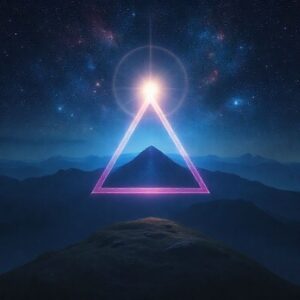
2. The Primordial Dichotomy: Triangle vs. Upside-Down Triangle
To fully appreciate the significance of the inverted triangle, we must first understand its counterpart. The upward-pointing triangle (△) is a symbol of aspiration, fire, masculinity, and active energy. It represents the pursuit of higher consciousness, the ascent of the spirit towards the heavens, and the outward, projective force of the will. It is the blade, the spear, the mountain peak, and the flame reaching for the sky.
In stark contrast, the upside-down triangle (▽) embodies a complementary, yet opposite, set of principles. It is the symbol of:
-
Receptivity: It is open to receiving from above, acting as a cup or a vessel.
-
Descent: It signifies the movement of spirit into matter, consciousness descending into form.
-
The Feminine: It is universally recognized as a symbol of the Divine Feminine, the Great Mother, and the womb.
-
Water and Earth: It represents the passive, nurturing, and formative elements.
-
The Subconscious: It points toward the hidden, intuitive, and emotional realms within.
This dichotomy is not a hierarchy but a essential duality. One cannot exist without the other. The projective, fiery energy of the upward triangle needs the receptive, watery energy of the downward triangle to be grounded, contained, and given form. They are the sacred marriage of Yang and Yin, Shiva and Shakti, the penetrative and the generative.
The Sacred Duality of Triangles
| Feature | Upward-Pointing Triangle (△) | Upside-Down Triangle (▽) |
|---|---|---|
| Primary Direction | Ascent, Rising | Descent, Grounding |
| Elemental Association | Fire, Air | Water, Earth |
| Energetic Quality | Active, Projective, Masculine | Receptive, Containing, Feminine |
| Spiritual Principle | Spirit descending into Matter | Spirit descending into Matter |
| Symbolic Forms | Blade, Mountain, Flame, Tower | Chalice, Vessel, Womb, Cave, Valley |
| Psychological Aspect | Conscious Mind, Will, Action | Subconscious Mind, Intuition, Emotion |
| Chakra Association | Third Eye & Crown (Higher Chakras) | Root & Sacral Chakras (Lower Chakras) |
3. The Vessel of the Divine Feminine: Receptivity, Intuition, and the Womb of Creation
Perhaps the most pervasive and powerful meaning of the upside-down triangle is its representation of the Divine Feminine. Across cultures and epochs, this simple shape has been a glyph for the creative and receptive power of the goddess, the earth mother, and the feminine principle in the cosmos.
The inverted triangle visually mimics the pubic triangle, a universal and ancient symbol of the female generative power. It is, in its most fundamental sense, the Womb of Creation. It is not an empty void, but a fertile, dark, and potential-filled space where life is conceived, nurtured, and brought into being. This is not creation through forceful action, but through patient, magnetic, and intelligent receptivity. The womb receives the seed and, through its own innate wisdom, transforms it into a complex, living being. Similarly, the inverted triangle symbolizes the power to receive inspiration, energy, and spirit and to give it tangible form.
This feminine principle is also deeply tied to Intuition. While the upward triangle relates to linear, logical thought, the inverted triangle points down into the body and the subconscious, the wellspring of intuitive knowing. It is the “gut feeling,” the deep knowing that bypasses rational analysis. To align with this symbol is to honor the wisdom that arises from stillness, from listening to the body, and from trusting the inner voice that speaks not in words, but in sensations and synchronicities.
Furthermore, it represents Nurturing and Sustenance. Just as a mother nourishes her child, the receptive energy of the inverted triangle holds, contains, and sustains life. It is the vessel that holds water, the earth that holds the seed, the heart that holds emotion. In a world that often prizes output over input and speaking over listening, the upside-down triangle reminds us of the profound strength found in receiving, in holding space, and in nurturing ourselves and others.
4. The Alchemy of Descent: The Water Element and the Subconscious Mind
Alchemy, the ancient art of inner transformation, provides a rich symbolic language for understanding the upside-down triangle. In alchemical tradition, the symbol is unequivocally known as the sign for Water.
Water is the element of emotion, flow, purification, and the subconscious. It is formless yet takes the shape of any container. It is soft, yet it can wear away the hardest stone. The upside-down triangle, as the symbol for water, calls us to explore the depths of our own emotional and psychic landscape.
The Journey into the Subconscious: The downward point is a direct arrow into the hidden parts of ourselves—the memories, fears, desires, and primal instincts that reside beneath the surface of our conscious awareness. This is not a journey to be feared, but one of profound healing. By consciously “descending” through meditation, dream work, or shadow work, we can bring light to these dark waters, understanding and integrating the fragmented parts of our psyche. This process is the alchemical solve (to dissolve), where the rigid structures of the ego are broken down in the watery depths, preparing the soul for its rebirth.
Purification and Fluidity: Water cleanses. The upside-down triangle can be seen as a funnel through which divine energy or consciousness flows down to purify the emotional body. It invites us to let go of stagnant emotions, old grudges, and rigid beliefs, allowing them to be washed away in the continuous flow of life. It also teaches the virtue of fluidity—to adapt, to yield, and to flow around obstacles rather than confronting them with rigid force, much like a river flowing around rocks in its path.
The Union of Opposites: In more complex alchemical diagrams, the upward triangle of Fire and the downward triangle of Water are often shown interlaced. This sacred marriage, known as conjunctio oppositorum, is the ultimate goal of the alchemical work. It represents the fusion of spirit and soul, consciousness and the unconscious, will and surrender, resulting in the creation of the enlightened “Philosopher’s Stone” or the integrated Self.
5. Grounding the Spirit: The Root Chakra and Connection to Earth
While the upward triangle seeks the heavens, the inverted triangle is firmly anchored on the earth. This makes it a powerful symbol for grounding and our connection to the physical plane. In the Hindu and Tantric traditions, this association is most clearly seen in the chakra system.
The Muladhara, or Root Chakra, located at the base of the spine, is our foundation. It is symbolized by a red, four-petaled lotus, and while its primary symbol is not an inverted triangle, the energy it represents is perfectly aligned with it. The Root Chakra is about survival, safety, stability, and our connection to the physical world—our body, our home, and the earth itself. The downward-pointing energy of the inverted triangle mirrors the Root Chakra’s function of rooting our spiritual energy into the material realm.
A person with a balanced Root Chakra energy (the energy of the inverted triangle) feels secure, present, and connected. They are able to manifest their dreams into reality because they are well-grounded. An imbalance, however, can lead to feelings of anxiety, fear, disconnection, and a lack of focus—a state of being “ungrounded.”
Using the symbol of the upside-down triangle in meditation or visualization can be a powerful tool for healing this chakra. One can imagine a red, inverted triangle at the base of the spine, its point extending deep into the center of the earth, drawing up stabilizing, nourishing energy. It serves as a spiritual anchor, reminding us that true spirituality is not an escape from the world, but a deeper, more sacred engagement with it.
6. The Chalice and The Mountain: A Comparative Symbolism
The power of the upside-down triangle is further illuminated when we examine its symbolic counterparts in myth and religion: the Chalice and the Mountain.
The Chalice (The Holy Grail): The Chalice is the ultimate symbol of the receptive vessel. In the Arthurian legends, the Holy Grail is not a trophy to be won by force, but a sacred object that reveals itself only to the pure of heart. The quest for the Grail is an inward journey, a descent into the forest of the self to heal the “Wounded King” and the barren “Wasteland”—both symbols of a fractured psyche and a disconnected, infertile world. The Grail, often depicted as a cup or chalice, is a classic representation of the upside-down triangle. It holds the divine blood or elixir of life, representing the receptive feminine principle that contains the essence of spirit. The knight who succeeds is not the strongest, but the one who asks the healing question, demonstrating compassion and receptivity.
The Mountain: The Mountain is the classic symbol of the upward-pointing triangle—ascent, struggle, and transcendence. Moses receives the commandments on Mount Sinai; Buddha attains enlightenment under the Bodhi tree on a raised seat of earth; Greek gods reside on Mount Olympus. The spiritual path of the mountain is one of effort, discipline, and rising above the mundane.
The inverted triangle offers a complementary path: the path of The Valley. If the mountain is about reaching the summit, the valley is about embracing the low places. It is in the valleys that water collects and life flourishes. It is a place of humility, fertility, and quiet strength. This “Via Negativa” or “Negative Path” in mysticism values surrender, emptiness, and becoming a vessel for the divine, rather than actively seeking to grasp it. The upside-down triangle, therefore, champions the spirituality of the valley, the cave, and the chalice—a path of profound depth and nurturing stillness.
7. Sacred Geometry: The Upside-Down Triangle in the Sri Yantra and The Star of David
The upside-down triangle rarely exists in isolation within sacred art. Its most profound expressions are found in its interplay with other shapes, creating powerful geometric mandalas for meditation.
The Sri Yantra: This is one of the most complex and revered sacred geometric figures in Hinduism, representing the entire cosmos and the body of the Goddess. At its core are nine interlocking triangles. Five of these triangles point downward (Shakti triangles, representing the Divine Feminine), and four point upward (Shiva triangles, representing the Divine Masculine). Their intricate overlap creates 43 small triangles, symbolizing the process of cosmic creation. The downward-pointing Shakti triangles are the very womb of the universe from which all manifestation arises. The entire Sri Yantra is a visual representation of the dynamic union of the receptive (inverted triangle) and projective (upright triangle) principles, whose interplay generates the myriad forms of existence.
The Star of David (Magen David): Composed of two overlapping triangles—one pointing up and one pointing down—the Star of David is a potent symbol of balance and harmony. The upward triangle represents the divine reaching downward (God reaching toward humanity), the element of fire, and the masculine. The downward triangle represents the earthly reaching upward (humanity aspiring toward God), the element of water, and the feminine. Their union symbolizes the integrated human being, the marriage of heaven and earth, and the perfect balance between spiritual and material, fire and water, action and reception. The inverted triangle here is indispensable, providing the necessary counterbalance to create a stable, holistic symbol.
8. The Alchemical Symbol for Water: Purification, Fluidity, and Emotional Transformation
As briefly mentioned earlier, the upside-down triangle’s role in alchemy is specific and crucial. It is the standard glyph for the element Water. In the alchemical process, which is a metaphor for psychological and spiritual refinement, the four classical elements (Earth, Air, Fire, Water) all play a role.
-
Earth (⬇︎) is the base material, the unrefined self.
-
Air () is the intellect and communication.
-
Fire (▲) is the purifying passion and will.
-
Water (▽) is the solvent of transformation.
The Water element, symbolized by the inverted triangle, is responsible for the stage of dissolution or solution. This is where the fixed, rigid aspects of the personality (the “lead”) are dissolved back into their liquid, primal state. It is a necessary stage of breakdown that precedes rebirth. This can feel like an emotional crisis, a period of grief, or a “dark night of the soul” where old structures fall away. The alchemist understands that this watery dissolution is not a failure but a vital part of the process. By surrendering to this flow, by allowing the old self to be broken down in the waters of the unconscious, the soul becomes malleable and ready to be reshaped into a higher form (“gold”).
9. A Tool for Manifestation: Directing Energy Inward and Downward
In many modern spiritual practices, particularly those influenced by the Law of Attraction, there is a strong emphasis on “raising your vibration” and sending energy outward. The upside-down triangle introduces a critical, and often missing, piece to the manifestation process: the receptive container.
Manifestation is not just about projecting desire; it is about creating a space for that desire to land, take root, and grow. The inverted triangle provides the blueprint for this.
The Process:
-
Projection (Upward Triangle): You clarify your intention and send it out with focused will (fire/air energy).
-
Reception (Downward Triangle): You then shift your energy to become a receptive vessel. You cultivate a deep sense of trust and allowing, knowing that the universe will respond. You “descend” into a state of feeling the wish fulfilled, as if your desire is already real.
-
Grounding (Downward Triangle): You direct that received energy down into the earth, into your root chakra, anchoring your vision into the physical plane through practical, grounded actions.
Without the receptive, grounding phase of the inverted triangle, manifestation efforts can remain ungrounded fantasies, lacking the substance to become tangible reality. The symbol teaches us that to bring spirit into matter, we must become like the earth—stable, fertile, and receptive.
10. The Upside-Down Triangle in Dreams and Meditation
Encountering this symbol in dreams or using it in meditation can be a powerful sign from your subconscious.
In Dreams: Dreaming of an upside-down triangle can indicate:
-
A call to connect with your feminine side, whether you are male or female (i.e., to be more receptive, intuitive, or creative).
-
A need for greater grounding and stability in your waking life.
-
A process of deep emotional purification or a confrontation with your subconscious.
-
A preparation for a new creative project or a “birth” of some kind in your life.
-
A message to honor your body and its innate wisdom.
In Meditation:
-
For Grounding: Visualize a red or black inverted triangle at your root chakra. See its point as a taproot going deep into the earth, drawing up stable, calming energy.
-
For Receptivity: Visualize a golden inverted triangle over your crown chakra, its wide base open to the cosmos, receiving divine light, inspiration, and healing energy. Then guide that energy down through your body.
-
For Emotional Healing: Imagine a soft, blue, inverted triangle in your heart or sacral space. See it as a pool of calming water, dissolving and washing away any emotional pain or anxiety.
11. Modern Context: From Feminist Spirituality to Corporate Logos
The upside-down triangle has been reclaimed and repurposed in the modern world, carrying layers of new meaning.
-
Feminist and Goddess Spirituality: It has become a powerful icon for the re-emergence of the Divine Feminine. It is used to represent female empowerment, not as a dominance over the masculine, but as a reclamation of the innate power of receptivity, intuition, and creation. It symbolizes a return to a more balanced, earth-honoring spirituality.
-
LGBTQ+ Community: Historically, the inverted triangle was used in a negative context, most infamously in Nazi concentration camps to identify various groups, including gay men. In a powerful act of reclamation, the LGBTQ+ community, particularly the gay community, adopted the pink inverted triangle in the 1970s and 80s as a symbol of pride and resistance against oppression. It stands as a testament to turning a symbol of shame into one of strength and identity.
-
Corporate and Design World: Stripped of its spiritual context, the shape is often used in logos and design for its sense of stability (a wide base) and dynamic direction. It can imply a funnel (directing flow), a location pin (pointing to a specific place), or simply a bold, geometric element.
Understanding the spiritual roots of the symbol allows us to see these modern uses through a more nuanced lens, recognizing the enduring power of its fundamental meaning: stability, receptivity, and a pointed focus.
12. Conclusion: Integrating the Symbol into Your Spiritual Practice
The journey through the spiritual landscape of the upside-down triangle reveals a symbol of immense depth and practical value. It is not merely an inverted form but the key to a balanced spiritual life.
-
It is the sacred vessel that teaches us the power of receiving, nurturing, and containing.
-
It is the anchor that grounds fleeting spirit into tangible reality, healing the rift between heaven and earth.
-
It is the guide that leads us inward to the wisdom of the subconscious and the healing waters of emotion.
By consciously working with this symbol—through meditation, contemplation, or simply by acknowledging its principles—we invite more balance into our lives. We learn to value the descent as much as the ascent, the valley as much as the mountain, and the quiet power of the chalice as much as the active force of the blade. In a world out of balance, the upside-down triangle offers a timeless wisdom: that our greatest power often lies in our capacity to be open, to be still, and to be rooted.
13. Frequently Asked Questions (FAQs)
Q1: Is the upside-down triangle a negative or evil symbol?
A: No, not inherently. Like any symbol, its meaning is determined by context and intent. In its core spiritual traditions, it is a profoundly positive symbol of the Divine Feminine, grounding, and receptivity. While it has been misused in negative historical contexts (e.g., Nazi Germany), its fundamental meaning remains one of balance and creative power.
Q2: How is the upside-down triangle different from the upward-pointing one?
A: They represent a sacred duality. The upward triangle (△) is active, masculine, fiery, and represents ascent and spirit. The upside-down triangle (▽) is receptive, feminine, watery/earthy, and represents descent, grounding, and matter. They are two halves of a whole.
Q3: How can I use the upside-down triangle in my daily meditation?
A: You can visualize it to enhance different qualities:
-
For Grounding: See a red triangle at your tailbone, pointing into the earth.
-
For Emotional Calm: Imagine a blue triangle in your belly, calming your emotions like still water.
-
For Receptivity: Visualize a golden triangle at your crown, open to receiving divine guidance.
Q4: What does it mean if I keep seeing upside-down triangles?
A: This could be a synchronicity, a message from your subconscious or the universe. It may be a prompt to become more receptive, to focus on grounding yourself, to honor your intuition, or to pay attention to a creative project or emotional process that is unfolding within you.
Q5: Is the upside-down triangle associated with a specific religion?
A: It is not exclusive to one religion but is a universal symbol. It appears prominently in Hinduism (Sri Yantra), Judaism (Star of David), Alchemy (symbol for Water), and modern Pagan and Goddess spirituality, among others.