Imagine a plant so tenacious, so utterly defiant of death, that it can lie dormant as a dry, brittle ball for decades—even a century—only to unfurl into vibrant green life with just a few drops of water. This is not a botanical myth but the living reality of the Rose of Jericho (Selaginella lepidophylla or Anastatica hierochuntica). To the casual observer, it is a curiosity of nature; to the spiritual seeker, it is one of the most powerful and ancient talismans of transformation ever gifted by the natural world. Its very biology is a sermon, its lifecycle a sacred text written in the language of resilience.
This article is not merely a compilation of known facts but an exclusive, deep dive into the soul of this remarkable plant. We will journey beyond its physical resurrection to explore the rich, multifaceted spiritual meanings it holds across continents and cultures. From the deserts of the Middle East to the altars of contemporary spiritual practitioners, the Rose of Jericho serves as a universal symbol of hope, a tool for manifestation, and a bridge between the mundane and the miraculous. We will unravel its secrets, from its historical veneration in ancient rites to its step-by-step use in modern rituals for blessing, protection, and attracting abundance. Prepare to discover why this “resurrection plant” has been, and continues to be, a cherished companion on humanity’s spiritual path.
2. Botanical Marvel: The Science Behind the Resurrection Plant
To fully appreciate its spiritual symbolism, one must first understand the breathtaking science that makes it possible. The term “Rose of Jericho” commonly refers to two distinct, though similar, plants:
-
The True Rose of Jericho (Anastatica hierochuntica): Native to the deserts of the Middle East and North Africa, this is the plant most closely associated with biblical lore. It is a member of the Brassicaceae family. After its annual lifecycle, it dies, its stems curling inward into a tight, ball-like shape. This ball is severed at the root and becomes a “tumbleweed,” dispersed by the wind. It does not truly resurrect itself; when exposed to moisture, its dead stems uncurl, releasing seeds for a new generation. Its symbolism is tied to this act of scattering life.
-
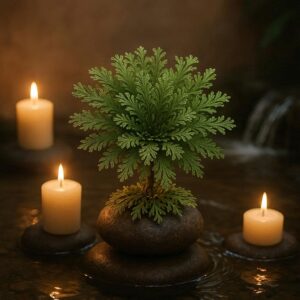
The Resurrection Plant (Selaginella lepidophylla): Native to the Chihuahuan Desert of Mexico and the Southwestern United States, this is a spikemoss (a type of lycophyte). This is the plant most commonly sold today for spiritual and decorative purposes. It undergoes a far more dramatic “resurrection.” During drought, it enters a state of cryptobiosis—a complete, reversible metabolic shutdown. Its tissues dehydrate to survive, and the plant curls into a tight ball. When water returns, it can rehydrate, unfurl, and return to its green, photosynthetic state within hours, truly “coming back to life” from a dormant state.
It is Selaginella lepidophylla, with its genuine cycle of death-and-revival, that fuels most modern spiritual practice. This biological miracle is the foundational metaphor for all its spiritual applications: revival, renewal, and the unstoppable return of life and fortune.
3. Historical Roots: Ancient Cross-Cultural Veneration
The spiritual legacy of the Rose of Jericho is as old as civilization in arid lands. Its ability to “return from the dead” made it an object of wonder and sacred reverence.
-
Ancient Egypt: Associated with eternal life and resurrection, it may have been used in funeral rites to symbolize the soul’s journey and rebirth in the afterlife, mirroring the solar cycle of death (sunset) and rebirth (sunrise).
-
Medieval Alchemy & European Folklore: Known as “Santa Rosa” or “Mary’s Flower,” it was cherished by Crusaders and pilgrims returning from the Holy Land. It was kept in homes as a sacred relic for protection, used to bless childbirth, and was believed to bloom at midnight on Christmas Eve.
-
Indigenous Practices of the Americas: While Selaginella had its own place in local medicinal and practical uses, its incorporation into complex spiritual systems often merged with introduced traditions over time.
This deep historical tapestry confirms the Rose of Jericho is not a passing New Age trend but an archetypal symbol embedded in the human psyche.
4. Core Spiritual Meanings: A Tapestry of Symbolism
From its historical and biological roots bloom a perennial garden of spiritual meanings:
-
Resurrection & Rebirth: The paramount symbol. It represents emerging from a “barren period,” recovering from illness, grief, or financial hardship, and the promise of spring after a personal winter.
-
Unbreakable Resilience & Endurance: It teaches the lesson of curling inward for self-preservation during trials, and the wisdom of knowing when to unfurl and bloom again.
-
Purification & Cleansing: The water that activates it is often blessed or charged, turning the plant into a living filter for negative energy in a home or for one’s own spiritual field.
-
Manifestation & Amplification: It acts as a spiritual battery. Written petitions, crystals, or talismans placed in its center or under its dish are believed to be charged with its potent, life-giving energy.
-
Divine Protection & Blessing: A hydrated Rose in the home is considered a vigilant guardian, absorbing harm and creating a sacred, blessed space.
-
Fertility & Abundance: Its rapid green growth symbolizes the flourishing of family, ideas, projects, and material prosperity.
5. The Rose of Jericho in Christian Tradition
Here, the plant is intimately linked to the land of the Bible. It is called “Mary’s Rose” or the “Hand of Mary,” with legends stating it first bloomed where the Holy Family rested during the flight to Egypt. Its curling and unfurling are seen as a mirror of Christ’s death and resurrection, making it a powerful Easter symbol. It is used to bless homes, often hydrated in holy water during Lent and displayed as a centerpiece at Easter to celebrate Christ’s triumph over death.
6. The Rose of Jericho in Hoodoo, Rootwork, and African Diasporic Traditions
In these powerful African-American conjure traditions, the Rose (often called the “Resurrection Plant” or “Miracle Plant”) is a cornerstone of practical spiritual work. Its energy is directed with clear intention.
-
Money Drawing & Business Luck: Placed in the cash register or hydrated with coins in its water to “grow” wealth.
-
Uncrossing & Removing Curses: Used in baths and floor washes to break hexes and restore one’s natural spiritual state.
-
Court Case & Legal Matters: Carried or kept hydrated to ensure a favorable outcome, symbolizing the “opening” of the case in one’s favor.
-
Returning Lost Loves or Items: Petitions are placed within it, calling back what has been lost.
7. The Rose of Jericho in Wicca, Paganism, and Modern Witchcraft
Modern Pagans see the Rose as a embodiment of Earth magic and cyclical power.
-
Elemental Magic: A perfect fusion of Earth (the plant) and Water (its activator), with Air (its dispersal) and Fire (the desert sun) in its story.
-
Altar Centerpiece: Used on altars for Sabbats, especially Ostara (Spring Equinox) and Samhain (to honor death and rebirth).
-
Spellwork Enhancer: Used to charge crystals, empower poppets, or add potent resurrection energy to any spell for new beginnings.
8. The Rose of Jericho in Hispanic & Latin American Folk Spirituality
Known as “Santa Rosa” or “Flor de la Vida” (Flower of Life), it is a staple in botánicas and home altars.
-
Santería/Lucumí: May be offered to certain orishas associated with healing and prosperity.
-
Curanderismo: Used in limpias (spiritual cleansings) and rituals for healing emotional wounds.
-
Home Blessing: Passed around the home while praying, then placed in water to establish protection.
9. Practical Spiritual Uses: Rituals, Prayers, and Ceremonies
A. Basic Activation Ritual:
-
Set Intention: Hold the dry ball, meditate on your purpose (e.g., “I activate this Rose for healing and renewal”).
-
Prepare Sacred Water: Use clean, filtered water. You may add a pinch of sea salt (for purification), a drop of holy water, or charge it under moonlight.
-
The Placement: Place the Rose in a shallow bowl or plate. Pour water slowly into the center, witnessing its first miraculous unfurling.
-
Speak Your Truth: As it opens, recite a prayer, psalm, or your own affirmation.
B. Ritual for Home Blessing & Protection:
Hydrate your Rose on a Thursday (day of Jupiter for expansion) or Sunday (day of the Sun for power). Carry it clockwise through each room, praying for light and protection in each space. Place it centrally in the home (e.g., kitchen, living room).
C. Ritual for Attracting Prosperity:
-
Place three coins (e.g., pennies, silver dimes) in the bottom of a green or gold dish.
-
Place the dry Rose on top.
-
Hydrate with water charged under a New Moon (for new beginnings) or a Full Moon (for abundance).
-
Place a citrine or pyrite crystal beside it. Each time you add water, affirm, “My prosperity grows and flows easily.”
D. Ritual for Emotional or Spiritual Healing:
-
Write a word representing your pain (e.g., “grief,” “betrayal”) on a small piece of paper with a pencil.
-
Place the dry Rose over the paper in a white bowl.
-
Hydrate with pure water, visualizing the plant absorbing and transforming that pain into life force.
-
After 3-7 days, respectfully burn the paper, releasing the energy as the plant thrives.
10. Caring for Your Spiritual Companion
-
Hydration Cycle: Keep it hydrated for 1-2 weeks, ensuring it always has water. Change water weekly to prevent mold.
-
Dormancy Period: To rest it, remove from water, let it dry completely in a sunny spot (1-2 weeks) until it curls back into a ball. Store in a cloth bag.
-
Respecting the Cycle: This dormancy is crucial. It mirrors necessary periods of rest in our own lives and renews the plant’s potency.
11. Ethical Sourcing and Cultural Respect
Seek sellers who source sustainably, especially for Anastatica hierochuntica, which is often wild-harvested. When practicing rituals from closed cultures (like Hoodoo), approach with deep respect, understanding their historical context, and avoid commodification.
12. Historical & Cultural Significance Table
| Culture/Tradition | Primary Name(s) | Core Symbolic Meaning | Typical Ritual Use |
|---|---|---|---|
| Christian Folk Tradition | Mary’s Rose, Dinosaur Plant | Resurrection of Christ, Divine Protection | Blessed at Easter, home blessing, placed in nativity scenes. |
| Hoodoo & Conjure | Resurrection Plant, Miracle Plant | Uncrossing, Money Drawing, Court Case Victory | Used in floor washes, placed with coins, carried in mojo bags. |
| Modern Witchcraft | Resurrection Plant, Rose of Jericho | Earth Magic, Cyclical Rebirth, Spell Amplification | Altar centerpiece for Sabbats, used to charge crystals & tools. |
| Hispanic Folk Magic (Curanderismo) | Santa Rosa, Flor de la Vida | Healing (Sanación), Blessing (Bendición), Luck (Suerte) | Used in limpias, placed in entryways, gifted for new homes. |
| General New Age Spirituality | Rose of Jericho, Resurrection Fern | Personal Resilience, Spiritual Awakening, Manifestation | Meditation focus, intention-setting rituals, space cleansing. |
13. Conclusion: The Everlasting Symbol
The Rose of Jericho is more than a plant; it is a living parable. Its journey from dust to verdancy mirrors our own capacity for renewal against all odds. It teaches us that dormancy is not death, that with the water of intention and faith, we too can unfurl once more. By welcoming this ancient spiritual companion into your practice, you align yourself with the eternal rhythms of death, rebirth, and resilient life—a timeless truth held in a humble, miraculous ball of foliage.
14. Frequently Asked Questions (FAQs)
Q1: How long can a Rose of Jericho stay dormant and still revive?
A: With proper care, it can survive decades in its dry state. There are reports of specimens over 50 years old successfully reviving, a testament to its incredible durability.
Q2: Can I use the same Rose of Jericho for multiple different intentions?
A: It is generally recommended to dedicate one plant to a broad theme (e.g., abundance, protection) for consistency. If you wish to work on a completely new intention, give the plant a full dormancy rest period before reactivating it with the new purpose.
Q3: My Rose of Jericho has a slight odor or slimy stems. What should I do?
A: This indicates stagnant water or the start of mold. Immediately remove it from the water, rinse it gently under cool water, and allow it to dry completely for 1-2 weeks. For the next activation, use a cleaner dish and change the water every 3-4 days.
Q4: Is it bad luck if my Rose of Jericho doesn’t open?
A: Not at all. First, ensure you have the correct plant (Selaginella lepidophylla). If it is the right plant and fails to open, it may have reached the end of its very long life. Thank it for its service and return it to the earth (compost or garden). Its completion of the cycle is natural, not ominous.
Q5: Can I plant it in soil after it opens?
A: No. Unlike typical plants, it draws moisture directly through its stems. Planting it in soil while hydrated will cause it to rot. It is adapted to live on rocky surfaces and should only be hydrated in a shallow dish of water.