They strut across city squares with a quiet confidence, their iridescent necks catching the light, their soft coos a gentle soundtrack to the urban hustle. To many, the pigeon is merely a “rat with wings,” an unassuming and often overlooked fixture of the concrete landscape. Yet, this perception is a profound spiritual blindness, a forgetting of a legacy that is both ancient and majestic. The common rock dove, Columba livia, is in fact the original dove, the fount from which all dove symbolism flows. To dismiss the pigeon is to ignore one of humanity’s oldest and most sacred companions. This article is an invitation to look again, to peer beyond the soot-stained feathers and see the urban sage for what it truly is: a powerful spiritual emissary, a symbol of unwavering love, a master of navigation, and a resilient testament to life’s ability to thrive amidst chaos. We will embark on a comprehensive journey, spanning millennia and continents, to reclaim the pigeon’s rightful place in the pantheon of spiritual symbols, exploring its roles as a divine messenger, a symbol of sacrifice, a guide to the inner home, and a living lesson in adaptability and peace.
Chapter 1: Messenger of the Gods – The Pigeon in Ancient Mythology and Religion
Long before they graced our city ledges, pigeons were revered in the temples and palaces of the ancient world. Their unparalleled homing ability marked them as creatures capable of traversing the boundaries between the earthly and the divine, making them the perfect celestial couriers.
1.1. Mesopotamia and the Ancient Near East: The Soul-Bird and Sacred Prostitute
In the cradle of civilization, the pigeon was deeply entwined with the great goddess Ishtar (Inanna). As the goddess of love, war, and fertility, Ishtar’s sacred animal was the pigeon. Temples dedicated to her were said to be filled with them. The pigeon was seen as a representation of the soul, perhaps due to its ability to fly high into the sky, towards the realm of the gods. Furthermore, the term “pigeon” was a common epithet for the priestesses of Ishtar, the qadishtu, who served in her temples. This connection linked the bird to sacred sexuality, fertility, and the powerful, generative forces of the feminine divine.
1.2. Ancient Greece and Rome: Avatars of Aphrodite and Venus, Oracles of Fortune
The Greeks and Romans inherited and refined this symbolism. The pigeon was the sacred bird of Aphrodite and Venus, the goddesses of love and beauty. Myth tells that her chariot was drawn by a team of dazzling pigeons. This association cemented the pigeon’s connection to love, desire, and beauty. Its presence was an omen of romantic fortune. Beyond love, pigeons were also used for divination, or augury, in the ancient world. The flight patterns, feeding behaviors, and number of pigeons in a flock were carefully observed by priests to predict the future and discern the will of the gods. A pigeon flying from the east might be a favorable sign, while one from the west could signal misfortune.
1.3. Christianity: The Holy Spirit, Baptism, and the Symbol of Deliverance
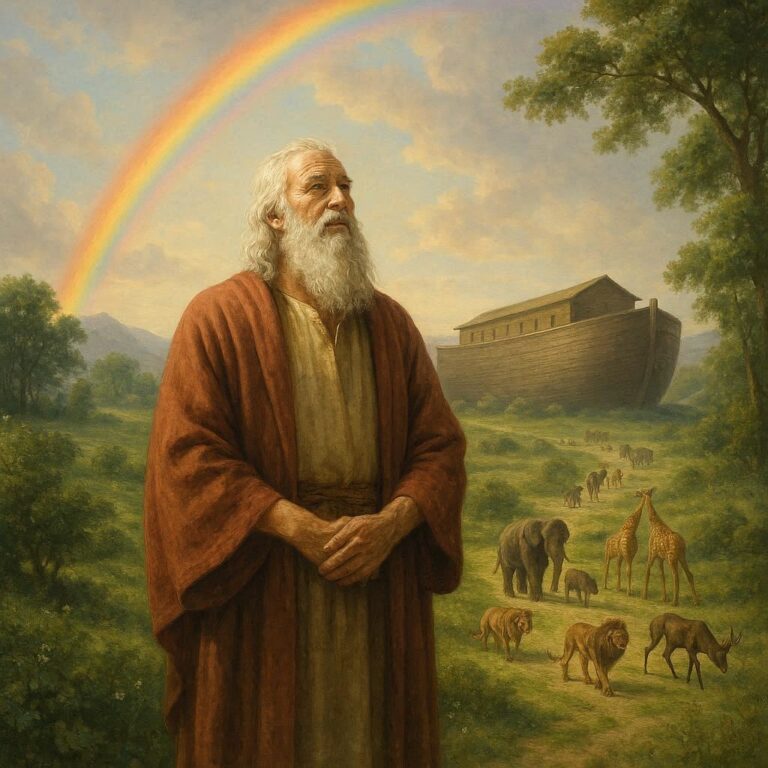
In Christianity, the pigeon’s symbolism was purified and elevated to its highest form—as the embodiment of the Holy Spirit. In the New Testament, during the baptism of Jesus, the Gospels describe the Holy Spirit descending from heaven “like a dove” (Matthew 3:16). This moment forever linked the bird to divine inspiration, purity, and the direct presence of God. It represents the soul’s innocence and the peace that comes from spiritual rebirth. Furthermore, in the story of Noah’s Ark, a dove is sent out to find dry land and returns with a fresh olive leaf, signaling God’s forgiveness and the end of the great flood (Genesis 8:11). Here, the pigeon/dove is a messenger of hope, peace, and God’s covenant with humanity.
1.4. Islam: The Divine Helper and the Unbreakable Bond with the Prophet
Islamic tradition holds the pigeon in high esteem due to a pivotal event in the life of the Prophet Muhammad. During the Hijra, his migration from Mecca to Medina, he and his companion Abu Bakr hid in a cave from their pursuers. As the Quraysh search party approached, they noticed a pigeon had built a nest and laid eggs at the cave’s entrance, and a spider had woven a web across it. Seeing this, the pursuers concluded that no one could have recently entered the cave and moved on. The pigeon, in this story, was an instrument of God’s protection, a divine helper that ensured the Prophet’s safety and the eventual success of Islam.
1.5. Hinduism: Kamadeva’s Steed and the Vahana of Desire
In Hindu mythology, the pigeon is associated with Kamadeva, the god of human love and desire, often described as the Indian equivalent of Cupid. Kamadeva rides upon a parrot or a pigeon, and the bird is thus seen as his vahana, or vehicle. This links the pigeon to the powerful, driving force of love, attraction, and the sensual pleasures of life. It is a symbol of the yearning that connects souls and the creative impulse that sustains the world.
1.6. Indigenous Traditions: Scouts, Weather Prophets, and Community Keepers
Many Native American tribes held the wild pigeon, particularly the now-extinct Passenger Pigeon, in deep regard. Their massive, migratory flocks were seen as a symbol of abundance and the interconnectedness of all life. Some tribes saw them as scouts or messengers due to their keen navigational skills. Their behavior was also closely watched as a predictor of weather and seasonal changes, making them a practical as well as a spiritual guide.
Chapter 2: A Spectrum of Feathers – Interpreting Pigeon Encounters and Omens
When a pigeon enters your awareness in a significant way, it is rarely a random event. Spirit animals and omens communicate through synchronicity. Understanding the context of the encounter is key to deciphering the message.
2.1. A Pigeon Crosses Your Path: A Nudge to Pay Attention
This is the most common omen. A pigeon crossing your path is a gentle tap on the shoulder from the universe. It asks you to slow down and be present. Are you rushing through life, missing the subtle signs and guidance being offered? The pigeon reminds you that important messages often come in humble packages. It may also be prompting you to think about your direction—are you on the right path home to your true self?
2.2. A Pigeon Visits Your Home or Window: Messages from the Ancestral Realm
Your home is your sanctuary, your personal nest. When a pigeon visits it, especially by lingering on a windowsill or balcony, the message is deeply personal. This often signifies a message from the spirit world, particularly from ancestors or departed loved ones. It is a sign of their watchful presence and a reassurance of their love and protection. It can also indicate that a period of domestic harmony is coming, or that your home is a safe and nurturing space.
2.3. A Pigeon Following You: The Persistence of Spirit
If you feel a pigeon is deliberately following you, or if you keep seeing them repeatedly in different locations, pay close attention. The spirit world is not being subtle. This is a persistent message you have been overlooking. The pigeon, with its incredible homing instinct, may be trying to guide you back to your spiritual “home”—your core values, your passion, or a path you have abandoned. It’s a call to remember who you are.
2.4. Hearing Pigeon Coos: The Sound of Inner Reconciliation
The soft, rhythmic cooing of a pigeon is a sound of profound comfort and peace. Spiritually, this sound is a balm for the heart. It encourages you to forgive, to make peace with yourself and others, and to find harmony in your relationships. If you are in conflict, the pigeon’s coo is a message to seek reconciliation. It is also a prompt to listen to your own inner voice, the gentle guidance of your heart that is often drowned out by the noise of the mind.
2.5. A Pigeon Flying Into Your Window: A Potent, Ambiguous Sign
This can be a startling event. While it can sometimes result in injury or death (addressed below), a pigeon simply flying into and bouncing off a window is a powerful, urgent wake-up call. The window is a barrier between the inner and outer worlds. The pigeon is trying to break through to you. The message is: “Wake up! You are not seeing something important. A situation or an opportunity is right in front of you, but you are perceiving it as a barrier.” It is a call to shatter illusions and see reality with clarity.
2.6. A Dead Pigeon: The End of a Cycle and the Promise of Renewal
Finding a dead pigeon can be unsettling, but in spiritual symbolism, death is rarely an end; it is a transformation. This encounter signifies the conclusive end of a cycle, relationship, or project. Something in your life has run its course. While there may be grief, the pigeon’s spirit asks you to release it with grace. Its sacrifice makes way for new growth. Remember the pigeon’s link to the maternal and nurturing; the death of this form may be necessary to nourish a new beginning.
2.7. Dreaming of Pigeons: A Subconscious Dialogue with the Soul
Dreams of pigeons are direct communications from your subconscious or higher self.
-
A Flying Pigeon: Symbolizes freedom, spiritual aspiration, and rising above a situation.
-
A Feeding Pigeon: Suggests a need for nurturing, or that you are being spiritually nourished.
-
A White Pigeon: A clear message of peace, spiritual blessing, or divine inspiration.
-
A Flock of Pigeons: Represents your social circle, community, or the collective consciousness. Are you working in harmony with your flock?
-
A Trapped or Injured Pigeon: Indicates that your own spirit, your ability to love, or your peace of mind feels trapped or wounded.
Chapter 3: The Alchemy of Color – A Detailed Guide to Pigeon Symbolism
Color is a primary language of the spirit world. The specific coloration of a pigeon you encounter adds a profound layer of meaning to its message.
The Spiritual Spectrum of Pigeon Colors
| Color | Primary Meanings | Contextual Message | Invocation For… |
|---|---|---|---|
| White | Purity, Spirit, Peace, Divinity, New Beginnings | A direct link to the divine; spiritual blessings; a clean slate. | Purification, connecting to spirit, finding inner peace, starting anew. |
| Gray | Neutrality, Compromise, The Mundane, Balance, Wisdom | Finding beauty in the ordinary; the need for diplomacy; calm wisdom. | Grounding, resolving conflict, finding balance, appreciating simple joys. |
| Black | Mystery, The Unconscious, Feminine Power, Protection | A call to explore your shadow self; deep magic; hidden wisdom. | Protection rituals, deep meditation, connecting with the divine feminine. |
| Brown | Grounding, Stability, Home, Connection to Earth, Nurturing | A focus on family, home, and the physical world; practical matters. | Strengthening family bonds, creating a stable home, financial security. |
| Iridescent | Integration, Magic, Multi-dimensionality, Complexity | You contain multitudes; embrace all aspects of yourself; magic is at work. | Personal integration, embracing uniqueness, spiritual awakening. |
3.1. White Pigeons: Purity, Spirit, and Divine Connection
The white pigeon is the quintessential symbol of purity and the Holy Spirit. Its appearance is almost always a sign of profound spiritual grace. It signifies that you are on the right path, that your intentions are pure, and that you are receiving divine protection and inspiration. Releasing white pigeons at weddings or ceremonies symbolizes the release of pure intentions and blessings into the universe.
3.2. Gray Pigeons: The Beauty of the Mundane and Neutrality
The common blue-bar gray pigeon teaches a masterful lesson: sacredness exists within the ordinary. It is the color of compromise, neutrality, and wisdom. A gray pigeon encounter may be urging you to be the peacemaker in a conflict, to see both sides of a story, and to find a balanced, middle path. It reminds us that true wisdom is often found not in dramatic revelations, but in the quiet, consistent practice of everyday life.
3.3. Black Pigeons: Mystery, the Unconscious, and Feminine Power
A black pigeon is a powerful and often misunderstood omen. It is not inherently negative. Instead, it represents the mysteries of the unconscious mind, the world of dreams, and the deep, potent energy of the divine feminine and the Crone. It is a call to explore your shadow self—the parts of you that you have repressed or hidden. It can also be a strong sign of spiritual protection, a shield against negative energies.
3.4. Brown Pigeons: Grounding, Stability, and Connection to the Earth
Brown pigeons bring our focus down to earth. Their message is about the foundations of life: home, family, security, and nurturing. If you encounter a brown pigeon, it may be a sign to focus on your domestic life, to strengthen your connection with family, or to tend to your physical and financial well-being. It is a nurturing, maternal energy that encourages you to build a stable and secure nest for yourself.
3.5. Multicolored or Iridescent Pigeons: Integration and the Complexity of Life
The shimmering, iridescent neck feathers of many pigeons are a spiritual lesson in themselves. They represent the integration of all aspects of the self—light and shadow, spiritual and material. This pigeon tells you that you do not have to be one thing. You are a complex, beautiful, and multi-faceted being. Its message is to embrace all parts of yourself and your life experience, for it is this complexity that makes you whole and uniquely beautiful.
Chapter 4: Beyond the Messenger – Core Spiritual Meanings of the Pigeon
While the role of messenger is primary, the pigeon embodies a host of other profound spiritual concepts that are essential for the modern seeker.
4.1. Peace and Harmony: More Than a Modern Cliché
The pigeon’s association with peace, popularized by Pablo Picasso, is not a modern invention but a deep archetypal truth. Its non-aggressive nature, its soft coo, and its role in the story of Noah’s Ark all point to this. Spiritually, the pigeon does not just symbolize the absence of conflict, but the active state of inner and outer harmony. It calls us to be peace, to cultivate it within our own hearts so that it may radiate outward.
4.2. Love, Devotion, and Monogamy: The Ultimate Symbol of Fidelity
Pigeons are monogamous, often mating for life. They share the duties of nest-building, incubating eggs, and feeding their young (with a unique substance called crop milk). This makes them one of the most powerful symbols of true, committed, and nurturing love in the animal kingdom. The pigeon spirit encourages us to nurture our relationships, to be devoted and faithful, and to build a “nest” of love and security with our partners and family.
4.3. Sacrifice and Nurturance: The Profound Power of the Crop Milk
A unique biological trait underscores the pigeon’s spiritual link to sacrifice. Both parent pigeons produce “crop milk,” a nutrient-rich secretion from the lining of their crop, to feed their squabs. This act of giving of their own substance is a profound symbol of selfless love and nurturance. The pigeon teaches that true love and parenting often require sacrifice, the giving of our own energy to nourish the growth of others.
4.4. Home and Homing Instinct: The Spiritual Journey Back to Self
The pigeon’s legendary homing instinct is its most mystical attribute. Scientifically, it is explained by magnetoreception and other cues, but spiritually, it represents the soul’s innate, unerring ability to find its way back to its source. The pigeon is a powerful guide for anyone feeling lost, disconnected, or off-path. It reminds you that you carry an internal GPS for your soul. Your true “home” is a state of being—of self-acceptance, peace, and alignment with your purpose.
4.5. Resilience and Adaptability: Thriving in the Urban Wilderness
From cliff-faces to city skyscrapers, the pigeon is a master of adaptation. This is not a sign of being “common” but of being incredibly resilient. The pigeon spirit animal empowers you to thrive wherever you are planted. It teaches you to make the best of your environment, to find community and resources in unlikely places, and to persist with gentle determination. It is the ultimate symbol of making a home in the wilderness of modern life.
4.6. Community and Sociability: The Wisdom of the Flock
Pigeons are rarely alone; they are flock animals. This symbolizes the importance of community, family, and social connection. The pigeon spirit reminds us that we are not meant to journey alone. There is strength, safety, and wisdom in the collective. However, it also cautions against losing your individuality in the crowd. It’s about finding the balance between being a supportive part of a community and maintaining your own unique flight path.
Chapter 5: The Pigeon as a Spiritual Guide and Totem Animal
When the pigeon appears consistently as a guide or totem animal in your life, it offers a specific set of gifts, lessons, and challenges.
5.1. Is the Pigeon Your Spirit Animal? Key Questions to Ask
-
Are you naturally a peaceful, diplomatic person who seeks to resolve conflict?
-
Do you value home, family, and deep, committed relationships above all else?
-
Are you highly adaptable, able to feel “at home” in many different environments?
-
Do you have a strong urge to nurture and care for others?
-
Are you on a journey to find your true “home” or life’s purpose?
-
Do you feel a deep connection to the sacred feminine and ancestral wisdom?
If you answered yes to many of these, the pigeon may be your spirit guide.
5.2. The Traits and Gifts of the Pigeon Totem
Those with a pigeon totem are often the heart of their family or community. You are a natural nurturer, peacemaker, and homemaker. Your gifts include:
-
Unconditional Love: You love deeply and loyally.
-
Diplomacy: You can see all sides of an argument and find a middle way.
-
Resilience: You have an incredible ability to bounce back from hardship.
-
Strong Intuition: You have a strong “homing instinct” for truth and can navigate by the compass of your heart.
-
Practical Spirituality: You find the divine in the everyday acts of cooking, cleaning, and caring for your loved ones.
5.3. Challenges and Shadow Aspects of the Pigeon Totem
Every totem has its shadow. The challenges for the pigeon spirit are:
-
Codependency: The strong focus on home and relationship can lead to losing your sense of self.
-
Passivity: The desire for peace can sometimes turn into a fear of confrontation, leading you to tolerate what you shouldn’t.
-
Getting “Stuck in the Nest”: An over-attachment to comfort and routine can prevent you from taking necessary risks and exploring new horizons.
5.4. Invoking the Pigeon’s Energy: Practical Rituals and Meditations
-
Create a Sacred Home Space: Dedicate a corner of your home as an altar for peace. Place a picture or figurine of a pigeon there, along with items that make you feel safe and nurtured.
-
Pigeon-Guided Meditation: Close your eyes and envision a pigeon. Ask it to show you the way “home” to your true self. Follow it in your mind’s eye and see where it leads you.
-
Act of Nurturance: Cook a meal for someone you love with the conscious intention of the pigeon’s nurturing energy. As you cook, infuse the food with love.
-
Carry a Gray Stone: Carry a small, smooth gray stone in your pocket. When you feel stressed or off-center, hold it and recall the pigeon’s message of finding peace and beauty in the mundane.
Conclusion: The Urban Sage – Embracing the Pigeon’s Wisdom
The pigeon, in its quiet, unassuming way, is a master spiritual teacher. It reminds us that the sacred is not separate from the so-called profane world. It walks among us, thriving in the very environments we have created. Its message is one of unwavering love, profound peace, and the incredible resilience of the spirit. It is a guide that teaches us to navigate the complexities of life with grace, to nurture our connections, and to always, always find our way back home to the peace within our own hearts. The next time you see a pigeon on a telephone wire or strutting across a city square, pause for a moment. See the urban sage. Acknowledge the divine messenger in your midst, and listen for the gentle, cooing whisper of its wisdom.
Frequently Asked Questions (FAQs)
Q1: Is seeing a pigeon a good omen?
Generally, yes. Pigeons are overwhelmingly positive symbols, representing love, peace, home, and messages from the spirit world. The specific context and color will refine the meaning, but it is rarely a negative sign.
Q2: What is the difference between a dove and a pigeon spiritually?
There is no biological distinction; they are members of the same family, Columbidae. Spiritually, any difference is a matter of human perception. “Doves” are often seen as the pure, white symbol of peace, while “pigeons” are their more grounded, urban counterparts. However, their core spiritual meanings are identical. The pigeon is the dove in its most practical, resilient, and earthly form.
Q3: A pigeon built a nest on my balcony. What does this mean?
This is a very powerful and positive sign. It means that the energies of home, family, and nurturance are strongly present around you. Your home is recognized as a safe and sacred space. It is also a direct invitation to practice the pigeon’s virtues of care and nurturance. Respect the nest and observe the cycle of life unfolding before you.
Q4: What should I do if I find an injured or baby pigeon?
Your compassionate response is an act of spiritual alignment with the pigeon’s energy. Do not ignore it. If safe, gently place it in a cardboard box with a soft cloth in a quiet, dark, and warm place. Provide a shallow lid of water but do not force-feed it. Contact a local wildlife rehabilitator immediately. Your act of kindness honors the spirit of this sacred bird.
Q5: The pigeon is my spirit animal, but I struggle with its “common” image. How can I embrace it?
This is a common challenge. To embrace the pigeon totem is to undergo a profound spiritual initiation: to see the divine in the overlooked. Research its majestic history. Observe its incredible resilience and loving nature. The pigeon does not need your approval; it is secure in its own power. By embracing it, you learn to find your own self-worth from within, not from the perceptions of others.