Knee pain is a pervasive ailment, affecting millions worldwide. From a medical perspective, it is attributed to a myriad of causes: arthritis, ligament tears, tendonitis, or simple wear and tear. We seek answers from physicians, physiotherapists, and orthopedic specialists, focusing on the physical mechanisms of injury and degeneration. Yet, what if the pain echoing through our joints is more than a biomechanical failure? What if it is a resonant message from the deepest parts of our being, a signal from our soul trying to communicate a fundamental misalignment in our life’s path?
The concept that physical symptoms have emotional, psychological, and spiritual roots is an ancient one, found in healing traditions from Chinese Medicine and Ayurveda to modern energy psychology. Our bodies are not merely machines of flesh and bone; they are intricate maps of our consciousness, recording every thought, emotion, and belief. When these internal experiences are suppressed, unacknowledged, or out of harmony, they often manifest as physical discomfort or disease. The knee, as a critical joint bearing the weight of our entire body and facilitating forward movement, is particularly rich in symbolic meaning.
This article delves into the profound spiritual and metaphysical landscape of knee pain. We will embark on a detailed exploration of what your knees might be trying to tell you. Are you resisting a necessary step forward in your life? Is your ego preventing you from bending, from showing humility? Are you carrying fears about the future, unable to move with confidence and trust? By understanding the symbolic language of the body, we can transform a simple ache into a powerful catalyst for personal growth, emotional healing, and spiritual evolution. This is not to replace medical advice but to complement it, offering a holistic framework for healing that addresses the root cause, not just the physical symptom.
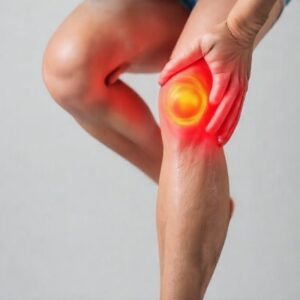
1. The Body as a Map of Consciousness: An Introduction to Metaphysical Anatomy
Before we can decipher the specific message of knee pain, we must first establish a foundational understanding of the mind-body-spirit connection. The idea that our physical body is a reflection of our inner state is not a new-age fantasy but a principle observed across millennia.
The Principle of Somatization: How Emotions Become Physical
Somatization is the process by which psychological distress is expressed as physical symptoms. When we experience an emotion—be it fear, anger, sadness, or joy—it is not an abstract event. It is a full-body experience involving neurochemicals, hormones, and electrical impulses. Chronic stress, for instance, leads to elevated cortisol levels, which can contribute to inflammation throughout the body, including the joints. When we consistently suppress or ignore difficult emotions, the body, in its innate wisdom, often “speaks” the truth that the mind will not acknowledge. It amplifies the signal from a whisper of discomfort to a shout of pain, forcing us to pay attention. A pain in the neck might symbolize people or situations you find “a pain in the neck,” while a sore throat might relate to an inability to speak your truth. Similarly, knee pain emerges when the themes of movement, flexibility, and humility are under duress in our lives.
A Brief History of Mind-Body Connection in Healing Traditions
-
Traditional Chinese Medicine (TCM): In TCM, the body is traversed by meridians, or energy pathways. The knees are influenced by the Kidney and Bladder meridians. The Kidney energy (Jing) is considered the root of life, governing willpower, fear, and our fundamental vitality. Weak Kidney energy can manifest as weak bones and knees, symbolizing a depletion of life force and a deep-seated fear that paralyzes forward movement.
-
Ayurveda: This ancient Indian system links the body’s three doshas (Vata, Pitta, Kapha) to physical and mental tendencies. Knee problems are often associated with an imbalance in Vata dosha, which governs movement and is characterized by qualities of dryness, cold, and instability. An aggravated Vata can lead to joint pain, anxiety, and a feeling of being ungrounded—all themes relevant to knee issues.
-
Modern Pioneers: Figures like Dr. John Sarno, with his work on Tension Myositis Syndrome (TMS), proposed that chronic pain is often a distraction created by the brain to avoid confronting repressed, unconscious emotions. Similarly, authors like Louise Hay have popularized the concept of mental patterns behind physical ailments, suggesting that knee problems relate to pride and an inflexible ego.
Why the Knees? Understanding Their Unique Symbolic Weight
The knees are engineering marvels. They are the largest and one of the most complex joints in the human body, designed to bear immense weight while providing a remarkable range of motion. They allow us to stand firm, walk, run, kneel, and pivot. This primary function gives them their core spiritual symbolism:
-
Support and Foundation: They support the entire structure of the body, just as our beliefs and attitudes support our journey through life.
-
Movement and Progress: They are essential for forward motion, symbolizing our ability to move forward in life, to advance, and to embrace change.
-
Flexibility and Adaptation: Their hinge-and-pivot mechanism represents our capacity to be flexible, to adapt to life’s twists and turns, and to “go with the flow.”
-
Humility and Surrender: Kneeling is a universal gesture of submission, reverence, prayer, and respect. It signifies letting go of the ego’s need to always be in control.
When pain arises in this area, it is a direct signal that one or more of these fundamental aspects of our existence are out of balance.
2. The Core Spiritual Themes of the Knees
Let’s delve deeper into the primary spiritual and emotional themes associated with knee pain. Understanding these core concepts is the key to interpreting your own discomfort.
Humility vs. Stubbornness: The Inability to Bend
This is perhaps the most classic interpretation of knee problems. The knee is the joint that allows us to bend. Spiritually, this bending is synonymous with humility, compromise, and the ability to yield. When we are rigid in our opinions, stubborn in our ways, or refuse to acknowledge our own mistakes or the wisdom of others, we create a metaphysical rigidity that can manifest as physical stiffness and pain in the knees.
-
Ask Yourself: Are you in a situation where you are refusing to compromise? Is your pride getting in the way of a peaceful resolution? Are you unwilling to “bend” your will or your rules? The pain may be a message that your inflexibility is costing you your peace and mobility. It’s the body’s way of forcing a humility you are otherwise resisting.
Moving Forward: Fear, Flexibility, and the Future
The knees propel us forward. Consequently, pain in the knees often relates to a deep-seated fear or resistance about moving into the future. This isn’t just about major life decisions; it can be a fear of the next step in a relationship, a career change, or even the simple, daunting passage of time.
-
Lack of Flexibility: This theme intertwines with humility but focuses more on life’s path. Are you being too rigid in your plans? Are you unable to adapt when life throws you a curveball? The knee may be signaling a need to develop more mental and emotional flexibility, to be more like water and less like a rigid stone in the river of life.
-
Fear of the Future: “My knees are knocking with fear” is not just an idiom; it’s a somatic reality. Chronic knee pain can indicate an underlying anxiety about what lies ahead—a fear of failure, of the unknown, or of not being able to support oneself. This fear literally paralyzes your forward momentum.
The Weight of Responsibility: What Are You Carrying?
As the primary weight-bearing joints, the knees are a direct reflection of the burdens we carry. This is not only physical weight but, more significantly, emotional and psychological weight. Are you carrying the weight of your family’s expectations? The burden of financial stress? The responsibility for everyone’s happiness?
-
Ask Yourself: Is the load you are carrying too heavy? Are you taking on responsibilities that are not yours to bear? Knee pain can be a sign that you need to learn to delegate, set boundaries, or simply put down burdens that you were never meant to carry. It’s a cry for help from a body buckling under excessive pressure.
Ego and Pride: The Refusal to Yield
Closely linked to humility, this theme specifically addresses the inflated ego. The ego wants to stand tall, be unbending, and be in control. Kneeling is an act of surrender that the ego often resists. Pain can emerge when we are too proud to ask for help, too arrogant to admit we are wrong, or too self-important to show vulnerability.
-
Ask Yourself: Are you refusing to “kneel” or yield in a situation where it is the wisest course of action? Is your need to be right more important than your well-being? The pain serves as a reminder that true strength often lies in vulnerability and the willingness to surrender to a flow greater than our individual will.
3. Decoding Specific Types of Knee Pain
The location of the pain can offer even more precise insights into the nature of the emotional or spiritual imbalance.
Pain in the Left Knee vs. Right Knee: The Receptive and Active Sides
In many metaphysical systems, the body’s sides have different symbolic meanings:
-
Left Side: Generally considered the receptive, feminine, yin side. It relates to the internal world, intuition, receiving, relationships, and the past. Pain in the left knee might point to issues with receiving support, flexibility in personal relationships, or being stuck in past emotional patterns that hinder your movement forward.
-
Right Side: Generally considered the active, masculine, yang side. It relates to the external world, action, giving, work, and the future. Pain in the right knee could indicate conflicts with asserting yourself in the world, fear about your career path, or rigidity in how you project yourself outwardly.
Front Knee Pain (Kneecap): Confronting Authority and Forward Progress
The kneecap (patella) protects the knee joint and improves the leverage of the thigh muscles. Pain here is often linked to our forward-moving momentum and our relationship with authority.
-
Spiritual Meaning: Difficulty moving forward due to a confrontation with authority (a boss, parent, or societal rules). It can also represent a fear of what is “in front” of you—the next step. Are you afraid to “put your best foot forward”? The kneecap’s function is to facilitate efficient movement; pain here can signal that your forward progress is being hampered or that you feel “attacked” in your ability to advance.
Back of Knee Pain: Pushing Forward Against Resistance and Fear
Pain in the popliteal fossa (the back of the knee) is often related to the energy of propulsion and what is “pushing” you from behind.
-
Spiritual Meaning: This can symbolize feeling pushed into a future you are not ready for, or carrying the weight of past traumas that are propelling you forward unwillingly. It can also indicate a deep, unacknowledged fear that you are trying to outrun. The resistance to looking back or dealing with what’s behind you can manifest as pain in this area.
Inner Knee Pain: Relationship Stresses and Community Support
The inner (medial) side of the knee is often associated with our inner circle and relational world.
-
Spiritual Meaning: Pain here can point to conflicts within close relationships—with a spouse, family member, or close friend. It may also relate to a feeling of lack of support from your community or tribe. Are you being inflexible in a relationship? Is a relationship causing you to feel burdened? The pain calls for an examination of your closest connections.
Outer Knee Pain: Frustration with Life’s Path and Personal Goals
The outer (lateral) side of the knee relates to the external world and your trajectory through it.
-
Spiritual Meaning: This pain often flares up when you are frustrated with your career, life goals, or the general direction of your life. It can indicate rigidity in your plans, an inability to adapt to external changes, or anger about obstacles blocking your chosen path. It’s a signal to reassess your goals and become more adaptable in your approach.
Sharp vs. Dull Aches: Acute Crises and Chronic Grumbles
-
Sharp, Sudden Pain: This often corresponds to an acute emotional or spiritual crisis—a sudden event that shatters your sense of direction (like a ligament tear) or a moment where you are forced to “bend” in a way you never have before.
-
Dull, Chronic Ache: This points to a long-standing, unresolved issue. It’s the background noise of stubborn pride, a persistent fear of the future, or a lifetime of carrying burdens without complaint. It’s a constant, low-level reminder that a core life theme needs addressing.
4. Common Conditions and Their Deeper Meanings
Let’s apply these principles to specific diagnosed knee conditions.
Osteoarthritis: Rigidity and Resistance to Change
Osteoarthritis is the “wear and tear” degeneration of cartilage, leading to pain, stiffness, and loss of mobility.
-
Metaphysical Interpretation: This condition is the physical embodiment of long-term rigidity. It speaks to a life lived with resistance to new ideas, an unwillingness to adapt, and a calcification of beliefs and attitudes. The joints literally become hardened and inflexible, mirroring a mind that has become set in its ways. There may be underlying bitterness or resentment that has “eaten away” at the joy and fluidity of life.
Rheumatoid Arthritis: Deep-Seated Criticism and Resentment
Rheumatoid arthritis is an autoimmune condition where the body attacks its own joints, causing inflammation, pain, and deformity.
-
Metaphysical Interpretation: If osteoarthritis is about rigidity, rheumatoid arthritis is often about deep-seated anger, criticism, and resentment. It is a “self-attacking” condition, which can mirror a pattern of being overly critical of oneself or others. The inflammation points to “inflamed” emotions that are burning within. There is often a feeling of being a victim or carrying a deep sense of grievance that is literally crippling the body.
Ligament Tears (ACL, MCL, etc.): A Shattered Sense of Direction
Ligaments provide stability and dictate the range of motion of the knee. A tear is a dramatic, often traumatic, event.
-
Metaphysical Interpretation: A ligament tear frequently occurs at a moment when a person’s sense of direction or stability in life is shattered. It can happen after a sudden change—a job loss, the end of a relationship, a personal failure—that makes the future feel uncertain and unstable. The body reflects this inner chaos and loss of foundation through a structural failure of one of its key stabilizing tissues. It forces a complete stop, demanding a reevaluation of one’s path.
Tendonitis: Inflexibility in Applying Your Will
Tendons connect muscle to bone, translating the will of the muscle (to move) into action.
-
Metaphysical Interpretation: Tendonitis, an inflammation of the tendons, suggests frustration and anger in the application of your will. You are trying to move forward, to act, but you are meeting resistance, either internally or externally. This creates a “rub” or irritation. It’s the physical manifestation of feeling “in a bind” or forced to move in a direction you resent. Are you pushing yourself too hard in a direction you don’t truly believe in?
Meniscus Tears: The Fragility of Your Life’s Foundation
The meniscus is a C-shaped cartilage that acts as a shock absorber between the shin and thigh bones.
-
Metaphysical Interpretation: A meniscus tear often relates to a perceived fragility or breakdown in one’s foundation. This could be a crisis of faith, a feeling that your core beliefs are no longer supporting you, or a sense that your home life or most stable relationships are under threat. The “shock absorber” of your life is compromised, making you feel vulnerable to the normal bumps and jolts of existence.
Swelling and Inflammation: Suppressed Emotions and Stagnant Energy
Swelling is the body’s response to injury, involving an accumulation of fluid.
-
Metaphysical Interpretation: Energetically, swelling represents stagnant energy and suppressed emotions that have not been processed or released. The body is trying to cushion and protect the area, just as the psyche is trying to cushion itself from painful feelings—sadness, grief, or anger—that are “pooling” around the issues of movement and flexibility. The knee is “holding onto” emotional water because you are.
5. The Chakra Connection: Knees and the Root and Sacral Chakras
While the knees are not the direct seat of a major chakra, they are profoundly influenced by the two lowest energy centers, which govern our foundation and flow.
The Root Chakra (Muladhara): Security, Survival, and Foundation
Located at the base of the spine, the Root Chakra is our connection to the earth, governing our sense of safety, security, and basic survival. When this chakra is blocked or imbalanced, we feel ungrounded, anxious, and insecure about our place in the world.
-
Connection to the Knees: The knees are part of the structural foundation that connects the root chakra to the earth. If your root chakra is compromised due to financial fears, housing instability, or a general lack of safety, the knees can weaken, become painful, or lose stability, reflecting this shaky foundation. A strong root chakra leads to strong, stable, and confident movement through life.
The Sacral Chakra (Svadhisthana): Creativity, Flow, and Flexibility
Located just below the navel, the Sacral Chakra is the center of emotion, creativity, pleasure, and flexibility. It governs our ability to “go with the flow” and adapt to life.
-
Connection to the Knees: The flexibility of the knees is a direct mirror of the flexibility governed by the Sacral Chakra. A blocked sacral chakra leads to emotional rigidity, creativity blocks, and resistance to change. This mental and emotional stiffness will inevitably manifest as physical stiffness in the hips, groin, and knees. A healthy, open sacral chakra allows for fluid, graceful, and adaptable movement, both emotionally and physically.
6. A Holistic Healing Protocol: Integrating Body, Mind, and Spirit
Healing spiritually-based knee pain requires a multi-faceted approach that addresses the root cause on all levels.
Step 1: Deep Introspection and Journaling – Uncovering the Core Message
The first step is to listen. Sit quietly with your pain and ask it questions. Journal your answers without judgment.
-
Prompt Questions:
-
What was happening in my life when this pain first started?
-
Where in my life am I being stubborn or inflexible?
-
What step forward am I afraid to take?
-
What burden am I carrying that feels too heavy?
-
Is my pride or ego preventing me from finding peace?
-
What does this pain prevent me from doing? (This is often a direct clue).
-
Step 2: Emotional Release and Forgiveness Practices
Holding onto stagnant emotions fuels physical pain.
-
Practices: Allow yourself to feel and release suppressed anger through safe, physical expression (punching a pillow, screaming in the car). Release sadness through crying. Practice radical forgiveness—for others and for yourself—using guided meditations or Ho’oponopono, an ancient Hawaiian practice of reconciliation.
Step 3: Affirmations and Mindset Reprogramming
Consciously replace the old, rigid thought patterns with new, life-affirming ones. Repeat these affirmations daily, with feeling.
-
Sample Affirmations for Knee Pain:
-
“I am flexible and flowing. I bend with ease and move forward with joy.”
-
“I forgive others and I forgive myself. I release the past with love.”
-
“I move forward in life with confidence and trust. I am safe and supported.”
-
“I am willing to bend. I am willing to learn. I am open to new experiences.”
-
“I release all burdens that are not mine to carry. I am strong and capable.”
-
Step 4: Energetic and Somatic Practices
Re-establish the flow of energy and restore physical flexibility.
-
Yoga: Gentle yoga poses like Balasana (Child’s Pose), Marjaryasana/Bitilasana (Cat-Cow), and supine knee bends help restore mobility and release tension in a mindful way.
-
Qigong/Tai Chi: These ancient Chinese movement arts are exceptional for improving joint health, balance, and the flow of Qi (life force energy) throughout the body.
-
Grounding (Earthing): Walk barefoot on grass, sand, or soil. This practice directly calms the nervous system and strengthens your connection to the earth, supporting the root chakra and, by extension, the knees.
Step 5: Seeking Support
You do not have to do this alone.
-
Therapy: A good therapist can help you uncover and process the core emotional wounds linked to your pain.
-
Energy Healing: Modalities like Reiki, acupuncture, or craniosacral therapy can help clear energetic blockages and promote healing.
-
Community: Share your journey with trusted friends or a support group. Being heard and supported can lighten the perceived burden you carry.
7. Real-World Applications and Case Studies
Case Study 1: The Stubborn Executive with Osteoarthritis
-
Physical Issue: Mark, a 55-year-old CEO, had progressively worsening osteoarthritis in both knees. He was rigid, resistant to new company strategies, and prided himself on never showing weakness.
-
Spiritual Interpretation: His knees were mirroring his mental and emotional rigidity. His refusal to “bend” to new market trends or delegate responsibility was the “weight” his knees could no longer bear.
-
Healing Path: Through coaching, Mark began to see the cost of his stubbornness. He started practicing humility by actively listening to junior employees and delegating tasks. He took up Tai Chi to improve his physical flexibility. As he became more adaptable in his leadership, his knee pain, while not cured, became significantly more manageable, and his mobility improved.
Case Study 2: The Anxious Graduate with Recurring Ligament Issues
-
Physical Issue: Sarah, a 22-year-old recent graduate, tore her ACL twice in two years, both times during sports, but without major impact.
-
Spiritual Interpretation: Sarah was terrified of the future. Graduation felt like stepping off a cliff. The ligament tears occurred at times of peak uncertainty—right before graduation and before starting a new job. Her sense of direction and stability was shattered.
-
Healing Path: In therapy, Sarah addressed her anxiety about adulthood. She began using affirmations about trust and safety. She worked with a physiotherapist who incorporated mindfulness into her rehab, framing each exercise as a “step of confidence” into her future. The recurring injuries stopped.
Case Study 3: The Overwhelmed Parent with Chronic Knee Swelling
-
Physical Issue: Maria, a 40-year-old mother of three, had chronic swelling in her knees with no clear medical diagnosis. She felt constantly overwhelmed.
-
Spiritual Interpretation: The swelling represented the “pooled” emotions of resentment and sadness she suppressed while caring for everyone else. She was carrying the entire family’s emotional and practical weight.
-
Healing Path: Maria began a daily journaling practice to release her feelings. She learned to set boundaries with her family and ask for help. She also started taking Epsom salt baths, visualizing the salt drawing out both the physical and emotional stagnation. The swelling reduced dramatically as she lightened her emotional load.
Summary of Knee Pain Locations and Their Potential Spiritual Meanings
| Pain Location | Primary Spiritual Meaning | Key Questions to Ask Yourself |
|---|---|---|
| Left Knee | Receptive side issues: Relationships, receiving support, past emotions. | “Am I stuck in a past relationship dynamic? Do I struggle to receive help?” |
| Right Knee | Active side issues: Career, external world, future, giving. | “Am I fearful about my career path? Am I being rigid in how I assert myself?” |
| Front (Kneecap) | Forward progress, confrontation with authority. | “What step am I afraid to take? Who or what is blocking my forward movement?” |
| Back of Knee | Being pushed forward, carrying the past, deep fear. | “What am I running from? Is my past pushing me into an unwanted future?” |
| Inner Knee | Close relationships, family, inner circle support. | “Is there conflict in my closest relationships? Do I feel unsupported by my tribe?” |
| Outer Knee | Life path, career goals, external obstacles. | “Am I frustrated with my life’s direction? Am I inflexible with my plans?” |
8. Conclusion: Walking Forward with Grace and Awareness
Knee pain is a powerful messenger, not a life sentence.
It calls us to cultivate humility over stubbornness, to move forward with trust instead of fear, and to release the burdens that are not ours to carry.
By listening to its wisdom, we can align our steps with our soul’s true purpose, walking our path with greater grace, flexibility, and peace.
Frequently Asked Questions (FAQs)
Q1: Is this saying my knee pain is “all in my head”?
A: Absolutely not. The pain is very real. This perspective suggests that the origin of the imbalance may be in your emotional or spiritual state, which then manifests in the physical body. It’s a holistic view that sees the mind and body as an interconnected system, not separate entities.
Q2: I understand the spiritual cause, but I’m still in pain. What now?
A: Spiritual understanding must be paired with physical action. Continue to follow your doctor’s advice—physiotherapy, medication, or surgery if needed. The spiritual work complements the physical treatment by addressing the root cause, which can prevent recurrence and accelerate healing.
Q3: Can past life trauma cause current knee pain?
A: In some spiritual frameworks, yes. It is believed that traumas from past lives, particularly those involving being restrained, injured, or unable to escape (e.g., from war, imprisonment, or accidents), can leave energetic imprints that manifest as chronic issues in corresponding body parts, like the knees, in this lifetime. Exploring this may require specialized guidance like a regression therapist.
Q4: How long does it take to heal knee pain using these methods?
A: There is no set timeline. Healing is a personal journey. Chronic issues that developed over decades may take time to unravel. Consistency is key. The more diligently you apply the introspective, emotional, and energetic practices, the more profound and lasting the shifts will be, both internally and externally.
Q5: Are there any specific crystals or essential oils that can help?
A: While not a substitute for medical care, some find these helpful as supportive tools.
-
Crystals:
-
Green Aventurine: For promoting flexibility and emotional calm.
-
Carnelian: To strengthen the sacral chakra and boost vitality for moving forward.
-
Smoky Quartz: For grounding and releasing old, heavy energies.
-
-
Essential Oils:
-
Peppermint: Cooling and analgesic; can be diluted and applied topically for pain.
-
Frankincense: Anti-inflammatory and spiritually grounding; useful for meditation.
-
Ginger: Warming and stimulating; can help with circulation and stiffness.
(Always dilute essential oils properly and check for allergies.)
-
Additional Resources
-
Books:
-
You Can Heal Your Life by Louise Hay
-
The Body Keeps the Score: Brain, Mind, and Body in the Healing of Trauma by Bessel van der Kolk M.D.
-
Eastern Body, Western Mind: Psychology and the Chakra System As a Path to the Self by Anodea Judith
-