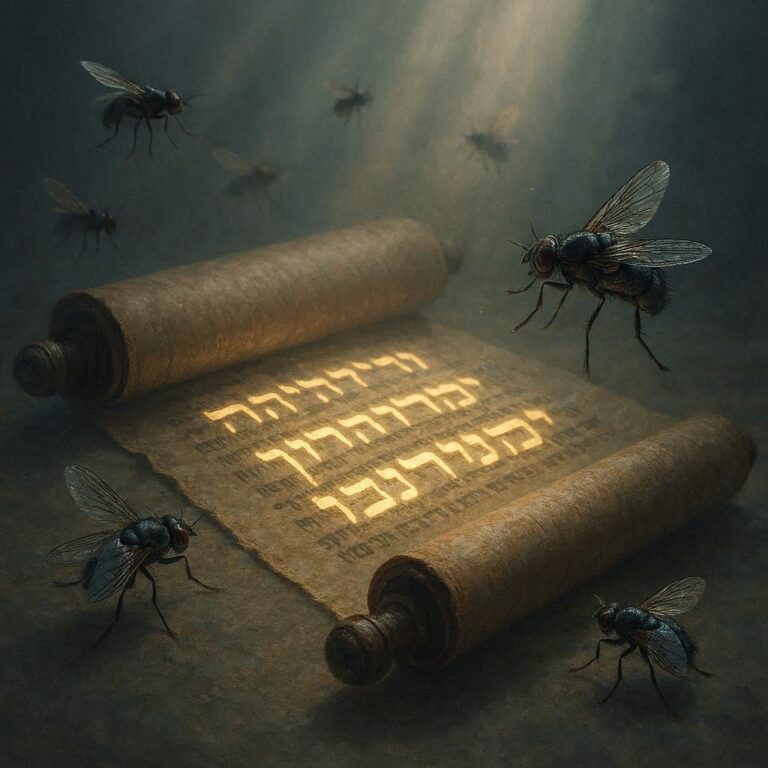
The ubiquitous fly. It is an insect most often met with a swat, a dismissive wave, or a grimace of disgust. It buzzes with an irritating persistence around our food, our homes, our summer picnics, embodying filth, disease, and annoyance in the modern human psyche. To consider this common creature as a bearer of profound spiritual wisdom seems, at first glance, a counterintuitive leap. Yet, it is precisely in the spaces we label as unpleasant, disruptive, or mundane that the deepest spiritual lessons often reside. The fly, in its relentless, chaotic dance, is a master alchemist of the natural world, a crucial agent in the cycle of life, death, and rebirth. It is an unsung psychopomp, guiding decaying matter back into the earth to nourish new life.
This article invites you on a journey to look past the instinctual aversion and to see the fly for what it truly is: a powerful and ancient spiritual symbol. We will delve into the shadowy realms it inhabits, not to dwell in darkness, but to understand the essential role darkness plays in creating light. We will explore its symbolism across cultures, from the sacred scarabs of Egypt to the demonic Beelzebub of Abrahamic traditions. We will unpack its meanings in dreams, shamanic practices, and as a persistent spirit animal, revealing lessons on transformation, resilience, truth, and the delicate balance of our ecosystem. The fly is an uninvited guest that, if we dare to listen, has urgent messages about our own inner decay, the persistence required for our goals, and the undeniable truths we so often try to ignore. Prepare to have your perception shifted, as we decode the buzz and uncover the profound spiritual meaning of the fly.
1. The Fly in the Global Symbolic Tapestry: A Cross-Cultural Perspective
To understand the fly’s spiritual significance, we must first look beyond our personal and cultural biases. This creature has been viewed through vastly different lenses throughout human history, revealing a complex and multifaceted symbol.
Ancient Egypt: Khepri and the Sacred Scarab
Perhaps the most striking positive association of a fly-like insect comes from Ancient Egypt. The dung beetle, or scarab (Scarabaeus sacer), was not merely an insect; it was a potent solar deity, Khepri. The Egyptians observed the beetle rolling a ball of dung across the ground, an action they poetically linked to the sun god rolling the sun across the sky. The beetle laid its eggs in this ball of dung, and the newborn beetles would emerge from it, symbolizing spontaneous creation, resurrection, and the cycle of rebirth. While not a true fly, the scarab belongs to the same broad category of “annoying insects” in the modern mind, yet it was venerated as a god. This teaches us a crucial lesson: spiritual meaning is not inherent in the object itself, but in the perception and context we assign to it. The Egyptians saw in the lowly dung beetle the very engine of cosmic renewal.
Abrahamic Traditions: Beelzebub, Lord of the Flies, and Sin
In stark contrast, the fly occupies a much darker role in Abrahamic traditions. The name Beelzebub (or Baal Zebub) translates directly from Hebrew as “Lord of the Flies.” Originally a Philistine deity, possibly a god who was invoked to ward off flies or the plagues they represented, he was demonized in Jewish and Christian texts. He became a prince of demons, often synonymous with Satan himself. In this context, the fly symbolizes corruption, sin, decay, and the presence of evil. It is the manifestation of spiritual filth and moral rot. This association is deeply rooted in the fly’s attraction to decay and waste, linking it physically and symbolically to death, disease, and impurity. The fly, therefore, becomes a powerful symbol of that which corrupts and defiles the pure soul.
Native American Beliefs: Humility, Adaptability, and the Cycle of Life
Many Native American tribes hold a more pragmatic and respectful view of the fly. Recognized for its incredible adaptability and persistence, the fly is often seen as a teacher of humility and survival. It thrives in almost any environment, reminding us to be versatile and to make the best of our circumstances. Furthermore, its role as a decomposer is honored. The fly is an integral part of the sacred circle of life, transforming death into nourishment for new life. In some stories, the fly is a messenger, its buzzing a communication from the spirit world. It is not inherently good or evil but is a necessary part of the natural order, demanding respect for its role in maintaining balance.
Celtic and European Folklore: Messengers from the Otherworld
In Celtic and broader European folklore, flies, along with other insects like moths and butterflies, were often thought to be souls of the departed or fairies in disguise. A sudden appearance of a fly, especially in a room where someone had recently died, could be interpreted as the soul of the deceased paying a final visit. This connects the fly to the concept of the psychopomp—a guide for souls transitioning between the world of the living and the world of the dead. Its ability to seemingly appear from nowhere and disappear just as quickly reinforced its association with the unseen, magical realms.
Eastern Philosophies: Impermanence and the Acceptance of Decay
In Buddhist and Hindu philosophies, the fly can be a potent, if unpleasant, reminder of the core tenets of impermanence (Anicca in Buddhism) and the inevitable nature of decay. The sight of flies buzzing around a piece of rotting food is a direct visual lesson in the transitory nature of all physical things. It confronts the observer with the reality of death and decomposition, not to incite fear, but to encourage non-attachment to the physical form and a deeper focus on the eternal spirit. The fly, therefore, becomes a living memento mori, urging us to live consciously and virtuously in the face of life’s inevitable cycles.
2. The Core Spiritual Meanings of the Fly: Unpacking the Symbolism
Having explored its cultural history, we can now distill the core spiritual meanings associated with the fly. These are the fundamental lessons this insect carries for those who are willing to listen.
Transformation and Alchemy: The Master of Decay and Rebirth
This is the fly’s most profound and powerful spiritual lesson. The fly is a master alchemist. It is uniquely equipped to land on that which is dead, decaying, and toxic to most other life forms. It breaks down this matter, and in doing so, it transforms death into life. Its maggots are not symbols of grotesquery but of potent, raw, life force, processing the old to make way for the new.
Spiritually, the fly asks us: What in your life needs to decompose? What old habits, beliefs, relationships, or emotional wounds have festered and are now rotting, poisoning your present? The fly’s appearance can be a call to engage in our own inner alchemy. It urges us to courageously face our “shadow” material—the aspects of ourselves we find shameful, ugly, or unpleasant—and to transform it into fuel for growth. Just as the fly turns waste into fertile ground, we can transform our pain into wisdom, our trauma into resilience, and our failures into foundational lessons. This process is not pretty or comfortable, but it is essential for true, deep-seated rebirth.
Persistence and Resilience: The Power of Unyielding Determination
The fly is arguably one of the most persistent creatures on the planet. Its evasive flight pattern, its ability to survive in harsh conditions, and its relentless return even after being shooed away a dozen times are testaments to a primal, unstoppable will to live.
When the fly appears as a spiritual symbol, it often carries a message about persistence. Are you giving up on a goal too easily? Are you allowing obstacles to deter you permanently? The fly embodies the energy of “try, try again.” It does not take “no” for an answer. It finds another angle, another approach, another moment of opportunity. This spirit animal teaches us that success often belongs not to the strongest or the smartest, but to the most persistent. It encourages us to develop a thick skin against rejection and to keep buzzing towards our objectives with unwavering determination.
Truth and Illumination: Seeing What is Hidden in the Shadows
Flies have compound eyes, allowing them to see in multiple directions at once. They are drawn to what is hidden, to the garbage under the lid, the corpse under the leaves, the wound festering beneath the bandage.
Spiritually, the fly is a symbol of unveiling truth. It comes to illuminate the things we have tried to hide, especially from ourselves. Its buzzing can be an annoying alarm clock, waking us up to a truth we have been ignoring. Is there a lie you are telling yourself? A dysfunctional situation you are pretending is fine? A negative pattern you refuse to acknowledge? The fly’s presence suggests that this hidden truth is beginning to “stink,” to draw attention to itself, and can no longer be contained. It demands that you lift the lid, look at the decay, and deal with it honestly. It is the bringer of uncomfortable but necessary revelations.
Annoyance and Disruption: The Catalyst for Necessary Change
Sometimes, the spiritual message of the fly is not deep or symbolic, but intensely practical. Its incessant buzzing and disruptive presence are designed to annoy. It breaks our concentration, disturbs our peace, and forces us to take action.
In this sense, the fly can be a catalyst for change. It appears when we have become too complacent, stagnant, or lazy. That project you’ve been procrastinating on, that difficult conversation you’ve been avoiding, that health issue you’ve been neglecting—the fly’s energy disrupts your false peace and forces you to move. It is the universe’s way of saying, “You can no longer ignore this. It is time to swat away the procrastination and address the issue head-on.” The annoyance is not the message itself; it is the delivery mechanism for the message that action is required.
Mortality and Impermanence: The Memento Mori Messenger
As discussed in the Eastern philosophy section, the fly is a classic memento mori—a reminder of death. Its intimate connection with decay and its short life span make it a walking, buzzing symbol of the impermanence of all physical life.
This is not meant to be a morbid or frightening message. Instead, it is a call to presence and priority. Confronting the reality of death gives life its urgency and sweetness. The fly reminds us that our time is limited. Are we spending it on things that truly matter? Are we living authentically? Are we harboring grudges or postponing joy? By reminding us of the end, the fly encourages us to live more fully, love more deeply, and appreciate the beauty of the present moment before it, too, passes.
3. The Fly as a Spirit Animal and Totem: Embodying the Essence
When an animal consistently appears in your life, in physical form, dreams, or meditation, it may be presenting itself as a spirit guide or totem. The fly spirit animal carries a powerful, if challenging, set of attributes.
Characteristics of a Fly Spirit Animal
If the fly is your spirit animal, you likely possess or are being called to develop the following traits:
-
Extreme Resilience: You have an incredible ability to bounce back from adversity. You can survive and even thrive in difficult environments where others would give up.
-
Keen Perception: You have a knack for seeing beneath the surface. You can spot the flaws, the hidden truths, and the underlying decay in situations, systems, and even people. You are not easily deceived.
-
Persistence: You are tenacious and determined. You do not give up easily and are willing to try multiple approaches until you achieve your goal.
-
Adaptability: You can fit in anywhere and make the best of any situation. You are versatile and quick to adjust to changing circumstances.
-
A Focus on Transformation: You are drawn to processes of healing and rebirth. You may find yourself helping others through their “dark night of the soul” or constantly working on transforming your own weaknesses into strengths.
Is the Fly Your Totem? Key Indicators
The fly may be making its presence known as your totem if:
-
You encounter flies frequently and unusually, especially in clean environments or at significant moments.
-
You are going through a period of intense personal transformation that feels “messy” or difficult.
-
You are struggling with a situation that requires immense persistence.
-
You are being forced to confront an uncomfortable truth about yourself or your life.
-
You work in fields related to cleanup, healing, therapy, recycling, or any profession that deals with transforming “waste” into something useful.
The Shadow Side: Overcoming Obsession and Nagging Thoughts
Like all power animals, the fly has a shadow aspect. If its energy is out of balance, it can manifest as:
-
Obsession: An inability to let go of a thought, person, or goal, to the point of it becoming unhealthy.
-
Nagging and Nitpicking: Focusing excessively on the flaws and negatives in others or in situations.
-
Feeling “Dirty” or Unworthy: An internalized sense of being attracted to or mired in “decay” without the ability to transform it.
-
Spreading “Disease”: Gossiping, spreading negativity, or engaging in toxic behaviors that corrupt your environment.
Working with the fly totem involves harnessing its positive persistence and transformative power while consciously avoiding the pitfalls of obsession and negativity.
4. Flies in the World of Dreams: A Subconscious Dialogue
Dreams are the language of the subconscious, and the appearance of a fly is a potent symbol worth deciphering. The context and emotion of the dream are crucial for accurate interpretation.
Common Fly Dream Scenarios and Their Interpretations
Being Swarmed by Flies
This is a powerful and often frightening dream image. It typically signifies feeling overwhelmed by “small” annoyances, negative thoughts, or guilt. Many minor problems have accumulated into a large, buzzing cloud that feels inescapable. It can also point to a situation in your waking life where you feel your personal boundaries are being violated by many people or demands. The swarm calls for a systematic clearing out of these irritants.
A Single, Persistent Fly
This dream mirrors the waking spiritual meaning. A single fly that you cannot seem to catch or get rid of represents a specific, persistent problem or truth you are avoiding. It could be a nagging doubt, a secret, a unresolved conflict, or a task you keep procrastinating. The dream is urging you to stop swatting it away metaphorically and to finally address it directly.
Killing a Fly
This can be a positive sign, symbolizing that you are successfully overcoming an annoyance, conquering a nagging fear, or putting an end to a toxic pattern. It represents taking control and eliminating a source of irritation from your life. However, consider how you felt. If you felt relief, the interpretation is positive. If you felt guilt or sadness, it might indicate you are forcefully suppressing a part of yourself that needs integration, not destruction.
Eating Food with Flies On It
This unsettling dream points to “consuming” something that is spiritually or emotionally tainted. You may be accepting lies, engaging in corrupt practices, or internalizing toxic ideas. It’s a warning from your subconscious that what you are taking in is “rotten” and could cause you harm. It’s time to scrutinize your sources of information and the influences in your life.
A Fly Landing on You
Where the fly lands is significant. On the hand: Your actions may be “tainted” or misguided. On the face: You are refusing to “see” or “face” a truth. On the mouth: Be careful with your words—are you gossiping or speaking untruths? Generally, a fly landing on you suggests that a particular issue or negative influence is “sticking” to you and needs to be consciously brushed off.
The Emotional Context: Fear, Annoyance, or Curiosity?
Always recall the emotion you felt in the dream. Fear suggests the issue is related to a deep-seated anxiety. Annoyance points to a practical, waking-life irritation. Curiosity or detachment might indicate that you are objectively observing a process of decay and transformation within yourself without being emotionally consumed by it.
5. Shamanic and Energetic Perspectives: The Fly as a Psychopomp
In shamanic traditions, all of nature is alive with spirit and medicine. The fly, despite its modern reputation, holds a vital and respected role.
Guides of Decay: Releasing What No Longer Serves
Shamans understand that for new life to begin, the old must die and decompose. The fly is a spirit ally in this process. In shamanic journeying or energy work, fly medicine can be called upon to help break down energetic blockages, old trauma, and outmoded belief systems that have become toxic and are “rotting” within one’s energy field. Just as its physical counterpart breaks down physical waste, the spirit of the fly can help decompose these stagnant energies, turning them into neutral “compost” that can then be used to fuel future growth.
Navigating the Underworld: Facing the Shadow Self
The fly is a creature of the underworld—not the Christian hell, but the shamanic underworld, the realm of the subconscious, the shadow self, and the ancestors. Its ability to navigate dark, confined spaces makes it an excellent guide for soul retrieval or for journeys to face one’s own shadow. Working with fly energy can provide the courage and the perceptual ability to see clearly in the dark corners of our own psyche, to retrieve lost power, and to make peace with the parts of ourselves we have rejected.
Energetic Cleansing and the Fly’s Medicine
While we often think of smudging with sage to cleanse a space, the fly offers a different kind of cleansing. Its medicine is not about banishing, but about processing and transforming. If a space or a person’s energy feels heavy with the “rot” of old arguments, grief, or negativity, invoking fly medicine can help initiate the alchemical process of breaking that down. It’s a more active, involved form of cleansing than simple removal; it’s about recycling the toxic energy itself.
6. Practical Applications: Integrating the Fly’s Wisdom into Daily Life
How do we move beyond theory and actually work with the challenging wisdom of the fly? Here are some practical steps.
When a Fly Appears: A Step-by-Step Reflective Process
-
Pause and Observe: Instead of immediately reaching for a swatter, take a deep breath. Observe the fly’s behavior. Is it persistent? Is it landing in a specific area?
-
Ask the Core Questions:
-
Transformation: What in my life feels like it’s decaying or needs to be released?
-
Persistence: Where am I giving up too easily? What goal requires more determination?
-
Truth: What uncomfortable truth am I avoiding?
-
Disruption: What complacency is this fly disrupting? What action do I need to take?
-
Mortality: Am I taking my time and my life for granted?
-
-
Take One Small Action: Based on your reflection, commit to one small, concrete action. Send that email you’ve been avoiding. Have that difficult conversation. Clean out a closet (a physical act of release). Meditate for five minutes on letting go.
Rituals and Meditations to Connect with Fly Energy
-
Meditation for Transformation: Sit in a quiet space. Imagine an area of your life that feels stagnant or “rotten.” Visualize a fly landing on it. See the fly’s energy breaking it down, decomposing it, turning it into dark, rich soil. Now, visualize a new, healthy seed sprouting from that soil. What is it?
-
Persistence Talisman: Find a small, discreet object—a stone, a bead—that you can carry in your pocket. This is your “persistence talisman.” When you feel like giving up, hold it and recall the relentless energy of the fly. Let it remind you to try one more time.
Embracing Resilience in the Face of Adversity
The fly’s ultimate lesson is resilience. It is built to survive. When you face setbacks, channel the fly. Be adaptable. Change your approach. Be persistent. Buzz around the obstacle. Remember that even in the most unwelcoming environments, you have the innate ability to find a way to survive and, eventually, to thrive.
Summary of Fly Symbolism and Corresponding Actions
| Spiritual Meaning | Core Message | Suggested Action |
|---|---|---|
| Transformation & Rebirth | It’s time to break down what is decaying in your life. | Identify one old habit, belief, or grudge and consciously release it. |
| Persistence & Resilience | Don’t give up; your determination will pay off. | Take one more step toward a goal you’ve been avoiding. |
| Truth & Illumination | You are avoiding an uncomfortable truth. | Write down a truth you’re afraid to admit, even if just for yourself. |
| Annoyance & Disruption | Your complacency is being challenged; action is required. | Address the source of the annoyance directly instead of just swatting it away. |
| Mortality & Impermanence | Your time is precious; live with purpose. | Do something today that you truly love and that aligns with your values. |
7. Conclusion: Embracing the Unwelcome Teacher
The fly, in its relentless buzzing and its intimate dance with decay, is one of spirituality’s most potent and misunderstood teachers. It is a symbol not of evil, but of essential, alchemical transformation. It is an emblem of a persistence so powerful it can overcome any obstacle. It is a bringer of truths we would rather not see, yet must acknowledge to grow. By learning to look past our instinctual disgust, we open ourselves to the profound wisdom carried on its iridescent wings. The fly does not ask to be loved, but to be understood. It is the uninvited guest who, in the end, shows us how to clean our own house.
-
The fly teaches us that true transformation requires courageously facing and breaking down our inner decay.
-
It embodies a persistence that refuses to be defeated, urging us to keep moving towards our goals.
-
It serves as a vital reminder of life’s impermanence, challenging us to live with greater purpose and presence.
Frequently Asked Questions (FAQs)
1. A fly keeps buzzing in my house. Is this a spiritual sign?
It can be. Before assigning spiritual meaning, rule out the practical (e.g., an open window, forgotten food). If its presence feels unusually persistent or significant, then yes, it is likely a spiritual nudge. Use the reflective process outlined in Section 6 to decipher its message for you.
2. Is a fly spirit animal a “bad” omen?
No. While its messages can be challenging, no spirit animal is inherently “bad.” The fly is a powerful guide for transformation and resilience. Its appearance signals that it’s time to deal with something you’ve been ignoring, which is ultimately a positive and necessary step for growth.
3. What does it mean if I dream about maggots?
Maggots amplify the fly’s transformative meaning. They represent the raw, messy, and active process of decomposition and rebirth already underway in your psyche or life. While the image can be shocking, it often indicates that a profound healing or transformation is in process, breaking down something old to make way for the new.
4. How can I work with fly energy if I find it repulsive?
Start with its positive attributes. Meditate on the concept of persistence or adaptability. You do not need to love the physical insect to appreciate its symbolic power. Focus on the lessons, not the messenger. As you understand its crucial role in the ecosystem, the aversion may lessen.
5. What is the difference between a fly and a bee spiritually?
Both are persistent, but their energy is different. The bee is a solar symbol, representing community, productivity, and sweet, tangible results (honey). The fly is a chthonic (underworld) symbol, representing the individual, the transformation of shadow, and the processing of “waste” to create fertile ground. The bee builds; the fly decomposes to make building possible.