Imagine your body not as a mere biological machine, but as a sophisticated, dynamic map of your inner world. It is a living, breathing manuscript upon which your deepest thoughts, unprocessed emotions, and spiritual struggles are inscribed. When a wordless sorrow lingers in the heart, it may manifest as a tightening in the chest. When a truth remains unspoken, it can crystallize as a lump in the throat. When the weight of responsibility becomes unbearable, it settles as a deep, persistent ache across the shoulders. This is the silent language of the self, a dialect spoken not in words, but in sensations, tensions, and pains.
For too long, Western medicine has operated under a paradigm of separation, treating the body as a distinct entity from the mind and spirit. A headache is met with an aspirin; back pain with a muscle relaxant. While these interventions can provide crucial temporary relief, they often function like hitting the mute button on a vital alarm system. They silence the symptom without ever addressing the root cause of the disturbance. The pain, therefore, is not the problem itself, but rather the final, desperate messenger of a deeper imbalance.
This article embarks on a profound journey into the heart of this inner landscape. We will explore the compelling and ancient premise that our physical aches are often the embodied echoes of our spiritual and emotional state. By learning to decipher this somatic code, we can transform our relationship with pain from one of frustration and victimhood to one of curiosity, dialogue, and ultimately, profound healing. This is not about blaming yourself for your pain, but about empowering yourself with a new lens through which to understand it. It is an invitation to listen to the whisper before it becomes a scream, and to discover that your body is not your adversary, but your most loyal and insightful ally on the path to wholeness.
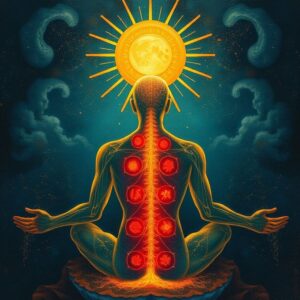
2. The Foundation: Understanding the Mind-Body-Spirit Nexus
The concept that our physical health is intertwined with our emotional and spiritual state is not new; it is a cornerstone of ancient healing traditions from Ayurveda in India to Traditional Chinese Medicine (TCM). These systems have understood for millennia that the body is permeated by a vital life force—known as Prana or Qi—that flows through specific pathways. Disruptions in this flow, caused by emotional trauma, stagnant energy, or spiritual disconnection, eventually manifest as physical symptoms.
In modern times, the field of psychoneuroimmunology (PNI) has provided a scientific framework for this connection. PNI studies the intricate communication network linking your psychological state, your central nervous system, and your immune response. We now know that chronic stress, which is often a manifestation of unresolved emotional and spiritual conflict, floods the body with cortisol and adrenaline. Over time, this chemical cascade can lead to inflammation, weakened immunity, high blood pressure, and a host of other physical ailments, including pain.
From a spiritual perspective, the body is the ultimate vessel for the soul’s journey. It is the medium through which we experience life, learn lessons, and evolve in consciousness. Every ache, every tension, every illness can be viewed as a curriculum. A sore throat is a lesson in speaking one’s truth. A stiff knee is a lesson in humility and flexibility. A weak immune system might be a lesson in establishing healthy energetic boundaries.
This holistic model does not dismiss the importance of conventional medicine. A broken bone needs a cast; a bacterial infection needs antibiotics. Rather, it proposes a more integrative approach. When we face a persistent, unexplained physical ache, we must ask not only, “What is the biological mechanism?” but also, “What is the message? What part of me is calling for attention? What emotion is trapped here? What belief is limiting my energy flow?” By addressing the issue on all levels—physical, emotional, and spiritual—we engage in true, sustainable healing.
3. The Map of the Self: Key Body Regions and Their Spiritual Correlations
Let us now embark on a detailed tour of this inner map, exploring the most common sites of physical pain and their potential spiritual and emotional underpinnings.
3.1. The Head and Brain: The Realm of Thought and Identity
The head is the command center, housing the brain and the faculties of thought, logic, and identity. Pain in this region, such as headaches and migraines, is often linked to overthinking, mental overload, and self-criticism.
-
Tension Headaches: These often feel like a tight band around the forehead or a pressure at the temples. Spiritually, they signify being “up in your head,” over-analyzing, and struggling to quiet the constant mental chatter. They can indicate a conflict between your heart’s desires and your mind’s logical objections.
-
Migraines: More intense and debilitating, migraines are often the body’s forced shutdown of a system that has been pushed too hard. They can relate to perfectionism, intense pressure (often self-imposed), and resistance to the natural flow of life. Some spiritual practitioners suggest migraines can occur during periods of intense spiritual awakening or psychic opening, when the brain’s neural pathways are being rewired to accommodate higher consciousness.
-
Sinus Pressure and Pain: Located in the center of the face, the sinuses are symbolically linked to irritation with people or situations in your immediate environment. The phrase “so-and-so gets up my nose” is a literal energetic description. Chronic sinus issues may point to ongoing frustration, held-in tears, or a feeling of being “stuck” with someone or something.
3.2. The Eyes and Ears: Perception and What We Choose to Acknowledge
These are our primary organs of perception, and their ailments often reflect what we are seeing or hearing on a non-physical level.
-
Eye Problems (Nearsightedness, Farsightedness, etc.): Metaphysically, eyesight issues relate to how we view our life. Nearsightedness (myopia) can suggest a fear of the future or difficulty seeing the bigger picture, preferring to focus on the immediate and safe. Farsightedness (hyperopia) may indicate an inability to see the value in the present moment or a resistance to looking at things close up, such as one’s own life or self.
-
Earaches and Tinnitus (Ringing in the Ears): Ears are about listening. Pain can signify a refusal to hear something, whether it’s unpleasant news, criticism, or your own inner guidance. Tinnitus, that persistent internal ringing, can be a powerful call to listen to the subtle, inner voice of your intuition that you have been ignoring amidst the noise of the external world.
3.3. The Neck and Throat: The Bridge of Expression and Will
The neck is the bridge between the head (thought) and the body (action). The throat is the center of communication, expression, and will.
-
Neck Pain and Stiffness: A stiff neck is the physical embodiment of being “stiff-necked” or stubborn. It represents an inflexibility in your perspectives, a refusal to see another side of an argument, or a resistance to looking at a situation from a different angle. It’s the body’s way of saying you are digging your heels in energetically.
-
Sore Throat and Thyroid Issues: The throat chakra is the energy center for expression. A sore throat often precedes or follows an event where you did not speak your truth, swallowed your words, or felt creatively blocked. Thyroid problems, which regulate metabolism (the speed of life), are deeply tied to issues of willpower, self-expression, and feeling unable to “throat” your needs and desires effectively in the world.
3.4. The Shoulders: Burdens, Responsibilities, and the Weight of the World
Our shoulders are designed to carry weight, both literally and metaphorically.
-
Shoulder Tension and Pain: This is one of the most common manifestations of emotional burden. The feeling of “the weight of the world on your shoulders” becomes a physical reality. Are you carrying responsibilities that are not yours? Are you shouldering the emotional problems of your family, friends, or work? This pain asks you to examine what burdens you have taken on and to learn the sacred art of setting them down, either by delegating, saying no, or simply releasing the need to control outcomes.
3.5. The Upper and Middle Back: Emotional Support, Guilt, and the Past
The upper and middle back, with the spine as its central pillar, represents support.
-
Upper Back Pain (Between Shoulder Blades): This area is linked to the heart chakra from the back, and pain here can indicate a lack of emotional support. You may feel unheard, unappreciated, or that you are giving love and support but not receiving it in return. It can also point to a fear of being vulnerable or “showing your back” to others.
-
Middle Back Pain: Often associated with the solar plexus chakra (power center) from the rear, pain here can be connected to feelings of guilt, or being stuck in the past. It’s as if you are carrying old regrets, resentments, or stories on your back, weighing you down and preventing you from moving forward freely.
3.6. The Lower Back: Foundation, Security, and Financial Fears
The lower back is the foundation of the body’s structure, housing the sacral and root chakras, which govern security, survival, and finances.
-
Lower Back Pain: This is a classic sign of worry about practical, material survival. Are you stressed about money? Do you feel unsupported in your basic life needs? Do you feel a lack of stability in your home or career? Lower back pain can also relate to feeling a lack of emotional support from family or your primary relationships, which form our foundational sense of safety. It screams, “I don’t feel supported!”
3.7. The Hands and Arms: Action, Holding On, and Letting Go
Our hands and arms are how we reach out, create, hold, and embrace life.
-
Hand Pain (Arthritis, Carpal Tunnel): Hands are about “handling” life. Arthritis, which involves inflammation and stiffness, can metaphorically represent a feeling of being victimized by life, a lack of love, or deep-seated criticism and resentment. It can signal a need to “let go” of a tight grip on people, situations, or outdated ways of being. Carpal tunnel syndrome, affecting the median nerve, is often seen in people who feel life is a “pain in the wrist”—a thankless, repetitive grind that lacks joy and meaning.
-
Arm Pain (Elbows and Shoulders): Arms are about embracing life’s experiences. Elbows represent flexibility in life’s movements—are you being too rigid? Shoulder and arm pain together can indicate carrying burdens that prevent you from reaching out for what you truly desire.
3.8. The Hips and Pelvis: Motion, Fear of the Future, and Creativity
The hips are the body’s largest ball-and-socket joints, designed for fluid movement and forward motion.
-
Hip Pain and Stiffness: Spiritually, hips store deep-seated emotions related to fear and resistance. Specifically, they are linked to a fear of making major decisions, especially those that propel you into the future. Stiff hips signify a resistance to moving forward in life, whether in a relationship, career, or personal growth. They also hold the energy of our primal, creative life force, and pain here can indicate a blockage in one’s creativity or sexual expression.
3.9. The Knees: Humility, Flexibility, and the Ego’s Resistance
Knees symbolize humility, flexibility, and our ability to bend and adapt to life’s flow.
-
Knee Pain: Pain in the knees is a powerful message from the body about the ego’s resistance to yielding. Are you being too proud, stubborn, or inflexible? Is there a situation in your life where you need to “bend” or compromise? Knee problems often arise when we refuse to submit to a necessary change, clinging to our own way with rigid determination. They remind us that life is a dance of give and take, and sometimes, we must kneel to conquer our own pride.
3.10. The Feet and Ankles: Grounding, Stability, and Our Path Forward
Our feet connect us to the earth; they are our foundation and determine our direction.
-
Foot and Ankle Pain: Issues here are fundamentally about our connection to reality and our forward movement. Sore feet can mean you feel “ungrounded,” unstable, or disconnected from the present moment. You may be worrying too much and not being “down to earth.” Ankle pain often occurs when we feel a lack of flexibility in the direction our life is taking, or when we feel we are on unstable footing in a relationship or situation. It asks, “Are you happy with your path? Do you feel supported by it?”
3.11. The Gut and Digestive System: Assimilation, Intuition, and “Gut Feelings”
The gut is often called the “second brain,” and for good reason. It is a center of intuition and the process of assimilation—both of food and of life experiences.
-
Stomach Issues (Ulcers, Pain): The stomach digests facts and ideas. Ulcers and chronic stomach pain can signify an inability to “stomach” a person or situation. It’s a feeling of being eaten up inside by worry, anxiety, or resentment.
-
Intestinal Problems (IBS, Constipation, Diarrhea): The intestines are about the final assimilation and release. Irritable Bowel Syndrome (IBS) can be linked to deep-seated anxiety and a need for control. Constipation metaphorically represents an inability to let go of old, toxic thoughts, emotions, or material possessions. You are clinging to what is no longer needed. Diarrhea is the opposite—a rushed, fearful release, often related to letting go of something before it has been fully processed and its lessons learned.
3.12. The Heart and Chest: Love, Joy, Grief, and Emotional Center
The heart is the universal symbol of love, joy, and connection, but also of grief and sadness.
-
Chest Tightness and Pain (Non-Cardiac): A tight chest can feel like a literal weight of sadness, unprocessed grief, or loneliness. It can signify a closed or broken heart, a fear of intimacy, or an inability to fully experience and express joy. When we say we are “heartbroken,” the feeling is often a tangible ache in the chest.
-
Heart Palpitations: While always requiring medical evaluation, palpitations can sometimes be the body’s response to an emotional shock, a surge of repressed emotion, or a signal that your life is out of rhythm with your heart’s true desires.
3.13. The Skin: Boundaries, Sensitivity, and Interaction with the World
The skin is our largest organ and our primary boundary between our inner self and the outer world.
-
Skin Conditions (Eczema, Psoriasis, Hives): Skin issues often reflect problems with boundaries, anxiety, and irritation. Eczema and psoriasis can be manifestations of feeling “thin-skinned,” overly sensitive to external criticism, or feeling that your personal space is being invaded. Hives are a classic psychosomatic reaction to emotional “irritants”—something or someone you are “allergic” to in your life.
4. A Deeper Dive: Chronic Conditions and Their Energetic Roots
Some conditions are systemic, affecting multiple body systems, and thus point to more complex and deep-seated spiritual and emotional patterns.
4.1. Fibromyalgia: The Cries of an Overwhelmed Nervous System
Fibromyalgia, characterized by widespread musculoskeletal pain, fatigue, and tenderness, is often described by energy healers as a condition of “extreme permeability.” The individual’s energetic boundaries are so thin or compromised that they absorb the stress, emotions, and even physical pain of those around them. It is a body in a constant state of high alert, often rooted in a history of trauma, perfectionism, and a deep-seated feeling of being “unsafe” in the world. The pain is a signal that the nervous system is overwhelmed and that the spirit needs to learn the profound and non-negotiable practice of energetic shielding and self-care.
4.2. Autoimmune Disorders: The Spiritual Metaphor of Self-Attack
In autoimmune conditions, the body’s defense system turns on itself, attacking its own tissues. This presents a powerful spiritual metaphor: a civil war within the self. It often correlates with a deep, often unconscious, pattern of self-criticism, self-rejection, or a feeling of being at war with a part of oneself. There may be a history of feeling “attacked” from the outside, leading to an internalization of that aggression. The healing journey involves moving from self-conflict to self-acceptance, from inner criticism to profound self-compassion.
4.3. Chronic Fatigue: When the Soul is Weary
Chronic Fatigue Syndrome (CFS) is more than just physical tiredness; it is a profound, soul-level exhaustion. It can indicate a disconnect from one’s life purpose, a feeling of being on the wrong path, or a depletion from living a life that is not authentically one’s own. The body, in its infinite wisdom, forces a shutdown because the spirit has lost its will to engage. Recovery often involves a radical re-evaluation of one’s life, passions, and values, and a conscious effort to redirect energy towards what truly nourishes the soul.
5. The Healing Pathway: Practical Steps to Decode and Alleviate Spiritual Pain
Understanding the message is the first step; the next is to take actionable, healing steps. This is a gentle, compassionate process.
5.1. Step 1: Mindful Inquiry – The Art of Listening to Your Body
When pain arises, instead of immediately reaching for a pill, pause. Close your eyes, breathe into the sensation, and approach it with curiosity, not judgment.
-
Ask your body questions: “What are you trying to tell me? What emotion are you holding? What situation in my life does this connect to?”
-
Journal: Write down whatever comes to mind without censorship. You may be surprised by the insights that arise.
5.2. Step 2: Emotional Release – Techniques for Letting Go
Once you have identified a potential emotional root, you need to release it.
-
Therapeutic Crying: Allow yourself to cry fully. Tears are a profound release mechanism for stress hormones and emotional pain.
-
Primal Scream: In a safe, private space (like a car with the windows up), allow yourself to scream or yell to release pent-up anger and frustration.
-
Forgiveness Practices: Holding onto resentment is like drinking poison and expecting the other person to die. Work on forgiving others and, most importantly, yourself.
5.3. Step 3: Energetic Rebalancing – Meditation, Breathwork, and Yoga
These practices help to clear stagnant energy and restore the flow of life force.
-
Meditation: Regular practice quietens the mind, reduces stress, and allows you to connect with the stillness beneath the pain.
-
Conscious Breathwork (Pranayama): The breath is a direct link to your autonomic nervous system. Deep, diaphragmatic breathing can switch the body from the stress-filled “fight-or-flight” mode to the healing “rest-and-digest” mode.
-
Yoga or Tai Chi: These movement modalities gently stretch and open the areas of holding, releasing physical tension and emotional blockages stored in the fascia and muscles.
5.4. Step 4: Reframing Beliefs – Changing the Internal Narrative
Our thoughts create our biochemical reality. Identify the limiting belief behind the pain and consciously reframe it.
-
Old Belief: “I have to carry this all by myself. No one supports me.”
-
New Affirmation: “I am supported by the universe. I release burdens that are not mine to carry and ask for and receive help easily.”
Use the table in the next section for specific affirmations for different body parts.
5.5. Step 5: Integration – Bringing Spirit into the Physical
Healing is not about transcending the body, but about fully inhabiting it with love and awareness.
-
Self-Massage and Loving Touch: Touch the painful area with love and acceptance, not frustration. Send it loving-kindness.
-
Nature Connection: Walk barefoot on the earth (grounding), sit by a body of water, or walk in a forest. Nature has a powerful, recalibrating energy.
-
Creative Expression: Paint, dance, sing, or write. Creativity is the language of the soul and a powerful way to move energy that has been stuck.
6. A Holistic Reference: Table of Spiritual Aches and Affirmations
The following table provides a quick-reference guide to the spiritual meanings of common aches and powerful affirmations to begin the healing dialogue.
Spiritual Meanings of Physical Aches and Corresponding Affirmations
| Body Part | Potential Spiritual/Emotional Meaning | Healing Affirmation |
|---|---|---|
| Head/ Migraine | Overthinking, perfectionism, pressure, resistance to the flow of life. | “I relax and trust the process of life. I release the need to control and allow peace to flow through my mind.” |
| Neck | Stubbornness, inflexibility, refusal to see other perspectives. | “I am flexible and flow easily with life. I see all sides of a situation with wisdom and love.” |
| Shoulders | Carrying the burdens of the world, feeling weighed down by responsibility. | “I release all burdens that are not mine to carry. I stand tall and free, allowing life to support me.” |
| Upper/Mid Back | Lack of emotional support, holding onto the past, guilt. | “The past is over. I forgive myself and others. I am loved and supported by life itself.” |
| Lower Back | Financial fears, lack of support, worry about survival. | “I trust that I am always provided for. I am safe and supported in the universe.” |
| Hips | Fear of moving forward, resistance to major decisions, blocked creativity. | “I move through life with ease and joy. I am safe to move forward and embrace my creative power.” |
| Knees | Stubborn ego, inflexibility, fear of bending, lack of humility. | “I am flexible and flowing. I forgive, I yield, and I move forward with compassion and understanding.” |
| Gut/Stomach | Inability to “stomach” a situation, fear, anxiety, indigestible ideas. | “I digest life with ease. I trust my inner process. I am safe and all is well.” |
| Heart/Chest | Unprocessed grief, sadness, fear of love, lack of joy. | “My heart is open. I give and receive love freely. Joy flows through me with every heartbeat.” |
| Throat | Inability to speak one’s truth, creative block, swallowed anger. | “I express my truth freely and clearly. I am creative and empowered in my communication.” |
7. Conclusion: The Body as a Sacred Ally
Your physical aches are not random punishments, but profound and intelligent communications. They are the whispers of your soul, guiding you toward greater self-awareness, emotional release, and spiritual evolution. By learning this silent language, you transform your body from a source of suffering into a sacred ally—a wise and faithful companion on your journey toward wholeness. Listen to its messages, honor its wisdom, and embark on the most important healing journey of all: the one that leads you back to the integrated, vibrant, and authentic self you were always meant to be.
8. Frequently Asked Questions (FAQs)
Q1: Does this mean my pain is “all in my head” and not real?
Absolutely not. The pain is very real and physical. This perspective suggests that the origin of some chronic, unexplained pain may be rooted in the emotional and spiritual bodies, which then manifest in the physical body. It does not invalidate your experience; it seeks to empower you by exploring its deeper roots.
Q2: Should I stop seeing my doctor and taking my medication?
No. This approach is intended to be complementary, not a replacement for conventional medical care. Always consult with your healthcare provider for diagnoses and treatment plans. Use this spiritual understanding as an additional layer of healing to address potential root causes that medicine alone may not target.
Q3: I’ve identified a possible emotional cause, but the pain hasn’t gone away. Why?
Understanding the message is the first step, but the pain has created a physical and energetic pattern in the body that needs time and consistent practice to release. The body has a “memory” of the pain, and it takes patience, repetition of healing practices (like affirmations, meditation, and movement), and sometimes professional therapeutic support to fully unwind these patterns.
Q4: Isn’t this just blaming the person for their own illness?
This is a critical distinction. This work is about empowerment, not blame. Blame is a judgmental, backward-looking energy. Empowerment is a compassionate, forward-moving force. It’s not about “You caused this,” but rather, “You have the power to understand and influence your healing.” It shifts you from a passive victim of pain to an active participant in your well-being.
Q5: Where can I find a practitioner who understands this mind-body-spirit connection?
Look for holistic or integrative medical doctors, certified energy healers (like Reiki masters), somatic therapists, practitioners of Traditional Chinese Medicine or Ayurveda, and psychotherapists who specialize in trauma-informed or mind-body modalities.