Imagine a single strand of hair. It is a filament, a delicate thread of protein growing from a follicle deep within your skin. Now, imagine thousands of these strands, intentionally or organically, weaving themselves together over months and years into a unified, robust, and singular form—a loc. This process, seemingly simple in its physicality, is one of the most potent and misunderstood spiritual practices found across human history. To wear locs is to make a profound statement that transcends fashion and trends. It is to carry on your head a living, growing testament to a philosophy that intertwines the divine with the earthly, the individual with the collective, and the soul with its source. This article is not a styling guide nor a mere historical account; it is a deep dive into the soul of locs. We will journey through ancient temples and dusty scriptures, through the struggles for liberation and the quiet moments of personal meditation, to unravel the sacred coil and understand why, for millions, locs are far more than hair—they are a spiritual antenna, a lion’s mane of courage, a Nazarite’s vow, and a map of one’s inner journey etched in keratin and spirit.
Chapter 1: Ancient Roots – The Historical and Spiritual Origins of Locs
The spiritual significance of locs is not a modern invention but a timeless thread woven into the fabric of numerous ancient civilizations. To understand their depth, we must travel back millennia, to a time when hair was seen as a direct conduit to the divine.
Vedic Scriptures and the Sadhus of India
In the ancient spiritual landscape of India, the “Jata” or “dreadlocks” have been a central symbol of asceticism and divine pursuit for thousands of years. The Sadhus, holy men who renounce worldly possessions, cultivate their jata as a physical manifestation of their spiritual vows. Their matted hair is not a result of neglect but a deliberate practice. It symbolizes:
-
Renunciation: By neglecting the societal norms of grooming, they reject vanity and ego, focusing entirely on their connection to God (Shiva, in particular, who is often depicted with matted locks, known as “Jatajut”).
-
Tapas (Austerity): The process of allowing the hair to mat is considered a form of tapas—a spiritual discipline that generates inner heat and power. The energy and life force (prana) that might be expended in grooming are instead conserved and redirected towards spiritual awakening.
-
A Connection to Shiva: Lord Shiva, the destroyer and transformer within the Hindu trinity, is the archetypal yogi. His flowing, matted locks represent his control over the powerful, often chaotic, forces of the universe. They are said to catch the waters of the celestial Ganga river, channeling its purifying energy down to earth. For a Sadhu, his jata is a direct emulation of this divine power and a symbol of his dedication to the path of enlightenment.
The Kemetic (Egyptian) Legacy: Dreadlocks of the Pharaohs and Priests
Evidence from ancient Kemet (Egypt) provides some of the most iconic imagery of locked hair. Hieroglyphs and statues depict royalty, priests, and even deities with carefully braided and locked styles. The spiritual implications here are deeply tied to status, power, and divine connection.
-
Royalty and Divinity: Pharaohs like Tutankhamun were discovered with their hair in locked styles. As living gods, their hair was a symbol of their sovereign power and their direct lineage to the deities. It was a crown of biological and spiritual authority.
-
Priestly Purity: The priests of ancient Egypt were required to maintain extreme ritual purity. Their locs, often covered in elaborate headdresses, were not just a style but a hygienic practice that prevented the shedding of hair in sacred spaces. More importantly, it was believed that the hair could act as a receptor for divine messages and energies. By keeping their hair in this controlled, sacred state, they were better able to commune with the gods and perform their duties without spiritual contamination.
Aboriginal Australian Elders and Ceremonial Hair
Across the world, the Indigenous peoples of Australia have long held beliefs about the spiritual power of hair. For many Aboriginal nations, hair is a repository of memory, knowledge, and spiritual strength.
-
Ancestral Memory: It is believed that hair contains a record of one’s life experiences, a physical manifestation of one’s personal story and connection to the Dreamtime—the sacred era of creation.
-
Source of Strength: Similar to the Samson story in the Bible, many Aboriginal cultures believe that cutting the hair can lead to a loss of strength, both physical and spiritual. Elders and individuals undergoing important spiritual training would often allow their hair to lock or mat, seeing it as a way to accumulate wisdom and power.
-
Ceremonial Significance: During important rituals and ceremonies, hair would be dressed with ochre and fat, sometimes encouraging it to form locks. This was a way of preparing the individual to be a proper vessel for spiritual forces and ancestral communication.
The Nazarite Vow: Biblical Foundations of Sacred Hair
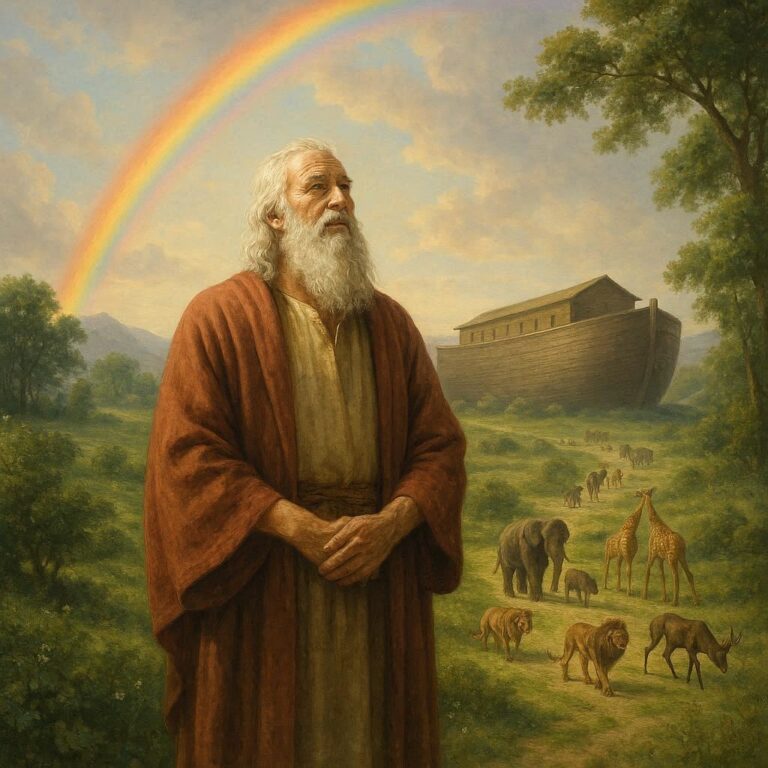
One of the most direct and influential scriptural references to the spiritual power of uncut, locked hair comes from the Hebrew Bible, in the form of the Nazarite Vow. Described in the Book of Numbers (Chapter 6), this was a temporary vow of dedication and separation unto God.
The regulations were strict: abstain from wine and vinegar, avoid contact with dead bodies, and—most crucially—”no razor shall be used on his head… he must let the hair of his head grow long” (Numbers 6:5). The hair was considered the physical sign of the vow, the “crown of consecration to his God.” It was a visible, tangible manifestation of the individual’s covenant and the divine power residing within them. The most famous Nazarites were Samson, whose superhuman strength resided in his seven locks, and Samuel. This Biblical foundation firmly establishes the principle that hair can be a reservoir for spiritual power and a sacred contract between an individual and the Divine.
Chapter 2: The Lion’s Mane – The Rastafari Reformation and Global Consciousness
While locs have ancient origins, their modern spiritual symbolism is inextricably linked to the Rastafari movement, which emerged in Jamaica in the 1930s. For Rastafari, locs (often called “locks” or “dreadlocks”) are not merely a style but a central tenet of their faith, a “Livity” or way of life.
From Oppression to Empowerment: The Birth of a Symbol
Rastafari emerged from the brutal legacy of slavery and colonialism. Enslaved Africans had their heads shaved, their languages forbidden, and their spiritual practices criminalized—a systematic attempt to erase their identity and connection to Africa. In this context, the decision to grow locs was a radical act of decolonization. It was a direct rejection of European beauty standards that prized straight, “tamed” hair. By allowing their hair to grow in its natural, God-given state and form locs, the early Rastafari were reclaiming their African heritage and bodily autonomy. They were, in effect, saying, “This is who I am, as the Almighty created me.”
“Lion of Judah”: Symbolism of Strength and African Majesty
The lion is a paramount symbol in Rastafari, representing His Imperial Majesty, Emperor Haile Selassie I of Ethiopia, whom they see as a messianic figure and the embodiment of God (Jah). The lion symbolizes strength, majesty, nobility, and dominion. Rastafari wear their locs to emulate the lion’s mane. This is powerfully symbolic:
-
Strength and Courage: Just as a lion’s mane makes it appear larger and more formidable, a Rasta’s locs are a public declaration of inner strength, resilience, and the courage to stand against oppression (often referred to as “Babylon System”).
-
African Identity: The lion is an indigenous animal of Africa. By identifying with the lion, Rastas affirm their pride in their African ancestry and the divine right of Black people to be kings and queens of their own destiny.
-
The Conquering Lion: The title “Conquering Lion of the Tribe of Judah” links Selassie to the lineage of King David and the Messiah in Christian theology. Wearing locs is thus an act of aligning oneself with this conquering, divine power.
The Rejection of Babylon and Western Aesthetics
In Rastafari philosophy, “Babylon” is the corrupt, oppressive, and materialistic system of the Western world. It represents everything that is contrary to a natural and righteous life. The comb and scissors are seen as tools of Babylon, used to alter and “polish” the natural self into a state of conformity. By rejecting these tools, Rastafari make a conscious separation from this system. Their locs are a constant, visible testimony to their refusal to be assimilated and their commitment to living a natural, Zion-centered life.
The Livity: Locs as an Extension of a Holistic Spiritual Life
For a Rastafari, locs are not an isolated practice. They are part of a holistic spiritual lifestyle known as “Livity.” This includes adhering to a natural, Ital diet (often vegan or vegetarian), speaking in a language of truth and empowerment (I-words), and living in harmony with nature and one’s community. The locs are the most visible sign of this internal commitment. They are a reminder to live righteously, to uphold the sacredness of the body as Jah’s temple, and to channel one’s energy toward spiritual growth and the liberation of all oppressed people.
Chapter 3: The Body as a Temple – The Energetic and Biological Philosophy of Locs
Beyond specific religious doctrines, there is a widespread metaphysical belief system regarding the human body’s energy fields, and locs are thought to play a significant role within this framework.
The Antenna Hypothesis: Locs as Spiritual Receptors
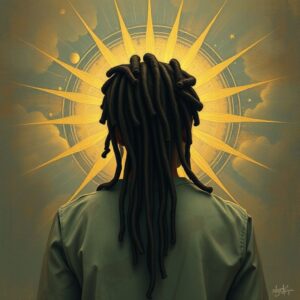
A prevalent belief among many who wear locs for spiritual reasons is that they function as antennae. Just as a radio antenna is designed to pick up specific frequencies from the air, locs are believed to be uniquely structured to receive subtle spiritual energies, cosmic information, and divine guidance. The coiled, dense structure is thought to be more efficient at this than loose, straight hair. This idea posits that by growing locs, one can heighten their intuition, deepen their meditation, and achieve a stronger connection to the universal consciousness or God.
The Retention of Energy and Life Force (Prana/Chi)
In traditions like Yoga and Qigong, the body is filled with a vital life force energy known as Prana (India) or Chi (China). This energy is what animates life and is central to spiritual vitality. A common belief is that the hair on the head acts as a conduit for this energy, with the follicles drawing it into the body. When hair is loose, this energy can easily dissipate. However, when hair is locked, the energy is believed to be cycled, contained, and amplified within the coils, creating a continuous feedback loop that nourishes the mind, body, and spirit. This is why many spiritual practitioners report feeling a greater sense of centeredness, energy, and personal power after their locs have matured.
The Third Eye and Crown Chakra Connection
In the Chakra system, the seven main energy centers of the body, the hair on the head is closely associated with the two highest chakras:
-
The Third Eye Chakra (Ajna): Located between the eyebrows, this is the center of intuition, foresight, and spiritual perception. The hair falling over the forehead is seen as protecting and energizing this sensitive center.
-
The Crown Chakra (Sahasrara): Located at the top of the head, this is our connection to the divine, universal consciousness, and higher states of awareness. It is the doorway through which spiritual energy enters the body.
Locs are believed to act as a powerful focusing tool for these chakras. They are thought to help channel energy directly into the Crown Chakra, facilitating a stronger spiritual connection, while also protecting and honing the intuitive abilities of the Third Eye. The weight and presence of the locs serve as a constant physical reminder to keep one’s consciousness elevated.
The Science of Hair as a Crystalline Antenna
While the spiritual claims are metaphysical, there is some fascinating scientific correlation. Hair, both on the head and throughout the body, contains crystalline structures. These structures have piezoelectric properties—meaning they can generate an electric charge in response to mechanical stress. It is theorized that the unique structure of a loc, with its thousands of hair strands fused together, could amplify this effect, making it a more effective biological antenna for electromagnetic fields and subtle energies than individual strands. While science has not “proven” the spiritual antenna theory, this biological reality provides a compelling bridge between the physical and the metaphysical worlds.
The Energetic Anatomy of a Loc – A Metaphysical Perspective
| Energetic Component | Proposed Function in Locs | Associated Spiritual Concept |
|---|---|---|
| The Antenna | To receive divine guidance, universal wisdom, and higher-frequency energies. | Enhanced intuition, clearer meditation, spiritual downloads. |
| The Energy Capacitor | To store and amplify one’s personal life force (Prana/Chi). | Increased vitality, personal power, and a sense of being “grounded.” |
| The Chakra Conduit | To focus energy towards the Crown and Third Eye Chakras. | Deepened spiritual connection, heightened awareness, and mystical insight. |
| The Protective Shield | To filter out negative or lower-vibrational energies from the environment. | Emotional resilience, psychic protection, and maintaining energetic integrity. |
| The Akashic Record | To physically encode one’s life experiences, wisdom, and karmic lessons. | A living diary of the soul’s journey; a connection to personal and ancestral history. |
Chapter 4: The Journey Within – The Spiritual Process of Cultivating Locs
The spiritual significance of locs is not found solely in the finished product but is deeply embedded in the transformative process of their cultivation. From the first day of commitment to the years of maturation, each phase offers profound spiritual lessons.
Intention Setting: The Foundation of Your Sacred Journey
Before the first twist or coil, the most critical step is setting a clear intention. Why are you choosing this path? Is it for spiritual growth? A vow to your faith? A commitment to your natural self? A journey of patience? This initial act of conscious decision-making plants a spiritual seed. The intention becomes the DNA of your locs, the invisible force that will guide their growth and infuse them with purpose. This is what separates a spiritual practice from a mere hairstyle.
The Patience of the Starter Phase: A Lesson in Surrender
The initial “starter” phase of locs can be challenging. The hair is short, the pattern is new, and the final form is nowhere in sight. This phase is a masterclass in patience and faith. It teaches you to trust the process even when you cannot see the result. It demands a surrender of the need for immediate gratification and external validation. Spiritually, this mirrors the beginning of any profound inner work—it requires humility, consistency, and the faith that with time and care, something beautiful and strong will emerge from the seeming chaos.
The Awkward Phase: Spiritual Growth and Transformation
As locs mature, they go through an “awkward” or “teenage” phase. They may puff up, stick out in different directions, and seem unruly. This phase is a powerful metaphor for spiritual growth and transformation. Just as a caterpillar must dissolve in its chrysalis before becoming a butterfly, your hair is undergoing a fundamental restructuring. Spiritually, this teaches acceptance of imperfection, non-attachment to appearance, and the understanding that true transformation is often messy and unpredictable. It is a period of building character and learning to love yourself through the process, not just the outcome.
Maturity and Maintenance: The Practice of Mindfulness and Care
When locs finally reach maturity, they are strong, defined, and carry the weight of their history. The maintenance of mature locs—whether through palm-rolling, interlocking, or simply washing and drying with care—becomes a ritual of mindfulness. It is a dedicated time for self-care and reflection. As you care for each loc, you are reminded of your intention, your journey, and the lessons you’ve learned. This regular practice reinforces the spiritual bond you have with your hair, turning maintenance from a chore into a meditative act of honoring your body and spirit.
Chapter 5: A Tapestry of Meanings – Interpreting the Spiritual Significance
While the reasons for wearing locs are deeply personal, several universal spiritual themes emerge across cultures and individual experiences.
A Vow of Non-Conformity and Authenticity
In a world that often pressures individuals to conform, locs stand as a bold declaration of authenticity. They represent a conscious decision to follow an inner compass rather than external trends. This is a spiritual vow to be true to oneself, to honor one’s unique path, and to resist the soul-crushing force of societal homogenization. It is an act of spiritual rebellion that says, “I will be who I am meant to be, not who you want me to be.”
A Symbol of Wisdom, Patience, and Time
Locs cannot be rushed. They are a physical manifestation of time itself. Each coil represents a day, a month, a year of one’s life. As they grow longer and denser, they become a record of lived experience and, by extension, earned wisdom. In many cultures, elders with long locs are revered not just for their age, but for the vast repository of life and spiritual insight they are believed to carry within their hair.
A Testament to Resilience and Inner Strength
The very structure of a loc is a lesson in resilience. Individual hairs, which on their own are weak and easily broken, when twisted together, become incredibly strong and difficult to tear apart. This is a powerful metaphor for the human spirit. Locs symbolize the ability to withstand pressure, to turn challenges into sources of strength, and to find unshakeable power in unity—both the unity of the self (mind, body, spirit) and unity with community and the Divine.
A Living Prayer and a Connection to Ancestors
For many, their locs are a continuous, silent prayer. With every new growth, it is a prayer for strength, for guidance, for protection. It is a physical offering of the self to God, spirit, or the Universe. Furthermore, by wearing a hairstyle with such deep historical and ancestral roots, one feels a tangible connection to those who walked this path before—the Sadhus in their caves, the priests in the temples, the freedom fighters in the streets. The locs become a bridge across time, honoring the ancestors and continuing their spiritual legacy.
Chapter 6: Locs in the Modern World: Spirituality, Stereotypes, and Empowerment
In the 21st century, the wearing of locs exists at a complex intersection of deep spirituality, cultural identity, and pervasive social bias.
Navigating Cultural Appropriation vs. Spiritual Appreciation
As locs have gained mainstream visibility, the conversation around cultural appropriation has intensified. The key distinction lies in context, respect, and understanding. Appropriation occurs when a dominant culture adopts the symbols of a marginalized culture without understanding or respecting their history and significance, often while the people of that culture continue to be discriminated against for those same symbols. Appreciation, on the other hand, involves a genuine effort to understand the spiritual and cultural weight of locs, to honor their origins, and to wear them with the respect they deserve. For a non-Black or non-Rastafari individual drawn to locs for spiritual reasons, the onus is to engage in deep research, understand the history of struggle and empowerment they represent, and approach the journey with humility and the right intention.
Challenging Professional and Social Biases
Despite their spiritual significance, locs are often met with discrimination in workplaces and social settings. They are wrongly associated with being “unprofessional,” “unhygienic,” or “rebellious” in a negative context. This bias is a modern manifestation of the same colonial mindset that Rastafari and others have fought against. Challenging these stereotypes is a spiritual act in itself. It is a stand for the right to express one’s faith and identity freely. Every individual who wears their locs with pride in a biased environment is not only representing themselves but also contributing to the broader struggle for acceptance and understanding.
The Rise of the “Loc Revolution”: A New Generation of Spiritual Seekers
Today, a new generation is embracing locs. This includes people from all walks of life, ethnicities, and spiritual backgrounds. For many, it is not necessarily a strict adherence to Rastafari or another ancient tradition, but a personal spiritual path. They are drawn to the ideas of natural living, energy work, mindfulness, and authentic self-expression that the journey of locs facilitates. This modern “Loc Revolution” is creating a new, inclusive narrative for locs, one that honors their sacred history while allowing for individual spiritual interpretation and growth.
Conclusion: The Eternal Coil – A Summary
In summary, the spiritual meaning behind locs is a rich and multifaceted tapestry woven from ancient vows, cultural resilience, and metaphysical belief. They are a sacred testament to the power of intention, a biological antenna for divine connection, and a lion’s mane of inner strength and authenticity. Ultimately, to wear locs is to embark on a lifelong journey of spiritual discovery, where the very hair on one’s head becomes a map, a prayer, and a crown of one’s unique and sacred path.
Frequently Asked Questions (FAQs)
1. Do I have to be Rastafari to have spiritual locs?
No, you do not. While Rastafari have profoundly shaped the modern understanding of spiritual locs, the practice predates the movement by thousands of years across various cultures (Hinduism, Ancient Egypt, Nazarites). Your spiritual journey is your own. What matters is the conscious intention and respect you bring to the practice.
2. Is it cultural appropriation for someone who is not Black to have locs?
This is a nuanced topic. It becomes appropriation if the wearer is ignorant of the deep cultural and spiritual history of locs, treats them as a mere fashion trend, and benefits from a style for which Black people have been historically persecuted. It can be appreciation if done with deep respect, understanding, and a genuine spiritual intention, while also acknowledging the history and standing against the discrimination that others may face for the same hairstyle.
3. Can I cut my locs if I feel my spiritual journey with them is over?
Absolutely. The spiritual journey is fluid. Locs represent a chapter in your life. If you feel the chapter has concluded and cutting them is the right step for your next phase of growth, that is a valid and powerful choice. It can be done ceremonially, with gratitude for the lessons and strength they provided.
4. Do locs really hold energy, both positive and negative?
Many spiritual practitioners believe they do. This is why practices like regular cleansing (both physical washing and spiritual practices like smudging with sage, meditation, or soaking in salt water) are considered important to clear any stagnant or negative energy the locs may have absorbed from the environment.
5. How do I set a spiritual intention for my locs?
Before you start, spend time in meditation or journaling. Ask yourself: “Why am I doing this? What do I hope to learn? What energy do I want to invite into my life?” Write it down or speak it aloud as you begin your journey. You can revisit this intention during your maintenance rituals to keep it alive.