If you’ve ever browsed garden centers or read classic poetry, you’ve likely come across the name “Rose of Sharon.” It’s a phrase that carries a whisper of ancient beauty and spiritual depth. But what is the true Rose of Sharon biblical meaning? Is it a specific flower, a poetic metaphor, or a title for Jesus Christ?
This phrase, found in one of the most poetic books of the Bible, has captivated gardeners, theologians, and artists for centuries. Its meaning is layered, beautiful, and surprisingly practical for our modern faith. This comprehensive guide will explore every facet—from the disputed botany of the Holy Land to the profound theological symbolism—to give you a clear, reliable, and deeply enriching understanding.
Understanding the Source: The Song of Solomon
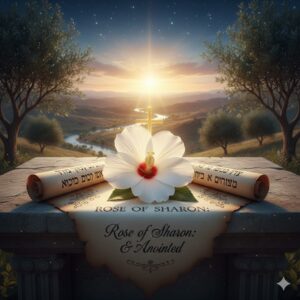
To grasp the meaning of the Rose of Sharon, we must first visit its biblical home. The phrase appears only once in the entire Bible, in the Song of Solomon (also called the Song of Songs).
“I am the rose of Sharon, and the lily of the valleys.” (Song of Solomon 2:1, KJV)
This book is a unique piece of scripture—a passionate, lyrical dialogue of love between a bride (the Shulammite woman) and her bridegroom (King Solomon), and a chorus known as the “daughters of Jerusalem.” Scholars through the ages have interpreted this song on two primary levels:
-
The Literal/Human Level: A celebration of God-given human love, intimacy, and marriage.
-
The Allegorical/Spiritual Level: A representation of the love between God (as the bridegroom) and His people (as the bride). In Christian tradition, this is often seen as depicting the love between Christ and the Church.
The speaker declaring, “I am the rose of Sharon” is the beloved woman. This is her humble yet confident self-description.
The Setting: The Plain of Sharon
Sharon is not a person, but a place. It refers to the coastal plain of Sharon, a fertile, lush region along the Mediterranean coast in ancient Israel, stretching from modern-day Haifa to Tel Aviv-Jaffa.
| Characteristic | Description of the Plain of Sharon |
|---|---|
| Location | Central coastal plain of Israel |
| Biblical Reference | Known for its beauty and fertility (e.g., Isaiah 35:2) |
| Terrain | Historically covered with oak forests and rich pastureland |
| Floral Life | Hosted a wide variety of wildflowers and pasture plants |
| Key Insight | It was not a cultivated rose garden, but a wild, open plain. |
This geographical context is crucial. The “rose” of this plain is not a hothouse flower but a resilient, wild blossom thriving in an open landscape.
What Was the Actual “Rose of Sharon” Flower?
Here lies one of the great botanical mysteries of the Bible. The ancient Hebrew text uses the word חֲבַצֶּלֶת (ḥăḇaṣṣeleṯ). The exact identification of this plant is lost to time, and Bible translations differ significantly.
Important Note: The famous hybrid garden shrub known as “Rose of Sharon” (Hibiscus syriacus) is a misnomer. This plant, native to Asia, was not present in biblical Israel and was given this romantic name by European gardeners centuries later.
Let’s examine the leading candidates for the true biblical ḥăḇaṣṣeleṯ:
1. The Meadow Flower / Wildflower (Most Likely)
Many modern scholars believe the ḥăḇaṣṣeleṯ was not a “rose” as we know it at all. The translation “rose” comes from early English Bibles influenced by the Latin rosa. More recent translations often use more generic terms:
-
NIV: “I am a lily of the valleys.”
-
ESV: “I am a lily of the valleys.”
-
NASB: “I am the narcissus of Sharon.”
The consensus is shifting toward it being a common, but striking, wildflower of the plain—perhaps a bulb flower like a narcissus, tulip, crocus, or anemone. These flowers are known for their vibrant, unexpected beauty in open fields.
2. The Rock Rose or Cistus
This is a strong contender. The Cistus genus (especially Cistus creticus) is a common shrub in the Israeli hills. It has delicate, crinkled petals (often pink) that resemble roses and thrives in rocky, difficult soil. Its resilience and humble beauty make it a fitting symbol.
3. The Tulip or Anemone
The brilliant red anemone (Anemone coronaria), often called the “lily of the field” in Israel today, blankets the Plain of Sharon in spring. Its stunning, blood-red bloom could easily be the object of poetic admiration.
Comparative Table of Likely Plants
| Plant | Characteristics | Pro | Con |
|---|---|---|---|
| Wildflower / Meadow Lily | Generic term for a field blossom | Fits the plain’s ecology; emphasizes common beauty | Not botanically specific |
| Narcissus / Daffodil | Bulb flower; white/yellow blooms | Grows in valleys; mentioned in other ancient texts | Not uniquely associated with Sharon |
| Rock Rose (Cistus) | Pink, rose-like shrub; grows in poor soil | Resilient; name includes “rose”; common in region | Not a showy, singular bloom |
| Anemone (Red) | Striking red bloom; covers fields in spring | Visually stunning; iconic to the region today | The Hebrew root word doesn’t directly point to it |
The key takeaway? The Rose of Sharon biblical meaning is not about a specific horticultural species. It’s about the qualities of the flower: its natural beauty, its humble origin, and its value despite being one among many in a vast field.
Primary Symbolic Meaning in the Song of Solomon
When the Shulammite woman calls herself the “rose of Sharon,” she is making a profound statement of identity. Let’s break down the layers of meaning in its original context.
A Statement of Humility and Commonality
She is not a rare, imported orchid or a royal, cultivated flower. She is a blossom from the open, public plain. This can be seen as an expression of humility. She sees herself as ordinary, just a girl among others (“the daughters of Jerusalem”).
A Statement of Unique Beauty and Value
In the very next verse, Solomon responds with a powerful counterpoint:
“Like a lily among thorns is my darling among the young women.” (Song of Solomon 2:2, NIV)
Her self-view as a common flower is met with his view of her as exquisite and unique. The “rose of Sharon,” while common in its setting, is undoubtedly beautiful. It stands out for its grace and fragrance against the backdrop of the plain. Her declaration is therefore not self-deprecation, but a confident acknowledgment of her own God-given beauty in its natural state.
Symbol of Delightful, Accessible Love
The rose/lily of the valleys is a symbol of the beloved herself. She is:
-
Beautiful to behold: She brings delight to her lover.
-
Sweet-smelling: Her presence and character are pleasing.
-
Found in the open places: Her love is not hidden or exclusive but found in the “fields” of everyday life.
This aligns with the book’s celebration of love that is both earthly and divine, passionate and pure.
The Christian Interpretation: Jesus as the Rose of Sharon
Over time, especially in Christian hymnody and preaching, the title “Rose of Sharon” has been poetically applied to Jesus Christ. This is an allegorical interpretation that grew from viewing the Song of Solomon as a metaphor for Christ’s love for the Church.
While the speaker in the Bible is the bride, the symbolic attributes of the flower have been seen as reflecting the character of the divine bridegroom.
How is Jesus seen as the Rose of Sharon?
-
Supreme Beauty: Jesus is the ultimate beauty and delight of humanity.
-
Humble Origin: Like a flower from a plain (not a royal garden), Jesus came from humble beginnings (Nazareth, a stable).
-
Sweet Fragrance: His life and sacrifice are described as a “pleasing aroma” to God (Ephesians 5:2).
-
A Source of Life in the Wilderness: In the spiritual “valley” or wilderness of the world, He is the source of life and hope.
-
Unique Among All: He is the unique and only Son of God, the “lily among thorns.”
This interpretation is most famously captured in the beloved 19th-century hymn:
“Jesus, Rose of Sharon, bloom within my heart; Beauties of Thy truth and holiness impart.”
Important Note: It is vital to understand that this is a devotional and poetic application, not a direct exegetical claim on the Song of Solomon 2:1. It takes the symbol’s qualities and applies them to Christ, which has been a meaningful practice for many believers.
Lessons for the Modern Believer
The Rose of Sharon biblical meaning offers powerful, practical lessons for our lives today.
1. Embracing Our Identity in God’s Eyes
We often see ourselves as common, growing in the vast, anonymous “plain” of humanity. Yet, God sees us as He saw the Shulammite woman: as His unique, cherished, and beautiful creation. Our value is not in being the only flower, but in being His flower.
2. Finding Beauty in Humility
True beauty and spiritual depth often spring from humble, unassuming places. God’s work in our lives doesn’t require a royal greenhouse; it flourishes in the fields of our ordinary circumstances.
3. Recognizing Christ’s Accessible Beauty
The image invites us to find Jesus not only in grand temples but in the “open plain”—in everyday life, in nature, in simple acts of love and grace. He is a Savior accessible to all.
4. The Church as a Garden
Just as the plain of Sharon held many flowers, the Church is a garden where each believer, like a unique blossom, contributes to the overall beauty of God’s kingdom. Diversity within unity is a divine design.
Common Questions and Misconceptions
FAQ: Frequently Asked Questions
Q: Is the Rose of Sharon Jesus or the Church?
A: In the literal Bible verse (Song of Solomon 2:1), it is the bride (often symbolizing God’s people/the Church). In longstanding Christian devotional tradition, the title and qualities of the Rose have been applied to Jesus. Both applications hold spiritual value when understood in their respective contexts.
Q: Can I buy a real “Rose of Sharon” bush?
A: You can buy a shrub called Hibiscus syriacus, or “Rose of Sharon.” It’s a beautiful, hardy plant. Just remember it is not the biblical flower but carries the romantic name due to its later association.
Q: Why is there so much confusion about the flower?
A: Language and botany have evolved over 3,000 years. The precise Hebrew plant name was lost, and translators chose words familiar to their audiences (like “rose” for English readers). The focus is rightly on the symbolism, not the botany.
Q: What is the main lesson of the Rose of Sharon?
A: The core lesson is that God finds exquisite beauty and value in what the world might see as common or humble, and He cultivates a love relationship with His people in the open fields of human experience.
Conclusion
The Rose of Sharon biblical meaning blossoms from a single, poetic line into a rich field of insight. It is a symbol of humble yet confident beauty, a testament to love that flourishes in open places, and a reminder that our worth is defined by the One who cherishes us. Whether viewed as the believer’s identity in Christ or a reflection of Christ’s own accessible grace, this ancient metaphor continues to offer fragrance and beauty to all who ponder its meaning. Its enduring power lies not in pinpointing a petal, but in embracing the promise it represents: that in the vast plain of life, love and beauty, divinely given, can always be found.
Additional Resource:
For a deeper academic and linguistic study of the plants of the Bible, consider visiting the University of Michigan’s Online Biblical Flora Database. (Note: This is an external resource for further research).