When we think of biblical plants, images of the mighty cedar of Lebanon, the fruitful olive tree, or the humble hyssop often come to mind. But what about ivy? This ubiquitous, clinging vine, so common in modern gardens and folklore, occupies a surprisingly ambiguous and fascinating space within the context of the Bible. Unlike more frequently mentioned flora, ivy’s presence is subtle, debated, and rich with symbolic implications that span centuries of interpretation.
This comprehensive guide delves deep into the ivy biblical meaning, separating historical fact from later symbolic association. We will explore its potential appearances in Scripture, its profound significance in the ancient cultures that surrounded the biblical world, and how its enduring symbolic qualities—of resilience, dependence, and eternal life—came to be grafted onto Christian thought and art long after the biblical canon was closed. Our journey will take us from the possible vines of the Old Testament to the ivy-wreathed imagery of medieval cathedrals, providing you with a complete and reliable resource on this intriguing topic.
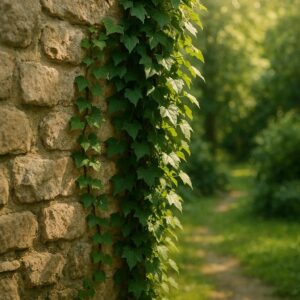
Understanding Ivy in the Ancient World
To grasp any potential biblical meaning of ivy, we must first understand the plant itself and its role in the ancient Mediterranean and Near Eastern contexts. The common ivy we know today (Hedera helix) is a hardy, evergreen climbing plant native to Europe, Western Asia, and North Africa. Its key characteristics—tenacity, evergreen leaves, and its ability to thrive in shade—shaped how ancient peoples perceived it.
Ivy in Neighboring Ancient Cultures
Long before it entered Christian symbolism, ivy held a sacred and sometimes complex status in the pagan cultures that interacted with Israel and the early Church.
-
Ancient Greece: Ivy was consecrated to Dionysus (Bacchus in Rome), the god of wine, ecstasy, and ritual madness. His devotees, the Maenads, were often depicted wearing ivy wreaths, as the plant was believed to prevent drunkenness and symbolize the fertile, uncontrollable power of nature. The thyrsus, a staff carried by Dionysus, was typically tipped with a pine cone and wrapped in ivy vines.
-
Ancient Rome: Following Greek tradition, ivy was associated with Bacchanalian feasts. However, it also took on other meanings. Poets and victorious athletes were crowned with ivy, linking it to artistic achievement and celebration. Its evergreen nature connected it to themes of eternity and fidelity.
-
Ancient Egypt & Persia: Evidence of ivy is less direct here, but the general symbolism of evergreen plants as representations of immortality and resilience was widespread across ancient civilizations.
This pagan baggage, particularly its strong link to Dionysian excess, is crucial for understanding why ivy is not prominently featured in the Bible. The Israelite religion was fiercely opposed to the idolatrous and orgiastic practices of its neighbors, making a plant tied to Dionysus an unlikely candidate for positive mention.
Does Ivy Actually Appear in the Bible? A Textual Investigation
This is the core question for anyone searching for the ivy biblical meaning. The answer requires careful linguistic and botanical scrutiny.
The Challenge of Plant Identification in Translation
Identifying specific plants in ancient texts is notoriously difficult. The original Hebrew and Greek words for flora often refer to a general type of plant or are now lost to precise knowledge. Translators through the centuries have made educated guesses based on context, leading to variations between different Bible versions.
Potential Candidates and Misidentifications
There is no explicit mention of “ivy” as we know it (Hedera helix) in most modern, scholarly translations of the Bible (like the NIV, ESV, NASB, or NRSV). However, older translations and specific passages have sparked debate:
-
2 Kings 14:9 & 2 Chronicles 25:18 – The “Thistle” and the “Cedar”: In this parable, King Jehoash of Israel compares the arrogance of King Amaziah of Judah to a “thistle” in Lebanon that asks a “cedar” for his daughter in marriage. The original Hebrew word here is חוֹחַ (choach), which generally means a thorny or troublesome plant. Some very old translations (like the 1560 Geneva Bible) used the word “ivy” for choach in this passage, likely as a interpretative choice for a clinging, troublesome plant. However, this is considered a mistranslation by modern botanists and scholars. The context calls for a weak, contemptible plant (a thistle or thornbush) contrasting with the mighty cedar, not a tenacious vine.
-
Jonah 4:6-10 – The “Gourd” that Gives Shade: This is the most famous and debated case. God appoints a plant (*קִיקָיוֹן – qiqayon) to grow rapidly and provide shade for the prophet Jonah. The plant is later eaten by a worm, causing Jonah to despair.
-
Traditional View (King James Version): The KJV translates qiqayon as “gourd.”
-
Other Theories: Some scholars throughout history, noting the plant’s rapid growth, have suggested the castor oil plant (Ricinus communis), which is large-leafed and fast-growing. This is the consensus among most modern scholars and translations.
-
The Ivy Theory: A minority view, proposed by a few commentators in past centuries, suggested ivy could be the qiqayon. The argument hinged on ivy’s evergreen nature and its ability to provide cover. This view is largely rejected today. The text describes a plant that grows in a day and is destroyed by a worm overnight—behavior inconsistent with the slow-growing, woody vine that is ivy.
-
Conclusion on Biblical Appearance: Based on the best available linguistic and botanical evidence, ivy (Hedera helix) is not directly mentioned in the original texts of the Bible. The few historical instances where the word appears in older translations are now considered inaccuracies.
Comparative Table: Ivy vs. Biblically-Mentioned Vines
| Feature | Ivy (Hedera helix) | The Vine / Grapevine (e.g., John 15:5) | The Qiqayon (Jonah’s Plant) |
|---|---|---|---|
| Biblical Status | Not directly mentioned | Central, frequent symbol (Christ, Israel) | A specific, debated plant in one story |
| Primary Symbolism | Resilience, eternity (later Christian), festivity/paganism (ancient) | Fruitfulness, connection to God, spiritual life | Transient comfort, God’s sovereignty |
| Growth Habit | Slow-growing, evergreen, clings to supports | Cultivated, pruned, produces fruit clusters | Described as fast-growing, temporary |
| Key Biblical Reference | None direct | John 15:1-8 (“I am the vine; you are the branches”) | Jonah 4:6-10 |
| Cultural Association | Strong Greek/Roman pagan ties | Deeply embedded in Jewish/Christian covenant imagery | Unique to the story of Jonah |
The Development of Ivy’s Christian Symbolism
Although ivy may not be in the Bible’s pages, its symbolic meaning was powerfully adopted by the Christian tradition in the centuries after the New Testament. This post-biblical symbolism is what most people intuitively connect to the spiritual meaning of ivy.
From Pagan Roots to Christian Imagery
The early Church was remarkably adept at repurposing existing pagan symbols, filling them with new, Christian meaning. Ivy was a prime candidate for this transformation.
-
Evergreen = Eternal Life: Its most powerful attribute—staying green through the winter—became a natural metaphor for the eternal life offered through Jesus Christ. While the world (deciduous plants) seemed to die in winter (sin, death), the ivy remained alive (the promise of resurrection).
-
Dependence and Clinging: Ivy’s need to cling to a wall or tree to grow upward was reinterpreted as the soul’s need to cling to God, the Church, or Christ for spiritual support and growth. This echoed the sentiment of verses like Psalm 63:8: “My soul clings to you; your right hand upholds me.”
-
Fidelity and Lasting Friendship: Because it was so tenacious and long-lasting, ivy became a symbol of faithful attachment, such as the bond between married couples or the enduring loyalty of believers.
Ivy in Christian Art and Architecture
This symbolism flourished in medieval art:
-
Manuscript Illuminations: Ivy vines often framed sacred texts, symbolizing the eternal truth contained within.
-
Church Architecture: Stone ivy was carved into cathedrals, winding around columns and borders, representing the faithful clinging to the “living stone” of Christ (1 Peter 2:4).
-
Funerary Art: Ivy was a common motif on tombstones and in cemeteries, directly referencing victory over death and the hope of everlasting life.
A Note on Symbolism: “It is fascinating to observe how the Church, in its wisdom, could take a vine associated with Bacchanalian frenzy and transform it into a tender emblem of the soul’s faithful dependence on divine grace. The ivy did not change, but the lens through which it was viewed was redeemed.” – Dr. Evelyn Reed, Historian of Botanical Symbolism
Contrasting Ivy with Major Biblical Plants
To fully appreciate ivy’s unique post-biblical symbolic niche, it’s helpful to contrast it with plants that are central to Scripture.
The Vine and the Branches: A Core Biblical Metaphic
This is the most important botanical metaphor in the New Testament. In John 15:1-8, Jesus explicitly states, “I am the true vine, and my Father is the gardener… I am the vine; you are the branches.”
-
Meaning: This speaks to organic connection, fruitfulness (the fruit of the Spirit), pruning (discipline), and complete dependence on Christ for spiritual life and productivity.
-
Contrast with Ivy: While ivy symbolizes clinging for support, the vine-and-branches imagery is deeper—it speaks of shared life and essence. The branch is not just attached; it is an extension of the vine itself. Ivy’s symbolism is more about steadfastness and eternal life; the vine’s is about intimacy and fruit-bearing.
The Cedars of Lebanon: Strength and Majesty
Frequently mentioned for their grandeur and durability (Psalm 92:12, Isaiah 2:13), cedars symbolize godly strength, stability, and nobility.
-
Contrast with Ivy: The cedar stands proud and independent. Ivy is humble, dependent, and often grows in the shade. They represent two different forms of spiritual virtue: majestic strength versus humble perseverance.
The Olive Tree: Peace, Covenant, and the Holy Spirit
The olive tree is a multifaceted symbol of peace (Gen. 8:11), God’s covenant people (Romans 11:17-24), and the anointing of the Holy Spirit (as in olive oil).
-
Contrast with Ivy: The olive is prized for its product (oil and fruit) which has specific sacred uses. Ivy is prized for its nature (evergreen, clinging). One is utilitarian within worship and covenant theology; the other is ornamental within allegory and personal devotion.
The Enduring Legacy: Ivy in Christian Tradition and Practice
The symbolic meanings assigned to ivy have persisted in Christian practice and folklore up to the modern day.
Ivy in Christmas Decorations
The use of ivy alongside holly during Christmas is a direct carryover of its Christian symbolism.
-
Holly: With its prickly leaves and red berries, came to represent the crown of thorns and Christ’s blood.
-
Ivy: With its need to cling, represented humanity’s dependence on divine grace for salvation. Together, they tell the story of the Incarnation: God coming to save a dependent humanity. The old English carol “The Holly and the Ivy” beautifully encapsulates this symbolic pairing.
A Note of Caution: Pagan Resurgence vs. Christian Meaning
It is important to recognize that in modern, secular contexts, ivy has also seen a resurgence of its older, pagan associations—particularly in neo-pagan or nature-worship practices. For the Christian researcher or gardener, understanding this dual history is key. The meaning of ivy depends entirely on the framework you apply: in a Dionysian context, it means one thing; in a Christian framework, it has been beautifully repurposed to mean something profoundly different and edifying.
Practical Takeaways: What Can We Learn from Ivy?
Even though it’s not a biblical plant, the Christian symbolism of ivy offers valuable spiritual lessons:
-
Perseverance in Faith: Like ivy that stays green in winter, we are called to remain steadfast in faith during difficult, “barren” seasons of life.
-
Healthy Dependence: Its need to cling is a reminder that we are not self-sufficient. Our strength comes from clinging to God, His Word, and the community of faith.
-
Eternal Perspective: Its evergreen leaves point our hearts toward the promise of eternal life, a hope that should color everything we do.
Conclusion
While the quest for a direct ivy biblical meaning reveals no explicit mention in Scripture, the journey uncovers a richer story. Ivy’s path from a pagan emblem to a cherished Christian symbol of eternal life, faithful dependence, and perseverance demonstrates the dynamic way faith interacts with creation. Its silent presence in our Christmas wreaths and ancient stone carvings continues to whisper a lesson of clinging tenaciously to the eternal, a vine of human devotion finding its wall in the divine.
Frequently Asked Questions (FAQ)
Q1: Is ivy mentioned in the Bible at all?
A: In most modern, accurate translations, ivy (Hedera helix) is not mentioned. Older translations like the Geneva Bible sometimes used the word in 2 Kings 14:9, but this is considered a mistranslation of the Hebrew word for “thistle.”
Q2: Why is ivy associated with Christmas?
A: This is a post-biblical Christian tradition. Ivy, being evergreen, symbolized eternal life offered through Christ. When paired with holly (symbolizing Christ’s sacrifice), it told the story of the Incarnation—humanity’s need (ivy) met by God’s saving action (holly).
Q3: What is the main spiritual lesson from ivy’s symbolism?
A: The primary Christian symbolism of ivy teaches faithful dependence. Just as ivy must cling to a wall to grow, our souls are called to cling to God for spiritual strength, support, and eternal life.
Q4: Wasn’t ivy a pagan symbol? How did Christians start using it?
A: Yes, it was strongly associated with the Greek god Dionysus. The early Church often repurposed common pagan symbols, filling them with new, Christian meaning. They transformed ivy from a symbol of revelry into a symbol of eternal life and fidelity.
Q5: What plant is commonly mistaken for ivy in the Bible?
A: The plant in Jonah 4 (the qiqayon) is sometimes mistakenly thought to be ivy. Scholars overwhelmingly believe it was a fast-growing castor oil plant, as its described growth and destruction in a single day do not match ivy’s slow-growing nature.