The image of a tree is deeply rooted in the human imagination. It speaks of growth, strength, and connection. But within the pages of the Bible, one particular tree transcends all others in its symbolic power: the Tree of Life. This isn’t just a plant in a garden; it’s a central motif, a divine promise, and a key to understanding God’s plan from the first book of the Bible to the last.
You might first think of it as that forbidden tree in Eden, but its story is far richer and more hopeful. The Tree of Life biblical meaning weaves a thread of grace, redemption, and eternal hope through the entire biblical narrative. It begins in a perfect garden, seems lost to humanity, and returns in a glorious, future city. Understanding this symbol is like finding a map to the heart of the Bible’s message.
In this guide, we will journey together through Scripture. We’ll explore its first appearance in Genesis, trace its echoes in Proverbs and Psalms, and witness its triumphant return in Revelation. We’ll unpack what it meant for the original readers and, more importantly, what its profound symbolism means for your faith today. This is more than an academic study; it’s an exploration of God’s enduring offer of life, healing, and restored relationship with Him.
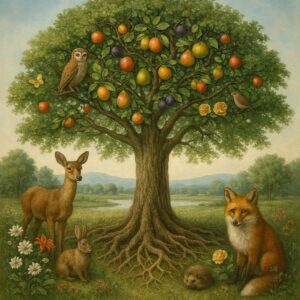
What is the Tree of Life in the Bible?
At its core, the Tree of Life is a literal, yet powerfully symbolic, object created by God. It represents the source and sustainer of eternal, unbroken life—life as God originally intended it. It’s not merely a tree that grants long years, but one that embodies the fullness of life in perfect harmony with the Creator.
A Definition Rooted in Scripture
The Bible first introduces it in Genesis 2:9, stating, “The Lord God made all kinds of trees grow out of the ground—trees that were pleasing to the eye and good for food. In the middle of the garden were the tree of life and the tree of the knowledge of good and evil.” Its placement is intentional: in the middle of the Garden of Eden. This central location signifies its supreme importance. It was accessible, beautiful, and meant for humanity’s benefit.
Unlike the Tree of the Knowledge of Good and Evil, which came with a specific command not to eat from it, the Tree of Life appears to have been freely available. It stood as a constant, gracious invitation from God to partake in His own eternal, divine life. It was the physical manifestation of the life-giving relationship He offered to Adam and Eve.
Core Symbolism: More Than Just Fruit
The Tree of Life biblical meaning is layered with rich symbolism that develops throughout Scripture. Its primary meanings include:
-
Eternal Life and Immortality: Its very name defines its purpose. In Eden, eating from it would have perpetually sustained human life, preventing physical death (Genesis 3:22).
-
Divine Provision and Sustenance: It symbolizes all good gifts that flow from God to nourish and sustain His creation, both physically and spiritually.
-
Wisdom and Flourishing: Later books like Proverbs connect a righteous, wisdom-led life to the qualities of the Tree of Life (Proverbs 3:18, 11:30).
-
Healing and Restoration: The prophetic book of Ezekiel and the final book of Revelation depict its leaves being used for “healing,” pointing to a future restoration of all things.
-
God’s Presence and Approval: To have access to the tree was to live in God’s favor and intimate presence. To be barred from it was a consequence of severed relationship.
In essence, the Tree of Life is the Bible’s symbol for the kind of true, abundant, and eternal life that can only be found in connection with God Himself.
The Tree of Life in Genesis: The Story of Paradise Lost
Our first encounter with the Tree of Life is in a state of perfect peace. Genesis chapters 2 and 3 set the stage for the entire human story, and the tree plays a pivotal role in both humanity’s original purpose and its tragic fall.
Creation and Placement in Eden
After forming Adam, God planted a garden “eastward in Eden” as a perfect habitat for him. Genesis 2:9 tells us that God caused to grow “every tree that is pleasant to the sight, and good for food.” Among this abundance, two trees are singled out by name and given prime, central real estate: the Tree of Life and the Tree of the Knowledge of Good and Evil.
This placement is profoundly theological. The two trees represented two fundamental choices, two ways to live:
-
The Tree of Life: The way of receptive trust, dependence on God, and receiving life as a gift.
-
The Tree of Knowledge: The way of autonomous judgment, deciding for oneself what is good and evil, independent of God.
The Garden was a temple of sorts, and the Tree of Life may have functioned as a symbol of God’s life-giving presence at its center—much like the lampstand in the later Tabernacle. Its fruit was permissible and, it seems, encouraged as the means to sustain the eternal life Adam and Eve enjoyed.
The Fall and Expulsion: The Barrier to Life
The famous story of the Fall revolves around the other tree. God gave one prohibition: “You must not eat from the tree of the knowledge of good and evil, for when you eat from it you will certainly die” (Genesis 2:17). Tragically, Adam and Eve chose autonomy over trust. They ate from the forbidden tree.
The immediate consequence was spiritual death—a rupture in their relationship with God, marked by shame, fear, and hiding. Physical death became their new, tragic destiny. It is at this point that the Tree of Life re-enters the narrative with heartbreaking significance.
After pronouncing the curses, God speaks in a divine counsel: “The man has now become like one of us, knowing good and evil. He must not be allowed to reach out his hand and take also from the tree of life and eat, and live forever” (Genesis 3:22).
This is an act of severe mercy. To live forever in a state of sin, brokenness, and separation from God would be an eternal nightmare—a living death. God’s love necessitated barring the way. He stationed cherubim and a flaming sword “to guard the way to the tree of life” (Genesis 3:24). Paradise was lost, and the source of eternal life was placed out of reach.
Theological Significance in the Primeval Narrative
The events in Genesis establish the foundational biblical meaning of the Tree of Life:
-
The Original Gift: It signifies the perfect, eternal life God intended for humanity—a life of unbroken fellowship with Him.
-
The Consequence of Sin: It becomes the symbol of what was lost. Sin makes us unfit for God’s holy, eternal life. The flaming sword represents the barrier our rebellion has erected.
-
The Promise Implied: Even in judgment, the tree is not destroyed. It remains, its way guarded. This hints that the story isn’t over. The longing for that tree—for restored access to God’s life—is woven into the human heart from that moment forward. The rest of the Bible is, in a sense, the story of how that way is reopened.
The Tree of Life in Wisdom Literature: A Symbol for Right Living
After Genesis, the Tree of Life seems to vanish from the biblical story for a time. But it reappears not as a physical object, but as a powerful metaphor in the poetry and wisdom books of the Old Testament. Here, its meaning expands from a lost historical artifact to a present spiritual reality available to the faithful.
Proverbs: Wisdom as a Tree of Life
The book of Proverbs, a guide for skillful and godly living, uses the Tree of Life metaphor to describe the tangible benefits of a life aligned with God’s wisdom.
-
Proverbs 3:18: This is the most direct link. Speaking of divine Wisdom personified, it says, “She is a tree of life to those who take hold of her; those who hold her fast will be blessed.” Here, the Tree of Life biblical meaning transforms. Access to it is no longer a geographical location in Eden, but a relational and moral choice. Embracing God’s wisdom is like eating from the Tree of Life—it leads to blessing, stability, and a flourishing soul.
-
Proverbs 11:30: “The fruit of the righteous is a tree of life, and the one who is wise saves lives.” A righteous person’s life and influence are themselves life-giving to others, like a tree that produces nourishing fruit.
-
Proverbs 13:12: “Hope deferred makes the heart sick, but a longing fulfilled is a tree of life.” The experience of seeing good desires and godly hopes come to pass brings rejuvenation and joy to the spirit.
-
Proverbs 15:4: “The soothing tongue is a tree of life, but a perverse tongue crushes the spirit.” Our words have the power to bring healing and life or destruction.
In Proverbs, the tree is no longer guarded by angels. It is planted in the daily choices of speech, righteousness, and the pursuit of wisdom.
Psalms and the Righteous as a Tree
While the exact phrase “tree of life” isn’t used in Psalms, the powerful imagery of the righteous person as a flourishing, well-watered tree directly echoes the concept.
-
Psalm 1:3: The blessed man, who delights in God’s law, “is like a tree planted by streams of water, which yields its fruit in season and whose leaf does not wither—whatever they do prospers.” This is a portrait of sustained, resilient, and fruitful life—the very essence of what the Tree of Life represents.
-
Psalm 92:12-14: “The righteous will flourish like a palm tree… They will still bear fruit in old age, they will stay fresh and green.”
This imagery reinforces the idea that a life rooted in God experiences a continual, life-giving flow of grace and vitality, even amidst life’s challenges.
Comparative Table: The Tree of Life in the Old Testament
| Book & Context | Symbolic Meaning | Key Verse | Access Condition |
|---|---|---|---|
| Genesis (Garden) | Source of Eternal Physical Life | Genesis 2:9; 3:22-24 | Original Access: Given. Post-Fall: Barred by sin, guarded by cherubim. |
| Proverbs (Wisdom) | Wisdom, Righteousness, and Life-Giving Speech | Proverbs 3:18 | Accessible Through: Taking hold of wisdom, living righteously, speaking healing words. |
| Psalms (Metaphor) | The Flourishing, Fruitful Life of the Godly | Psalm 1:3 | Accessible Through: Delighting in and meditating on God’s law (His revealed will). |
Note for Readers: The development of this symbol from Genesis to Proverbs is crucial. It shows that while humanity lost physical access to the tree in Eden, God immediately began revealing how its spiritual reality could be recovered through a relationship with Him defined by wisdom, righteousness, and trust.
The Prophetic Foreshadowing: Ezekiel’s Vision of a New Temple
Centuries after Proverbs, the prophet Ezekiel receives a series of astounding visions. While in exile, God shows him a detailed blueprint for a future, ideal Temple. In the final chapters of his book (Ezekiel 47), he describes a miraculous river flowing from the threshold of this Temple. And on the banks of this river, the Tree of Life imagery makes a stunning reappearance, but now in a multiplied, abundant form.
The River from the Temple
Ezekiel sees a trickle of water flowing from under the Temple altar. As he follows it, the water becomes ankle-deep, then knee-deep, then waist-deep, until it is “a river that no one could cross” (Ezekiel 47:5). This river flows eastward to the Dead Sea, and wherever it goes, it brings extraordinary life: fresh water, swarms of living creatures, and great numbers of fish.
Trees for Healing on Both Banks
Then comes the vision of the trees. Ezekiel 47:12 states:
“Fruit trees of all kinds will grow on both banks of the river. Their leaves will not wither, nor will their fruit fail. Every month they will bear fruit, because the water from the sanctuary flows to them. Their fruit will serve for food and their leaves for healing.”
This is a direct escalation of the Genesis imagery. We see not one, but many trees. Their perpetual fruitfulness (fruit every month!) and unwithering leaves speak of a supernatural, endless source of life. Most significantly, their leaves are explicitly for “healing.”
Symbolic Meaning in Ezekiel’s Vision
Ezekiel’s vision is highly symbolic, pointing to a future restoration. Its meaning includes:
-
The Source of Life is God’s Presence: The life-giving river flows from the Temple, the symbolic dwelling place of God. Eternal life and healing originate in Him alone.
-
Abundant, Communal Provision: No longer a single tree for humanity, but many trees for all. This suggests a communal and abundant provision of God’s life in the future kingdom.
-
Healing for the Nations: The river flows to the Dead Sea, transforming salt and death into fresh water and life. This symbolizes the future healing of the entire world from the curse of sin and death. The “healing” of the leaves is not just physical, but the total restoration of creation.
-
A Promise of Restoration: For exiled Israel, this was a promise that God would one day restore them, dwell among them, and reverse the curse of barrenness and death. For all readers, it is a prophetic pointer to the ultimate renewal described in Revelation.
Ezekiel’s vision acts as a bridge. It takes the lost Tree of Eden and the metaphorical tree of Proverbs and projects it into a future, eschatological hope where access to God’s life is not only restored but magnified and made available for global healing.
The Tree of Life in Revelation: The Promise of Paradise Restored
The Bible’s final book, Revelation, given to the Apostle John, brings the biblical narrative full circle. After visions of judgment, persecution, and tribulation, it culminates in a glorious vision of a new heaven and a new earth. And here, at the very end of God’s story, the Tree of Life returns in breathtaking glory. The guarded way is finally reopened.
The New Jerusalem and the River of Life
John describes the New Jerusalem, the holy city coming down out of heaven from God (Revelation 21:2). In its center stands the throne of God and of the Lamb (Jesus Christ). Then, in Revelation 22, the vision becomes even more vivid:
“Then the angel showed me the river of the water of life, as clear as crystal, flowing from the throne of God and of the Lamb down the middle of the great street of the city.” (Revelation 22:1-2a).
Just as in Ezekiel’s vision, the source is divine (the throne), and the river brings life. But this is the ultimate fulfillment.
The Tree of Life on Each Side of the River
John continues:
“On each side of the river stood the tree of life, bearing twelve crops of fruit, yielding its fruit every month. And the leaves of the tree are for the healing of the nations.” (Revelation 22:2b).
The imagery from Ezekiel is perfected. It is singular (“the tree of life”) yet plural in its placement (“on each side”). It suggests a majestic, overarching tree of life whose influence covers the entire city, or perhaps a continuous orchard of life-giving trees lining the river. Its perpetual fruitfulness (twelve crops, monthly) signifies the never-ending, abundant provision of God’s life in eternity.
Access Restored and the Curse Reversed
This is the climax of the Tree of Life biblical meaning. The consequences of Eden are utterly undone.
-
The Curse is No More: Revelation 22:3 explicitly states, “No longer will there be any curse.” The flaming sword is gone. The barrier of sin, which was dealt with at the cross, is permanently removed.
-
Access is Granted to the Redeemed: “Blessed are those who wash their robes, that they may have the right to the tree of life and may go through the gates into the city.” (Revelation 22:14). The right to eat from the tree—lost in Genesis—is now granted to all who are cleansed by the blood of the Lamb.
-
Healing for the Nations: The leaves are for “the healing of the nations.” In the new creation, there is no sickness, but this “healing” represents the complete and final restoration of all relationships, cultures, and peoples from the wounds of sin and history. It is the ultimate peace and wholeness.
Important Note: The tree in Revelation is not a magical plant. It is the symbolic representation of the eternal, abundant, and unbroken life that flows from dwelling in the direct, unmediated presence of God and the Lamb. It is the fulfillment of Jesus’ promise: “I have come that they may have life, and have it to the full” (John 10:10).
Theological Significance and Christian Interpretation
The journey of the Tree of Life from Genesis to Revelation forms a profound theological arc, often called the “story of the Bible.” For Christian readers, this symbol is not merely a historical or literary artifact; it is a powerful lens through which to understand the work of Jesus Christ.
The Tree of Life and the Cross of Christ
A striking and poignant connection many theologians and believers make is between the Tree of Life and the tree of the cross. While the Bible never explicitly calls the cross a “tree of life,” the thematic parallels are deep and meaningful.
-
Two Trees in a Garden: In Eden, a tree brought death into the world. Outside Jerusalem, on a hill (which may have resembled a garden tomb), Jesus was crucified on a wooden cross (referred to as a “tree” in Acts 5:30 and 1 Peter 2:24). On this tree, He took upon Himself the death that resulted from the first sin.
-
Access Through Death: The way to the Tree of Life was barred after sin. Jesus, by His death on the cross, removed the barrier. As Colossians 2:14 says, He “canceled the charge of our legal indebtedness… nailing it to the cross.” The flaming sword of God’s justice was satisfied in Christ.
-
Life Through Death: The cross, an instrument of torture and death, became the very means by which eternal life is offered. Jesus said, “I am the resurrection and the life” (John 11:25). He is the true Tree of Life in person. By trusting in His sacrifice, we spiritually “eat” of His life (John 6:53-57).
In this view, the cross is the paradoxical Tree of Life planted in the soil of human history, making a way back to the Garden’s blessing.
Symbol of Eternal Life and Salvation
Ultimately, the Tree of Life is the Bible’s master symbol for salvation itself—the restoration of eternal life with God.
-
What Was Lost: In Eden, access to the tree meant unending life in God’s presence.
-
What is Promised: In Revelation, access is restored for the redeemed.
-
The Bridge: Jesus Christ is that bridge. He is “the way” (John 14:6) back to the Father’s life-giving presence.
The promise of eating from the Tree of Life is the promise of final, victorious salvation. It assures believers that the story ends not with exile, but with welcome; not with a guarded gate, but with an open invitation to “take the free gift of the water of life” (Revelation 22:17).
Connection to the Person of Jesus Christ
Many see Jesus Himself as the ultimate embodiment and fulfillment of the Tree of Life.
-
He is the source of life (John 1:4).
-
He offers living water (John 4:14, 7:38) that becomes a spring of eternal life within a believer, echoing the river from the throne.
-
He promises that those who abide in Him will bear much fruit (John 15:5).
-
He is the healing for the nations, reconciling humanity to God and to each other.
In Christian theology, the biblical meaning of the Tree of Life finds its ultimate “yes” and “amen” in Jesus Christ (2 Corinthians 1:20).
The Tree of Life in Art, Culture, and Tradition
The powerful symbol of the Tree of Life has captured the human imagination far beyond the pages of Scripture. Its themes of connection, growth, and immortality resonate across cultures and faiths.
In Christian Art and Iconography
For centuries, Christian artists have used the Tree of Life as a rich visual symbol.
-
Medieval Manuscripts and Stained Glass: Often depicted in the Garden of Eden or flanking the river in the New Jerusalem. It was sometimes shown as a vine or with Christ crucified upon it, visually linking the two trees (the Arbor Vitae or “Tree of Life” crucifixion).
-
Jesse Trees: A popular Advent tradition in art, tracing the lineage of Jesus from the root of Jesse (King David’s father) as a tree, with prophets and ancestors in its branches. This symbolizes Jesus as the life-giving shoot from the seemingly dead stump of Israel (Isaiah 11:1).
-
Symbolic Architecture: The motif appears in carvings, mosaics, and tapestries in churches and cathedrals worldwide, representing the hope of eternal life found in Christ.
In Other Religions and Mythologies
It’s important to recognize that the concept of a world tree or tree of immortality is nearly universal.
-
Norse Mythology: Yggdrasil, the immense world tree connecting the nine realms.
-
Mesopotamian Epics: The Epic of Gilgamesh features a plant that grants rejuvenation.
-
Various Eastern Traditions: Trees like the Bodhi Tree in Buddhism or the Ashvattha in Hinduism hold sacred, life-giving significance.
Key Distinction: The biblical Tree of Life is unique because it is not an impersonal force or a representation of the natural world’s cycle. It is a specific creation of the one true God, representing His gift of personal, relational, and eternal life that is accessed through faithfulness and, ultimately, through the redemptive work of Christ. Its meaning is tied directly to human history, sin, and salvation.
Modern Usage and Symbolism
Today, the Tree of Life remains a popular symbol.
-
Jewelry and Decor: Often worn as a pendant, it symbolizes personal growth, family connections, strength, and rebirth.
-
Psychology (Jungian Archetype): Seen as a symbol of the Self, representing psychological integration, growth, and the connection between the unconscious (roots) and consciousness (branches).
-
Ecology: Used as a symbol of interconnectedness and the fragility of life on Earth.
While these modern uses often secularize the symbol, they still draw from its deep, archetypal power—a power that finds its most complete and hopeful story in the Bible.
FAQ: Common Questions About the Tree of Life
Q1: Was the Tree of Life a real tree?
Yes, within the biblical narrative, it is presented as a real, physical tree in the Garden of Eden with real properties that would sustain life indefinitely (Genesis 3:22). However, its primary purpose is theological. It served as a tangible symbol of the life found in unbroken fellowship with God. Its reality does not diminish its profound symbolic meaning.
Q2: Why did God not want humans to eat from the Tree of Life after the fall?
This was an act of mercy, not cruelty. After sin entered the world, humanity became mortal and corrupted. To eat from the Tree of Life and live forever in a state of sin, suffering, and eternal separation from God would be a fate worse than physical death. God barred the way to prevent an eternal living death, preserving the hope of a future redemption that would deal with sin first.
Q3: Is the Tree of Life the same as the Tree of Knowledge of Good and Evil?
No, they are two distinct trees with two distinct purposes. The Tree of Life represented receiving life from God. The Tree of Knowledge represented gaining moral autonomy apart from God. One was about dependence; the other was about independence. Humanity was forbidden from the latter to protect them, while the former seems to have been their intended sustenance.
Q4: Can Christians “access” the Tree of Life today?
According to the New Testament, believers spiritually partake of the life it represents now, through Jesus Christ. He is the true vine (John 15:1), the bread of life (John 6:35). The Holy Spirit within a believer is a “spring of water welling up to eternal life” (John 4:14). We taste the “powers of the coming age” (Hebrews 6:5). The full, physical, and unhindered access depicted in Revelation is our future hope, but the spiritual reality begins at salvation.
Q5: What does “the leaves are for the healing of the nations” mean?
In Revelation’s vision, this signifies the complete and final restoration of all things. In the New Jerusalem, there is no sickness (Revelation 21:4), so the “healing” is not from disease. It represents the mending of all the wounds caused by sin throughout history—ethnic divisions, wars, injustice, and broken relationships. It is the ultimate peace and holistic shalom for all peoples in God’s presence.
Q6: Is the cross the Tree of Life?
While the Bible doesn’t explicitly label the cross as such, the symbolic connection is strong and cherished in Christian theology. The cross, a tree of death, became the instrument through which eternal life was won. It is the historical event that removed the “flaming sword” and reopened the way to paradise. In this sense, the cross is the functional and historical Tree of Life for humanity.
Conclusion
The Tree of Life biblical meaning unfolds as the story of the Bible itself: a story of perfect life offered, tragically lost through sin, and gloriously restored through redemption. From its guarded place in Eden to its triumphant return on the banks of the river in the New Jerusalem, this powerful symbol points unwaveringly to God as the sole source of true and eternal life. It finds its ultimate meaning in Jesus Christ, who is the way back to the Father and the fulfillment of all our longing for healing, wholeness, and home.
Additional Resource: A Reflective Exercise
To apply this study personally, take time to read the following passages in order, reflecting on the journey of the Tree of Life:
-
Genesis 2:8-9; 3:22-24 (The Gift and The Loss)
-
Proverbs 3:13-18 (Wisdom as the Path to Life)
-
Ezekiel 47:1-12 (The Prophetic Promise of Healing)
-
Revelation 22:1-5, 14 (The Promise Fulfilled)
As you read, ask yourself: Where do I see my own story in this arc? Do I live with a sense of exile or a sense of promised homecoming? How does Jesus, as the true source of life, change my perspective today? Let the hope of the final chapter shape your walk in the present one.