For many, the word “heaven” brings to mind a singular, blissful destination after life. However, a closer reading of the Bible reveals a more layered concept, most intriguingly captured in the phrase “the third heaven.” This term isn’t part of everyday Christian vocabulary, yet it holds profound theological significance. It invites us to expand our understanding of God’s creation and the ultimate dwelling place of His presence. This comprehensive guide will explore the biblical meaning of the third heaven, tracing its roots in scripture, its theological implications, and its enduring relevance for believers today.
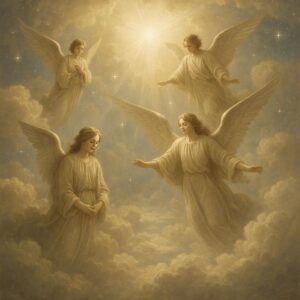
What is the Third Heaven in the Bible?
The direct biblical reference to the “third heaven” is found in one specific place: the writings of the Apostle Paul. To grasp its meaning, we must first dismantle the idea of heaven as a simple, monolithic location. The ancient biblical worldview often conceived of a multi-tiered universe. The third heaven, then, represents the highest, most sublime realm—the very throne room of God.
The Sole Biblical Source: Paul’s Account
The key passage is 2 Corinthians 12:2-4 (ESV):
“I know a man in Christ who fourteen years ago was caught up to the third heaven—whether in the body or out of the body I do not know, God knows. And I know that this man was caught up into paradise—whether in the body or out of the body I do not know, God knows—and he heard things that cannot be told, which man may not utter.”
Here, Paul speaks in the third person (humbly referring to himself) about an extraordinary visionary experience. He equates being caught up to the “third heaven” with being caught up into “paradise.” This is our primary data point. From this, we understand that:
-
The experience was transcendent and mystical.
-
The third heaven is synonymous with Paradise.
-
It is a realm where divine, inexpressible mysteries are revealed.
The Three Heavens: A Biblical Framework
To understand why it’s called the third heaven, we need to explore the ancient Hebraic concept of multiple heavens. While the Bible doesn’t provide a rigid, systematic “map,” a general three-tiered model emerges from scriptural language.
First Heaven: The Sky and Atmosphere (The Firmament)
This is the heaven we see. It encompasses the earthly sky, clouds, birds, and the atmosphere (Genesis 1:8, 20; Deuteronomy 11:11). It’s the realm of weather and the “air” we breathe.
Second Heaven: The Celestial Realm (Space)
This is the heaven beyond the clouds, home to the stars, planets, sun, and moon (Genesis 1:14-17; Psalm 19:1). In ancient cosmology, this was also sometimes associated with the realm of spiritual forces, as suggested in Ephesians 6:12 where Paul speaks of “spiritual forces of evil in the heavenly places.”
Third Heaven: The Dwelling Place of God (Paradise)
This is the heaven beyond the physical universe. It is the uncreated, eternal dimension where God’s glory is fully manifested. It is the location of His throne, attended by angels, and is the ultimate destination for the redeemed (1 Kings 8:30; Revelation 4:1-2).
| Heaven Tier | Biblical Description | Key References | Modern Analogy |
|---|---|---|---|
| First Heaven | The sky, atmosphere, and firmament. The realm of birds and weather. | Genesis 1:8, 20; Daniel 4:12 | Earth’s Atmosphere |
| Second Heaven | The celestial realm of stars, planets, sun, and moon. The cosmos. | Genesis 1:14-17; Psalm 8:3 | Outer Space / Universe |
| Third Heaven | The spiritual dimension of God’s immediate presence. Paradise. The throne room. | 2 Corinthians 12:2; 1 Kings 8:30; Revelation 21-22 | The Uncreated Divine Dimension |
Paradise and the Third Heaven: An Inseparable Link
Paul’s equation of the third heaven with Paradise is crucial. “Paradise” is a Persian loan word meaning “a walled garden.” In the Bible, it evokes three sacred spaces:
-
The Garden of Eden: The original perfect creation (Genesis 2:8-10).
-
The Future Renewed Creation: The New Jerusalem, described as a garden-city with the tree of life (Revelation 22:1-2).
-
The Intermediate State: The blissful dwelling place of the righteous dead prior to the final resurrection (Luke 23:43, where Jesus tells the thief on the cross, “today you will be with me in paradise”).
Therefore, the third heaven is not a cold, distant space. It is Paradise—a place of beauty, rest, intimate fellowship with God, and the fulfillment of His redemptive promises. It encompasses both the current dwelling place of God and the departed saints, and the future eternal home of all the redeemed in the new creation.
Theological Significance and Interpretations
The concept of the third heaven enriches Christian theology in several key ways.
1. It Reveals the Transcendence and Immanence of God
God is utterly transcendent, reigning in a glorious realm beyond our physical universe (the third heaven). Yet, through the Spirit and prayer, He is immanently present with us (1 Kings 8:27; Acts 17:24, 28). The third heaven reminds us of His majestic “otherness.”
2. It Clarifies the Believer’s Ultimate Destination
Our hope is not merely to float among clouds but to be brought into the very presence of God in His glorious dwelling—Paradise. This was Paul’s ardent desire (Philippians 1:23) and is the Christian’s blessed hope (John 14:2-3).
3. It Provides Context for Spiritual Conflict
Ephesians 6:12 indicates that spiritual warfare occurs in “the heavenly places.” Some theologians associate this with the second heaven, a realm where spiritual forces may operate. The third heaven, by contrast, is the impregnable throne room of God, the source of all victory and authority.
4. It Informs Our Understanding of Paul’s Ministry
Paul’s glimpse of the third heaven was a profound, private revelation that likely fortified him for immense suffering and persecution (2 Corinthians 11:23-28 followed by chapter 12). It gave him an unshakeable perspective on eternal glory versus present trials (2 Corinthians 4:17-18).
The Third Heaven in the Context of Other Visions
Paul’s experience wasn’t unique in its form. Other biblical figures were granted visions of God’s throne room, which align with the description of the third heaven.
-
Isaiah (Isaiah 6:1-4): Saw the Lord “high and lifted up,” with seraphim crying “Holy, holy, holy.”
-
Ezekiel (Ezekiel 1): Had a breathtaking vision of God’s mobile throne-chariot and the glory of the Lord.
-
John (Revelation 4-5): Was summoned in spirit to heaven’s throne room to witness worship, the scroll, and the Lamb.
These visions, like Paul’s, involve:
-
Being transported in vision to God’s throne.
-
Overwhelming imagery of God’s holiness and glory.
-
Heavenly beings in worship.
-
The reception of divine revelation.
Important Note for Readers: While these visions use symbolic and awe-inspiring language, they point to a magnificent reality. They are not meant to provide a literal architectural blueprint but to convey the supreme majesty, order, and holiness of God’s dwelling—the third heaven.
Common Questions and Misconceptions
Is the Third Heaven the Same as the “Seven Heavens”?
No. The “seven heavens” concept is more prevalent in later Jewish mystical literature and some extra-biblical texts (like 2 Enoch). The Bible does not formally teach seven defined heavens. The three-tiered model is a simpler framework derived from the biblical text itself. The third heaven is the scriptural term.
Do All Christians Go to the Third Heaven When They Die?
According to the biblical witness, the spirits of departed believers in Christ are immediately “with the Lord” in a state of conscious joy and rest (2 Corinthians 5:8, Philippians 1:23, Luke 23:43). This state is in Paradise, which Paul identifies with the third heaven. This is an intermediate state preceding the final resurrection of the body and the establishment of the New Heaven and New Earth on the last day (Revelation 21-22).
How Does This Relate to the “New Heaven and New Earth”?
Revelation 21-22 describes the glorious climax of history: a New Heaven and a New Earth, with the New Jerusalem coming down from God. This is the eternal state. The third heaven (Paradise) is the current dwelling place of God and departed saints. In eternity, the distinction between heaven and earth will be transformed. God’s dwelling (third heaven/Paradise) will be fully united with the redeemed creation, and He will dwell with His people forever (Revelation 21:3).
Living with a Third Heaven Perspective
Understanding the biblical meaning of the third heaven isn’t just an academic exercise. It’s meant to transform how we live today.
-
It Lifts Our Perspective: It reminds us our true citizenship is in heaven (Philippians 3:20).
-
It Fuels Our Worship: We join a worship service that is eternally ongoing before God’s throne (Revelation 4:8-11).
-
It Comforts in Grief: The death of a believer is a promotion into glorious Paradise.
-
It Steadies Us in Trials: Like Paul, we can endure suffering by focusing on the eternal weight of glory that awaits (2 Corinthians 4:17).
Conclusion
The biblical meaning of the third heaven reveals it as the highest realm, the very Paradise where God’s throne is established and His immediate, glorious presence dwells. It is the assured destination for those in Christ, offering a profound hope that transcends earthly life and anchors the believer’s faith in the ultimate reality of God’s eternal kingdom. This hope, grounded in Paul’s revelation and the broader biblical narrative, provides perspective, comfort, and purpose for the journey of faith.
Frequently Asked Questions (FAQ)
Q1: Where exactly in the Bible is the “third heaven” mentioned?
A1: It is explicitly mentioned only in 2 Corinthians 12:2, within the context of the Apostle Paul describing a profound personal vision.
Q2: Is the third heaven different from the “kingdom of heaven”?
A2: The phrases are related but distinct. The “kingdom of heaven” (used primarily in Matthew’s Gospel) refers to the rule and reign of God. The third heaven is the specific location or dimension from which that reign is ultimately exercised. One speaks of authority, the other of dwelling.
Q3: Did Jesus ascend to the third heaven?
A3: Yes. Jesus’ ascension (Acts 1:9-11) was a return to the glory of the Father’s presence. Ephesians 4:10 states He “ascended far above all the heavens,” which includes passing through and transcending all created realms to sit at the Father’s right hand in the third heaven (Hebrews 8:1).
Q4: Can we seek visions of the third heaven like Paul had?
A4: Paul’s experience was a unique, sovereign gift from God for his apostolic ministry. The Bible does not instruct believers to seek such ecstatic experiences. Our focus should be on knowing Christ through His Word, prayer, and the Spirit, while resting in the hope of one day seeing Him face to face (1 Corinthians 13:12).