Have you ever read through the Bible and noticed a specific tree, the “terebinth,” appearing at some of the most pivotal moments in scripture? It’s more than just background scenery. The terebinth tree holds a profound and layered meaning, acting as a silent witness to covenants, revelations, and tragedies. This guide will take you on a journey through its branches, exploring what this resilient tree meant in the ancient world and the powerful spiritual symbolism it carries for readers today. We’ll move beyond a simple definition to uncover why this tree is a recurring landmark in the story of God and His people.
What is a Terebinth Tree?
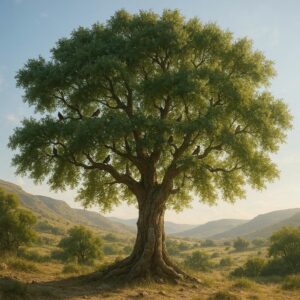
Before we dive into its biblical significance, let’s understand what we’re talking about. The terebinth (Pistacia terebinthus), also often translated as “oak” in some older Bible versions, is a robust, drought-resistant tree native to the Mediterranean and Middle Eastern regions. It’s a survivor.
Key Characteristics of the Terebinth:
-
Longevity & Strength: It can live for centuries, developing a massive, gnarled trunk and a wide, spreading canopy that provides deep, welcome shade in a harsh landscape.
-
Practical Use: It produced a valuable resin (known as Chian or Cyprus turpentine) used in ancient medicine, incense, and varnish.
-
A Landmark: Due to its size and longevity, a solitary terebinth often served as a well-known geographic marker, a meeting place, and a symbol of stability.
In the biblical world, trees like the terebinth were not just plants; they were communal hubs, boundary markers, and sacred spaces. Their shade was a place of rest, commerce, and council.
The Hebrew Words Behind the Translation
A bit of translation history is crucial here. Most English readers encounter confusion because of how this tree is named in their Bibles. Understanding the original Hebrew clears it up.
-
’Êlâh (אֵלָה): This is the primary Hebrew word for the terebinth tree. It specifies the Pistacia species.
-
’Ĕlôn (אֵלוֹן): This word more generally means a large, strong tree, often a terebinth or an oak. It’s frequently used in place names.
-
’Allôn (אַלּוֹן): This term typically refers to the oak tree specifically.
Why the confusion? Early English translators often rendered both ’êlâh and ’êlôn simply as “oak.” However, modern scholarship and botany clarify that the ’êlâh (terebinth) is the star of many key stories. It was a distinct and recognizable part of the Israelite landscape.
Note for Readers: When you read “oak” in your Bible (especially in stories set in the hill country), it is very often a terebinth. This small shift in understanding makes the imagery much richer.
Major Biblical Stories Featuring the Terebinth Tree
The terebinth isn’t a passive backdrop; it’s an active participant in the narrative. Here are the most significant appearances.
The Oaks of Mamre: Covenant and Hospitality (Genesis 18)
This is perhaps the most famous terebinth encounter. Abraham was sitting at the entrance of his tent “by the terebinths of Mamre” (Genesis 18:1) during the heat of the day when he saw three visitors. This wasn’t a random campsite.
-
Significance: These ancient trees were his home base, symbols of his settled presence in the land God promised him. It was in this familiar, shaded place of his own dwelling that he welcomed divine messengers who reaffirmed the covenant promise of a son. The terebinths represent rootedness, promise, and the place where extraordinary hospitality meets divine revelation.
The Terebinth of Moreh: Promise and Proclamation (Genesis 12:6-7)
Much earlier, when Abram first entered the land of Canaan, he traveled to “the site of Shechem, to the terebinth of Moreh.” The text pointedly adds, “At that time the Canaanites were in the land.”
-
Significance: This terebinth was already a known sacred site, likely used for Canaanite worship. By appearing to Abram here, God effectively “reclaimed” the land and the symbol. It was under this tree that God first promised, “To your offspring I will give this land.” The terebinth marked the very spot where the covenant concerning the Land was inaugurated.
The Terebinth of Deborah: Grief and Memory (Genesis 35:8)
After the traumatic events in Shechem, Jacob’s company journeyed and “Deborah, Rebekah’s nurse, died and was buried under the oak [terebinth] below Bethel. So it was named Allon Bakuth (which means ‘terebinth of weeping’).”
-
Significance: This story adds a layer of human emotion to the tree’s symbolism. It becomes a living memorial, a grave marker bearing a name of sorrow. It shows how these trees anchored not only national history but also personal and familial grief.
The Terebinth of the Pillar: Judgment and Injustice (Judges 9)
In the dark story of Abimelech, the citizens of Shechem made him king “by the terebinth of the pillar that was in Shechem” (Judges 9:6). This is likely the same area as the terebinth of Moreh. Later, Gaal son of Ebed challenges Abimelech from the same location.
-
Significance: The tree, once a place of God’s promise to Abram, is now corrupted into a site of illegitimate kingship and violent intrigue. It demonstrates how a location of sacred promise can be misused for human ambition, yet it remains the geographic center of the unfolding judgment.
Absalom’s Fatal Encounter (2 Samuel 18:9-10)
In a bizarre and poetic twist of fate, the rebellious Absalom met his end when his famous hair “got caught in the terebinth tree. He was left hanging in midair, while the mule he was riding kept on going.”
-
Significance: The tree, a natural symbol of strength and rootedness, becomes an instrument of divine judgment against a son who was uprooted from righteousness. It’s a stark narrative use of the natural world to execute pivotal justice.
Spiritual Symbolism and Meaning
From these stories, a powerful symbolic profile emerges. The terebinth is a “Witness Tree.”
| Symbolic Theme | Biblical Example | Meaning for Today |
|---|---|---|
| Divine Encounter | Mamre (Gen. 18), Moreh (Gen. 12) | God often meets people in familiar, “marked” places. Our “terebinths” can be places of prayer, community, or habit where we are open to revelation. |
| Covenant & Promise | Moreh (Gen. 12), Mamre (Gen. 18) | Represents the enduring, rooted nature of God’s promises, which outlast generations and opposition. |
| Strength & Legacy | Its physical characteristics | A call to be spiritually resilient, deep-rooted in faith, and to provide “shade” or support for others. |
| Idolatry & Warning | Associated with pagan highs (Hosea 4:13) | Even good things (a beautiful, shady tree) can become idols if we worship the creation not the Creator. |
| Memory & Lament | Allon Bakuth (Gen. 35:8) | Acknowledges that places of promise can also be places of profound human sorrow and loss. |
A Note on the Danger of Syncretism
The prophets, especially Hosea and Ezekiel, condemn the practice of worshiping under every “green tree” or terebinth, which was associated with Canaanite fertility rites. This provides a critical warning: the tree itself is not sacred. It is only a place where the sacred God chose to reveal Himself. The Israelites constantly risked blending the worship of Yahweh with the worship of the Canaanite gods associated with those very locations. The terebinth, therefore, also symbolizes the perennial human temptation toward syncretism—mixing true faith with surrounding cultural practices.
The Terebinth vs. Other Significant Biblical Trees
It’s helpful to distinguish the terebinth’s role from other important trees in Scripture.
-
The Fig Tree: Often symbolizes Israel’s national health and fruitfulness (or lack thereof). It’s about produce and spiritual condition.
-
The Olive Tree: A symbol of peace, prosperity, anointing, and most profoundly, God’s covenant people (Romans 11).
-
The Cedars of Lebanon: Symbols of human pride, majesty, and grandeur, often associated with kings and palaces.
-
The Terebinth: A symbol of enduring presence, witness, and personal encounter. It is less about fruit and more about steadfast, rooted location.
Archaeological and Historical Insights
What does history tell us about this tree?
-
Longevity Confirmed: Ancient terebinths in the Holy Land, like the famous “Abraham’s Oak” near Hebron (which died in the 20th century), were revered for ages, showing how a single tree could be a living link to the past.
-
Resin Trade: The terebinth resin was a valuable commodity, part of the economic fabric of the ancient world. This adds a layer of practical, economic importance to the tree beyond the spiritual.
-
Persistent Landmarks: Historical records and travelogues from pilgrims over centuries often mention specific, named trees as guiding landmarks, confirming the biblical description of their role.
Application: What Can We Learn from the Terebinth Today?
The terebinth isn’t just ancient history. Its symbolism speaks directly to our modern spiritual journey.
-
Seek Your “Terebinth Places”: Identify the consistent places and practices where you are most open to meeting with God. Is it a chair in your home? A walking path? Protect that space.
-
Be a “Terebinth” for Others: Strive to be a person of spiritual strength and resilience, offering shade—support, wisdom, and refuge—to those who are weary.
-
Root Yourself in God’s Promises: Like the deep-rooted terebinth surviving drought, anchor your life in the enduring promises of Scripture to withstand life’s dry seasons.
-
Beware of Sacred Mixing: Be vigilant that your places of worship and spiritual habits are centered on Christ alone, not blended with cultural values that contradict the gospel.
Helpful List: Reflection Questions
Where is your “terebinth of Moreh”—a place where God made a significant promise clear to you?
Have you experienced an “Allon Bakuth”—a place of mourning that is somehow still under the canopy of God’s presence?
Are there any “green trees” in your life—good things—that risk becoming idols?
Conclusion
The terebinth tree in the Bible is far more than flora. From Abraham’s covenant to Absalom’s judgment, it stands as a silent, steadfast witness to the unfolding drama of faith, failure, and God’s faithfulness. It symbolizes the places where heaven touches earth, where promises are given, where we grieve, and where we are called to be deeply rooted. By understanding this powerful symbol, we enrich our reading of Scripture and find a timeless model for a resilient, encounter-oriented faith that provides shelter for a weary world.
Frequently Asked Questions (FAQ)
Q: Is a terebinth the same as an oak tree in the Bible?
A: Not exactly. While older English translations often use “oak,” the original Hebrew (’êlâh) specifically denotes the terebinth (Pistacia terebinthus), a different but equally sturdy tree common in the Levant. The symbolic meaning of a large, landmark tree remains, but the specific botanical identity adds accuracy.
Q: Why did God often appear to people under trees like the terebinth?
A: In the ancient Near East, large trees were natural gathering places, landmarks, and often associated with divine presence due to their longevity and life-giving shade. God, in His condescension, met people in culturally understood places of significance and community to communicate vital truths.
Q: What is the negative symbolism of the terebinth?
A: The prophets (e.g., Hosea 4:13) condemn worship under terebinths and other green trees because these were sites of Canaanite idolatry and fertility cults. The negative symbolism warns against syncretism—mixing the worship of Yahweh with pagan practices or worshiping the creation instead of the Creator.
Q: Is the “great tree” in Jesus’ parable of the mustard seed related to a terebinth?
A: The connection is thematic rather than botanical. Jesus’ parable (Mark 4:30-32) uses the familiar image of a large tree providing shelter for birds (a biblical image for nations). While not a terebinth specifically, it draws on the same cultural understanding of a large tree as a place of refuge and gathered community, fulfilling a role the terebinth often symbolized in the Old Testament.
Additional Resources
For further study on plants of the Bible and their significance, a highly reputable resource is the “Flora of the Bible” database hosted by the University of North Carolina at Chapel Hill’s Botanical Gardens, which provides detailed, scholarly plant profiles in their historical context. [Link to external resource: https://ncbg.unc.edu/research/unc-herbarium/flora-of-the-bible/] (Note: This is an example of a credible resource format. Always ensure links are active and relevant at time of publication).