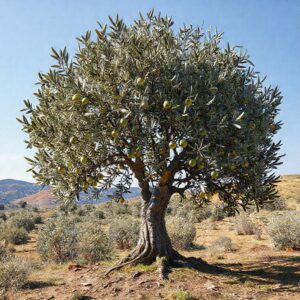
Picture a tree. Not towering like the cedar, nor fleeting like the grass, but gnarled, resilient, evergreen. Its silvery leaves shimmer under a Mediterranean sun, and its roots clutch stubbornly at rocky hillsides. This is the olive tree (Olea europaea), a botanical marvel that has fed lamps, anointed kings, soothed wounds, and bridged the chasm between a drowning world and dry land. In the biblical imagination, the olive tree is far more than a source of food and fuel; it is a living, breathing theological treatise. Its very nature—its capacity to thrive in drought, to regenerate from seemingly dead stumps, to yield precious oil under immense pressure—made it the perfect, God-ordained symbol for profound spiritual truths. To trace the olive through the Bible is to trace the heartbeat of God’s relationship with humanity: judgment and mercy, covenant and rupture, suffering and glory, Israel and the nations, and the promise of ultimate peace. This article will embark on a detailed journey through the Scriptures, unearthing the deep-rooted meaning of the olive tree, a symbol whose richness and complexity continues to nourish faith and understanding today.
2. Roots in the Ancient World: The Olive’s Historical and Cultural Context
To grasp the biblical symbolism, one must first appreciate the olive’s unparalleled role in the ancient Near Eastern world. It was a cornerstone of civilization.
-
Economic Lifeline: Olive oil was a staple commodity—the primary source of fat in the diet, the fuel for lamps that pushed back the darkness, and a base for perfumes and medicines. An olive harvest meant survival and prosperity.
-
Agricultural Patience: Unlike annual grains, an olive tree requires years of patient tending before it bears significant fruit. A mature, productive grove represented generational stability, inherited blessing, and a tangible connection to one’s ancestors and land. Uprooting an enemy’s olive trees was an act of total war, striking at their economic future (Judges 15:5).
-
Universal Symbolism: Across cultures surrounding Israel, the olive carried connotations of peace, wisdom, and victory. The Greeks crowned Olympians with olive wreaths; Egyptians associated it with the goddess Isis. God, in His wisdom, often uses creation’s universal language to communicate specific covenantal truths to His people, elevating the olive from a common cultural symbol to a sacred one.
The Olive Tree in the Ancient Near East vs. Biblical Israel
| Aspect | General Ancient Near East | Biblical Israel (Theological Layer) |
|---|---|---|
| Primary Use | Economic (food, fuel, trade), Cultural (peace, victory) | All of the above, plus Sacramental & Covenantal |
| Symbolism | Peace, Wisdom, Prosperity, Victory | Divine Covenant, God’s Blessing, The Nation of Israel, The Holy Spirit, Reconciliation |
| Key Action | Cultivation for harvest | Anointing (consecration for holy purpose) |
| Destruction Meaning | Economic/ military defeat | Divine Judgment (breaking of covenant) |
| Regeneration Meaning | Agricultural resilience | Divine Mercy & Restoration (faithful remnant) |
3. Genesis: First Fruits—The Olive Branch of Reconciliation
The olive makes its dramatic debut not in the land of promise, but in a world submerged under judgment. After the cataclysmic Flood, Noah sends out a dove. It returns with a freshly plucked olive leaf (Genesis 8:11). This simple act is theologically seismic.
The leaf is not a fruit of human cultivation; it is a spontaneous gift from God’s preserved creation. It signals the abating of the waters of wrath and the first hint of a new creation. The dove with the olive branch becomes the ultimate symbol of peace achieved through judgment—a peace initiated by God. It is a sign of life returning to a dead world, a promise that God’s anger has turned to mercy. This first mention sets the tone: the olive is intrinsically linked to God’s gracious initiative to restore a broken relationship.
4. Cultivation and Covenant: The Promised Land as an Olive Garden
As the biblical narrative shifts to the Patriarchs and the Exodus, the olive becomes a defining feature of the covenant promises. God describes the land sworn to Abraham, Isaac, and Jacob as a “good land… a land of olive oil and honey” (Deuteronomy 8:7-8). It is a land of covenant blessing, where the careful tending of olive trees would be a lived experience of God’s faithfulness.
The olive tree becomes a national metaphor. In the Song of Deborah, the people offer themselves willingly, and are blessed: “Blessed above women shall Jael be… She brought forth butter in a lordly dish” (Judges 5:24-25, KJV). The word translated “butter” is more accurately curds or yogurt, but the imagery of richness from the land’s bounty is clear, intertwined with agricultural prosperity. The Psalmist proclaims, “But I am like a green olive tree in the house of God” (Psalm 52:8), connecting the righteous individual to the vitality, stability, and beauty of the cultivated olive in God’s very courtyard. Israel is God’s choice, cultivated olive planting.
5. Sacred Oil: Anointing, Light, and Consecration
Here lies the core of the olive’s sacred purpose: the holy anointing oil. God gives Moses a specific recipe of fine spices and pure, crushed olive oil to create a sacred mixture (Exodus 30:22-33). This oil is not for common use; it is for consecration.
-
Anointing Kings: Saul, David, and Solomon were anointed with olive oil, signifying the Spirit of God coming upon them for governance. The king was the “anointed one” (mashiach—Messiah).
-
Anointing Priests: Aaron and his sons were anointed, setting them apart to mediate between God and the people.
-
Anointing the Tabernacle: Even the objects of worship were anointed, making them holy.
The oil, produced by crushing the fruit, symbolizes the Holy Spirit’s empowering presence, separating persons and things for God’s service. Furthermore, pure olive oil fueled the Menorah in the Tabernacle and Temple, creating a perpetual light before the Lord (Exodus 27:20-21). Thus, the olive provides both the light of God’s presence and the oil of God’s Spirit—both essential for the life and identity of the covenant community.
6. The Tree and the Nation: Olive Imagery in Psalms and Prophets
The prophets, in particular, wield the olive tree as a powerful image for blessing, warning, and future hope.
-
Blessing & Judgment: Hosea declares Israel’s prosperity “like an olive tree” (Hosea 14:6), but also warns that God will destroy their fruit (Hosea 2:12). The tree’s condition reflects the people’s spiritual state.
-
The Faithful Remnant: After prophesying the devastation of Judah, Isaiah uses a powerful olive metaphor. A tree is felled, but a stump (or stock) remains (Isaiah 6:13; 11:1). From this seemingly dead remnant, new life will spring—the shoot of Jesse, the future Messiah. The olive tree’s famed ability to regenerate from old stumps becomes a perfect picture of God preserving a faithful remnant and fulfilling His promises against all odds.
-
Jeremiah’s Lament & Hope: Jeremiah witnesses the Babylonian invasion, a direct result of covenant unfaithfulness. He describes the land as ravaged, the harvest ended, and “the olive tree has failed” (Joel 1:10-12 echoes this). Yet, in his famous letter to the exiles, God uses an agricultural image that includes the olive: when you seek the peace of the foreign city, “you shall eat the fruit thereof” (Jeremiah 29:5-7, implying the long-term cultivation of trees like the olive). Judgment is real, but God’s plans for a future and a hope are as patient and enduring as the olive’s growth.
7. Gethsemane: The Oil Press of Agony and Submission
The symbolism reaches its most poignant human moment in the Gospel narratives. After the Last Supper, Jesus goes to a place called Gethsemane. The name is Aramaic for “oil press.” It was an olive grove with a press for crushing olives to extract oil.
Here, in the shadow of ancient olive trees, Jesus is “crushed” under the weight of the coming wrath. He prays in agony, “Let this cup pass from me,” yet submits, “not as I will, but as you will” (Matthew 26:39). The “cup” of God’s judgment (often symbolized by wine) meets the imagery of the oil press. In Gethsemane, the true, cultivated Olive—the beloved Son in whom the Father is well-pleased—enters the press. The oil of His perfect submission to the Father’s will is yielded through intense spiritual pressure. This sacred oil would soon anoint the world for salvation, and the Holy Spirit, promised after His ascension, would be poured out from this ultimate act of consecration.
8. Paul’s Allegory: The Wild and Cultivated Olive Trees (Romans 11)
The Apostle Paul provides the New Testament’s most systematic theological reflection on the olive tree in Romans 11. Addressing the relationship between Israel (the majority of whom rejected Jesus as Messiah) and the Gentile believers, he constructs a masterful allegory.
He describes Israel as a cultivated olive tree, rooted in the patriarchs and covenants. Because of unbelief, some natural branches (unbelieving Jews) were broken off. Conversely, wild olive branches (Gentile believers), who were not part of the original cultivated tree, have been grafied in to share in the nourishing sap of the root—the Abrahamic promises fulfilled in Christ.
Paul’s warnings and insights are crucial:
-
Gentiles must not boast. They are supported by the root, not vice-versa.
-
God is able to graft the natural branches back in. Israel’s “hardening” is partial and temporary.
-
The root’s holiness supports all branches. God’s covenant faithfulness to Israel is the foundation of the entire plan of salvation for all.
This allegory establishes the olive tree as the primary biblical metaphor for the people of God across salvation history, comprising both Israel and the international church, united by faith in the Messiah.
9. The Mount of Olives: Eschatological Center Stage
The Mount of Olives is not just a geographical location east of Jerusalem’s Temple Mount; it is a theological axis. David fled over it weeping during Absalom’s rebellion (2 Samuel 15:30). Ezekiel saw the glory of the Lord depart from the Temple and pause over this mountain (Ezekiel 11:23). Jesus descended it on Palm Sunday, wept over Jerusalem from its slope, taught his disciples upon it (the Olivet Discourse of Matthew 24-25), and was betrayed in its grove (Gethsemane).
Most significantly, after His resurrection, Jesus ascended to heaven from the Mount of Olives (Acts 1:9-12). The angel then told the disciples that “this same Jesus… will come in the same way as you saw him go into heaven.” Zechariah the prophet had already pinpointed this location for the final, cosmic drama: “On that day his feet shall stand on the Mount of Olives… And the Lord my God will come, and all the holy ones with him” (Zechariah 14:4-5). Thus, the mountain named for the olive tree becomes the stage for departure and the guaranteed location for the glorious return, tying the symbol of peace and anointing to the consummation of all things.
10. The Olive in Christian Typology and Tradition
Early Christians naturally expanded this rich symbolism. The olive branch became a sign of peace and reconciliation for penitents. The chrism used in baptism, confirmation, and ordination—a perfumed olive oil—directly continues the biblical tradition of anointing with the Holy Spirit for a holy purpose. In Christian art, the olive branch appears in the mouths of doves, in the hands of angels announcing peace, and is often associated with martyrs (whose death yields the oil of witness). It remains a powerful emblem of hope, derived entirely from its deep biblical roots.
11. Modern Resonance: Lessons from the Ancient Grove
The olive tree’s symbolism offers enduring lessons:
-
Resilience in Aridity: It teaches us to sink roots deep into the streams of living water (Christ) to withstand spiritual drought.
-
Fruitfulness Through Pruning: It reminds us that God’s pruning, though painful, yields greater fruitfulness (John 15:1-2).
-
Unity in Diversity: Paul’s grafted tree is a timeless model for humility, mutual support, and rootedness in shared covenant history between Jewish and Gentile believers.
-
Peace Through Pressure: Just as oil comes from crushing and peace was won through Christ’s agony, our spiritual vitality and capacity to be peacemakers often come through surrendered suffering.
12. Conclusion: The Evergreen Symbol
From the dove over the receding waters to the grove where God-Man prayed, from the holy oil that lit the Temple to the allegory of a united people of God, the olive tree stands as an evergreen witness. It is a living symbol of God’s enduring covenant, the gift of His Spirit, the hope of restoration from remnant stumps, and the promised peace that will one day cover the earth when the Anointed One returns to the Mount that bears its name.
13. Frequently Asked Questions (FAQs)
Q1: Is the olive tree a symbol of Israel or the Church?
A: Biblically, it is primarily a symbol of the people of God. In the Old Testament, this is national Israel. In Paul’s allegory (Romans 11), it becomes a single tree with cultivated roots (the covenants) that has had branches broken off (unbelieving Israel) and wild branches grafted in (believing Gentiles). Thus, it represents the continuity of God’s people across history, comprised of all—Jew or Gentile—who are connected by faith to the Abrahamic promises as fulfilled in Jesus the Messiah.
Q2: Why was olive oil specifically chosen for anointing?
A: Olive oil was precious, useful, and produced light and healing. Theologically, its need to be crushed to be produced made it a fitting symbol for consecration through sacrifice. It represented the Holy Spirit’s empowering presence (Zechariah 4:1-6) that sets apart a person or object for God’s sacred service. Its practical and symbolic properties uniquely qualified it for this holy role.
Q3: What is the significance of the olive tree regenerating from its stump?
A: This remarkable natural trait became a powerful metaphor for God’s mercy and the promise of restoration after judgment. Even when Israel seemed utterly cut down (in exile), God preserved a faithful remnant (the stump). From that seemingly dead remnant would spring the Messiah (the shoot of Jesse) and a restored people. It is a symbol of hope that God’s purposes cannot be ultimately thwarted.
Q4: What is the connection between the olive tree and peace?
A: The connection originates in Genesis 8, where the dove returns to Noah with an olive leaf, signaling the end of God’s wrath and the dawn of a renewed, peaceful relationship between God and creation. From there, the association stuck. The olive branch became a universal symbol of peace because of its biblical origin story of reconciliation.