When you reach for the salt shaker at the dinner table, you’re handling a substance of profound spiritual significance. In our modern world, salt is common, inexpensive, and often cautioned against for health reasons. But in the ancient biblical world, it was a precious commodity, a vital preservative, and a powerful spiritual symbol. The biblical meaning of salt weaves through Scripture as a multifaceted metaphor, touching on themes of covenant, preservation, purity, judgment, and even speech. Understanding this symbolism enriches our reading of the Bible and offers practical wisdom for our daily walk of faith. This guide will take you on a deep dive into the world of salt in the Bible, uncovering its layers of meaning and enduring relevance.
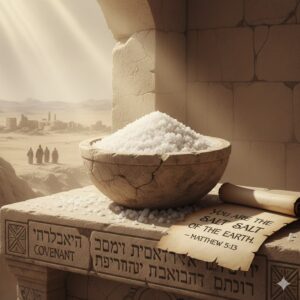
The Tangible Value of Salt in the Ancient World
To grasp the biblical meaning of salt, we must first step out of our modern context. Today, salt is ubiquitous. In the ancient Near East, it was crucial for survival and deeply woven into the fabric of society.
Why Salt Was “White Gold”:
-
Preservation: Refrigeration did not exist. Salt was the primary means of preserving meat, fish, and other perishables. It drew out moisture, creating an environment where bacteria couldn’t thrive. This literal function of stopping decay became the foundation for its spiritual metaphor.
-
Purification: Salt had antiseptic qualities. It was used to cleanse and disinfect wounds (a practice echoed in the phrase “rubbing salt in a wound”). Newborn babies were washed and rubbed with salt (Ezekiel 16:4) as a purifying ritual.
-
Covenant Signifier: Sharing salt was a sign of mutual commitment and trust. In many cultures, to “eat salt” with someone meant to be in a binding, loyal relationship with them.
-
Economic Engine: Salt was a valuable trading commodity. Roman soldiers were sometimes paid in salt, which is the origin of the word “salary” (from the Latin salarium).
This tangible, life-sustaining value made salt the perfect earthly element to explain deep spiritual truths.
Salt as a Covenant Symbol: The Unbreakable Bond
One of the most significant meanings of salt in the Bible is its connection to covenant. A covenant is a sacred, binding agreement between two parties, often between God and His people.
The Salt Covenant in the Old Testament
The phrase “covenant of salt” appears explicitly three times in Scripture, marking agreements as permanent and inviolable.
-
Numbers 18:19: God tells Aaron that the portions of the offerings given to the priests are “a covenant of salt forever before the Lord.” The priestly inheritance was secured by this salt covenant.
-
2 Chronicles 13:5: King Abijah confronts the northern kingdom of Israel, declaring that God gave the kingship over Israel to David and his sons by “a covenant of salt.” This established the Davidic lineage as a permanent, God-ordained promise.
-
Leviticus 2:13: God commands, “Season all your grain offerings with salt. Do not leave the salt of the covenant of your God out of your grain offerings; add salt to all your offerings.”
This last verse is particularly instructive. Every grain offering, a symbol of dedication and worship, was to be salted. Why?
The Properties of a Salt Covenant:
-
Preservative: It signifies an agreement that does not spoil or decay over time.
-
Incorruptible: Salt does not burn or lose its essence when heated. The covenant is unchangeable.
-
Permanent: Salt was a stable mineral. A “covenant of salt” was understood to be everlasting.
Key Insight: “The ‘covenant of salt’ signifies that God’s promises are not fleeting. They are preserved, reliable, and designed to last for eternity, just as salt preserves food for the long winter.”
Salt as a Preservative and Purifier: The Call to Influence
This is perhaps the most well-known metaphor for salt, given by Jesus Himself. It moves from God’s covenant with us to our purpose in the world.
Jesus’ Command: “You Are the Salt of the Earth”
In the Sermon on the Mount, Jesus tells His followers:
“You are the salt of the earth. But if the salt loses its saltiness, how can it be made salty again? It is no longer good for anything, except to be thrown out and trampled underfoot.” (Matthew 5:13)
This single verse is packed with meaning about the believer’s role.
What It Means to Be “Salt of the Earth”:
| Function of Salt | Spiritual Application for Believers |
|---|---|
| Prevents Decay | We are called to slow moral and spiritual decay in society through righteousness, justice, and love. |
| Enhances Flavor | We are to bring the flavor of God’s Kingdom—joy, hope, peace—to a bland and despairing world. |
| Creates Thirst | Our lives and words should create a thirst in others for the living water, Jesus Christ. |
| Promotes Healing | We are agents of healing in a broken world, bringing reconciliation and comfort. |
The Warning: Salt That Loses Its Saltiness
Jesus gives a serious warning. In His day, salt was often harvested from the Dead Sea and could be mixed with gypsum or other minerals. If the actual sodium chloride dissolved away or was washed out, a tasteless, useless white powder remained. It looked like salt but was utterly ineffective.
How Can “Salt” Lose Its Saltiness?
-
Assimilation: When believers become indistinguishable from the surrounding culture, adopting its values and compromising their convictions.
-
Compromise: Diluting the message of the Gospel or living in a way that contradicts it.
-
Disobedience: Choosing a life of willful sin that severs our active, preserving influence.
-
Passivity: Withdrawing from engagement with the world, hiding our faith.
The consequence is being “thrown out,” a symbol of spiritual irrelevance and judgment.
Salt for Seasoning: Wisdom and Gracious Speech
Salt not only preserves; it makes things palatable and enjoyable. The Bible connects this property to how we communicate.
Colossians 4:6 instructs:
“Let your conversation be always full of grace, seasoned with salt, so that you may know how to answer everyone.”
Here, “salt” represents:
-
Wisdom: Speech that is thoughtful, discerning, and timely.
-
Grace: Words that are kind, beneficial, and uplifting.
-
Pungency: Communication that is not bland or meaningless, but has substance and can stimulate thought and conviction.
-
Preservation: Words that heal relationships rather than corrupt them.
Our speech should not be sugary flattery or corrosive criticism, but a balanced, gracious, and truth-filled blend that preserves dignity and points people toward God.
The Duality of Salt: Judgment and Barrenness
The Bible presents a balanced picture. While salt is a symbol of covenant and preservation, it is also an agent of judgment and desolation.
The Symbolism of Salting the Land:
Sowing a conquered city with salt was a known practice in the ancient world (though debated in specific historical instances). Biblically, it became a powerful metaphor for God’s judgment on persistent, defiant sin.
-
Judges 9:45: After defeating the city of Shechem, Abimelech “sowed it with salt.” This was a symbolic act to curse the land, making it infertile and declaring it permanently desolate.
-
Jeremiah 17:6: The one who trusts in man is said to be “like a bush in the wastelands… in the salt land where no one lives.”
-
Zephaniah 2:9: The prophecy against Moab and Ammon says their land will become “a place of salt and sulfur… a wasteland forever.”
This negative image reinforces salt’s preserving quality in a sobering way: it can preserve a state of barrenness and curse just as it can preserve a state of covenant blessing.
The Tale of Lot’s Wife (Genesis 19:26)
Perhaps the most dramatic story involving salt is the transformation of Lot’s wife into a “pillar of salt” for looking back at the condemned cities of Sodom and Gomorrah. This serves as a stark warning against:
-
Clinging to a sinful past.
-
Disobeying God’s clear command for deliverance.
-
The spiritual paralysis that comes from nostalgia for a life under judgment.
Salt in Sacrifice and Worship
As mentioned in Leviticus 2:13, salt was a mandatory ingredient on every grain offering presented to God.
Why Salt on the Offering?
-
A Symbol of Covenant: It signified that the offering was made under the terms of God’s everlasting covenant.
-
A Symbol of Purity: Salt was an agent of cleansing, representing the offerer’s desire for purification.
-
A Preservative of the Covenant: It indicated the offering’s acceptability and enduring significance before God.
Ezekiel 43:24 also mentions priests throwing salt on a burnt offering. Salt in worship reminds us that our approach to God must be marked by the permanence of His covenant and a purified heart.
Practical Applications: Living as “Salt” Today
How do we translate these ancient symbols into a 21st-century life? Here are practical ways to live out our calling as salt.
1. Be a Preservative in Your Community:
-
Act with integrity in your workplace.
-
Stand for justice and righteousness in social issues.
-
Be a peacemaker in conflicts.
-
Model healthy, faithful relationships and family life.
2. Be a Flavor-Enhancer:
-
Cultivate and express genuine joy, hope, and gratitude.
-
Be generous with encouragement.
-
Create beauty—in your home, your work, your art—that points to the Creator.
3. Season Your Speech:
-
Pause before speaking in anger or gossip.
-
Ask: “Are my words gracious? Are they true? Are they necessary?”
-
Use your words to build up and impart wisdom.
4. Guard Against Losing Your Saltiness:
-
Stay rooted in Scripture and prayer.
-
Engage in authentic Christian community for accountability.
-
Consciously evaluate the media and culture you consume—does it dilute your convictions?
-
Serve others actively; salt in the shaker has no effect.
Important Note: Being “salt” is not about being loud, abrasive, or self-righteous. Just as salt works subtly, often invisibly, our influence is often quiet, woven into the fabric of daily faithfulness, integrity, and love.
Salt in the Bible: A Comparative Summary
| Reference | Context | Primary Symbolism | Key Lesson |
|---|---|---|---|
| Lev. 2:13; Num. 18:19 | Offerings & Priesthood | Covenant | God’s promises are eternal and incorruptible. |
| Matt. 5:13 | Sermon on the Mount | Influence & Purity | Believers are to actively preserve goodness and create thirst for God. |
| Col. 4:6 | Christian Conduct | Gracious Speech | Our words should be wise, kind, and meaningful. |
| Judges 9:45 | Conquest of Shechem | Judgment & Desolation | Defiant sin leads to barrenness. |
| Genesis 19:26 | Destruction of Sodom | Consequence of Disobedience | Do not long for a life under God’s judgment. |
| Ezekiel 16:4 | Care for an Infant | Purification & Care | God’s nurturing love cleanses and establishes. |
| 2 Kings 2:20-21 | Elisha’s Miracle | Healing & Restoration | God’s power can heal corrupted sources and make them life-giving. |
Frequently Asked Questions (FAQ)
Q1: What does “salt losing its saltiness” mean practically for a Christian today?
A: It refers to a believer becoming spiritually ineffective. This happens through gradual compromise with worldly values, persistent unrepentant sin, passivity in faith, or diluting the core truths of the Gospel to make them more palatable. The result is a life that no longer has a distinct, preserving, or thirst-creating influence for God’s Kingdom.
Q2: Is the “covenant of salt” still in effect for Christians?
A: Yes, but in a fulfilled sense. Christians are under the New Covenant established by Jesus’s blood (Luke 22:20). This New Covenant is the ultimate, everlasting covenant, of which the “salt covenant” was a foreshadowing. It is permanent, incorruptible, and secures our relationship with God.
Q3: How can I “salt” my conversations as Colossians 4:6 says?
A: It means intentionally making your speech both gracious and substantive. Before speaking, consider: Is this comment helpful or hurtful? Is it true? Does it reflect wisdom? Aim to encourage, speak truth in love, and offer thoughtful perspectives that point people toward grace and reality.
Q4: What’s the difference between being “salt” and being “light” (Matthew 5:14)?
A: Both metaphors describe influence, but from different angles. Salt often works invisibly (preserving from within, enhancing flavor) and is about character (preventing decay, creating thirst). Light works visibly (illuminating darkness, exposing what’s hidden) and is about truth and testimony (revealing God’s way, showcasing good works). We are called to be both.
Q5: Why was Lot’s wife turned into a pillar of salt specifically?
A: The text emphasizes her direct disobedience and her heart’s attachment to the sinful cities. Salt, in this context, becomes a monument of judgment—a permanent, sterile reminder of the consequence of looking back and longing for a life that God is judging. It symbolizes the barrenness of a soul that chooses the world over God’s salvation.
Conclusion
The biblical meaning of salt is rich and multifaceted, flowing from its immense practical value in the ancient world. It symbolizes God’s everlasting, incorruptible covenant with His people. It defines our purpose as believers to be a preserving, flavor-enhancing influence in a decaying world. It guides our speech to be both gracious and substantive. And it solemnly warns of the barrenness that comes from judgment and disobedience. From the offerings in the Tabernacle to the words of Jesus on the mountain, salt serves as a powerful, everyday reminder that our faith is meant to be essential, active, and transformative—penetrating every aspect of life to preserve goodness and create a thirst for the Divine.
Additional Resource:
For a deeper dive into the cultural background of biblical symbols, you may find helpful resources from reputable theological libraries or academic sites like the Tyndale House article archives (ensure links are to established, trustworthy .edu or .org domains in your final publication).