The word “perish” echoes through the pages of the Bible with a weight and finality that can be unsettling. From warnings in the Prophets to the most famous verse in the New Testament, its presence is undeniable. But what does it truly mean to perish according to the Bible? Is it simply about physical death, or does it point to something more profound? This guide will take you on a journey through the original languages, key themes, and foundational scriptures to uncover the rich, complex, and ultimately hope-filled meaning behind this pivotal biblical concept.
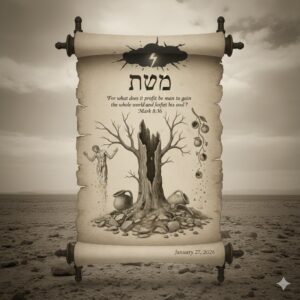
Understanding “Perish” in Its Original Language
To move beyond a surface-level understanding, we must look at the Hebrew and Greek words translated as “perish.” These original terms carry nuances that a single English word cannot fully capture.
The Hebrew Perspective: ’ābad and šāḥaṯ
In the Old Testament, two primary Hebrew verbs lay the foundation for the concept of perishing.
-
’Ābad (אָבַד): This is the most common term. Its core meaning is to be lost, to go astray, or to vanish. It implies a movement from a state of existence or possession into a state of lack or non-possession. Think of a lost sheep (Psalm 119:176) or a ruined piece of pottery (Jeremiah 18:4). It often conveys ruin or destruction, but with a sense of being lost from where one should be.
-
Key Insight: ’Ābad isn’t always about instant annihilation. It can describe a process of fading, decaying, or becoming useless. It carries a tragic tone of something valuable being lost.
-
-
Šāḥaṯ (שָׁחַת): This verb leans more strongly toward corruption, decay, or spoiling. It’s used for physical destruction (like the corrupted earth before the Flood, Genesis 6:11) but also for moral and spiritual ruin (like Israel’s corruption in Judges 2:19).
-
Key Insight: Šāḥaṯ emphasizes a state of being marred, broken down, or rendered unfit for a purpose. It’s the opposite of wholeness and integrity.
-
The Greek Perspective: Apollumi and Olothreutēs
The New Testament Greek terms build upon the Hebrew foundation, adding crucial layers of meaning.
-
Apollumi (ἀπόλλυμι): This is the powerhouse Greek word behind most New Testament uses of “perish.” It is famously used in John 3:16. Its meanings span a fascinating spectrum:
-
To destroy, kill, or put to death.
-
To lose (e.g., the lost coin in Luke 15:8).
-
To be ruined, marred, or rendered useless (e.g., old wineskins being destroyed, Matthew 9:17).
-
Key Insight: Apollumi is not about ceasing to exist. It is about a state of utter ruin, loss, and separation from the purpose for which something was created. A lost coin still exists, but it is worthless until found. A ruined wineskin exists, but it can no longer hold wine. This is critical for understanding eternal truths.
-
-
Olothreutēs (ὀλοθρευτής): A rarer, more intense term meaning “the destroyer” (used in 1 Corinthians 10:10). It refers to an agent of complete and utter destruction.
Comparative Table: Original Words for “Perish”
| Language | Word | Primary Meaning | Key Nuance | Example Verse |
|---|---|---|---|---|
| Hebrew | ’Ābad (אָבַד) | To be lost, vanish, be ruined | Loss of state, becoming astray | Psalm 1:6 – “the way of the wicked will perish.” |
| Hebrew | Šāḥaṯ (שָׁחַת) | To corrupt, spoil, decay | Moral/physical marring, ruin | Genesis 6:12 – “God saw the earth, and behold, it was corrupted.” |
| Greek | Apollumi (ἀπόλλυμι) | To destroy, lose, ruin | Ruin of purpose, separation | John 3:16 – “…should not perish but have eternal life.” |
| Greek | Olothreutēs (ὀλοθρευτής) | The destroyer | Agent of total destruction | 1 Corinthians 10:10 – “…by the destroyer.” |
Major Themes of “Perish” in Scripture
The concept of perishing weaves through several central biblical narratives, forming consistent themes.
1. The Consequence of Sin and Separation
From the beginning, the Bible frames perishing as the natural consequence of sin, which is separation from God, the source of life. In the Garden, God warned that disobedience would lead to death (Genesis 2:17). This wasn’t just physical death but a spiritual separation—a “perishing” of the perfect relationship for which humanity was made. The prophet Isaiah captures this: “Your iniquities have made a separation between you and your God” (Isaiah 59:2). To perish, in this sense, is to exist in a state of voluntary alienation from the One who gives life its true meaning and permanence.
Important Note: The biblical view is not of a vengeful God arbitrarily punishing people, but of a holy God respecting human choice. To choose a path of rebellion is to choose the natural consequence of that path: separation from Him, which is the essence of perishing.
2. Physical Destruction and National Judgment
Often, “perish” describes tangible, historical judgment on nations or individuals. This is seen in the Flood (Genesis 6-7), the destruction of Sodom and Gomorrah (Genesis 19), and the prophetic warnings to Israel and Judah (e.g., Jeremiah 25). Here, perishing involves physical death and national collapse as a direct result of persistent wickedness and covenant-breaking. It serves as a sobering, visible demonstration of the spiritual principle that a life built in opposition to God’s order ultimately cannot stand.
3. The Contrast with Eternal Life
This is the most theologically significant theme. The Bible consistently presents “perish” as the antithesis of “eternal life.” They are the two ultimate destinations.
-
Eternal Life: Not merely endless duration, but a quality of life—knowing God (John 17:3), living in His presence, and experiencing the fullness of joy and shalom for which we were created.
-
To Perish: The permanent state of missing that reality. It is the enduring condition of loss and ruin (apollumi) that results from being separated from the source of life.
This contrast is most sharply defined by Jesus himself:
“For God so loved the world, that he gave his only Son, that whoever believes in him should not perish but have eternal life.” – John 3:16 (ESV)
In this single verse, the entire biblical narrative is distilled. The human predicament is perishing. God’s solution is the gift of His Son. The two possible outcomes are presented with stark clarity.
Key Passages and Their Meaning
Let’s examine some of the most critical scriptures that use the term “perish.”
John 3:16 – The Most Famous Verse
As noted, this verse is central. The Greek structure emphasizes the word “perish” (apollumi). It is not an afterthought but the serious reality from which Jesus rescues us. Believing in Christ is the means of crossing from the state of perishing into the state of possessing eternal life. It is a transfer from a domain of loss to a domain of secure, abundant life in relationship with God.
2 Peter 3:9 – God’s Desire and Patience
“The Lord is not slow to fulfill his promise as some count slowness, but is patient toward you, not wishing that any should perish, but that all should reach repentance.” – 2 Peter 3:9 (ESV)
This verse reveals God’s heart. His delay in final judgment is an expression of patience, giving more time for people to turn to Him. The explicit will of God is that no one would remain in the state of perishing. This verse dismantles any notion that God takes pleasure in judgment; His deepest desire is for salvation and reconciliation.
Psalm 1:6 – The Two Ways
“for the Lord knows the way of the righteous, but the way of the wicked will perish.” – Psalm 1:6 (ESV)
This psalm opens the entire Psalter by presenting two paths: the way of the righteous (delighting in God’s law) and the way of the wicked. The end of the wicked’s way is to ’ābad—to be lost, to vanish like chaff in the wind. It speaks of a path that ultimately leads nowhere, a life that fails to yield lasting fruit or significance.
Luke 15: Parables of the Lost (Perishing)
In Luke 15, Jesus tells three parables about something lost: a sheep, a coin, and a son. The Greek word apollumi is used for “lost.” The shepherd searches for the lost sheep, the woman for the lost coin. The father says of his prodigal son, “he was lost, and is found.” These parables beautifully illustrate the meaning of apollumi/perish. The sheep was in danger, the coin was useless in its lost state, and the son was in a state of ruin and alienation. The celebration upon their recovery mirrors the joy in heaven over one sinner who “repents”—who turns from the path of perishing.
Perishing vs. Eternal Death vs. Annihilationism
This is a crucial area of theological discussion. How do these concepts relate?
-
To Perish (Apollumi): As established, this is the state of ruin, loss, and separation from God. It is the condition of being “lost.”
-
Eternal Death/Second Death: This is the final, irreversible confirmation of the state of perishing. It is eternal separation from God, described as “the second death” in Revelation 21:8. If “eternal life” is conscious existence in God’s presence, then “eternal death” is conscious existence apart from it (see Revelation 14:10-11).
-
Annihilationism: This is the view that those who are not saved ultimately cease to exist (are annihilated) rather than experiencing eternal conscious separation. Proponents often point to “perish” language as supporting this.
Analysis: The predominant historical understanding of apollumi as “ruin/loss” and the direct contrast with “eternal life” suggests that both are eternal states. Something that is eternally ruined or lost remains in that state. The imagery of Revelation (e.g., the lake of fire) points to an enduring consequence, not a cessation of being. Therefore, while “perish” does not mean obliteration in the moment, it describes an eternal state of catastrophic loss—the “second death.”
Hope and Salvation: The Antidote to Perishing
The Bible’s message about perishing is grave, but it is never the final word. The consistent thread is God’s provision of a way out.
The entire biblical narrative is a rescue mission. God calls Abraham to bless all nations. He delivers Israel from Egypt. He sends prophets. Finally, He sends His Son. Jesus speaks of his mission this way: “For the Son of Man came to seek and to save the lost (apollumi)” (Luke 19:10).
How does one move from perishing to eternal life? The New Testament is clear:
-
Acknowledge the Problem: Recognize our state of being lost, separated from God by our own sin (Romans 3:23).
-
Trust in the Solution: Believe that Jesus Christ, through his death and resurrection, paid the penalty for sin and offers reconciliation with God (Romans 5:8; John 3:16).
-
Receive the Gift: Eternal life is not earned; it is received as a gift through faith (Ephesians 2:8-9).
-
Follow the Way: This belief leads to a transformed life, following Jesus as Lord (Mark 8:34-35).
Conclusion
The biblical meaning of “perish” is far richer than simple destruction. Rooted in words meaning to be lost, ruined, or separated from purpose, it describes the tragic state of existence apart from God, the source of life. It is the ultimate consequence of sin, contrasted sharply with the gift of eternal life in Jesus Christ. While a sobering reality, the Bible’s overwhelming emphasis is on God’s patient desire to rescue us from perishing, fulfilled in the seeking love of Jesus, who came to save the lost. The urgent invitation of Scripture is to turn from the path that leads to ruin and embrace the life that truly is life.
Frequently Asked Questions (FAQ)
Q1: Does “perish” in the Bible mean to stop existing?
A: Generally, no. The core Hebrew and Greek words (’ābad and especially apollumi) emphasize a state of loss, ruin, or separation rather than annihilation. It is about being lost from a place of safety and purpose.
Q2: If God doesn’t want anyone to perish (2 Peter 3:9), why will some people perish?
A: The Bible teaches that God, in His love, respects human free will. He patiently invites all to repentance, but does not force salvation. To perish, then, is the consequence of persistently rejecting God’s gracious offer of reconciliation in Christ.
Q3: How is “perishing” different from just dying physically?
A: Physical death is a part of the human experience. “Perishing” encompasses spiritual and eternal reality. One can be physically alive yet in a state of spiritual lostness (apollumi). The “second death” (Revelation 21:8) is the final, eternal confirmation of this state of perishing.
Q4: What is the most important Bible verse about perishing?
A: John 3:16 is the most comprehensive: “For God so loved the world, that he gave his only Son, that whoever believes in him should not perish but have eternal life.” It defines the problem, the solution, and the two possible outcomes.
Additional Resource
For a deeper dive into the original language study of biblical words, you can explore public-domain resources like the Blue Letter Bible (https://www.blueletterbible.org), which provides interlinear tools and lexicon entries for the Hebrew and Greek terms discussed in this article.