If you hear the word “meek” today, what comes to mind? Perhaps someone shy, passive, or even weak. This common understanding is a world away from the revolutionary, powerful concept presented in the Bible. Biblical meekness is not a personality trait but a chosen posture of the heart—a source of immense strength, not a surrender of it.
This guide will take you deep into the authentic definition of meekness biblical meaning. We will unpack its original language, meet its greatest examples, and discover why it was considered a virtue of kings and champions, not just the quiet and timid.
What is the True Biblical Definition of Meekness?
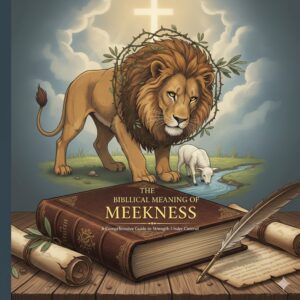
At its core, biblical meekness is strength under control. Imagine a powerful warhorse that has been trained: its immense power is not diminished, but it is now directed, responsive to the rider, and useful for a purpose. That is the biblical picture.
The key Hebrew word in the Old Testament is ‘anav (or ‘ani), often translated as “meek,” “humble,” or “poor.” It describes someone who, through circumstance or choice, has learned to depend entirely on God. It’s the posture of one who has been humbled and has submitted their strength and rights to a higher authority.
In the New Testament, the Greek word is praüs (or praupathia). In ancient Greek culture, this word described a soothing medicine, a gentle breeze, or a domesticated animal. It was the quality of having great power but exercising it with gentleness, appropriateness, and self-control.
Key Takeaway: Biblical meekness is not weakness; it is the deliberate channeling of one’s power, emotions, and rights under the authority of God and for the service of others.
How Cultural Understanding Differs from Biblical Truth
To grasp the full weight of this virtue, it’s helpful to see how our modern assumptions contrast with the biblical definition.
| Cultural “Meekness” | Biblical Meekness |
|---|---|
| Source: Timidity, lack of confidence. | Source: Conscious choice, spiritual maturity. |
| Posture: Passive, easily pushed around. | Posture: Active, responsive, and controlled. |
| Focus: Self-protection, avoiding conflict. | Focus: God-dependence, righteous action. |
| Energy: Absence of power. | Energy: Harnessed and directed power. |
| Result: Often overlooked or dismissed. | Result: Inherits the earth (Matthew 5:5). |
Meekness in Action: Key Figures in Scripture
The theory comes alive when we see meekness embodied. The Bible highlights some of its most powerful leaders as the prime examples.
Moses: The Meekest Man on Earth
It’s a stunning title. Moses, the prince of Egypt, the confrontor of Pharaoh, the lawgiver who led millions, is described in Numbers 12:3 as “very meek, more than all people who were on the face of the earth.”
-
His Strength: Unmatched authority as God’s spokesman, courage to face down empires.
-
His Control: He did not defend himself when his leadership was challenged by Miriam and Aaron (Numbers 12). He entrusted his cause to God. His meekness was seen in his refusal to use his power for personal vengeance or gain, instead interceding for the very people who rebelled against him.
Jesus Christ: The Perfect Model of Meekness
Jesus is the ultimate portrait of this virtue. He declared, “Take my yoke upon you, and learn from me, for I am gentle and lowly in heart, and you will find rest for your souls” (Matthew 11:29).
-
His Strength: The omnipotent Creator, with legions of angels at His call.
-
His Control: He washed the feet of His disciples (John 13). He remained silent before His accusers (Matthew 26:63). He prayed for forgiveness for those crucifying Him (Luke 23:34). His triumphal entry on a donkey, not a warhorse, was a direct symbol of meek, peace-bringing kingship (Zechariah 9:9).
“Blessed are the meek, for they shall inherit the earth.” – Matthew 5:5 (ESV). This central Beatitude redefines success. The inheritors are not the aggressive and domineering, but those who trust God to secure their future and portion.
The Anatomy of a Meek Heart: Characteristics and Manifestations
What does this controlled strength look like in daily life? It manifests in several key attitudes:
-
God-Dependence: The meek person has stopped relying on their own strength and cunning. They pray first, not as a last resort.
-
Teachable Spirit: Unlike the proud who resist correction, the meek are open to instruction, from God’s Word and from others (Psalm 25:9).
-
Righteous Anger, Controlled Response: Meekness is not the absence of anger, but the proper channeling of it. It gets angry at sin and injustice (like Jesus clearing the Temple) but is slow to anger in matters of personal offense (James 1:19-20).
-
Peacemaking: The meek person does not insist on their own way or escalate conflict. They seek reconciliation and understanding (Ephesians 4:1-3).
-
Contentment: Because they trust God’s provision, the meek are free from the desperate grasping and envy that drives the world (Philippians 4:11-13).
Why Meekness is a Source of Power
This may be the most counterintuitive point. Our culture says assert your rights, promote yourself, seize power. The Bible says true power is found in surrender.
-
It Receives God’s Guidance: “The LORD leads the humble in what is right, and teaches the humble his way” (Psalm 25:9). A submitted heart is a guidable heart.
-
It Attracts God’s Favor: “God opposes the proud but gives grace to the humble” (James 4:6, 1 Peter 5:5). The meek live in the flow of divine help.
-
It Achieves Lasting Victory: By refusing to fight fleshly battles with fleshly weapons, the meek avoid the cycles of bitterness and retaliation. They inherit promises through faithful endurance, not ruthless conquest.
Cultivating Meekness in a World That Values the Opposite
Developing this heart posture is a lifelong journey of spiritual discipline. It’s not about trying to be quiet; it’s about reorienting your source of strength.
Practical Steps for Development:
-
Practice Active Listening: Before formulating your reply, truly seek to understand the other person.
-
Defer to Others: Consciously choose to let someone else go first, be heard, or take credit.
-
Study the Life of Jesus: Regularly read the Gospels, specifically watching how He interacts with people in power, in pain, and in opposition.
-
Embrace Lessons in Humility: When a circumstance humbles you, don’t fight it defensively. Ask, “What might God be teaching me here?”
-
Pray for a Meek Heart: Make David’s prayer your own: “A broken and contrite heart, O God, you will not despise” (Psalm 51:17).
Important Note: Cultivating meekness does not mean becoming a doormat or tolerating abuse. Biblical meekness is coupled with wisdom, discernment, and courageous love. It knows when to be silent and when to speak truth, always powered by grace.
Meekness and Its Counterfeits: Discerning the Real from the False
It’s crucial to distinguish true meekness from behaviors that merely mimic it.
-
People-Pleasing vs. Meekness: People-pleasing seeks approval from others. Meekness seeks approval from God. The former changes with the crowd; the latter is rooted in conviction.
-
Passivity vs. Meekness: Passivity avoids action out of fear or apathy. Meekness chooses restrained action out of love and trust.
-
Low Self-Esteem vs. Meekness: Low self-esteem is a negative focus on self. Meekness is a positive focus on God and others—it’s not thinking less of yourself, but thinking of yourself less (in a healthy, God-affirmed way).
Conclusion
The biblical meaning of meekness turns worldly wisdom on its head, revealing a profound path to true strength and fulfillment. It is the cultivated heart posture of trusting God fully, surrendering personal power for His purposes, and exercising our God-given strength with gentle, disciplined grace. Far from a virtue of the weak, it is the distinguishing mark of those who are strong enough to be led, humble enough to learn, and secure enough to serve. They are the ones, as Jesus promised, who will ultimately inherit everything that truly matters.
Frequently Asked Questions (FAQ)
Q: Is meekness the same as humility?
A: They are deeply intertwined sisters. Humility is the internal recognition of our proper place before God and others—that we are not the center of the universe. Meekness is the outward expression of that humility, particularly in how we use our power and respond to offense.
Q: Can a leader be meek?
A: Absolutely. In fact, the best biblical leaders were meek. Moses and Jesus are the prime examples. A meek leader leads through service, listens to counsel, channels their authority for the good of others, and is not driven by ego or the need for control.
Q: How do I practice meekness when I’m being treated unfairly?
A: This is the hardest test. Biblical meekness in injustice looks like: 1) Entrusting your case to God as the just Judge (1 Peter 2:23), 2) Choosing not to retaliate with words or actions, 3) If confrontation is necessary, doing it with clarity and calmness, not malice, and 4) Seeking reconciliation if possible, while maintaining healthy boundaries.
Q: Doesn’t “inherit the earth” mean material prosperity?
A: While it includes God’s faithful provision, the promise is broader and richer. It speaks of possessing the fullness of God’s promises, enjoying the “land” of His blessing (spiritual peace, contentment, relational harmony, and ultimately, the new creation). It’s about having what is truly valuable, secured by God’s faithfulness, not human striving.
Additional Resource
For a deeper dive into the practical application of the Beatitudes, including meekness, consider exploring the *The Sermon on the Mount: A Study on Matthew 5-7* from The Bible Project. You can find their insightful video and podcast series here: https://bibleproject.com/explore/sermon-on-the-mount/ (Note: This is an external, high-quality resource for further study).