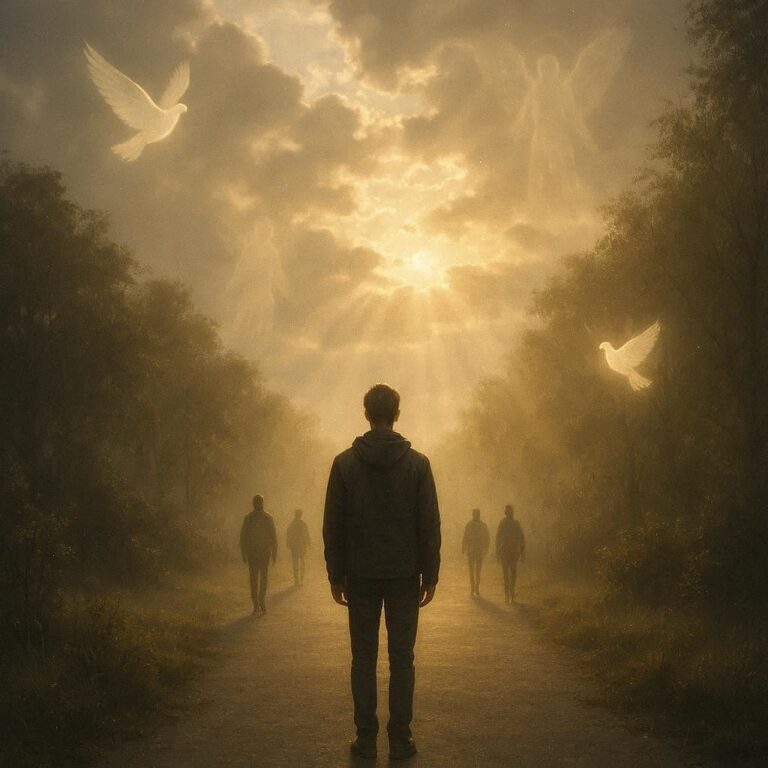
Have you ever encountered a word so rich with meaning that it feels like a key to a hidden room? In the world of faith, few words carry the weight, mystery, and urgency of “Maranatha.” It’s a term whispered in ancient liturgies, etched onto the walls of early Christian catacombs, and still spoken in churches today. But what does it actually mean? And why does this single word from the pages of the New Testament continue to resonate nearly 2,000 years later?
This guide will take you on a journey into the heart of this powerful expression. We’ll explore its Aramaic roots, unpack its dual significance in the Bible, and discover why understanding “Maranatha” is more than an academic exercise—it’s an invitation to a deeper, more expectant faith.

Table of Contents
ToggleWhat is the Meaning of “Maranatha” in the Bible?
At its core, Maranatha (μαραναθα) is an Aramaic phrase that was absorbed directly into the early Greek-speaking Christian communities. Aramaic was the everyday language of Jesus and his first disciples, making this word a precious linguistic artifact from the dawn of the faith.
The term is a compound of two Aramaic words:
-
“Maran” (מָרַן): Meaning “Our Lord.”
-
“atha” (אָתָא): An imperative verb meaning “come!”
Thus, the most straightforward and accepted translation is: “Our Lord, come!”
This cry is found just once in the New Testament, in 1 Corinthians 16:22, at the very end of Paul’s letter: “If anyone does not love the Lord, let that person be cursed! Come, Lord!” (NIV). The original Greek text preserves the Aramaic “μαραναθα” (maranatha), which translators then render into the reader’s language. Its placement is striking—a final, urgent plea that punctuates the entire epistle.
A Prayer with Two Faces: A Deeper Look at the Dual Meaning
Here’s where the richness of “Maranatha” deepens. Scholars and theologians have long recognized that this compact phrase can be understood—and was likely intended—in two profoundly interconnected ways. The table below clarifies this beautiful duality:
| Aspect | Interpretation 1: A Plea for Christ’s Return | Interpretation 2: An Invocation of Christ’s Presence |
|---|---|---|
| Primary Focus | Future Hope (Eschatology). Looks ahead to the Second Coming of Jesus at the end of the age. | Present Reality (Worship). Invites the recognized presence of the Lord in the here and now, especially in worship. |
| Grammatical Nuance | Reads as “Maran-atha” – “Our Lord, come!” A cry of longing directed toward the future. | Can be read as “Maran atha” – “Our Lord has come” or, as an invocation, “Our Lord is here.” Affirms His present reality. |
| Context in 1 Cor. 16 | Fits the broader New Testament theme of eager anticipation for Christ’s return (e.g., Revelation 22:20). | Fits the context of the Lord’s Supper (1 Cor. 11), where believers commune with the present Christ. |
| Practical Implication | A prayer for the final restoration of all things, justice, and the fullness of God’s kingdom. | A prayer for guidance, comfort, power, and tangible awareness of God’s Spirit in current life and community. |
Important Note: These are not contradictory meanings. Instead, they are two sides of the same coin of Christian faith. True biblical hope for the future empowers faithful living in the present. The Lord we call upon to come back is the same Lord we invite to be with us now.
The Powerful Context of Maranatha in 1 Corinthians
To feel the full force of Paul’s use of “Maranatha,” we must see it as the climax of his first letter to the Corinthians. This was a church fractured by division, moral confusion, and theological misunderstandings. Paul spends the entire letter addressing these issues:
-
Divisions and factions (Chapters 1-4)
-
Sexual immorality and lawsuits (Chapters 5-6)
-
Questions about marriage, food, and worship (Chapters 7-14)
-
Misunderstanding of spiritual gifts and the resurrection (Chapters 12-15)
After this exhaustive call to holiness, unity, and truth, he lands his final argument not with a new rule, but with a prayer. “Maranatha” is the ultimate solution. It’s a reminder that our standard of love, our call to purity, and our hope for unity are all rooted in the person of Jesus Christ—both as the Lord who is present with us by His Spirit and as the coming King who will one day make all things right.
It is immediately preceded by a stark warning: “If anyone has no love for the Lord, let him be accursed.” The word “accursed” (anathema) implies being set apart for destruction. The juxtaposition is intense: anathema for those who reject the Lord, followed immediately by maranatha, the heartfelt cry of those who love Him. This frames the Christian life as a fundamental orientation: a turning away from what is cursed and a turning toward the coming Lord in hopeful expectation.
Maranatha in Early Christian Worship and Life
The early church didn’t just see “Maranatha” as a theological concept; it was woven into the fabric of their worship and identity. Evidence suggests it was a regular part of their liturgical language.
-
The Didache (c. 50-110 AD): This early Christian manual, possibly contemporary with the later New Testament writings, instructs believers on how to celebrate the Eucharist (Communion). It states: “…let grace come, and let this world pass away. Hosanna to the God of David! If anyone is holy, let him come; if anyone is not, let him repent. Maranatha! Amen.” Here, “Maranatha” is a liturgical climax, a cry for God’s grace and presence in the sacred meal, linked to both holiness and the passing away of the current age.
-
Funerary Inscriptions: The word has been found carved on the tombs of early Christians in the catacombs. In this context of grief and death, “Maranatha” was a defiant shout of hope. It proclaimed belief in the resurrection and the sure return of Christ, who holds the keys to death and Hades (Revelation 1:18).
For these first believers, living under frequent persecution, “Maranatha” was a code of hope, a statement of allegiance, and a shared prayer that bound them together across cultures and languages. It was a reminder that their true citizenship was in a kingdom that was both already present and not yet fully revealed.
Why “Maranatha” Still Matters for Believers Today
In a world of instant gratification, chronic anxiety, and shifting foundations, the ancient cry of “Maranatha” offers a powerful corrective and a profound comfort. Here’s how integrating this prayer into your spiritual life can make a tangible difference:
1. It Recalibrates Our Perspective. When we pray “Our Lord, come,” we actively acknowledge that this world, with all its beauty and brokenness, is not the final chapter. It lifts our eyes from immediate crises to eternal promises, fostering a hopeful and enduring spirit.
2. It Unites Worship and Mission. The dual meaning of Maranatha bridges the gap between our Sunday worship and our Monday work. We invoke the Lord’s presence with us as we go into our workplaces, families, and communities. And we labor for justice, mercy, and love precisely because we know the Lord who will one day perfect it all is coming back.
3. It is an Antidote to Complacency. The prayer is inherently expectant and active. It’s not a passive wish but a plea that implies readiness. As Jesus taught in parables of the returning master (Matthew 25), to pray “Maranatha” is to commit to being a faithful servant, busy with the work He has given us.
4. It Provides Comfort in Suffering and Grief. Like the early Christians who carved it on tombs, we can cry “Maranatha” in our darkest moments. It is a prayer that admits pain while simultaneously affirming that the story is not over. The coming Lord will wipe away every tear (Revelation 21:4).
How to Incorporate “Maranatha” into Your Spiritual Practice
-
As a Simple Prayer: Use it as a breath prayer throughout your day. In moments of stress, joy, or decision, silently pray, “Maranatha. Come, Lord Jesus.”
-
In Times of Worship: Let it be a personal or communal climax during prayer, song, or the taking of Communion.
-
As a Meditative Focus: Reflect on its two meanings. Spend time considering Christ’s present presence with you, and then on the hope of His future return. Let one truth inform the other.
Maranatha and Biblical Eschatology: The End-Time Connection
“Maranatha” is intrinsically linked to Christian eschatology—the study of “last things.” It is the heartbeat of the New Testament’s forward look.
-
The Alpha and Omega: In Revelation 22, the final chapter of the Bible, Jesus declares, “Surely I am coming soon.” The responsive cry of the apostle John—and by extension, the entire church—is: “Amen. Come, Lord Jesus!” (Revelation 22:20). This is the book of Revelation’s “Maranatha,” forming an inclusio (a literary bookend) with the plea in 1 Corinthians. The Bible begins with God walking with humanity in a garden (Genesis 3:8) and ends with humanity’s prayer for God to return.
-
A Prayer for Final Victory: This prayer looks forward to the final defeat of evil, the resurrection of the dead, the great judgment, and the establishment of the New Heaven and New Earth. It is the ultimate expression of the hope that “the kingdom of the world has become the kingdom of our Lord and of his Messiah, and he will reign for ever and ever” (Revelation 11:15).
Helpful List: Key “Maranatha” Moments in Scripture
-
1 Corinthians 16:22: The direct occurrence, paired with anathema.
-
Revelation 22:20: The echoing prayer that closes the biblical canon.
-
Philippians 4:5: “The Lord is near.” This verse captures the dual sense—His nearness in spirit now and in person soon.
-
James 5:7-9: Encourages patience and steadfastness “because the coming of the Lord is at hand.”
-
The Didache 10:6: The early liturgical use, showing its living tradition.
A Common Misunderstanding
It’s crucial to clarify that “Maranatha” is not a curse or a word of condemnation. In some modern, fringe contexts, it has been misused as a kind of spiritual weapon. This is a complete distortion of its biblical and historical meaning. It is, and always has been, primarily a prayerful cry of longing, hope, and worshipful invocation from the heart of a believer towards their Lord. Any use that turns it into a threat contradicts its essence as an expression of love for Christ.
Conclusion
Maranatha is far more than an ancient Aramaic relic; it is the enduring cry of the Christian heart. It captures the beautiful tension of living faithfully in the present while yearning for God’s promised future. It is a plea for Christ’s return that simultaneously invites His presence into our current moment. From the pages of Corinthian correspondence to the whispers of persecuted saints in catacombs to our prayers today, “Our Lord, come!” remains the defining hope that shapes a life of purpose, perseverance, and worship.
Frequently Asked Questions (FAQ)
Q: Is “Maranatha” a magic word or a spell?
A: Absolutely not. It is a prayer, plain and simple. Its power does not lie in the phonetic sound but in the sincere faith and hope it expresses toward Jesus Christ. It is an invocation, not an incantation.
Q: Can anyone use the word “Maranatha”?
A: While anyone can say the word, its meaningful use is inherently confessional. It is most powerful and authentic when spoken by someone who recognizes Jesus as “Our Lord” and sincerely desires His presence and return. Using it without this faith context strips it of its intended meaning.
Q: How is “Maranatha” different from “Hallelujah” or “Hosanna”?
A: All three are Hebrew/Aramaic words adopted into Christian worship.
-
Hallelujah means “Praise the Lord!” It is a cry of worship and thanksgiving.
-
Hosanna means “Save, please!” It was a cry for deliverance (Psalm 118:25) that became an exclamation of praise to the Messiah.
-
Maranatha means “Our Lord, come!” It is a prayer of invocation and eager expectation for the Lord’s presence and return. They are complementary expressions of faith.
Q: Is there a specific way to pronounce “Maranatha”?
A: Common pronunciations are “mah-rah-nah-thah” or “mair-uh-nath-uh.” The precise ancient pronunciation is uncertain, and God is concerned with the heart behind the prayer, not perfect phonetics.
Additional Resources
To further your study on the historical context of early Christian worship and the hope of Christ’s return, consider exploring resources on Early Church Fathers and New Testament Eschatology. A great place to start is with public domain translations of works like The Didache or the letters of Ignatius of Antioch, which can often be found on academic library sites like The Christian Classics Ethereal Library.