The Bible is filled with names and titles for God, each revealing a different facet of His character. Among the most powerful, yet often misunderstood, is “The Lord of Armies” or “The Lord of Hosts.” This title isn’t a relic of ancient warfare but a vibrant, profound truth about God’s nature, sovereignty, and unwavering commitment to His people. If you’ve ever wondered about the depth behind this formidable name, you’re in the right place. This guide will unpack its meaning, trace its journey through Scripture, and reveal its stunning relevance for your life today.
What Does “Lord of Armies” Mean in the Bible?
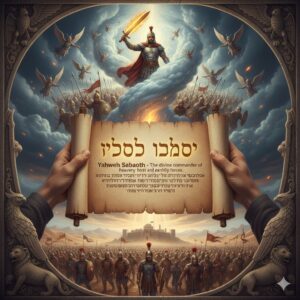
At its core, the title “Lord of Armies” (in Hebrew, Yahweh Sabaoth) signifies God as the sovereign commander of all heavenly forces and earthly powers. It speaks of His ultimate authority, unmatched strength, and majestic rule over everything seen and unseen.
Unlike human titles that can be ceremonial, this name is a declaration of active, omnipotent leadership. It assures us that the God we worship is not passive or distant. He is the commanding General of angelic armies, the celestial bodies, and all the hosts of heaven. He marshals the forces of creation itself to fulfill His perfect purposes of justice, salvation, and redemption.
Breaking Down the Original Hebrew: Yahweh Sabaoth
To truly grasp its weight, we need to look at the original language:
-
Yahweh (יהוה): The personal, covenant name of God, revealed to Moses at the burning bush. It signifies “I AM WHO I AM”—God’s self-existent, eternal, and faithful nature.
-
Sabaoth (צבאות): A plural noun meaning “armies,” “hosts,” or “multitudes.” This refers to vast, organized ranks.
When combined, Yahweh Sabaoth means “The Eternal, Covenant-Keeping God who commands all the multitudes.” These multitudes include:
-
The angelic armies of heaven (1 Kings 22:19).
-
The stars and celestial bodies (Isaiah 40:26).
-
All the inhabitants of the earth, whether they acknowledge Him or not (Isaiah 13:4).
-
The forces of creation, like wind and rain (Jeremiah 10:13).
This title elevates God from being merely a tribal deity to the Supreme Commander of the entire universe. It is a name of breathtaking scope and power.
The Historical and Theological Context of the Title
The title “Lord of Armies” emerges prominently during times of national crisis, uncertainty, and deep need for divine intervention. It’s not first used in a time of Israel’s strength, but in their vulnerability.
First Use and Prophetic Emphasis
While the concept is present earlier, the compound name Yahweh Sabaoth appears first in the book of 1 Samuel, during the period of the judges—a time of moral and military instability. It gains profound prominence through the prophets, especially Isaiah, Jeremiah, and Zechariah.
Why during these times? The name served as a crucial reminder. When Israel’s enemies seemed overwhelming, when their own king was weak, or when they felt abandoned, the prophets declared: “Your true King is the Lord of Armies. Your defender is the Commander of angelic legions. Your hope is in the God whose resources are infinite.”
| Period | Context | Message of “Yahweh Sabaoth” |
|---|---|---|
| Early Monarchy (1 Samuel) | Ark captured, priestly line corrupted, Philistine threat. | God remains the true King and Commander despite human failure. |
| Assyrian Crisis (Isaiah) | Jerusalem besieged, kings making fearful alliances. | Trust in the Holy One who musters armies for His people’s defense. |
| Babylonian Exile (Jeremiah) | Judgment, destruction of temple, loss of homeland. | God commands armies for judgment and for future restoration. |
| Post-Exile (Zechariah) | Small remnant, discouragement rebuilding temple. | Your work is backed by the omnipotent God of all hosts. |
A God of Both War and Worship
A critical tension within this title is its association with both battle and the temple. “Lord of Armies” is invoked in war contexts (1 Samuel 17:45) but also in deeply worshipful, liturgical settings (Isaiah 6:3, “Holy, holy, holy is the Lord of Armies”).
This shows that God’s sovereign power is not capricious violence. It is power wielded by a holy, covenant-keeping God. His might is exercised for:
-
Judgment: Against sin, evil, and oppressive powers.
-
Salvation: To rescue and deliver His people.
-
Establishing His Kingdom: A kingdom of righteousness and peace.
“You come to me with a sword and with a spear and with a javelin, but I come to you in the name of the Lord of Armies, the God of the armies of Israel, whom you have defied.” – 1 Samuel 17:45
David’s declaration to Goliath captures the essence: confidence is not in human weaponry but in the presence and authority of the Divine Commander.
The Lord of Armies in the Old and New Testaments
The journey of this title from the Old to the New Testament reveals a stunning and transformative continuity.
In the Old Testament: The Sovereign King
Throughout the Old Testament, Yahweh Sabaoth is the Divine Warrior and the true King of Israel.
-
In the Psalms: A refuge for the oppressed (Psalm 46:7, 11).
-
In the Prophets: A hope for the faithful remnant and a terror to the proud (Isaiah 24:23; Jeremiah 32:18).
-
Central Theme: God’s zealous commitment to defend His glory, punish evil, and protect His covenant people.
In the New Testament: The Victory in Christ
While the exact phrase “Lord of Armies” is less common, its reality is fulfilled and embodied in Jesus Christ.
-
Jesus as the Commander: When Jesus stands before the Roman cohort in the garden, He declares “I am he,” and they draw back and fall to the ground (John 18:6). He is the authoritative presence of Yahweh Sabaoth. He tells Pilate, “My kingdom is not of this world. If it were, my servants would fight” (John 18:36), indicating His command of heavenly legions (see Matthew 26:53).
-
The Armies of Heaven Follow Him: The book of Revelation unveils the cosmic Christ as the triumphant Warrior-King.
“Then I saw heaven opened, and behold, a white horse! The one sitting on it is called Faithful and True… He will rule them with a rod of iron… and the armies of heaven, arrayed in fine linen, white and pure, were following him on white horses.” – Revelation 19:11-14
Here, Jesus is the incarnate Lord of Armies, leading the celestial hosts to final victory over all evil.
-
The True Temple: Jesus is the true dwelling place of God (John 2:19-21). The God who filled the temple (Isaiah 6) now dwells incarnate among us, leading the ultimate campaign against sin and death.
Important Note: The New Testament shifts the focus of the battle. The primary enemy is no longer earthly nations but spiritual forces of darkness (Ephesians 6:12). The “Lord of Armies” now leads the church in spiritual warfare through truth, prayer, and the gospel, with the ultimate assurance of final victory.
The Personal and Practical Application for Today
Understanding “The Lord of Armies” is not just an academic exercise. It provides a foundational perspective for navigating modern life.
What It Means for Your Faith
-
In Times of Fear & Anxiety: Your circumstances are not governed by chaos or mere human power. They are under the oversight of the Supreme Commander who has infinite resources at His disposal. You can trade anxiety for trust in His sovereign command.
-
In Spiritual Warfare: You are not on the defensive. You serve in the army of the undefeated Yahweh Sabaoth. Ephesians 6:10 urges believers to “be strong in the Lord and in the strength of his might.” Your spiritual armor and authority are derived from Him.
-
In Feeling Insignificant: When your problems feel huge and your strength small, this name reminds you that God mobilizes galaxies for His purposes. You are part of a vast, divine strategy led by an all-powerful King.
A Framework for Trust and Prayer
Knowing God as the Lord of Armies transforms how we pray:
-
From Pleading to Aligning: Our prayers shift from merely asking God to intervene, to aligning ourselves with the strategies and purposes of the Divine Commander.
-
Praying with Authority: We pray in Jesus’ name—the name of the Victorious Commander—against spiritual strongholds, knowing the hosts of heaven are engaged.
-
Foundation for Hope: In a world of injustice, we know the final chapter is not written by tyrants or systems, but by the righteous Judge and Warrior who will make all things right.
Common Misconceptions and Clarifications
Let’s address some frequent misunderstandings about this powerful title.
Misconception 1: It portrays God as a violent warmonger.
-
Clarification: God’s warfare in Scripture is consistently against evil, injustice, and that which destroys His creation and people. It is the necessary action of a good King to establish peace and righteousness. His final victory in Revelation brings an end to all war and suffering.
Misconception 2: It’s an Old Testament concept replaced by a “God of love” in the New Testament.
-
Clarification: God’s nature is unchanging. The New Testament reveals the fullest expression of both His love and His justice at the cross. Christ’s victory over sin, death, and Satan is the ultimate act of the Divine Warrior, motivated by infinite love (Colossians 2:15).
Misconception 3: It means Christians should seek physical warfare or political dominance.
-
Clarification: The church’s mandate is to proclaim the gospel of peace and fight spiritual battles with spiritual weapons (2 Corinthians 10:4). Our hope is in Christ’s return, not in earthly militancy. We live out the values of His kingdom—love, mercy, justice—trusting Him to execute final judgment and restoration.
Conclusion
The biblical meaning of “Lord of Armies” reveals a God of unimaginable power who is passionately committed to His people. It is a title that moves Him from the pages of history to the throne of the universe, and into the battles of our everyday lives. From the prayers of Hannah to the prophecies of Isaiah, from David’s field to John’s vision of Revelation, Yahweh Sabaoth stands as our sovereign defender, our holy king, and our certain hope. In a world that often feels chaotic and threatening, there is no more comforting or empowering truth than this: The Lord of all the hosts of heaven is on your side.
Frequently Asked Questions (FAQ)
Q: Is “Lord of Hosts” the same as “Lord of Armies”?
A: Yes, they are identical translations of the Hebrew Yahweh Sabaoth. “Hosts” is an older English word for organized multitudes or armies.
Q: Why don’t we see the phrase “Lord of Armies” as much in the New Testament?
A: The concept is fully present but embodied in the person of Jesus Christ. The New Testament focuses on revealing Jesus as the Divine Commander who achieved the decisive victory through His cross and resurrection, now leading the church in spiritual conflict.
Q: How should I apply the “Lord of Armies” concept when I feel weak?
A: It is precisely for moments of weakness that this truth exists. Your strength is not the metric for success. Your alignment with the all-powerful Commander is. Trust that His strength is made perfect in weakness (2 Corinthians 12:9) and that His inexhaustible resources are deployed for your good and His glory.
Q: Does this title imply God is masculine in a human sense?
A: God is Spirit (John 4:24) and transcends human gender. The Bible uses masculine language as the best analogical framework to reveal God as a personal, purposeful, covenant-making Being. “Lord of Armies” conveys leadership, authority, and protective commitment, attributes Scripture consistently reveals about God.
Additional Resource
For a deeper dive into the names of God and their significance, consider exploring the scholarly work “The LORD Is a Warrior” by Millard J. Erickson, which explores the theme of divine warfare in Scripture, or access the free online resource The Bible Project’s video on “Yahweh” for a visual overview of God’s covenant name.