When you hear the name “Judah” in a biblical context, what comes to mind? Perhaps you think of one of the twelve tribes of Israel, or the southern kingdom in the divided monarchy. Maybe the word itself sounds familiar because it’s the root of the words “Jew” and “Judaism.” But the biblical meaning of Judah is a profound tapestry woven from personal stories, prophetic promises, and a legacy that literally changed the world. It’s a story of flawed humanity, unexpected grace, and a divine plan that unfolded across centuries.
In this guide, we’ll explore Judah from every angle. We’ll meet the man, trace the tribe, examine the territory, and uncover the ultimate fulfillment of Judah’s promise. This isn’t just ancient history; it’s a foundational narrative that offers insight into identity, redemption, and purpose.
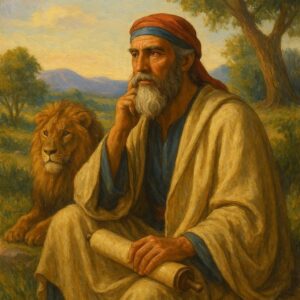
Who Was Judah the Man? The Fourth Son’s Transformation
The story begins with a person. Judah was the fourth son born to the patriarch Jacob and his wife, Leah. In the complex family dynamics of Genesis, Leah felt unloved, and each son’s name reflected her hopes and struggles. Judah’s name comes from the Hebrew root yadah, which means “to praise.” At his birth, Leah declared, “This time I will praise the Lord” (Genesis 29:35). So, from his first breath, his name pointed toward acknowledgment and worship.
But Judah’s early life was far from praiseworthy. His personal narrative is one of the most raw and transformative in Genesis. He is co-conspirator in selling his younger brother Joseph into slavery (Genesis 37:26-27). He experiences the loss of two sons, Er and Onan. His encounter with his daughter-in-law Tamar—whom he wronged—is a startling story of justice and admission of guilt. When Tamar produces evidence that he is the father of her child, Judah publicly declares, “She is more righteous than I” (Genesis 44:26).
This moment marks a turning point. Judah moves from selfishness to self-sacrifice. Later, in Egypt, he offers himself as a substitute to be a slave in place of his youngest brother Benjamin, pleading with Joseph (whom he doesn’t yet recognize) to take him instead (Genesis 44:33-34). The man who once sold a brother into slavery now offers to become a slave to save a brother. This demonstrated repentance and sacrificial leadership set the stage for his prophetic blessing.
Key Character Traits of Judah the Man:
-
Transformational: His life shows a clear arc from failure to maturity.
-
Repentant: He acknowledged his wrongdoing against Tamar.
-
Sacrificial: He offered his own life for Benjamin’s.
-
A Leader: Despite being the fourth son, he emerged as a spokesman for the brothers.
The Prophetic Blessing: Why Judah Took the Lead
On his deathbed, their father Jacob gathered his twelve sons to tell them “what will happen to you in days to come” (Genesis 49:1). This was more than a farewell; it was a prophetic declaration over each tribe’s future.
Reuben, the firstborn, forfeited his status due to instability. Simeon and Levi, the next two, were scattered due to their violent anger. Then came Judah. Jacob’s blessing over Judah is the longest and most royal of them all:
“Judah, your brothers will praise you; your hand will be on the neck of your enemies; your father’s sons will bow down to you… The scepter will not depart from Judah, nor the ruler’s staff from between his feet, until he to whom it belongs shall come and the obedience of the nations shall be his.” (Genesis 49:8-10)
This blessing contains several explosive promises:
-
Leadership and Praise: His brothers would acknowledge his leadership.
-
Military Strength: He would be victorious over enemies.
-
Lasting Royal Authority: The “scepter” and “ruler’s staff” symbolize kingship. This right to rule would never leave Judah’s line.
-
The Coming of Shiloh: This mysterious phrase (“until he to whom it belongs shall come”) points to a future, ultimate ruler from Judah’s line who would command universal obedience.
This blessing effectively anointed Judah as the tribal leader, transferring the birthright’s promises of leadership and nation-building from Reuben to him. The kingly line was now established.
The Tribe of Judah: Character, Territory, and Role
From the man came a tribe, and this tribe embodied the characteristics of its forefather: leadership, courage, and a tendency toward both failure and repentance.
Character of the Tribe:
The tribe of Judah was often the first in march and battle (Numbers 2:9, Judges 1:1-2). They were known for their courage and military prowess. However, they also struggled with faithlessness, at times falling into idolatry just like the other tribes. Yet, they often produced reformers and leaders who called the people back to God.
The Territory of Judah: The Promised Land’s Heart
When the Israelites entered Canaan under Joshua, Judah received its territorial inheritance by lot. It was the largest of the tribal territories, located in the southern part of the land.
| Feature | Description | Significance |
|---|---|---|
| Location | Southern Canaan, from just south of Jerusalem to the Negev desert. | A large, strategic territory that included key cities and varied landscapes. |
| Key Cities | Hebron (David’s first capital), Bethlehem (Judah’s lineage, David’s hometown), Jerusalem (later conquered, became capital). | These cities became the epicenters of Judah’s political and spiritual history. |
| Geography | Varied: mountains (hill country), farmland, and desert (wilderness of Judah). | The rugged terrain provided natural defense and shaped the tribe’s resilient character. |
Role in Israel’s History:
The tribe of Judah supplied Israel’s first permanent king: David. God’s covenant with David (2 Samuel 7) explicitly tied the eternal kingship promise to his line, directly fulfilling Jacob’s prophecy over Judah. From this point forward, the royal line was inseparable from the tribe of Judah. Even after the catastrophic division of the kingdom following Solomon’s reign, the southern kingdom retained the name “Judah,” centered on this tribe, with its capital in Jerusalem.
The Kingdom of Judah: A Nation’s Struggle and Hope
After Solomon’s death, the united kingdom of Israel split in two (c. 930 BC).
-
The Northern Kingdom: Retained the name Israel (or sometimes Ephraim).
-
The Southern Kingdom: Comprised primarily of the tribes of Judah and Benjamin, and was called Judah.
For over 300 years, the Kingdom of Judah existed alongside (and often in conflict with) the northern kingdom. Its history, detailed in the books of 1 & 2 Kings and 1 & 2 Chronicles, is a rollercoaster of spiritual fidelity and failure.
What made Judah distinct?
-
The Davidic Line: Every king of Judah was a direct descendant of David, keeping the Genesis 49 prophecy alive.
-
The Temple in Jerusalem: The one, true Temple of God was located in Judah’s capital, making it the spiritual center for all Israelites.
-
Longer Survival: While the northern kingdom of Israel fell to Assyria in 722 BC, Judah persisted for another 136 years. This is often attributed to occasional periods of revival and reform under kings like Hezekiah and Josiah.
Despite this, Judah’s persistent idolatry and injustice led to its downfall. In 586 BC, Babylon destroyed Jerusalem and the Temple, and exiled the people of Judah to Babylon. This could have been the end of the story. But the prophets had spoken of a remnant, a promise, and a future.
The Prophetic Vision: Judah’s Future Beyond Exile
During the kingdom era and especially leading up to exile, prophets like Isaiah, Micah, and Jeremiah spoke powerful words about Judah’s future. They condemned its sin but also offered breathtaking hope rooted in the ancient blessing.
“But you, Bethlehem Ephrathah, though you are small among the clans of Judah, out of you will come for me one who will be ruler over Israel, whose origins are from of old, from ancient times.” (Micah 5:2)
This prophecy directly connects the future ruler to Judah’s clan and the town of Bethlehem, David’s city. Isaiah famously foretold a coming king from the “stump of Jesse” (David’s father)—a shoot that would grow from Judah’s seemingly cut-down royal line (Isaiah 11:1). He described a suffering servant and a triumphant king, creating a complex picture of the one to come.
The Ultimate Fulfillment: Judah’s Lion and David’s Root
The New Testament unveils the ultimate meaning embedded in Judah’s story from the beginning. It identifies Jesus Christ as the final, complete fulfillment of all the promises made to Judah.
-
The Genealogical Fulfillment: The very first verse of the New Testament declares: “This is the genealogy of Jesus the Messiah the son of David, the son of Abraham” (Matthew 1:1). Matthew’s and Luke’s genealogies meticulously trace Jesus’ legal and biological lineage through the line of David, and thus, the tribe of Judah.
-
The Titular Fulfillment: Jesus is repeatedly called the “Son of David,” a direct claim to Judah’s royal, messianic throne (Matthew 21:9, Mark 10:47).
-
The Prophetic Fulfillment: The book of Revelation combines the imagery of Genesis and the Prophets in a powerful declaration about Jesus:
“Then one of the elders said to me, ‘Do not weep! See, the Lion of the tribe of Judah, the Root of David, has triumphed.’” (Revelation 5:5)
He is the Lion of Judah—the powerful, conquering king from Jacob’s prophecy. He is also the Root of David—the source and sustainer of the kingly line Isaiah described. In Revelation, he alone is found worthy to open the scroll of human history, symbolizing his ultimate authority.
-
The Spiritual Fulfillment: The writer of Hebrews states plainly that Jesus, “our Lord, descended from Judah” (Hebrews 7:14). More importantly, Jesus fulfills the role Judah himself once played. Just as Judah offered himself as a substitute for Benjamin, Jesus offered himself as the substitute for all humanity, securing redemption not through physical force but through sacrificial love.
Comparative Table: Judah’s Promise and Its Fulfillment in Jesus
| Promise/Type in Judah | Fulfillment/Antitype in Jesus |
|---|---|
| The Praised Leader (Gen. 49:8) | Worthy of all praise and worship (Phil. 2:10-11). |
| The Lion (Gen. 49:9) | The triumphant Lion who has conquered (Rev. 5:5). |
| Holder of the Scepter (Gen. 49:10) | The eternal King with all authority (Matt. 28:18). |
| The Substitute (Gen. 44:33) | The ultimate substitute who died for all (1 Pet. 3:18). |
| King David’s Line (2 Sam. 7) | The Son of David and Son of God (Rom. 1:3-4). |
Judah’s Enduring Legacy: From Tribe to Term
The legacy of Judah extends far beyond ancient maps. It shaped the very words we use today.
-
The Name “Jew”: After the Babylonian exile, the returning people were primarily from the tribe of Judah. The term “Yehudi” (Jew) originally meant “someone from the territory of Judah.” Over time, it came to refer to anyone from the people of Israel, regardless of their original tribe, who upheld the traditions centered on Jerusalem. Thus, Judaism and Jewish identity are historically rooted in the survival and spiritual continuity of the tribe and kingdom of Judah.
-
The Symbol of the Lion: The lion has remained a enduring symbol of the Jewish people and Jerusalem, directly stemming from Jacob’s blessing. It symbolizes strength, courage, and royalty.
-
A Blueprint for Redemption: Judah’s personal story is a microcosm of the gospel: failure, repentance, and restoration through substitution. It shows that God’s plans are advanced not through perfect people, but through transformed people.
Important Note for Readers: Understanding the biblical meaning of Judah is not merely an academic exercise. It shows how God works through imperfect families and individuals, weaving a consistent thread of promise across millennia that culminates in a hope available to everyone. It connects the Old Testament to the New in a deeply personal way.
Conclusion
The biblical meaning of Judah is a multi-layered story of personal failure and redemption, a tribe’s rise to leadership, a kingdom’s struggle with covenant faithfulness, and an ancient prophecy that found its ultimate yes in Jesus Christ. It’s the journey from a man who said “she is more righteous than I” to the righteous King who offers his righteousness to all. From Judah’s name meaning “praise” to the global praise offered to the Lion of his tribe, the story invites us to see the profound coherence and grace woven into the biblical narrative.
FAQ: The Biblical Meaning of Judah
Q1: Does the name “Judah” mean “Jew”?
A: Not directly. “Judah” (Yehudah) means “praise.” The term “Jew” (Yehudi) evolved later to mean “someone from Judah” (the territory/kingdom). Over centuries, it became the term for all Israelites, regardless of tribal origin.
Q2: Why is Jesus called the “Lion of the tribe of Judah” if he is peaceful?
A: The lion symbolizes supreme strength, authority, and kingship, not merely aggression. In Revelation, Jesus is the Lion who triumphs over sin, death, and evil through his sacrificial death and resurrection, establishing his royal authority to judge and save.
Q3: Are all Jewish people from the tribe of Judah?
A: Not genetically, historically. After the Assyrian conquest of the northern kingdom (722 BC), the surviving identifiable Israelite community was centered in Judah. The term “Jew” was adopted by all who identified with that religious and national community, absorbing descendants of other tribes. Tribal distinctions were largely lost after the exiles.
Q4: What is the difference between Israel, Judah, and Judaism?
A: Israel was the name of the united kingdom and the northern kingdom after the split. Judah was the southern kingdom after the split. Judaism is the religion and way of life that developed from the worship, laws, and traditions preserved by the people of Judah after the Babylonian exile.
Q5: What can we learn from the personal story of Judah the man?
A: His story is a powerful lesson in transformation. It shows that past failure does not disqualify one from future purpose. His journey toward taking responsibility and offering himself for another is seen as a foreshadowing of Christ’s own substitutionary sacrifice.
Additional Resource: A Timeline of Judah’s Legacy
To visualize the sprawling biblical narrative, consider this simplified timeline:
-
~1800 BC: Judah the Man is born, fails, and is transformed (Genesis).
-
~1400 BC: The Tribe of Judah enters Canaan, receives the largest territory (Joshua).
-
~1000 BC: David, from Judah, becomes king, fulfilling the royal promise (2 Samuel).
-
930-586 BC: The Kingdom of Judah exists as the southern kingdom (1 & 2 Kings).
-
586 BC: Judah falls to Babylon; Jerusalem and the Temple are destroyed.
-
538 BC onward: Exiles return; the Jewish people, centered on Judah’s legacy, rebuild.
-
1st Century AD: Jesus Christ, the Lion and Root of Judah, is born in Bethlehem, fulfills the law and prophets, and establishes a new covenant.
-
Today: The story continues, with the name, symbols, and prophetic promises of Judah remaining central to both Jewish and Christian theology.