The name “Jeremiah” echoes through history as a symbol of lamentation and unheeded warnings. Yet, to reduce his story to mere doom is to miss the profound, beating heart of his message. The biblical meaning of Jeremiah is a complex tapestry woven with threads of divine judgment, heartbreaking personal sacrifice, and an unwavering thread of future hope. He was a man profoundly sensitive to God’s heart, called to deliver a message nobody wanted to hear, during the last, desperate decades of the Kingdom of Judah. His life itself became a living parable, a dramatic illustration of God’s relationship with a rebellious people. This article will serve as your comprehensive guide, unraveling the historical context, symbolic actions, key themes, and the ultimate, resilient hope that defines the Book of Jeremiah and the prophet for whom it is named.
Understanding Jeremiah is not just an academic exercise. It is an exploration of faithfulness in the face of failure, of speaking truth when silence is safer, and of finding a promise of redemption when all seems lost. His story resonates with anyone who has ever felt alone in their convictions or wondered where God is in the midst of national or personal collapse.
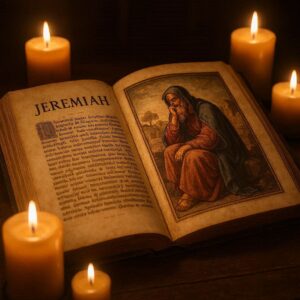
Who Was Jeremiah? The Reluctant Prophet
Jeremiah was born into a priestly family in the small town of Anathoth, just northeast of Jerusalem. His world was one of political upheaval and spiritual decay. The mighty Assyrian Empire was fading, but a new superpower, Babylon, was rising under King Nebuchadnezzar. In Judah, King Josiah’s brief religious reforms had stalled, and the nation had returned to idolatry and social injustice.
Jeremiah’s call to prophecy, described in the first chapter of his book, came in the thirteenth year of Josiah’s reign (approximately 627 BC). His reaction was immediate and deeply human: “Alas, Sovereign Lord,” he said, “I do not know how to speak; I am too young” (Jeremiah 1:6). This vulnerability becomes a hallmark of his ministry. Unlike the bold, confrontational Isaiah, Jeremiah’s biblical meaning is often tied to his introspection and emotional turmoil—he is sometimes called “the weeping prophet.”
God’s response to Jeremiah’s hesitation was not to dismiss his fears but to equip and assure him: “Do not say, ‘I am too young.’ You must go to everyone I send you to and say whatever I command you. Do not be afraid of them, for I am with you and will rescue you” (Jeremiah 1:7-8). This promise of divine presence would be Jeremiah’s anchor through decades of persecution, isolation, and imprisonment.
Historical Context: The Last Days of Judah
To grasp the biblical meaning of Jeremiah’s message, we must picture his world. Judah was a tiny kingdom caught in a geopolitical vise. Its leaders vacillated between two disastrous foreign policies: rebellion against Babylon (advocated by nationalists and false prophets) and submission to Babylon (the painful but divinely mandated course Jeremiah insisted was God’s will).
The following table outlines the key kings during Jeremiah’s ministry and how they responded to his prophecies:
| King of Judah | Reign Dates (Approx.) | Relationship with Jeremiah | Key National Event |
|---|---|---|---|
| Josiah | 640-609 BC | Initially receptive; his reforms likely inspired hope. | Institutes religious reforms based on the rediscovered Book of the Law. Dies in battle at Megiddo. |
| Jehoahaz | 609 BC (3 months) | Unrecorded, but the nation’s decline accelerates. | Deposed by Pharaoh Neco of Egypt. |
| Jehoiakim | 609-598 BC | Openly hostile. Burns Jeremiah’s scroll, seeks his arrest. | Forced into vassalage to Babylon, then rebels. |
| Jehoiachin | 598-597 BC (3 months) | Unrecorded, but Jeremiah prophesied his exile. | Surrenders Jerusalem to Babylon; first major exile of nobility and craftsmen. |
| Zedekiah | 597-586 BC | Ambivalent. Secretly consults Jeremiah but is too weak to obey. | Final rebellion against Babylon leads to the destruction of Jerusalem and the Temple. |
This turbulent history is the stage for Jeremiah’s ministry. His was not a abstract theological message, but a direct, urgent commentary on the policies and moral failures that were leading the nation to the brink of oblivion.
The Core Themes of Jeremiah’s Message
The biblical meaning of Jeremiah’s prophecy revolves around several interconnected themes that explain both the coming judgment and the nature of true hope.
1. The Broken Covenant and Coming Judgment
Jeremiah’s primary task was to declare that Judah had fundamentally broken its covenant with God. This was not a minor infraction but a foundational betrayal.
-
Idolatry as Adultery: Jeremiah frequently uses the metaphor of marriage to describe God’s covenant with Israel. Judah’s pursuit of other gods (like Baal) is not just wrong religion; it is spiritual adultery (Jeremiah 3:1-10).
-
Empty Ritual vs. Heart Religion: The people continued temple rituals, believing the Temple itself was a magical charm protecting them (“the temple of the Lord, the temple of the Lord, the temple of the Lord!” – Jeremiah 7:4). Jeremiah condemned this as a lie. God demanded justice, righteousness, and care for the vulnerable (Jeremiah 7:5-7), not empty ceremony.
-
The Foe from the North: The agent of God’s judgment, often called “the foe from the north,” is explicitly identified as Babylon (Jeremiah 20:4, 25:9). Jeremiah insisted that Nebuchadnezzar was God’s “servant” to enact divine discipline (Jeremiah 25:9, 27:6).
2. The Call to Repentance and Submission
A key part of the biblical meaning of Jeremiah is that judgment was not inevitable until the people’s hearts were fully hardened. His constant call was for genuine repentance.
-
A Message Rejected: He pleaded with kings and people to submit to the yoke of Babylon as an act of submitting to God’s will. This was seen as treasonous defeatism.
-
The Contrast with False Prophets: Jeremiah’s most bitter opponents were the court prophets, who proclaimed “Peace, peace” when there was no peace (Jeremiah 6:14, 8:11). They told the leaders what they wanted to hear, while Jeremiah told them the difficult truth.
3. The New Covenant: The Promise of Hope
This is the brilliant, transformative core that completes the biblical meaning of Jeremiah. The judgment is severe, but it is not the final word. Beyond the exile, God promises a radical, new beginning.
-
The Promise of Restoration: Jeremiah buys a field in his hometown while the Babylonian army besieges Jerusalem (Jeremiah 32). This outrageous act of faith is a sign that “houses, fields and vineyards will again be bought in this land.”
-
The Letter to the Exiles: In Jeremiah 29, he writes to those already in Babylon, telling them to build houses, plant gardens, marry, and seek the peace of the city. They are to live in hope, for God has a future for them: “For I know the plans I have for you,” declares the Lord, “plans to prosper you and not to harm you, plans to give you hope and a future” (Jeremiah 29:11).
-
The New Covenant (Jeremiah 31:31-34): This is the theological pinnacle of the book. God promises a future, unilateral act of grace:
“This is the covenant I will make with the people of Israel after that time,” declares the Lord. “I will put my law in their minds and write it on their hearts. I will be their God, and they will be my people. No longer will they teach their neighbor, or say to one another, ‘Know the Lord,’ because they will all know me, from the least of them to the greatest.”
This promise moves the relationship from external law to internal transformation, from collective ritual to personal knowledge of God, and is foundational for Christian theology.
Jeremiah the Man: Symbolic Actions and Personal Anguish
Jeremiah’s life was a living sermon. God instructed him to perform symbolic acts that physically embodied his message:
-
The Linen Belt (Jeremiah 13): He buries a linen belt, which becomes ruined, symbolizing how Judah’s pride has ruined its usefulness to God.
-
The Potter’s Clay (Jeremiah 18): He watches a potter reshape a marred vessel, illustrating God’s sovereignty to reshape nations based on their repentance.
-
The Yoke (Jeremiah 27-28): He wears a wooden yoke, urging submission to Babylon. The false prophet Hananiah breaks it, only for Jeremiah to return with an iron yoke, signifying the inescapability of God’s decree.
-
The Field Purchase (Jeremiah 32): As mentioned, this act of commerce during a siege is a powerful sign of hope beyond destruction.
These actions made his message unforgettable but also made his life incredibly difficult. Jeremiah’s “confessions” are raw, poetic prayers where he laments his calling:
-
He curses the day he was born (Jeremiah 20:14-18).
-
He accuses God of deceiving him (Jeremiah 20:7).
-
He cries out in loneliness and pain (Jeremiah 15:10, 15-18).
These passages add a profound layer to the biblical meaning of Jeremiah: he is a prophet who obeys not out of blind enthusiasm, but out of costly, agonizing faithfulness. His emotional honesty makes him one of the most relatable figures in the Bible.
Key Passages and Their Significance
-
Jeremiah 1: The Call. Establishes Jeremiah’s divine appointment and the themes of his ministry.
-
Jeremiah 7: The Temple Sermon. A blistering attack on empty ritualism and false security.
-
Jeremiah 18: The Potter. A masterful metaphor for God’s sovereignty and conditional promises.
-
Jeremiah 20: Conflict and Confession. Captures the peak of his persecution and personal despair.
-
Jeremiah 29: Letter to the Exiles. Shifts the focus to life during judgment and the famous “plans for hope” verse.
-
Jeremiah 31: The New Covenant. The revolutionary promise of an internal, permanent relationship with God.
-
Jeremiah 52: Historical Appendix. Confirms the fulfillment of Jeremiah’s prophecies with the fall of Jerusalem.
The Legacy and Fulfillment of Jeremiah’s Prophecies
Jeremiah’s prophecies saw immediate and long-term fulfillment:
-
Immediate Fulfillment: Jerusalem fell in 586 BC, the Temple was destroyed, and the people were exiled to Babylon, exactly as he had warned for decades.
-
The Return from Exile: After 70 years (as Jeremiah predicted in 25:11-12, 29:10), a remnant returned to Judah under Persian rule, fulfilling the promises of restoration.
-
The New Covenant in Christian Thought: The New Testament authors see the New Covenant promise fulfilled definitively in the life, death, and resurrection of Jesus Christ. At the Last Supper, Jesus says, “This cup is the new covenant in my blood” (Luke 22:20, 1 Corinthians 11:25), directly invoking Jeremiah 31.
Important Note for Readers
While Jeremiah 29:11 (“plans to prosper you…”) is a beautiful and cherished verse, it is crucial to remember its original context. God spoke these words specifically to the nation of Judah in exile, promising a future national restoration. Applying it personally is valid insofar as we understand God’s good character and redemptive purposes for His people, but it is not a blanket promise of individual health, wealth, or ease. Its power lies in the promise of God’s faithful presence and ultimate good purpose even in the midst of discipline and suffering.
Conclusion
The biblical meaning of Jeremiah is a profound journey from the brokenness of a covenant shattered by human rebellion to the glorious promise of a new covenant established by divine grace. Jeremiah himself embodies the cost of true prophecy—loneliness, opposition, and deep personal anguish—all borne for the sake of a truth that would save those who heeded it. His message demolishes false religious security and calls for a faith that transforms the heart. Ultimately, Jeremiah’s story is one of resilient hope, a hope not based on favorable circumstances, but on the unchanging character and promise of a God who, even in judgment, is working to redeem and restore. He is the prophet who, while watching the world burn, was given the vision of a new creation.
FAQ (Frequently Asked Questions)
Q: Why is Jeremiah called the “weeping prophet”?
A: This nickname comes from the deep sorrow and lamentation that permeates both his message (over Judah’s sin) and his personal prayers (his “Confessions”). The Book of Lamentations is also traditionally attributed to him, mourning the destruction of Jerusalem.
Q: Did Jeremiah’s prophecies come true?
A: Yes, in vivid and historically verifiable detail. His central prophecy—the destruction of Jerusalem by Babylon and a 70-year exile—occurred exactly as he foretold. The later return from exile also fulfilled his promises of restoration.
Q: What is the main lesson from the life of Jeremiah?
A: The primary lesson is the cost and necessity of faithful obedience to God, even when the message is unpopular, the results are not immediately visible, and the personal cost is incredibly high. It teaches that true hope is often forged in the fires of adversity.
Q: How does Jeremiah point to Jesus?
A: Jeremiah points to Jesus most clearly through the prophecy of the New Covenant (Jeremiah 31:31-34). Christians believe Jesus is the mediator of this new covenant (Hebrews 8:6-13, 9:15), which fulfills Jeremiah’s promise of a law written on the heart, forgiveness of sins, and a direct, personal knowledge of God.
Q: What was Jeremiah’s “yoke” symbol?
A: The wooden yoke Jeremiah wore (Jeremiah 27) was a physical symbol urging Judah to submit to the “yoke” of Babylonian rule, which was, in fact, the yoke of God’s disciplinary will. It was a call to surrender to avoid total destruction.
Additional Resources for Further Study
-
Book: Jeremiah (The Anchor Yale Bible Commentaries) by Jack R. Lundbom. A detailed, scholarly yet accessible multi-volume commentary.
-
Book: The Message of Jeremiah (The Bible Speaks Today) by Derek Kidner. A fantastic thematic and devotional exploration of the book’s key messages.
-
Online Course: “The Prophet Jeremiah” on BiblicalTraining.org. Offers free lectures from leading scholars providing historical and theological overviews.
-
Article: “Jeremiah and the God Who Weeps” on DesiringGod.org. A beautiful reflection on the emotional character of God revealed through Jeremiah’s ministry.
-
Map/Timeline: “Jeremiah’s World” infographic from the Bible Project. Visually traces the historical events and empires during Jeremiah’s life.