Few phrases in human language carry the weight, mystery, and transformative power of the simple declaration: “I AM.” Within the pages of the Bible, this is not merely a statement of existence but a profound revelation of divine identity, a cornerstone of faith, and a key to understanding the very nature of God and His Son, Jesus Christ. For anyone seeking a deeper spiritual understanding, unpacking the biblical meaning of “I AM” is an essential journey. This guide will explore its origins, its revolutionary use by Jesus, and its enduring significance for our lives today, offering a comprehensive look at one of Scripture’s most foundational concepts.
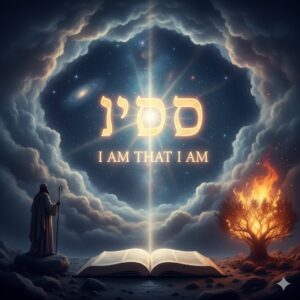
The Foundation: “I AM” in the Burning Bush
To grasp the full meaning, we must begin at its dramatic origin story in the Book of Exodus.
The Divine Encounter at Horeb
Moses, a fugitive shepherd, encounters a astonishing sight: a bush engulfed in flames yet not consumed. From this fire, the voice of God calls to him, commissioning him to return to Egypt and liberate the Israelite people. Moses, overwhelmed and feeling inadequate, poses a critical question:
“Suppose I go to the Israelites and say to them, ‘The God of your fathers has sent me to you,’ and they ask me, ‘What is his name?’ Then what shall I tell them?” (Exodus 3:13).
Moses’s question goes beyond curiosity. In ancient thought, a name was not just a label; it revealed the essential character, authority, and power of the bearer. To know the name was to understand something fundamental about the person. Moses is asking for God’s authentic identity—the nature of the Being sending him.
The Revolutionary Revelation: אֶהְיֶה אֲשֶׁר אֶהְיֶה (Ehyeh Asher Ehyeh)
God’s response is both an answer and a mystery:
“God said to Moses, ‘I AM WHO I AM. This is what you are to say to the Israelites: “I AM has sent me to you.”’” (Exodus 3:14).
The Hebrew phrase here is “Ehyeh Asher Ehyeh.” This is famously and variously translated as:
-
“I AM WHO I AM.”
-
“I WILL BE WHO I WILL BE.”
-
“I AM BECAUSE I AM.”
This name is a profound declaration of self-existence, sovereignty, and unchanging faithfulness. Let’s break down its core meanings:
-
Self-Existence: God defines Himself by Himself. He is the uncaused Cause, the uncreated Creator. He depends on nothing and no one for His being. He simply is. In a world of contingent beings, He is the necessary Being.
-
Sovereignty and Unpredictability: “I WILL BE WHO I WILL BE” speaks to God’s freedom. He cannot be boxed in by human expectations or definitions. He will reveal Himself as He chooses, faithful to His character but not bound by our limited understanding.
-
Faithful Presence: The verb tense carries a dynamic, ongoing sense. It is “I am” and “I will be.” God is declaring He is the ever-present, ever-faithful One. He is the God who will be there with His people, as He is there with Moses.
From this foundational phrase, God gives the memorial name for Israel to use: YHWH (often rendered as Yahweh or LORD in capital letters). YHWH is intrinsically linked to “I AM,” conveying the same truth: the eternal, self-sufficient, covenant-keeping God.
The Names of God in Exodus 3
| Hebrew Term | Common Translation | Significance & Context |
|---|---|---|
| אֶהְיֶה אֲשֶׁר אֶהְיֶה (Ehyeh Asher Ehyeh) | “I AM WHO I AM” | God’s definitive self-definition: self-existent, sovereign, dynamic. |
| אֶהְיֶה (Ehyeh) | “I AM” | The first-person form used by God for Himself (“I AM has sent me”). |
| יהוה (YHWH) | “The LORD” or “Yahweh” | The third-person, memorial name derived from “I AM.” Means “He Is” or “He Will Be.” |
Note for Readers: When you see “LORD” in all capital letters in your English Bible, it is the translator’s convention for the divine name YHWH, directly connecting back to the “I AM” of the burning bush. This distinguishes it from the generic Hebrew word Adonai, translated as “Lord.”
The Fulfillment: Jesus’s “I AM” Statements in the Gospel of John
Centuries after the revelation to Moses, the Gospel of John records a series of stunning declarations by Jesus of Nazareth. He doesn’t just teach about God; He employs the sacred language of “I AM” (ego eimi in Greek) in a way that directly and intentionally connects His identity to the God of Exodus.
The Theological Context of John’s Gospel
John’s Gospel is deeply theological, written to prove one central thesis:
“But these are written that you may believe that Jesus is the Messiah, the Son of God, and that by believing you may have life in his name.” (John 20:31).
John structures his narrative around seven miraculous “signs” and pairs them with seven profound “I AM” metaphors, each revealing a facet of Jesus’s divine identity and life-giving mission.
The Seven Metaphorical “I AM” Statements
Each statement is a claim to be the ultimate source and fulfillment of a fundamental human need.
1. “I am the Bread of Life.” (John 6:35, 48)
-
Context: After feeding the 5,000.
-
Meaning: Jesus presents Himself as the essential, sustaining spiritual nourishment. Just as bread sustains physical life, faith in Him sustains eternal life. He satisfies the deepest hunger of the soul.
2. “I am the Light of the World.” (John 8:12, 9:5)
-
Context: During the Festival of Tabernacles, which featured giant lamp-lighting ceremonies.
-
Meaning: He is the divine source of spiritual truth, moral guidance, and revelation. He dispels the darkness of sin, ignorance, and despair, offering a path to follow.
3. “I am the Door of the Sheep.” (John 10:7, 9)
-
Context: The Good Shepherd discourse.
-
Meaning: Jesus is the one and only gateway to safety, salvation, and pasture (abundant life). He is the exclusive means of access to a right relationship with God.
4. “I am the Good Shepherd.” (John 10:11, 14)
-
Context: Contrasting Himself with hired hands and thieves.
-
Meaning: He is the protective, sacrificial, and intimately knowing leader. The Good Shepherd lays down His life for His sheep, embodying God’s loving, guiding, and self-giving care.
5. “I am the Resurrection and the Life.” (John 11:25)
-
Context: Just before raising Lazarus from the dead.
-
Meaning: This is a claim of power over the ultimate enemy: death. He doesn’t just give resurrection; He is resurrection and life personified. Eternal life begins in a relationship with Him now, transcending physical death.
6. “I am the Way, the Truth, and the Life.” (John 14:6)
-
Context: Comforting His disciples before His crucifixion.
-
Meaning: A comprehensive claim of exclusivity and sufficiency. He is the path to the Father (Way), the embodiment of ultimate reality (Truth), and the source of divine vitality (Life).
7. “I am the True Vine.” (John 15:1, 5)
-
Context: The Last Supper discourse.
-
Meaning: He is the source of spiritual life, vitality, and fruitfulness. Believers (“branches”) must remain connected to Him to live a productive, God-honoring life.
List: The Practical Implication of Each “I AM”
-
Bread of Life: Come to Him to be satisfied.
-
Light of the World: Follow Him to walk in clarity.
-
Door: Enter through Him to find security.
-
Good Shepherd: Trust Him for guidance and care.
-
Resurrection and Life: Believe in Him to conquer fear.
-
Way, Truth, and Life: Rely on Him for direction and purpose.
-
True Vine: Abide in Him to live productively.
The Absolute “I AM” Statements: Direct Claims to Deity
Beyond the metaphors, John records moments where Jesus uses the phrase “I AM” (ego eimi) absolutely, with no predicate. In these instances, He is directly invoking the divine name from Exodus.
The Watershed Moment: John 8:58
During a heated debate with religious leaders about Abraham, Jesus makes an assertion that leaves no room for ambiguity:
“‘Very truly I tell you,’ Jesus answered, ‘before Abraham was born, I am!’”
The reaction of His audience proves they understood the weight of His words perfectly: they picked up stones to kill Him for blasphemy, as the Law prescribed for anyone claiming to be God (Leviticus 24:16). Jesus was not saying “I existed before Abraham” (which would use a past tense verb). He used the timeless, divine present: “I AM.” He placed Himself within the eternal, self-existent identity of YHWH.
Other Key Absolute Claims:
-
John 18:5-6: When the Roman cohort comes to arrest Him in Gethsemane, Jesus asks, “Who is it you want?” They reply, “Jesus of Nazareth.” He responds, “I am he” (ego eimi). John notes that at this declaration, the armed soldiers “drew back and fell to the ground.” His utterance of the divine name carried palpable, authoritative power.
Table: Comparing the “I AM” in Exodus and John
| Aspect | YHWH in Exodus | Jesus in John’s Gospel |
|---|---|---|
| Core Declaration | “I AM WHO I AM” (Ehyeh Asher Ehyeh) | “I am” (Ego Eimi) – absolutely and metaphorically. |
| Primary Meaning | Self-existence, Sovereignty, Faithful Presence. | Divine Identity, Source of Life, Fulfillment of Needs. |
| Revelation Context | To Moses at the burning bush, initiating redemption from slavery. | To the world through signs and teachings, initiating redemption from sin. |
| Human Response | Worship, covenant obedience, building of the Tabernacle (God’s dwelling). | Faith, discipleship, and building of the Church (God’s dwelling in Spirit). |
The Implications: What “I AM” Means for Faith and Life Today
Understanding the biblical meaning of “I AM” is not an academic exercise. It has transformative implications for how we relate to God, understand Jesus, and live our lives.
1. It Reveals the Character of God
The “I AM” tells us that God is:
-
Personal: He reveals His name. He desires to be known in relationship, not as an impersonal force.
-
Faithful: His name contains the promise of His ongoing presence: “I will be with you.”
-
Sovereign: He is in control, defining reality by His own will and character.
-
Self-Sufficient: Our worship adds nothing to Him, but He gives everything to us.
2. It Confirms the Identity of Jesus
Jesus’s use of “I AM” is the central Christological claim of the New Testament. It forces a decision: Was He a madman, a deceiver, or truly who He claimed to be—God incarnate? The Gospels present His life, miracles, death, and resurrection as the vindication of His claim.
C.S. Lewis, in Mere Christianity, framed it famously as the “Trilemma”: “A man who was merely a man and said the sort of things Jesus said would not be a great moral teacher. He would either be a lunatic… or else he would be the Devil of Hell. You must make your choice. Either this man was, and is, the Son of God: or else a madman or something worse… You can shut Him up for a fool, you can spit at Him and kill Him as a demon; or you can fall at His feet and call Him Lord and God.”
3. It Provides a Foundation for Our Identity and Security
If God is the eternal, self-defined “I AM,” then our identity is found in relation to Him. We are not self-defined. We are the “I am because He is.” Our worth, purpose, and security are anchored in His unchanging character.
-
When we feel inadequate, we remember “I AM” is with us.
-
When we are confused, we look to the Light of the World.
-
When we are empty, we partake of the Bread of Life.
-
When we face death (physical or spiritual), we cling to the Resurrection and the Life.
4. It Shapes Prayer and Worship
We do not pray to a distant, abstract concept. We pray to the “I AM,” the personal, present, and powerful God who has revealed His nature. Our worship is a response to who He has declared Himself to be.
Important Note: While the name “I AM” and “Yahweh” are sacred and powerful, Christians are not called to a magical or superstitious use of the term. The reverence is for the Person behind the name. We are invited into a relationship with that Person through Jesus Christ, whom we can call “Lord” and “Father” because of the Spirit He has given us (Romans 8:15, Galatians 4:6).
Conclusion: The Eternal Invitation
The biblical journey of “I AM” takes us from a burning bush in the wilderness to the great “I AM” walking on the waves, healing the sick, and surrendering His life on a cross. It reveals a God who is utterly transcendent yet intimately personal, the eternal Source who became the saving Servant. This name is not just a theological concept; it is an invitation to encounter, to trust, and to find life itself. In the end, the meaning of “I AM” is an open door, calling every seeker to know the One who simply, gloriously, and sufficiently is.
Frequently Asked Questions (FAQ)
Q: Is it wrong to use the name “Yahweh” or “I AM” in prayer?
A: There is no biblical command for Christians to avoid these names. However, the focus should always be on reverent, relational prayer to the Father, Son, and Holy Spirit. Using “Yahweh” can be meaningful if done with understanding and respect, but it is not required. The New Testament model is to approach God as “Abba, Father” through Jesus.
Q: Did Jesus ever explicitly say, “I am God”?
A: Not in those exact English words, but His claims were unmistakable in a Jewish context. Claiming to be one with the Father (John 10:30), accepting worship (John 20:28), forgiving sins (Mark 2:5-7), and using the absolute “I AM” were all understood as claims to divine identity. The Jewish authorities stated His crime clearly: “because you, a mere man, claim to be God” (John 10:33).
Q: Are there “I AM” statements in the other Gospels (Matthew, Mark, Luke)?
A: While John’s Gospel features the most concentrated and thematic use, the other Gospels contain significant echoes. For example, Jesus walks on water and says, “Take courage! It is I. Don’t be afraid” (Matthew 14:27). The Greek for “It is I” is ego eimi (“I am”). In Mark 14:62, when asked if He is the Messiah, Jesus says, “I am,” and then references divine authority from the book of Daniel.
Q: How does the “I AM” relate to the Trinity?
A: The “I AM” reveals the one, eternal, self-existent God. The New Testament reveals this one God exists in three co-equal, co-eternal Persons: Father, Son, and Holy Spirit. Jesus, as the “I AM,” is the eternal Son, the perfect revelation and embodiment of the God who revealed Himself to Moses. He and the Father are one in essence (John 10:30).
Additional Resource
For a deeper linguistic and theological study of the divine name YHWH, we recommend the entry on “God, Names of” in the Stanford Encyclopedia of Philosophy. While not a theological source, it provides excellent historical and philosophical context for the development of monotheistic thought. For devotional study, a trusted study Bible (like the ESV Study Bible or NIV Cultural Backgrounds Study Bible) is invaluable for exploring these passages in detail.
Final Summary:
The biblical phrase “I AM” is the foundational revelation of God’s self-existent, sovereign, and faithful nature, first declared to Moses. In the Gospel of John, Jesus’s seven “I AM” statements and His absolute claim “I am” before Abraham boldly identify Him as this same divine Person, the source of all life and salvation. Ultimately, understanding this name moves us from abstract belief to a personal, secure, and worshipful relationship with the God who eternally is.