The scene is one of the most iconic in human history: mysterious wise men from the East, kneeling before a young child in a humble dwelling, presenting treasures of great worth. For centuries, the gifts of gold, frankincense, and myrrh have captivated the imagination. But these were not merely expensive baby gifts. Each substance carried a deep, prophetic weight, speaking volumes about the identity and destiny of the child who received them.
In this guide, we will journey beyond the familiar Christmas pageant imagery. We’ll explore the tangible history of these precious items in the ancient world, unpack their layered spiritual symbolism, and discover why their message remains powerfully relevant. This is more than a history lesson; it’s an exploration of a divine announcement crafted not in words, but in gifts.
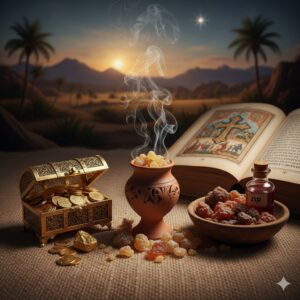
The Historical Context: Treasures of the Ancient World
To truly grasp the meaning of these gifts, we must first understand their immense material and cultural value in the 1st-century world. They were not random choices but represented some of the most coveted commodities on the planet, often traded along legendary routes like the Incense Trail.
Gold: The Currency of Kings and Kingdoms
Gold was, and remains, the universal symbol of supreme value and sovereignty. In the ancient Near East:
-
It was the metal of monarchy, used for crowns, scepters, and royal adornments.
-
It represented pure, incorruptible value, used in temple artifacts and as a high-value currency.
-
Its presentation was an act of homage fit for a ruler.
The wise men’s question, “Where is the one who has been born king of the Jews?” (Matthew 2:2), finds its first tangible answer in the gift of gold. It was a declaration of kingship.
Frankincense: The Perfume of the Divine
Frankincense is a fragrant resin harvested from the scraggly Boswellia tree, native to the Arabian Peninsula and Horn of Africa. When hardened tears of resin are burned, they release a rich, sweet, and woody aroma.
-
Its primary use was in religious worship. It was a key component of sacred incense burned in temples, including the Jewish Temple in Jerusalem (Exodus 30:34).
-
The smoke symbolized prayers ascending to heaven.
-
It was also a luxury item, used in perfumes and oils, signifying honor and recognition.
By offering frankincense, the Magi were acknowledging a divine presence. This was a gift for a priest or a god.
Myrrh: The Essence of Sacrifice and Mortality
Myrrh, also a resin, comes from the thorny Commiphora tree. Its fragrance is earthy, bitter, and medicinal.
-
It had wide-ranging uses: as a perfume, a healing antiseptic for wounds, and a key ingredient in anointing oils.
-
Most significantly, it was used in embalming and preparing bodies for burial, to mask odor and slow decay.
-
It represented mortality, suffering, and the costly nature of sacrifice.
The gift of myrrh foreshadowed a destiny of suffering and was a profound, if startling, gift for a newborn.
The Gifts in the Ancient World
| Gift | Source & Value | Primary Uses | Cultural Association |
|---|---|---|---|
| Gold | Mined; universal currency | Royal regalia, high-value trade, temple items | Kingship, wealth, divinity, permanence |
| Frankincense | Resin from Boswellia trees; extremely valuable | Temple incense, religious rituals, luxury perfume | Worship, priesthood, prayer, divinity |
| Myrrh | Resin from Commiphora trees; highly valuable | Embalming, medicinal salve, anointing oil, perfume | Mortality, sacrifice, suffering, healing |
The Prophetic Symbolism in the Christmas Narrative
The Gospel of Matthew (2:1-12) records the visit of the Magi, or wise men. While tradition often says there were three (based on the three gifts), the Bible does not specify a number. These men were likely astrologer-priests from Persia or Arabia, studying the stars for signs. Their journey and their gifts were a direct response to a heavenly sign—the “star.”
The gifts were not just expensive; they were prophetic. They revealed core truths about Jesus’s identity and mission.
Gold: The Kingship of Christ
The gift of gold directly affirmed Jesus as a king. However, this was not a king in the traditional, earthly sense of political power and conquest. The setting—a house in Bethlehem, not a palace in Jerusalem—made the contrast clear. This gold proclaimed a different kind of sovereignty:
-
A Spiritual King: His kingdom was “not of this world” (John 18:36).
-
The Messiah from David’s Line: Bethlehem was the city of David, the great king of Israel. The gold pointed to Jesus as the promised heir to David’s eternal throne (Isaiah 9:7).
-
Worthy of Our Submission: Just as the Magi presented gold in homage, this gift calls us to surrender our most valuable possession—our lives—to His loving rule.
Frankincense: The Deity and Priesthood of Christ
Frankincense, associated with the worship of God, pointed to Jesus’s divine nature. He was not just a human king or a moral teacher; He was God incarnate, worthy of worship.
-
Incense of Intercession: In the Old Testament, priests burned incense before God. Jesus is our ultimate High Priest who “always lives to intercede” for us (Hebrews 7:25). The frankincense symbolizes this priestly role.
-
Our Prayers Through Him: Just as incense smoke ascends, our prayers are offered to God through Jesus Christ. He is the mediator.
-
The Worship of the Nations: The Magi, Gentiles from foreign lands, prefigured the global worship Jesus would receive. The frankincense signifies that He is the Savior for all people.
Myrrh: The Suffering, Death, and Healing of Christ
The gift of myrrh was the most sobering, pointing directly to Jesus’s humanity, suffering, and sacrificial death.
-
Foreshadowing the Cross: Myrrh’s primary use in embalming was a direct prophetic gesture toward His death. Decades later, at His crucifixion, Jesus was offered wine mixed with myrrh (Mark 15:23), and after His death, His body was prepared for burial with a mixture of myrrh and aloes (John 19:39-40).
-
The Healer: Myrrh’s medicinal properties also point to Jesus as the Great Physician. His death, though bitter, would bring ultimate healing—forgiveness of sins and reconciliation with God.
-
The Cost of Love: This gift reminds us that our redemption was purchased at an immense personal cost. It was love, not obligation, that led Him to the cross.
Note: The progression of the gifts tells the story of the Gospel: Gold declares He is the King who came to rule. Frankincense declares He is the God who came to bridge the gap. Myrrh declares He is the Savior who came to die.
Beyond Bethlehem: The Gifts in the Broader Biblical Story
The symbolism of these substances echoes throughout Scripture, deepening our understanding of their significance at Jesus’s birth.
Frankincense and Myrrh in Worship and Ritual
-
Sacred Incense (Exodus 30:34-38): God gave Moses a specific recipe for holy incense to be used only in the Tabernacle. Frankincense was a key ingredient. This established a powerful link between its aroma and God’s holy presence.
-
The Anointing Oil (Exodus 30:22-25): Myrrh was a primary ingredient in the sacred oil used to anoint the Tabernacle, its utensils, and Aaron and his sons as priests. This connected myrrh to consecration—being set apart for God’s service.
The Suffering Servant and the King
The Magi’s gifts uniquely blend two seemingly contradictory Old Testament portraits of the Messiah:
-
The Conquering King (Psalm 72:10-11, 15): Prophecies spoke of kings bringing gifts, including gold, to a glorious royal Messiah.
-
The Suffering Servant (Isaiah 53): This figure would be “pierced for our transgressions” and assigned “a grave with the wicked.” Myrrh fits this portrait perfectly.
By bringing both gold and myrrh, the Magi unknowingly affirmed that the Messiah would be both a glorious King and a suffering Savior—a union fulfilled uniquely in Jesus.
The Enduring Message for Us Today
The gifts were not just for Jesus; they carry a profound challenge and invitation for every reader of the story.
What We Can “Give” to Christ
The Magi model a response of worship. While we don’t possess physical gold, frankincense, or myrrh, we can offer their spiritual equivalents:
-
Our Gold: Our wealth, resources, and talents. Recognizing Him as King means stewarding all we have for His kingdom’s purposes.
-
Our Frankincense: Our worship, prayer, and acknowledgment of His divinity. This is the offering of a surrendered heart that declares, “You are God, and I am not.”
-
Our Myrrh: Our sacrifice, willingness to suffer for our faith, and acknowledgment of our own mortality. It is offering our whole selves—the bitter and the sweet—to His service, knowing that following Him may involve cost.
A Pattern for Our Own Journey
The Magi’s story is a template for spiritual seeking:
-
They Saw the Sign: They were attentive to God’s revelation (the star).
-
They Pursued It: They undertook a long, difficult journey.
-
They Inquired: They sought understanding from Scripture (consulting with scholars in Jerusalem).
-
They Worshiped: Their ultimate goal was not knowledge, but humble adoration.
-
They Gave: Their worship was expressed in costly, symbolic gifts.
Common Questions and Misconceptions
Let’s address some frequent points of curiosity.
FAQ: Frequently Asked Questions
Q: Were the wise men kings, and were there really three of them?
A: The Bible calls them “Magi” (wise men, astrologers), not kings. The idea of them being kings comes from later tradition linking them to Old Testament prophecies about kings coming to worship (Psalm 72, Isaiah 60). The Bible also never states there were three; that assumption comes from the three gifts listed.
Q: Did the gold fund the Holy Family’s escape to Egypt?
A: This is a traditional and logical belief, though not explicitly stated in Scripture. After being warned about Herod, Joseph fled with Mary and Jesus to Egypt. The valuable gifts would have provided the necessary resources for such a sudden journey and extended stay in a foreign land, showing God’s practical provision.
Q: Is there a “fourth gift” that is sometimes mentioned?
A: Some ancient traditions and apocryphal texts occasionally speculate about other gifts, but the canonical Gospel of Matthew only lists these three. Their powerful, triune symbolism makes additional gifts unnecessary to the story’s theological message.
Q: How can I apply this story if I’m not religious?
A: On a human level, the story speaks to universal themes: the journey in search of truth, the recognition of something truly significant in humble circumstances, and the act of giving our best to honor a profound hope or idea. It invites reflection on what we consider most valuable and what we are willing to “bring” to our own deepest beliefs.
Conclusion
The gifts of the Magi were far more than ancient treasures. Gold proclaimed a spiritual King, frankincense a divine Priest, and myrrh a sacrificial Savior. Together, they form a complete portrait of Jesus Christ’s identity and mission. This story challenges us to move beyond casual familiarity and to offer our own lives—our loyalty, our worship, and our willingness to follow—in response to who He is.
Additional Resource:
For a deeper dive into the historical trade and cultural impact of frankincense and myrrh, consider the research compiled by the British Museum on the Incense Route.