When we hear the word “fear,” our minds often jump to feelings of anxiety, terror, or panic. It’s a negative emotion we instinctively avoid. Yet, if you’ve spent any time reading the Bible, you’ve likely noticed that “fear” is mentioned hundreds of times, often in a context that seems positive, even commanded. “The fear of the Lord is the beginning of wisdom,” says Proverbs 9:10. This apparent contradiction can be confusing. How can something we view as negative be a cornerstone of faith and wisdom?
The biblical meaning of fear is not a simple, one-dimensional concept. It’s a rich, multifaceted idea that spans a spectrum from paralyzing dread to reverent awe. Understanding this distinction is crucial for a healthy spiritual life. This guide will walk you through the different types of fear presented in the Scriptures, explain why “the fear of the Lord” is so vital, and show you how this ancient wisdom applies to your modern life. Our journey will move from the fear that shackles to the fear that liberates.
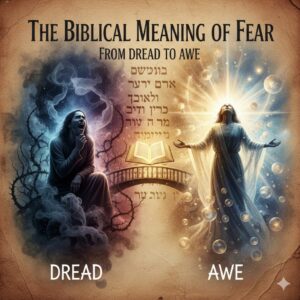
The Two Faces of Fear in Scripture
The Bible uses the same word—”fear”—to describe two profoundly different experiences. Recognizing which is which is the first step to unlocking the Bible’s message.
1. The Spirit of Fear: A Tool of Bondage
This is the fear we are most familiar with. In the Bible, this type of fear is often linked to sin, punishment, and a broken relationship with God and others. It’s characterized by:
-
Dread and Anxiety: A paralyzing worry about the future, circumstances, or people (Proverbs 12:25).
-
Torment: The Bible states that “fear has to do with punishment” (1 John 4:18).
-
A Lack of Love and Trust: This fear flourishes where love and faith are absent.
The Apostle Paul reminds Timothy that “God has not given us a spirit of fear, but of power and of love and of a sound mind” (2 Timothy 1:7, NKJV). This “spirit of fear” is depicted as something opposed to God’s gift to believers. It’s the fear that drove Adam and Eve to hide in the garden after their disobedience (Genesis 3:10).
2. The Fear of the Lord: A Path to Freedom
This is the predominant and positive meaning of fear in the Bible. It is not about being scared of God but about holding Him in the highest possible regard. Think of it as reverential awe. It combines:
-
Profound Respect and Honor: Recognizing God’s absolute holiness, power, and authority.
-
Awe and Wonder: Being overwhelmed by His majesty and creation.
-
Obedient Love: A heartfelt desire to please Him and turn from evil because of who He is.
This fear is the foundation of a right relationship with God. It’s the starting point for knowledge, wisdom, and a meaningful life.
The Two Faces of Biblical Fear
| Feature | The Spirit of Fear (Negative) | The Fear of the Lord (Positive) |
|---|---|---|
| Core Emotion | Dread, anxiety, terror | Reverence, awe, profound respect |
| Source | The world, sin, the enemy | Recognition of God’s holy character |
| Relationship to God | Sees God as a distant judge or threat | Sees God as a holy, loving Father |
| Effect on the Person | Paralyzes, torments, leads to bondage | Liberates, brings wisdom, leads to life |
| Biblical Example | Adam hiding after sin (Genesis 3) | Isaiah saying “Woe is me!” before God’s holiness (Isaiah 6) |
| Outcome | Separation, death (spiritual) | Intimacy, wisdom, life |
The Fear of the Lord: A Deep Dive
Now that we’ve distinguished the two, let’s explore the transformative concept of the “fear of the Lord” in detail. This isn’t a topic mentioned in passing; it’s a central theme woven throughout the entire biblical narrative.
What It Is (And What It Isn’t)
The Fear of the Lord is NOT:
-
Being afraid God will arbitrarily strike you down.
-
A cowering, servile terror.
-
A reason to live in constant guilt and anxiety.
The Fear of the Lord IS:
-
The Beginning of Knowledge: “The fear of the LORD is the beginning of knowledge, but fools despise wisdom and instruction” (Proverbs 1:7). You can’t truly understand the world or your place in it without this foundational perspective.
-
The Hatred of Evil: “To fear the LORD is to hate evil” (Proverbs 8:13). When you truly revere a holy God, you develop a distaste for what He hates. It reorients your moral compass.
-
A Source of Life: “The fear of the LORD is a fountain of life, turning a person from the snares of death” (Proverbs 14:27). It’s not restrictive; it’s protective and life-giving.
-
The Pathway to Intimacy: “The friendship of the LORD is for those who fear him, and he makes known to them his covenant” (Psalm 25:14). This reverence is the very context for deep friendship with God.
The Practical Benefits: Why It Matters Today
The Bible is intensely practical. The fear of the Lord isn’t a mystical feeling; it produces tangible results in daily life.
-
Wisdom & Guidance: It clears the fog of selfishness and worldly thinking, allowing for discerning choices (Psalm 111:10).
-
Security & Confidence: “In the fear of the LORD one has strong confidence” (Proverbs 14:26). This awe of God puts all other fears into perspective.
-
Provision & Protection: “The angel of the LORD encamps around those who fear him, and delivers them” (Psalm 34:7). God actively cares for those who honor Him.
-
A Unifying Principle: It simplifies life. Every decision, big or small, can be filtered through the question: “Does this honor and respect the God I claim to love?”
A Key Quote: “And now, Israel, what does the LORD your God require of you, but to fear the LORD your God, to walk in all his ways, to love him, to serve the LORD your God with all your heart and with all your soul.” – Deuteronomy 10:12 (ESV)
This verse beautifully ties together fear, love, and service, showing they are inseparable parts of a whole relationship.
From Slavery to Sonship: The Role of Fear in Our Relationship with God
Our relationship with God evolves, and so does the expression of our fear. The Bible shows a progression.
The Old Testament Foundation: Awe of the Sovereign King
In the Old Testament, God’s transcendent holiness, power, and law are emphasized. The fear of the Lord often involved a tangible sense of awe at His majesty (e.g., at Mount Sinai in Exodus 20). It was the proper response of a created being to the unapproachable holiness of the Creator. This fear established the boundaries for a covenant relationship.
The New Testament Fulfillment: Awe of the Loving Father
The New Testament does not abolish the fear of the Lord; it fulfills and deepens it. Through Jesus Christ, we see God’s holiness embodied and His love sacrificially demonstrated. We are invited from being distant subjects into being adopted children (Romans 8:15).
So, do we still “fear” God as His children? Absolutely. But it is transformed. It becomes the reverent love and awe a child has for a perfectly good, powerful, and loving Father. It’s the fear of offending or disappointing the One who gave everything for us. The writer of Hebrews captures this new-covenant balance: “Therefore let us be grateful for receiving a kingdom that cannot be shaken, and thus let us offer to God acceptable worship, with reverence and awe, for our God is a consuming fire” (Hebrews 12:28-29).
Conquering the “Spirit of Fear”
While cultivating the fear of the Lord, we are also called to resist the enslaving spirit of fear. The Bible provides a clear antidote.
The Antidote is Perfect Love
The Apostle John presents the ultimate solution: “There is no fear in love. But perfect love drives out fear, because fear has to do with punishment. The one who fears is not made perfect in love” (1 John 4:18).
God’s perfect love for us, demonstrated at the cross, and our growing love for Him, dismantle the fear of punishment and eternal separation. When we are secure in His love, the fears of this world—of failure, rejection, sickness, or circumstances—lose their ultimate power over us. We can face them with the “power, love, and sound mind” God provides (2 Timothy 1:7).
A Practical List: Steps to Replace Unhealthy Fear
-
Identify the Source: Is this fear rooted in a threat, or in a lack of trust?
-
Immerse in Truth: Counter fear with God’s promises. (e.g., Psalm 23, Isaiah 41:10).
-
Pray with Honesty: Bring your specific fears to God, asking for peace and perspective (Philippians 4:6-7).
-
Focus on Love: Actively meditate on the depth of God’s love for you in Christ (Romans 8:38-39).
-
Take Practical Action: Often, faith is acting in spite of fear, trusting God with the outcome.
Living in the Tension: A Healthy Balance for the Believer
The mature Christian life holds both truths in tension. We live in the joyful freedom of God’s love and the sobering reverence of His holiness. This balance keeps our faith from becoming either flippant or fatalistic.
-
We approach God with confidence as children (Hebrews 4:16), but we never forget He is the Almighty Creator.
-
We rejoice in grace, but we don’t use it as a license for sin (Jude 1:4).
-
We are secure in salvation, but we “work out [our] salvation with fear and trembling” (Philippians 2:12), taking our discipleship seriously.
This holy tension is the heartbeat of a vibrant, authentic faith.
Conclusion
The biblical meaning of fear is a journey from slavery to freedom. It invites us to reject the crippling spirit of fear that the world offers and to embrace the life-giving fear of the Lord—a profound reverence that is the very foundation of wisdom, love, and true life. This holy awe reorients our hearts, secures our souls, and becomes the lens through which we view God, ourselves, and our world.
Frequently Asked Questions (FAQ)
Q: If God is love, why should I fear Him?
A: Precisely because He is perfect love and perfect holiness. His love is not sentimental; it is pure and righteous. The fear of the Lord is the awe-filled respect we have for that complete character. It’s what keeps our understanding of His love from becoming shallow. A child who truly loves a good parent also has a healthy fear of disappointing them.
Q: How can I develop a healthy “fear of the Lord”?
A: It grows as you truly get to know God. Spend time in the Scriptures, focusing on passages that reveal His holiness (like Isaiah 6), His power (like Job 38-41), and His loving acts of salvation (the Gospels). As you see Him more clearly, a natural and deepening reverence will develop.
Q: Is it wrong to feel scared during a difficult time?
A: No, feeling fear is a human emotion and a natural response to threat. The issue is not the initial feeling, but where we let it lead us. The biblical command is often “do not fear,” meaning “do not be controlled or paralyzed by fear.” We are to acknowledge our fear, then choose to trust and worship God in the midst of it.
Q: Does the “fear of the Lord” mean I can’t be joyful or have fun?
A: Not at all! The Bible says, “his delight is in the fear of the LORD” (Isaiah 11:3). The Psalms are full of joyful worship that springs from a reverent awe of God. This fear removes the weight of self-importance and the anxiety of self-reliance, leading to a deeper, more secure joy.
Additional Resources
For a deeper study on the character of God, which is the foundation of the fear of the Lord, we recommend exploring the topic of God’s holiness. A great starting point is the book The Holiness of God by R.C. Sproul, which provides an accessible and profound look at this central attribute. You can find discussions and summaries of this theme on many reputable theological websites like The Gospel Coalition (search for “holiness of God”).