The name Ezra echoes through the corridors of biblical history with a quiet, resolute authority. Unlike kings who ruled with scepters or prophets who thundered with oracles, Ezra wielded a different kind of power: the power of the written Word. To understand the biblical meaning of Ezra is to uncover a story of spiritual crisis, profound restoration, and the foundational role Scripture plays in defining a community’s identity. He is far more than a minor figure in the Old Testament; he is a pivotal architect of Second Temple Judaism, a model of devout leadership, and a testament to the transformative power of applying God’s law with both conviction and compassion.
This comprehensive guide will journey through the life, mission, and enduring legacy of Ezra. We will explore his dual roles as priest and scribe, unpack the dramatic narrative of his return to Jerusalem, and discern the timeless principles his story holds for faith, identity, and renewal today.
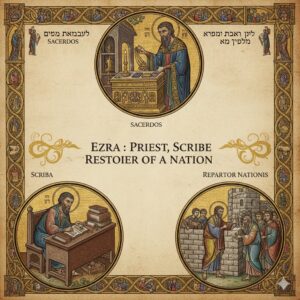
Who Was Ezra in the Bible?
Ezra emerges in Scripture during a fragile, hopeful period in Israel’s history. The Babylonian Exile—a traumatic 70-year period of displacement following Jerusalem’s destruction—had ended. By the decree of Persian kings, first Cyrus and later Artaxerxes, Jewish exiles were permitted to return to their homeland to rebuild.
Ezra steps onto the stage in the seventh year of King Artaxerxes I (circa 458 BC). The books of Ezra and Nehemiah, which were originally a single work in the Hebrew Bible, introduce him with a weighty title:
“Ezra came up from Babylon. He was a teacher well versed in the Law of Moses, which the Lord, the God of Israel, had given. The king had granted him everything he asked, for the hand of the Lord his God was on him.” (Ezra 7:6, NIV)
His identity is built on three foundational pillars:
-
A Priest (A Descendant of Aaron): Ezra was a direct descendant of Aaron, the first high priest (Ezra 7:1-5). This gave him inherent spiritual authority and a sacred duty to oversee the worship and purity of the people.
-
A Scribe (A Expert in the Law of Moses): More than just a copyist, Ezra was a “scribe skilled in the Law of Moses.” He was a master teacher, interpreter, and applier of the Torah. This expertise was his primary tool for reform.
-
A Trusted Official under Persian Rule: He carried the official decree and authority of the Persian Empire, which provided him with legal protection, resources, and the mandate to “appoint magistrates and judges” to govern according to Jewish law (Ezra 7:25-26).
Ezra’s mission was spiritual and civic restoration. While Zerubbabel had rebuilt the Temple (completed in 516 BC) and Nehemiah would later rebuild the city walls (445 BC), Ezra’s task was to rebuild the heart of the community—its covenant relationship with God, defined by obedience to His commandments.
Ezra vs. Nehemiah: Two Sides of Restoration
It’s helpful to distinguish Ezra from his contemporary, Nehemiah. While they worked together (Nehemiah 8), their primary callings and methods were complementary yet distinct.
| Feature | Ezra | Nehemiah |
|---|---|---|
| Primary Role | Priest & Scribe (Spiritual Leader) | Cupbearer & Governor (Political Leader) |
| Key Mission | Restore obedience to the Torah & purify worship | Rebuild Jerusalem’s walls & restore civil order |
| Key Tool | The Book of the Law (Scripture) | Trowel and sword (physical construction/defense) |
| Recorded Prayer | Lengthy confessions of national sin (Ezra 9) | Short, urgent prayers for strength & protection (Neh. 2:4, 4:4-5) |
| Primary Book | The Book of Ezra (and parts of Nehemiah) | The Book of Nehemiah |
Together, they represent the holistic nature of true renewal: both spiritual foundation (Ezra) and physical, practical structure (Nehemiah) are essential.
The Mission and Journey of Ezra (Ezra 7-8)
Ezra’s return from Babylon to Jerusalem is not merely a relocation; it is a deliberate, faith-filled expedition to re-establish God’s law as the nation’s constitution.
The Decree of Artaxerxes
King Artaxerxes’ letter (Ezra 7:11-26) is extraordinary. In it, the pagan Persian king:
-
Funds Ezra’s journey and the Temple worship from the royal treasury.
-
Grants Ezra authority to teach and enforce the “law of your God.”
-
Empowers him to set up a judicial system based on that law.
Ezra attributes this unprecedented favor to one source: “the good hand of his God upon him” (Ezra 7:9, 28). This phrase becomes a theme, highlighting that the success of the mission depends on divine providence, not just human planning or political goodwill.
A Journey of Faith and Dependence
Before departing, Ezra gathers a group of returning exiles, including priests and Levites. Notably, he discovers there are no Levites (the Temple assistants) among the volunteers. He pauses the journey to recruit them, understanding that proper worship requires the right people (Ezra 8:15-20).
Then, at the river Ahava, he makes a profound decision. Despite having the king’s guard at his disposal, he proclaims:
“I was ashamed to ask the king for soldiers and horsemen to protect us from enemies on the road, because we had told the king, ‘The gracious hand of our God is on everyone who looks to him, but his great anger is against all who forsake him.’” (Ezra 8:22)
Instead, he calls for a fast to seek God’s protection. This act defines Ezra’s leadership: public faith demands public dependence. The journey succeeds, and they arrive safely, crediting God’s protection.
Ezra’s Crisis and Reform: Confronting Sin (Ezra 9-10)
Upon arrival, Ezra’s mission immediately faces its greatest challenge. The leaders approach him with devastating news: the people, including priests and Levites, had intermarried with the surrounding pagan populations—a direct violation of God’s command to remain separate to avoid idolatry (Deuteronomy 7:1-4).
Ezra’s Reaction: A Model of Godly Grief
Ezra’s response is one of the most powerful scenes of corporate identification and repentance in the Bible.
-
He Tore His Cloak and Pulled His Hair: Physical signs of deep mourning and distress.
-
He Sat Appalled: He didn’t immediately rage or pronounce judgment. He absorbed the weight of the sin and its implications.
-
He Prayed a Prayer of Identification: His prayer (Ezra 9:6-15) is crucial. He does not say “they have sinned,” but “our sins… we have forsaken your commands.” Though personally innocent of this specific sin, he identifies with the guilt of his people, standing in the gap as a true intercessor.
The People’s Response and the Difficult Action
Ezra’s authentic grief catalyzes the people. A large crowd gathers, weeping in conviction. Under Ezra’s guidance, they make a covenant to put things right. The process is organized, public, and painful, involving the dissolution of the unlawful marriages over a period of several months.
Important Note for Readers: This action (Ezra 10) is often challenging for modern audiences. It’s critical to understand the theological context: this was not about ethnicity or racism, but about covenant fidelity and religious purity. The concern was the “abominable practices” of the Canaanite peoples (Ezra 9:1, 14)—the idolatry that had led to the Exile itself. In the post-exilic context, survival as a distinct people bound to Yahweh was at stake. The drastic action was seen as a necessary surgery to preserve the spiritual life of the community and fulfill its calling to be a holy nation.
The Legacy of Ezra: The Scribe Who Shaped Judaism
Ezra’s influence extends far beyond the events recorded in his book. Jewish tradition holds him in the highest esteem, often calling him “Ezra the Scribe” and attributing to him foundational work.
Possible Contributions Attributed to Ezra:
-
Compiling and Editing Biblical Books: Tradition suggests he had a hand in compiling and editing the books of the Chronicles, Ezra-Nehemiah, and possibly stabilizing the text of the Pentateuch.
-
Establishing the “Great Synagogue”: He is credited with founding this council of sages, which helped guide Judaism in the post-exilic period and preserve the biblical text.
-
Promoting the Public Reading of Scripture: His most famous act, recorded in Nehemiah 8, set a precedent that shaped Jewish worship forever.
Ezra Reads the Law: A Blueprint for Revival (Nehemiah 8)
This scene is the climax of Ezra’s public ministry. With the walls rebuilt (by Nehemiah), the people gather as one in Jerusalem.
-
The Public Reading: Ezra stands on a wooden platform and reads the Book of the Law aloud “from daybreak till noon” (Nehemiah 8:3).
-
The People’s Reverence: The people stand up as he opens the scroll. As he praises God, they respond, “Amen! Amen!” and bow down in worship.
-
The Levites’ Explanation: Levites move among the crowd, “making it clear and giving the meaning so that the people understood what was being read” (Nehemiah 8:8). This is the birth of expositional teaching—translating (likely from Hebrew to Aramaic) and interpreting Scripture for comprehension.
-
The Emotional Journey: The people weep upon hearing the law, convicted of their failure. But Ezra, Nehemiah, and the Levites tell them not to grieve, for “the joy of the Lord is your strength” (Nehemiah 8:10). They are to celebrate with feast and sharing, for understanding God’s Word is a beginning, not an end.
This event models true spiritual revival: Scripture is central, understanding is essential, conviction is natural, and joy in God is the ultimate goal.
The Enduring Meaning of Ezra for Today
The story of Ezra is not a dusty historical account. It offers timeless principles for spiritual leadership and community life:
-
The Centrality of Scripture: True reform and identity are always rooted in a return to God’s Word, publicly read and clearly explained.
-
Leadership through Devotion and Skill: Effective spiritual leadership combines deep personal piety (“he had devoted himself to the study… observance… and teaching of the Law,” Ezra 7:10) with practical skill and preparation.
-
The Courage to Confront Compromise: Ezra tackled the most difficult, systemic sin in the community head-on, but did so from a place of identified grief, not self-righteous anger.
-
Dependence on God’s Favor: He consistently acknowledged “the hand of God” as the source of all success, modeling humble dependence.
Ezra’s work preserved the Jewish people’s unique identity, ensuring the survival of the covenant community from which the Messiah, Jesus Christ, would one day come. In this way, the quiet scribe from Babylon played an indispensable role in the grand narrative of redemption.
Conclusion
The biblical meaning of Ezra is the story of a community rebuilt not with stones, but with words—the eternal words of God’s law. As priest, he interceded; as scribe, he instructed; and as a leader, he exemplified a faith that publicly depended on divine grace. His legacy teaches us that lasting renewal always flows from a return to Scripture, applied with conviction, compassion, and a heart wholly devoted to God.
FAQ: Common Questions About Ezra
Q: Was Ezra a prophet?
A: The Bible does not explicitly call Ezra a prophet in the sense of receiving new, direct revelations from God. His primary titles are “priest” and “scribe.” However, his role as a teacher and reformer who powerfully applied God’s existing Word placed him in a prophetic function, calling the people back to covenant faithfulness.
Q: What does the name “Ezra” mean?
A: The name Ezra (עֶזְרָא `Ezrā’) is Hebrew for “help” or “helper.” It is a shortened form of Azariah, which means “Yahweh has helped.” This meaning perfectly encapsulates his life and mission, which were enabled by the “hand of the Lord his God” upon him.
Q: Why is the Book of Ezra important in the Bible?
A: It documents the critical fulfillment of God’s promise to restore His people after the Exile (Jeremiah 29:10). It shows God’s sovereignty in using a pagan empire (Persia) to accomplish His purposes and highlights the essential work of spiritual and cultural restoration that followed the physical return to the land.
Q: How did Jesus view the Law that Ezra taught?
A: Jesus affirmed the eternal value and authority of the Law (the Torah) that Ezra taught (Matthew 5:17-18). However, He fulfilled its ultimate requirements and revealed its deepest meaning, focusing on the heart’s intent behind the commandments (Matthew 5:21-48). The Law, as taught by Ezra, was a “guardian” until Christ came (Galatians 3:24).
Additional Resources for Further Study
For those wishing to delve deeper into the historical context, theology, and application of Ezra’s life, we recommend exploring scholarly commentaries and resources from reputable theological institutions. A valuable starting point is the overview provided by The Bible Project on their YouTube channel or website, which offers an accessible, visual summary of the Book of Ezra and its place in the biblical story.