For many, Easter is a time of chocolate bunnies, colorful eggs, and spring celebrations. But beneath the cultural layers lies the cornerstone event of the Christian faith—a story of profound sacrifice, unwavering love, and world-altering victory. The meaning biblical of Easter is not found in pastel hues, but in the stark, historical reality of a cross and an empty tomb. It’s a narrative that stretches back to ancient prophecies and forward into eternal hope. This guide will walk you through the deep, historical, and transformative biblical roots of this holy day.
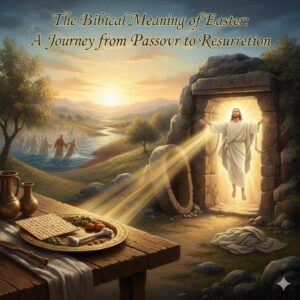
What is the Biblical Foundation of Easter?
The Bible does not use the word “Easter.” Instead, the events we commemorate are intimately woven into the Jewish celebration of Passover (Pesach). To understand Easter biblically, we must first travel to the Book of Exodus.
The Passover Prototype
The first Passover, described in Exodus 12, was God’s decisive act to liberate the Israelites from slavery in Egypt. Each household was to sacrifice an unblemished lamb and mark their doorposts with its blood. That night, the Lord “passed over” the marked homes, sparing the firstborn inside, while executing judgment on Egypt. This event required both faith (applying the blood) and obedience (following God’s precise commands). The sacrificed lamb provided redemption and deliverance.
Scripture Reference: “For the Lord will pass through to strike the Egyptians, and when he sees the blood on the lintel and on the two doorposts, the Lord will pass over the door and will not allow the destroyer to enter your houses to strike you.” – Exodus 12:23 (ESV)
This was not just a historical memory; it became a lasting ordinance. Every year, Jewish families gathered for the Passover meal (the Seder), retelling the story and eating specific elements like the lamb, bitter herbs, and unleavened bread. This ritual kept the hope of deliverance alive for centuries.
Jesus as the Fulfillment of Passover
The New Testament reveals Jesus of Nazareth as the ultimate fulfillment of the Passover story. The Gospel of John highlights this connection when John the Baptist sees Jesus and declares, “Behold, the Lamb of God, who takes away the sin of the world!” (John 1:29). Jesus is identified as the perfect, unblemished sacrificial lamb, whose mission is to bring a greater liberation—not from political slavery, but from the bondage of sin and death.
The timing of Jesus’ crucifixion is profoundly significant. He was arrested and tried during the Passover celebrations. As the priests in the temple were slaughtering thousands of Passover lambs, Jesus, the ultimate Lamb, was being led to the cross.
Comparison Table: The Passover Lamb and Jesus Christ
| Feature | The Passover Lamb (Exodus 12) | Jesus Christ (The New Testament) |
|---|---|---|
| Requirement | Must be without blemish or defect. | Was sinless and morally perfect (1 Peter 1:19). |
| Purpose | Its blood saved the firstborn from physical death. | His blood saves believers from spiritual death and eternal judgment (Romans 5:9). |
| Result | Delivered a people from slavery in Egypt. | Delivers all who believe from slavery to sin (John 8:34-36). |
| Memorial | The Passover meal (Seder) was instituted as a lasting remembrance. | The Lord’s Supper (Communion) was instituted as a lasting remembrance (Luke 22:19-20). |
The Core Events: Passion Week in Sequence
The biblical meaning of Easter is unpacked through the climactic events of Holy Week. Here is the essential sequence:
The Last Supper (A New Covenant)
On the night of Passover, Jesus shared a final meal with his disciples. During this, He fundamentally reinterpreted the Passover symbols:
-
The Bread: “This is my body, which is given for you” (Luke 22:19).
-
The Cup (Wine): “This cup that is poured out for you is the new covenant in my blood” (Luke 22:20).
He shifted the focus from remembering Egypt to remembering His imminent sacrifice. This instituted the practice of Communion, a central act of Christian worship.
The Crucifixion (The Sacrifice)
The following day, Jesus was crucified at Golgotha. The Gospel accounts detail this not as a tragic accident, but as a voluntary sacrifice. Key biblical truths from the cross include:
-
Substitutionary Atonement: Jesus died in our place, bearing the punishment for human sin (Isaiah 53:5-6; 2 Corinthians 5:21).
-
Forgiveness: “Father, forgive them, for they know not what they do” (Luke 23:34).
-
Completion: His final cry, “It is finished!” (John 19:30), signaled the completion of His redemptive work. The debt was paid.
The Resurrection (The Victory)
If the story ended at the cross, it would be a story of noble martyrdom. But the Resurrection on the third day is the non-negotiable core of the biblical Easter.
-
The empty tomb (John 20:1-9) was discovered by women, the first witnesses—a culturally shocking detail that underscores the truth of the account.
-
The risen Jesus appeared physically, alive, to Mary Magdalene, to the disciples, and to over 500 people at once (1 Corinthians 15:3-8).
-
This event validates everything Jesus claimed about Himself. It confirms His victory over sin and death, proving He is the Son of God (Romans 1:4).
Key Insight: The Apostle Paul stated plainly, “And if Christ has not been raised, your faith is futile and you are still in your sins… But in fact Christ has been raised from the dead” (1 Corinthians 15:17, 20). The resurrection is the linchpin of Christian faith.
The Ascension and Promise
Forty days after the resurrection, Jesus ascended to heaven (Acts 1:9-11), leaving with the promise of sending the Holy Spirit to empower His followers and the assurance of His eventual return.
Central Theological Themes of Biblical Easter
Beyond the historical timeline, the Easter event introduces transformative concepts.
Redemption and Atonement
This is the act of being “bought back” from slavery. Humanity was enslaved to sin, and the price for freedom was death. Jesus paid that price with His own life, redeeming us (Galatians 3:13). Atonement means “at-one-ment”—His sacrifice reconciles us to a holy God, mending the broken relationship caused by sin.
Justification and Grace
We are not made right with God by our own good works (Ephesians 2:8-9). Justification is a legal declaration: because Jesus took our guilt, God can now declare those who have faith in Him “not guilty” and righteous in His sight (Romans 3:23-24). This is a gift of pure grace.
New Life and Transformation
The resurrection is the model and power source for the believer’s life. Spiritually, we are “raised with Christ” to walk in a new way of living (Romans 6:4). The same power that raised Jesus from the dead is at work in Christians, enabling transformation and hope (Ephesians 1:19-20).
Helpful List: What the Resurrection Means for Believers Today
-
Hope Beyond Death: Death is not the end; eternal life is a assured promise.
-
Power for Living: We have access to divine strength to overcome sin and challenges.
-
Purpose and Mission: The Great Commission (Matthew 28:19-20) to share this news flows from Christ’s resurrection authority.
-
Assurance of Justice: Christ’s victory assures that evil and suffering will ultimately be defeated.
How Does Biblical Easter Differ from Common Celebrations?
It’s valuable to distinguish the core biblical message from common cultural traditions.
Important Note for Readers: There is nothing inherently wrong with egg hunts or family meals. However, understanding the profound depth of the biblical story can help you appreciate these as fun seasonal additions, rather than allowing them to obscure the central message of sacrifice and new life.
| Aspect | Common Cultural Easter | Biblical Easter |
|---|---|---|
| Primary Symbol | The Easter Bunny | The Lamb of God / The Empty Tomb |
| Central Focus | Spring, renewal, candy | The crucifixion and resurrection of Jesus Christ |
| Key Activity | Egg hunts, gift baskets | Worship, prayer, Communion, reflecting on Scripture |
| Narrative | Folklore about a rabbit delivering eggs | Historical accounts of Christ’s passion in the Gospels |
| Outcome Sought | Family fun, seasonal celebration | Spiritual reflection, repentance, gratitude, renewed faith |
Living Out the Biblical Meaning of Easter
How does this ancient story translate into daily life? Here are pathways to a meaningful observance:
-
Engage with the Biblical Text: Read the Passion narratives in the Gospels (Matthew 26-28, Mark 14-16, Luke 22-24, John 18-21).
-
Observe Holy Week: Follow the journey from Palm Sunday to Resurrection Sunday. Attend church services that mark Maundy Thursday (Last Supper) and Good Friday (Crucifixion).
-
Partake in Communion: Whether at church or in a private moment, remember Christ’s sacrifice as He commanded.
-
Embrace Repentance and Gratitude: Easter is a powerful time for self-reflection, turning from harmful patterns, and giving thanks for the gift of grace.
-
Share the Hope: The Easter message is one of hope. Consider how you can kindly and authentically share this story of love and victory with others.
Conclusion
The biblical meaning of Easter is the story of God’s perfect love meeting humanity’s deepest need through the sacrifice of Jesus, the Passover Lamb. It moves from the foreshadowing in Exodus to the fulfillment at Golgotha and the empty tomb, declaring a victory over sin and death that offers redemption, transformation, and eternal hope to all who believe. This profound historical event invites not just seasonal celebration, but a life-altering response of faith, gratitude, and purpose.
FAQ (Frequently Asked Questions)
Q: Why is it called “Easter”? The Bible doesn’t use that word.
A: The English term “Easter” likely derives from “Eostre,” a pre-Christian spring goddess. However, the essence of the holiday is purely Christian. Most other languages use a name derived from the Hebrew “Pesach” (Passover), like “Pâques” in French or “Pascua” in Spanish, which more directly reflects its biblical roots.
Q: Did Jesus really rise from the dead, or was it a legend?
A: Christians believe the resurrection was a real, historical event. Biblical scholars point to evidence such as the empty tomb, the post-resurrection appearances to many witnesses, the radical transformation of the terrified disciples into bold proclaimers, and the rapid growth of the early church—all of which are difficult to explain if the resurrection did not occur.
Q: How should Christians approach cultural Easter traditions like eggs and bunnies?
A: This is a matter of personal and family conviction. Many Christians enjoy these as harmless symbols of new life and spring, separating them from worship. The key is to ensure the core focus of your celebration remains on the death and resurrection of Jesus. Using the traditions as conversation starters about true new life in Christ can be a meaningful approach.
Q: What is the connection between forgiveness of sins and the resurrection?
A: The crucifixion paid the penalty for sin. The resurrection was God’s powerful declaration that the payment was accepted and complete. It proved that Jesus had conquered the ultimate consequence of sin—death itself. Therefore, our forgiveness is secured by His death and validated by His resurrection (Romans 4:25).
Additional Resource
For a deeper, verse-by-verse study of the Passion Week narratives, you can explore the following reputable online Bible resource: BibleGateway.com – Easter Reading Plans (This link leads to a general Bible study portal where you can find reading plans and passages related to Easter).