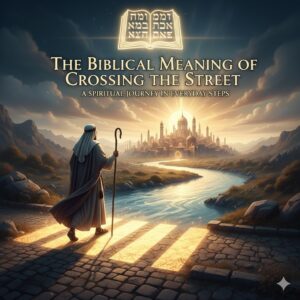
We cross streets countless times in our lives. It’s a mundane, automatic act. But what if this simple action held a deeper, spiritual significance? While the phrase “crossing the street” isn’t explicitly written in the Bible, the concepts of crossing over, transitioning, and moving from one place or state to another are foundational to the biblical narrative. This exploration seeks to uncover the rich, symbolic biblical meaning crossing street represents—a metaphor for faith, decision, divine guidance, and profound life change.
Understanding the Core Metaphor: “Crossing Over” in Scripture
In the Bible, to cross is never just about physical movement. It is an act laden with spiritual implication. The very idea is woven into the fabric of key stories, representing a shift in destiny, obedience to God, and entry into a new phase of promise or purpose.
The Patriarchs: Journeys of Promise and Obedience
The lives of the patriarchs—Abraham, Isaac, and Jacob—were defined by divinely instructed crossings.
-
Abraham’s Call (Genesis 12:1): God’s command to Abram was to “go from your country, your people and your father’s household to the land I will show you.” This was the ultimate street crossing—leaving the familiar for the unknown, based solely on a promise. He crossed geographical and spiritual boundaries, stepping into a covenant relationship with God.
-
Jacob at the Jabbok (Genesis 32:22-32): On the eve of meeting his brother Esau, Jacob crossed the ford of the Jabbok and found himself wrestling with God. This crossing symbolized a transition from a life of cunning (“Jacob” means supplanter) to a life of grace and new identity (“Israel” means he struggles with God). He crossed over, literally and figuratively, as a changed man.
The Exodus: The Ultimate Crossing from Slavery to Freedom
The most iconic crossing in the Old Testament is the Israelites crossing the Red Sea (Exodus 14). This wasn’t a street, but a terrifying sea path opened by God.
-
From Bondage to Freedom: This crossing marked the definitive break from slavery in Egypt to the journey toward the Promised Land. It was an act of deliverance that required faith to step into the parted waters.
-
A Baptismal Image: The Apostle Paul later refers to this event as a “baptism” (1 Corinthians 10:1-2). It prefigures the Christian idea of crossing from death to life through Christ.
The Promised Land: Crossing the Jordan
After 40 years of wandering, the next generation stood at the banks of the Jordan River, ready to cross into Canaan (Joshua 3).
-
A Step of Faith and Leadership: The priests had to step into the flooded river before the waters stopped. This crossing required faith in God’s immediate word. It represented the culmination of God’s promise and the beginning of a new chapter of conquest and settlement.
-
A Memorial of Stones: Joshua commanded them to take twelve stones from the riverbed to build a memorial. This act teaches us to mark and remember our spiritual crossings—the moments where God clearly brought us through.
The Spiritual Parallels: What Does Crossing a Street Represent Today?
So, how do these grand, historical crossings relate to you pausing at a crosswalk today? The spiritual parallels are powerful and practical.
| Physical Act of Crossing a Street | Spiritual & Biblical Parallel |
|---|---|
| Looking Both Ways | Spiritual discernment and seeking God’s guidance. “Test everything; hold fast what is good.” (1 Thessalonians 5:21). |
| Waiting for the Right Time | Patience and divine timing. “Wait for the LORD; be strong, and let your heart take courage.” (Psalm 27:14). |
| Stepping Off the Curb | An act of faith and obedience, moving from hesitation to action. |
| Navigating the Path | Trusting God’s guidance through a season of transition or vulnerability. |
| Reaching the Other Side | Arriving at a new beginning, a fulfilled promise, or a place of safety and rest. |
Key Spiritual Meanings of Your “Street Crossing”
-
A Transition or New Beginning: Every street you cross can symbolize a move from one season of life to another—from singleness to marriage, from one job to another, from sickness to health, from grief to healing.
-
A Decision Point: The corner is a place of decision. Do I stay or go? Do I proceed with caution or run ahead? It mirrors life’s moral and directional choices.
-
A Need for Divine Guidance: We don’t cross busy intersections blindly. We seek signals (the walk sign), look for cars, and use crosswalks. Spiritually, this represents seeking God’s will through prayer, scripture, and wise counsel before moving.
-
An Exercise in Faith and Trust: There is always a moment of vulnerability between curbs. This is the essence of faith—trusting that God will see you through the transition, even when you feel exposed.
-
Leaving the Old Behind: You cannot be on both sides of the street at once. To cross is to choose to leave one side to get to the other. It can symbolize repenting of old ways or leaving a harmful situation.
Biblical Principles for Navigating Life’s Crossings
How then should we live, understanding our daily walks as potential spiritual journeys? Here are actionable principles drawn directly from scripture.
1. Seek Wisdom and Discernment Before You Step
“Trust in the LORD with all your heart, and do not lean on your own understanding. In all your ways acknowledge him, and he will make straight your paths.” – Proverbs 3:5-6
Don’t jaywalk through life. Stop, pray, and seek confirmation. Look both ways spiritually by consulting God’s Word and listening for the Holy Spirit’s prompting.
2. Move in Faith, Not in Fear
“For God gave us a spirit not of fear but of power and love and self-control.” – 2 Timothy 1:7
Fear will keep you stranded on the curb of indecision. When God gives the green light through His peace and confirmed guidance, step out in faith, even if the path ahead isn’t fully dry (like the priests at the Jordan).
3. Understand the Role of Community
Crossing is sometimes done with others. The Israelites crossed the Red Sea and Jordan as a community. There is strength and accountability in sharing your journey with faithful friends, family, or a church community.
4. Mark Your Memorials
When you successfully cross a major “street” in life—recovery, a new calling, a reconciled relationship—set up a “memorial stone.” Journal about it, share your testimony, or create a tangible reminder. This builds your faith for the next crossing.
5. Keep Your Destination in Mind
A purposeful street-crosser knows where they are headed. As a Christian, your ultimate destination is Christ-likeness and eternity with Him. Let this hope orient all your smaller, daily crossings.
Important Note: While seeking spiritual meaning in daily life is valuable, avoid superstition. Not every red light is a “sign from God” to stop a project. The primary means of God’s guidance is His revealed Word, the Bible, applied with wisdom and confirmed by the Holy Spirit’s peace.
Modern Applications: Recognizing Your “Streets” to Cross
What might a “street” look like in your life right now?
-
A Relationship Decision: Should I pursue this friendship or set a boundary?
-
A Career Move: Is it time to change jobs or stay and be a light where I am?
-
A Financial Step: Should I invest, give, or save in a particular way?
-
A Call to Forgiveness: The street between resentment and release.
-
A Health Challenge: Moving from diagnosis, through treatment, to a new normal.
-
A Spiritual Commitment: Finally deciding to follow Christ, be baptized, or serve in a new capacity.
Each of these requires you to “look both ways” in prayer, wait for God’s timing, and eventually step out in faith.
Conclusion
The biblical meaning crossing street transforms a routine act into a profound spiritual metaphor. It reminds us that our entire life is a pilgrimage, marked by moments of decision, transition, and faithful steps. From Abraham’s call to your own daily choices, God is intimately involved in our crossings, guiding us from the familiar to the faithful, from bondage to freedom, and ultimately, from this world to the eternal Promised Land. So the next time you pause at a crosswalk, let it be a small prayer—a reminder to walk through your day with discernment, faith, and an awareness of the God who guides every step.
Frequently Asked Questions (FAQ)
Q: Is there a specific Bible verse about crossing the street?
A: No, there is no verse that mentions a modern “street.” However, the principle is richly illustrated through verses about paths, ways, journeys, and crossings (e.g., Proverbs 3:5-6, Joshua 1:9, Psalm 119:105).
Q: Can I ask God for a sign when I’m “at the curb” trying to decide?
A: While God can use circumstances, the Bible cautions against seeking signs over seeking God Himself (Matthew 12:39). It’s wiser to ask for wisdom (James 1:5), ensure your desire aligns with Scripture, seek counsel, and look for the Holy Spirit’s peace to rule in your heart (Colossians 3:15).
Q: What if I “cross” and it seems like I made a mistake?
A: God’s grace covers our missteps. If you sincerely sought God and stepped in faith, trust that He can redirect you (Proverbs 16:9). Often, what feels like a wrong turn becomes part of your growth story. Seek His guidance for the next right step.