If you’ve spent any time reading the Bible, you’ve encountered the word “covenant.” It’s more than a contract or a casual promise. In the scriptures, a covenant is the sacred architecture of God’s relationship with us. It’s the framework of commitment, the unbreakable bond that defines His love, faithfulness, and plan for redemption.
Understanding the biblical meaning of covenant is like finding the master key to the entire Bible’s story. It connects the dots from Genesis to Revelation, showing a consistent God who relentlessly pursues a people for Himself. This guide will walk you through what a covenant is, its profound significance, and how this ancient concept is powerfully relevant to your life today.
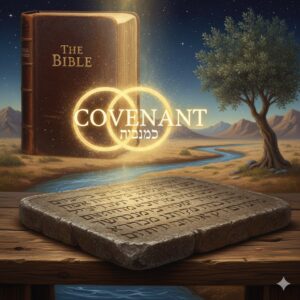
What is a Covenant in the Bible?
At its core, a biblical covenant is a solemn, binding agreement between two parties, established by a vow. But it’s so much more than a modern legal contract. In the ancient world, and especially in the Bible, covenants created family-like bonds of loyalty, love, and mutual commitment.
Think of it this way: A contract is about exchanging goods and services. A covenant is about exchanging identities and lives. Contracts can be broken with penalties. Covenants are meant to be unbreakable, sealed by an oath, often symbolized by a sacrifice.
Key Elements of a Biblical Covenant
-
Parties Involved: Usually between God and a person or people (like Abraham or Israel).
-
Promises & Obligations: God sets the terms, offering incredible blessings and asking for faithful loyalty in return.
-
Sign or Symbol: A tangible reminder (like the rainbow for Noah, or circumcision for Abraham).
-
Oath & Sacrifice: Often sealed with a solemn vow, sometimes accompanied by a ritual that signified the cost of breaking it (walking between animal pieces, sharing a meal).
This structure forms the backbone of God’s interaction with humanity throughout scripture.
Major Covenants in the Bible: A Journey Through God’s Promises
The Bible’s narrative is built on a series of foundational covenants. Each one builds upon the last, revealing more of God’s character and His ultimate plan.
The Adamic Covenant: Covenant of Beginnings
After the fall in the Garden of Eden, God established a covenant with Adam and Eve (and all humanity through them).
-
God’s Promise: A promise of a future Redeemer (Genesis 3:15 – the “seed” who would crush the serpent’s head), along with the realities of a fallen world.
-
Human Responsibility: To live under God’s providential order.
-
Sign: The animal skins God provided to cover their shame, pointing to the need for a sacrificial covering for sin.
The Noahic Covenant: Covenant of Preservation
After the flood, God made a covenant with Noah, his family, and every living creature.
-
God’s Promise: To never again destroy the earth with a flood. The preservation of the seasons and the natural order.
-
Human Responsibility: To be fruitful, multiply, and uphold the sanctity of life.
-
Sign: The rainbow (Genesis 9:13). It is God’s bow set in the clouds, a symbol of peace and His faithful remembrance.
The Abrahamic Covenant: Covenant of Faith and Family
This is a pivotal covenant where God chooses one man, Abraham, to bless all nations.
-
God’s Promises: Land (Canaan), descendants (as numerous as the stars), and universal blessing (Genesis 12:1-3, 15:18).
-
Human Responsibility: To believe God, to have faith counted as righteousness (Genesis 15:6), and the practice of circumcision as a sign.
-
Sign: Circumcision for males, marking them as part of the covenant family.
The Mosaic (Sinaitic) Covenant: Covenant of Law
At Mount Sinai, God made a covenant with the nation of Israel, defining them as His holy, treasured possession.
-
God’s Promise: To be their God, making them His special people if they obeyed.
-
Human Responsibility: Faithful obedience to the Law (the Ten Commandments and the rest of the Torah) as their response to God’s grace in rescuing them from Egypt.
-
Sign: The Sabbath (Exodus 31:16-17) as a weekly reminder of the covenant, and the Ark of the Covenant which contained the stone tablets.
The Davidic Covenant: Covenant of Kingdom
God made a stunning promise to King David, anchoring the hope of a future, perfect king.
-
God’s Promise: An everlasting kingdom and dynasty. One of David’s descendants would rule forever (2 Samuel 7:12-16).
-
Human Responsibility: For David’s descendants to rule with justice under God’s fatherly discipline.
-
Sign: The throne of David in Jerusalem. This covenant fueled messianic hope for a coming “Son of David.”
The New Covenant: Covenant of Heart and Spirit
Promised through the prophets (most clearly in Jeremiah 31:31-34) and fulfilled in Jesus Christ, this is the climactic covenant.
-
God’s Promise: Forgiveness of sins, the Holy Spirit dwelling within believers, a new heart with God’s law written on it, and a direct, personal knowledge of God.
-
Human Responsibility: Faith in Jesus Christ, the mediator of this new covenant.
-
Sign: The cup of the Lord’s Supper (Luke 22:20), symbolizing the new covenant in Jesus’ blood.
Comparative Table: The Major Biblical Covenants
| Covenant | Key Scripture | Parties | Core Promise | Sign/Symbol |
|---|---|---|---|---|
| Adamic | Genesis 3 | God & Humanity | Promise of a Redeemer | Animal Skins |
| Noahic | Genesis 9 | God & All Creation | Preservation, No More Flood | Rainbow |
| Abrahamic | Genesis 12, 15, 17 | God & Abraham | Land, Descendants, Blessing | Circumcision |
| Mosaic | Exodus 19-24 | God & Israel | “You will be my people” | Sabbath, Law |
| Davidic | 2 Samuel 7 | God & David | Everlasting Kingdom & Dynasty | David’s Throne |
| New | Jeremiah 31; Luke 22 | God & Believers | Forgiveness, New Heart, Spirit | Lord’s Supper |
Conditional vs. Unconditional Covenants: Understanding the Terms
A helpful way to understand these covenants is to see the balance between God’s sovereign grace and human response.
-
Unconditional Covenants: These are promissory covenants. Their fulfillment rests entirely on God’s faithfulness, not human performance. The Abrahamic and Davidic covenants are primarily unconditional—God declares “I will…” regardless.
-
Conditional Covenants: These are bilateral agreements where blessings are contingent upon obedience. The Mosaic Covenant is the prime example: “If you obey me fully and keep my covenant, then… you will be my treasured possession” (Exodus 19:5).
Important Note: Even conditional covenants are rooted in God’s initiating grace (He rescued Israel before giving the Law). And even unconditional covenants invite a faithful response. The distinction shows that God’s ultimate plan cannot be thwarted by human failure, while still taking our choices seriously.
The New Covenant beautifully resolves this tension. Its blessings are secured by Jesus’ perfect obedience and sacrifice (unconditional for us), yet it internally enables the response God desires by giving us a new heart and Spirit.
The Ultimate Fulfillment: Jesus Christ as the Covenant Mediator
The entire biblical covenant story finds its “yes” and “amen” in one person: Jesus Christ (2 Corinthians 1:20).
-
The New Adam: Jesus succeeded where Adam failed, living in perfect covenant faithfulness.
-
The True Son of Abraham: In Jesus, the blessing to all nations is realized (Galatians 3:14).
-
The Perfect Law-Keeper: He fulfilled the righteous requirements of the Mosaic Law on our behalf.
-
The Royal Son of David: He is the King whose kingdom will have no end.
-
The Mediator of the New Covenant: His death on the cross was the ultimate covenant-sealing sacrifice. As Hebrews 9:15 states, “For this reason Christ is the mediator of a new covenant, that those who are called may receive the promised eternal inheritance—now that he has died as a ransom to set them free from the sins committed under the first covenant.”
In Jesus, all the promises of God converge. He doesn’t just point to the covenant; He is the embodiment of God’s covenant faithfulness.
Why Understanding Covenant Matters for Your Life Today
This isn’t just ancient history. Grasping the biblical meaning of covenant transforms how you see God, yourself, and your faith.
-
It Reveals God’s Faithful Character. The covenant story shows a God who keeps His promises. He is not fickle or distant but relentlessly committed.
-
It Defines Our Relationship with God. If you are in Christ, you are not just a follower or a servant; you are a covenant partner. You are part of God’s family, with all the rights, privileges, and security that brings.
-
It Provides Security and Identity. Your standing with God is based on His oath and Christ’s performance, not your own. This is the foundation of assurance.
-
It Shapes Our Community. The New Covenant creates a new people—the Church. We are bound together not by race or law, but by shared faith in the covenant Mediator.
-
It Fuels Our Worship and Obedience. Our response to God’s gracious covenant is loving loyalty, trust, and gratitude, not fear or obligation.
Living in the New Covenant: Practical Takeaways
-
Approach God with Confidence: You are welcome because of Jesus, your mediator.
-
Trust in God’s Promises: The God of covenant is unfailingly trustworthy.
-
Embrace Your New Heart: Rely on the Holy Spirit within you to empower you to live faithfully.
-
Celebrate the Signs: Participate in communion (the Lord’s Supper) with deep reverence for the covenant it represents.
-
Live in Covenant Community: Invest deeply in the local church, your covenant family.
Conclusion
The biblical meaning of covenant is the golden thread weaving together God’s grand story of redemption. It moves from promise to fulfillment, from shadow to substance, all culminating in the person and work of Jesus Christ. Understanding this transforms the Bible from a collection of stories into a unified drama of God’s faithful love, securing our identity as His people and inviting us into an eternal, unbreakable relationship with Him.
Frequently Asked Questions (FAQ)
Q: Is a covenant the same as a contract?
A: No. A contract is a transactional agreement about things (e.g., I’ll pay you for that car). A covenant is a relational bond that creates a family (e.g., marriage). Contracts can be broken; covenants are meant to be lifelong and are sealed by an oath.
Q: Are Christians under the Old Covenant (Mosaic Law)?
A: No. Christians are under the New Covenant established by Jesus (Hebrews 8:13). The Law served as a tutor to lead us to Christ (Galatians 3:24). We now live by the Spirit, fulfilling the law’s righteous requirement through love, not by following its ceremonial and civil codes.
Q: What is the “Old Covenant” mentioned in the Bible?
A: The term “Old Covenant” primarily refers to the Mosaic Covenant given at Sinai. It is called “old” because it has been superseded and fulfilled by the “New Covenant” in Christ (2 Corinthians 3:14, Hebrews 8:7-13).
Q: How many covenants are there in the Bible?
A: The Bible explicitly names several major covenants (as outlined above). Some theologians group them differently (e.g., a “Covenant of Grace” encompassing all post-fall covenants). The key is to see the progressive revelation through the main covenant events with Adam, Noah, Abraham, Moses, David, and ultimately Jesus.
Q: What does “covenant of salt” mean (Numbers 18:19)?
A: Salt was a preservative and symbol of permanence in the ancient world. A “covenant of salt” signified an everlasting, unbreakable agreement. It emphasized the enduring nature of God’s covenant with the priesthood and David’s dynasty (2 Chronicles 13:5).