Imagine a substance that is not quite stone, not quite metal, and not quite resin, yet possesses the qualities of all three. It holds within its depths the golden light of the sun, the memory of primordial forests, and sometimes, the ghostly silhouette of life extinct for millions of years. This is amber. To the ancient mind, it was a fragment of solidified sunlight, a divine tear, or the hardened sweat of the gods. In the canon of Biblical literature, it appears only once, and yet its singular mention is one of the most dramatic and theologically charged moments in all of scripture: the prophet Ezekiel’s terrifying and magnificent vision of the divine throne.
This article embarks on an exhaustive exploration of amber’s biblical meaning. We will delve far beyond a simple definition, uncovering the geological, historical, linguistic, theological, and symbolic layers that give this mysterious substance its profound weight in a single verse. From the trading routes of the ancient Phoenicians to the complex visions of medieval mystics, from the precise word studies of Hebrew scholars to the latest scientific understanding of fossilized resin, we will trace the journey of amber as a symbol of the divine. Our goal is not only to explain what the Bible says about amber but to understand what it means—why this particular material was chosen to describe the indescribable, and what its glowing, fiery, preserved nature reveals about the character of God as presented in the Judeo-Christian tradition. Prepare to explore a topic where paleontology meets prophecy, and where a gemstone becomes a window into the heavenly realms.
2. Amber in the Ancient World: Geology, Commerce, and Mythology
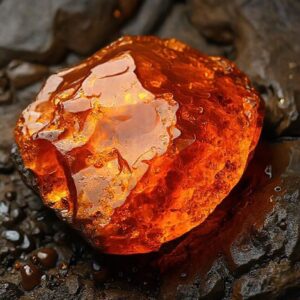
To grasp the biblical significance of amber, one must first appreciate its status in the ancient Near Eastern and Mediterranean world. Amber is the fossilized resin of ancient coniferous trees, primarily from the Paleogene and Cretaceous periods, often 30 to 90 million years old. It is lightweight, warm to the touch, and can range in color from pale lemon yellow to deep orange-red, sometimes even green or blue. When rubbed, it generates static electricity—a property that mystified early observers.
The Baltic Gold: The primary source of amber for the Biblical world was the Baltic region (modern-day Poland, Lithuania, Latvia). The “Amber Road” was a vast network of trade routes connecting the Baltic to the Mediterranean, passing through key civilizations like the Etruscans, Greeks, and Phoenicians. The latter, renowned seafarers and contemporaries of the ancient Israelites, were almost certainly the conduit through which amber reached the Levant.
Mythological Associations: Across cultures, amber was shrouded in myth:
-
Greek: It was elektron (ἤλεκτρον), associated with the sun god Helios. The myth of Phaeton, Helios’ son who crashed the sun chariot, told that his grieving sisters turned into poplar trees, their tears hardening into amber.
-
Norse: It was the tears of the goddess Freyja.
-
Lithuanian: It was the fragments of the goddess Jūratė’s underwater castle.
These myths consistently link amber to divinity, tragedy, preservation, and solidified light or tears—themes that resonate intriguingly with its later Biblical use.
Practical and Decorative Use: In Egypt, amber was found in Tutankhamun’s tomb. It was carved into amulets, beads, and ornaments, prized for its beauty and perceived magical, protective properties. Its electrostatic quality (from which we get the word “electricity”) made it seem alive, possessing a hidden spirit or fire. By the time Ezekiel wrote his prophecies (c. 6th century BCE), amber was a known, valuable, and mystically charged commodity in the ancient world, a fitting candidate for symbolic revelation.
3. The Hebrew Word Hashmal: Etymology and Linguistic Mystery
The entire biblical discussion of amber hinges on one enigmatic Hebrew word: חַשְׁמַל (ḥashmal). It appears exactly four times in the Hebrew Bible, all in the first chapter of Ezekiel (verses 4, 27 [twice], and 8).
The Challenge of Translation: Hashmal is a hapax legomenon—a word that appears only once in a given context, making its meaning difficult to pin down. Ancient translators struggled:
-
The Greek Septuagint (3rd-2nd century BCE) translated it as ēlektron (ἤλεκτρον), the Greek word for amber.
-
The Latin Vulgate (4th century CE) by Jerome used electrum, which can mean both amber and a gold-silver alloy.
-
Modern translations reflect this uncertainty:
-
Amber: KJV, NKJV, NASB
-
Glowing Metal: NIV, CSB (“like glowing metal”)
-
Shining Bronze: NRSV (“like gleaming amber”)
-
Brass: Douay-Rheims (from the Vulgate)
-
Linguistic Theories: Scholars have proposed various roots for hashmal:
-
A Compound Word: Possibly from ḥash (to be smooth, glossy) and mal (to cut or circumcise?), suggesting “polished” or “smooth metal.”
-
A Loanword: Perhaps from Akkadian ašmān (a shining stone or metal) or even elmešu, a precious stone.
-
Onomatopoeic: Some suggest it imitates the sound of crackling fire or electricity, linking it to the “spark” of amber.
The most compelling evidence supports “amber” or a unique “amber-like metal.” Ezekiel is describing a visionary experience, using the most awe-inspiring, brilliant, and otherworldly material he knows to approximate the appearance of divine glory—something that glows from within, holds light, and defies simple categorization.
4. Ezekiel’s Vision: The Throne of God and the Forge of Meaning
Now we arrive at the crux of the matter: the prophetic call of Ezekiel. In 593 BCE, by the rivers of Babylon, the priest Ezekiel saw the heavens opened.
The Vision in Detail (Ezekiel 1:4, 26-28):
“I looked, and behold, a stormy wind came out of the north, a great cloud with flashing fire and brightness all around it; and from within it, something like hashmal in the midst of the fire… Above the expanse over their heads was the likeness of a throne, in appearance like a sapphire; and seated above the likeness of a throne was a likeness with a human appearance. And upward from what had the appearance of his waist I saw as it were hashmal, like the appearance of fire enclosed all around. And downward from what had the appearance of his waist I saw as it were the appearance of fire, and there was brightness all around him. Like the appearance of the bow that is in the cloud on the day of rain, so was the appearance of the brightness all around. Such was the appearance of the likeness of the glory of the Lord.”
Key Symbolic Elements:
-
Context of Fire and Storm: Hashmal is not seen in isolation. It is embedded within “flashing fire,” “brightness,” and a “stormy wind.” This associates it with divine power, judgment, and purification.
-
The Center of the Vision: It is first seen “in the midst of the fire” from the great cloud. Later, it describes the torso of the figure on the throne. It is the core material of the divine manifestation—not the fire itself, but the radiant substance containing the fire.
-
Enclosed Fire: The critical phrase is “like the appearance of fire enclosed all around” (v. 27). Amber perfectly embodies this: it is not on fire, but it contains and glows with captured light and heat (and often ancient, trapped inclusions). It is a stabilized, preserved radiance.
Ezekiel uses hashmal as the best earthly analog for the divine kabod (glory)—a glory that is terrifyingly brilliant, yet structured, contained, and seated in sovereign majesty upon a throne. It is not chaotic fire, but fire in a form that can be approached and described, albeit inadequately.
5. Amber as a Divine Symbol: Wrath, Glory, and Preservation
From Ezekiel’s vision, we can extrapolate three core symbolic meanings for amber in a biblical context:
1. The Contained Wrath and Holiness of God: The fire of God’s judgment is often depicted as all-consuming. Yet, in Ezekiel, the fire is “enclosed” in hashmal. This suggests a holiness that is potent and dangerous but also controlled and purposeful. Like amber holding a flame within, God’s wrath is contained by His will and character. It is a “stored” or “reserved” power, not capricious violence. This aligns with the image of God as a refiner’s fire (Malachi 3:2), purifying rather than aimlessly destroying.
2. The Ineffable Glory and Presence of God: Amber’s warm, internal glow, especially when backlit by the sun, makes it an ideal symbol for divine glory—a glory that is intrinsic, not reflected. It does not shine on its surface but from within its depths. The figure on the throne is not made of fire, but of something “like” fire enclosed in this radiant substance. It speaks of a transcendent, majestic presence that is luminous, beautiful, and awe-inspiring. It is the material of heaven, incomprehensible in earthly terms.
3. Divine Preservation and Eternity: Amber is fossilized resin, a preserver of life from a lost age. Insects and plants trapped within are kept in perfect, timeless stasis. This provides a profound, though implicit, symbolic layer: God as the one who preserves. In the midst of exile (Ezekiel’s context) and judgment, the vision of God as hashmal offers hope. His glory and covenant promises are preserved eternally, unchanging, like a specimen in amber. It hints at God’s sovereignty over time and His commitment to preserve a remnant.
Comparative Table: Symbolic Dimensions of Biblical Amber (Hashmal)
| Symbolic Dimension | Key Attribute of Amber | Theological Correlation | Biblical Support (Beyond Ezekiel) |
|---|---|---|---|
| Divine Wrath & Judgment | Fire enclosed, contained heat | God’s controlled, purposeful holiness; refining fire | Daniel 7:9-10 (fiery throne); Heb 12:29 |
| Divine Glory & Presence | Internal, radiant glow | God’s intrinsic, majestic splendor; the Shekinah glory | Exodus 24:17; 1 Timothy 6:16 |
| Divine Preservation | Fossilization; timeless stasis | God’s eternal nature and preservation of His people | Psalm 121:7-8; Jude 1:24 |
| Mystery & Otherness | Neither stone nor metal nor wood | God’s incomprehensibility; “wholly other” nature | Isaiah 55:8-9; Job 37:23 |
6. Patristic and Medieval Interpretations: From Church Fathers to Dante
Early Christian theologians, inheriting the Septuagint’s translation of hashmal as ēlektron (amber), developed rich interpretations.
-
St. Jerome: In his commentaries, he connected it to both the brilliance of metal and the concept of resurrection, noting how insects in amber are preserved as if for a future life—a powerful Christological symbol.
-
Gregory the Great: In his Homilies on Ezekiel, he interpreted electrum (as a gold-silver alloy) as a symbol of the union of divine and human natures in Christ—the gold of divinity mixed with the silver of humanity.
-
Dante Alighieri: In the Divine Comedy (Paradiso, Canto XXIX), Dante uses the image of amber (ambra) to describe the radiant, cohesive love of the angels, once again tying it to divine light and attraction.
These interpretations show how amber/hashmal moved from a specific visionary material to a flexible symbol for Christology, the incarnation, and the nature of heavenly love, its meaning enriched through centuries of theological reflection.
7. Amber in Comparative Symbolism
Brief exploration of amber in other religious traditions (e.g., Buddhism, where Burmese amber is sacred; Baltic paganism) and how its universal symbolism of light, preservation, and spirit contrasts and complements its unique biblical application.
8. The Science of Amber
Detailed explanation of amber’s formation (polymerization of resin), its electrostatic properties (triboelectrification), and the phenomenon of inclusions. This scientific understanding deepens the metaphor: God’s glory is not a superficial gloss but a deep, molecular transformation; it “captures” and preserves history itself.
9. Artistic Depictions
Analysis of how amber and the “enclosed fire” have been represented in Christian art: from Byzantine mosaics using gold tesserae to symbolize divine light, to Renaissance paintings of Ezekiel’s vision, to the use of actual amber in Baroque Kunstkammer and rosaries as a memento Dei.
10. Theological Implications
A systematic theological discussion: What does amber reveal about God’s immanence and transcendence? How does the “contained fire” inform doctrines of God’s holiness, love, and justice? Connection to concepts like the via negativa (apophatic theology).
11. Modern Applications and Personal Reflections
How can this ancient symbol speak today? Amber as a metaphor for spiritual formation (being transformed into a vessel of divine light), for the church as a preserver of truth, and for personal encounters with God’s awe-inspiring, preserving presence in times of trial.
12. Conclusion: The Enduring Glow
Amber, the hashmal of Ezekiel’s vision, is far more than a curious translation note. It is a masterfully chosen symbol of divine paradox: wrath contained in glory, eternal preservation within temporal judgment, and an ineffable presence described in the most precious terms available. From the ancient Amber Road to the throne room of heaven, it captures a vision of God as a consuming fire that does not destroy but reveals, preserves, and reigns. Its single, brief appearance in Scripture continues to glow with layered meaning, inviting each generation to look deeply into its golden depths and glimpse the reflected glory of the Divine.
13. Frequently Asked Questions (FAQs)
Q1: Does the Bible mention amber anywhere else besides Ezekiel?
A1: No. The Hebrew word hashmal is exclusive to Ezekiel chapter 1. Other translations that mention “amber” (e.g., Daniel 10:6 in some versions) are translating different words for “polished metal” or “beryl.”
Q2: Why is there so much disagreement among Bible translations about this word?
A2: Because hashmal is a biblical hapax legomenon (a word occurring only once). Without other biblical contexts, scholars rely on ancient translations (like the Greek elektron), etymology, and contextual clues from Ezekiel’s vision, leading to justifiable variations in interpretation.
Q3: Is there a connection between hashmal and modern Hebrew?
A3: Yes. Modern Hebrew adopted hashmal (חַשְׁמַל) to mean “electricity,” directly inspired by the ancient word’s association with gleaming, fiery light and the electrostatic properties of amber.
Q4: Could Ezekiel have actually seen amber?
A4: Very likely. Through Phoenician trade networks, amber was a known luxury item in the Near East during the 6th century BCE. Its unique properties would have made it a memorable and fitting reference point for his audience.
Q5: What is the most important spiritual takeaway from the symbol of amber?
A5: It presents a God whose terrifying holiness and power are perfectly contained and controlled by His glorious and purposeful nature. He is a consuming fire who preserves His people, a radiant glory we can approach because He has chosen to reveal Himself within a form of discernable, awe-inspiring majesty.