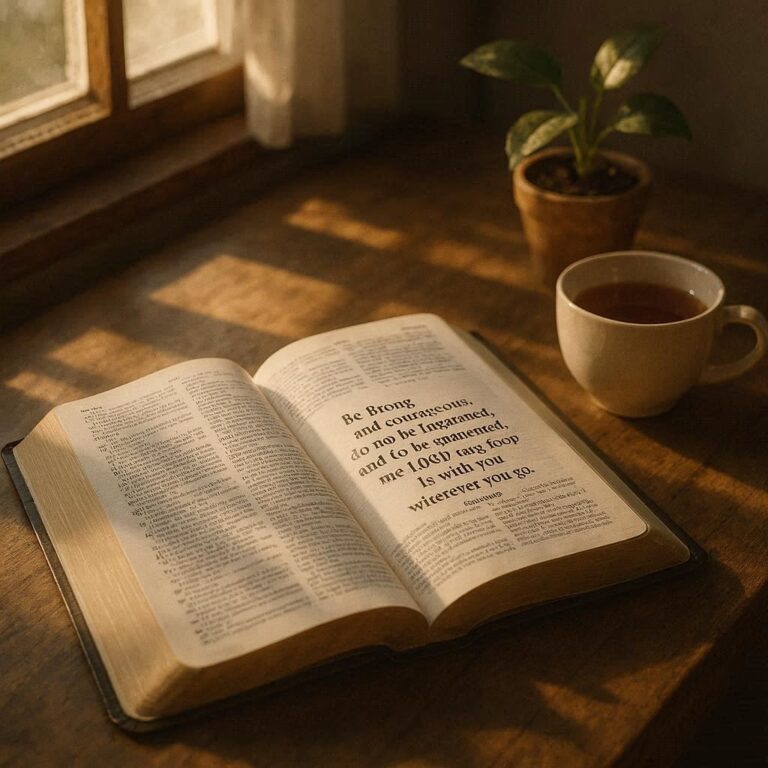
Life moves fast. It’s easy to get caught up in the daily grind, focusing on what’s missing, what’s broken, or what’s worrying us. We scroll through social media and see what others have, or we dwell on our own struggles, and suddenly, our perspective shrinks. We forget to look at the bigger picture. We forget to count our blessings.
The phrase “counting your blessings” is more than just a positive-thinking cliché. It is a deeply biblical concept. Throughout Scripture, God calls His people to remember, to give thanks, and to cultivate a heart of gratitude. This isn’t just about feeling good; it’s about aligning our hearts with the truth of who God is and what He has done for us.
In this comprehensive guide, we will explore the rich tapestry of Bible verses on counting your blessings. We’ll look at why gratitude is so important to God, how it benefits us, and specific verses you can turn to for every area of life. Whether you are starting a gratitude journal, looking for encouragement, or wanting to deepen your faith, this article will serve as your go-to resource.

Why “Counting Your Blessings” is a Biblical Mandate
Before we dive into the specific verses, it’s helpful to understand why the Bible places such a strong emphasis on thanksgiving. It’s not because God needs our praise. He is complete in Himself. Instead, gratitude is for our benefit. It is a spiritual discipline that transforms us.
When we count our blessings, we shift our focus from our circumstances to our Creator. We acknowledge that every good thing in our lives is a gift from Him. This act of remembrance builds our faith. When we remember how God provided in the past, we gain confidence that He will provide in the future.
Important Note: Counting your blessings doesn’t mean ignoring pain or pretending everything is perfect. The Bible is full of laments and honest cries of suffering. Gratitude is not toxic positivity. Rather, it is a choice to trust God’s goodness in the midst of our struggles, acknowledging that He is with us and that His grace is sufficient.
Old Testament Foundations of Gratitude
The Old Testament is filled with stories and commands that lay the groundwork for a thankful heart. The Israelites were constantly instructed to remember what God had done for them.
Remembering God’s Faithfulness
The act of remembering is a central theme in the Old Testament. God knew His people would be prone to forget His miracles when times got tough.
Deuteronomy 8:10-18 (NIV)
When you have eaten and are satisfied, praise the Lord your God for the good land he has given you. Be careful that you do not forget the Lord your God, failing to observe his commands, his laws and his decrees that I am giving you this day. Otherwise, when you eat and are satisfied, when you build fine houses and settle down, and when your herds and flocks grow large and your silver and gold increase and all you have is multiplied, then your heart will become proud and you will forget the Lord your God, who brought you out of Egypt, out of the land of slavery… You may say to yourself, “My power and the strength of my hands have produced this wealth for me.” But remember the Lord your God, for it is he who gives you the ability to produce wealth…
This passage is a powerful warning against the very human tendency to take credit for our blessings. Moses reminds the people that their prosperity, their land, and even their ability to work are gifts from God. Counting our blessings begins with the humility to recognize the Source of every good thing.
The Psalms: A Blueprint for Thanksgiving
The Book of Psalms is essentially the ancient hymnbook of Israel, and it is overflowing with calls to give thanks. The psalmists model for us what it looks like to pour out our hearts to God, whether in joy or sorrow, but always with an underlying current of trust.
Here are some foundational Psalms on counting your blessings:
| Verse | Theme | Key Takeaway |
|---|---|---|
| Psalm 103:1-5 | Personal Blessings | “Praise the Lord, my soul; all my inmost being, praise his holy name. Praise the Lord, my soul, and forget not all his benefits— who forgives all your sins and heals all your diseases, who redeems your life from the pit and crowns you with love and compassion, who satisfies your desires with good things so that your youth is renewed like the eagle’s.” This is a personal inventory of spiritual blessings: forgiveness, healing, redemption, love, and satisfaction. |
| Psalm 100:4-5 | Entering with Gratitude | “Enter his gates with thanksgiving and his courts with praise; give thanks to him and praise his name. For the Lord is good and his love endures forever; his faithfulness continues through all generations.” This verse gives us a practical model for prayer. We should approach God not just with our requests, but first with thanksgiving for who He is. |
| Psalm 136:1-3, 26 | God’s Enduring Love | “Give thanks to the Lord, for he is good. His love endures forever. Give thanks to the God of gods. His love endures forever. Give thanks to the Lord of lords… Give thanks to the God of heaven, His love endures forever.” This psalm repeats the refrain “His love endures forever” in every single one of its 26 verses. It’s a powerful way to connect every act of God—from creation to the exodus to daily provision—with His steadfast, covenant love. |
| Psalm 9:1 | Wholehearted Praise | “I will give thanks to you, Lord, with my whole heart; I will recount all of your wonderful deeds.” This verse links thanksgiving with recounting. It’s an active process of listing and remembering the specific things God has done. |
New Testament Teachings on Thankfulness
The New Testament builds on this foundation, connecting gratitude directly to our faith in Christ and our life in the Spirit. For believers, thankfulness is not just an occasional act but a constant attitude.
Paul’s Example of Contentment
The Apostle Paul is a remarkable example of someone who learned to count his blessings in the most difficult circumstances. He wrote some of his most joyful letters from a prison cell.
Philippians 4:11-13 (NIV)
I am not saying this because I am in need, for I have learned to be content whatever the circumstances. I know what it is to be in need, and I know what it is to have plenty. I have learned the secret of being content in any and every situation, whether well fed or hungry, whether living in plenty or in want. I can do all this through him who gives me strength.
Paul’s contentment wasn’t based on his external situation. It was rooted in his relationship with Christ. He counted his relationship with Jesus as his ultimate blessing, a treasure that could never be taken away by prison, poverty, or pain. When we count our blessings, we must start with the greatest one: the presence and strength of Christ in our lives.
A Call to Continual Thanksgiving
The New Testament letters are filled with direct commands to be thankful. These aren’t suggestions; they are presented as part of the normal, healthy Christian life.
1 Thessalonians 5:16-18 (NIV)
Rejoice always, pray continually, give thanks in all circumstances; for this is God’s will for you in Christ Jesus.
This is one of the most direct Bible verses on counting your blessings. It tells us to give thanks in all circumstances. Notice it doesn’t say for all circumstances (as if we should be thankful for tragedy), but in all circumstances. Even in the middle of a trial, we can find things to be thankful for: God’s presence, His comfort, the support of friends, the promise of future hope.
The Link Between Thankfulness and Prayer
Paul also connects gratitude with a healthy prayer life, showing how it can protect us from anxiety.
Philippians 4:6-7 (NIV)
Do not be anxious about anything, but in every situation, by prayer and petition, with thanksgiving, present your requests to God. And the peace of God, which transcends all understanding, will guard your hearts and your minds in Christ Jesus.
This verse provides a powerful formula for peace. Anxiety often comes when we focus on our problems. The antidote is to bring those problems to God, but to wrap our requests in a blanket of thanksgiving. As we thank Him for who He is and what He has already done, our perspective shifts, and His supernatural peace settles over us.
Rooted and Built Up in Thanksgiving
Paul emphasizes that thankfulness should be the atmosphere in which we live our entire Christian lives.
Colossians 2:6-7 (NIV)
So then, just as you received Christ Jesus as Lord, continue to live your lives in him, rooted and built up in him, strengthened in the faith as you were taught, and overflowing with thankfulness.
Gratitude is the evidence of a life that is deeply rooted in Christ. Just as a healthy tree naturally produces fruit, a healthy Christian life naturally overflows with thankfulness. It’s the sign that we are drawing our nourishment from the right source.
Bible Verses for Specific Blessings
While it’s good to have a general attitude of gratitude, the practice of “counting your blessings” becomes more powerful when we get specific. The Bible gives us language to thank God for every area of our lives. Here are verses grouped by category to help you get started.
Counting Spiritual Blessings in Christ
Our greatest blessings are not material; they are spiritual and eternal.
| Blessing | Bible Verse | Meaning |
|---|---|---|
| Salvation | Ephesians 2:8-9 “For it is by grace you have been saved, through faith—and this is not from yourselves, it is the gift of God— not by works, so that no one can boast.” | Our salvation is a gift we could never earn. It is the foundation of every other blessing. |
| Forgiveness | 1 John 1:9 “If we confess our sins, he is faithful and just and will forgive us our sins and purify us from all unrighteousness.” | The blessing of a clean slate. No matter what we’ve done, God offers complete forgiveness and cleansing. |
| Eternal Life | John 3:16 “For God so loved the world that he gave his one and only Son, that whoever believes in him shall not perish but have eternal life.” | The promise of life forever with God, where there will be no more death, mourning, crying, or pain. |
| The Holy Spirit | John 14:16-17 “And I will ask the Father, and he will give you another advocate to help you and be with you forever— the Spirit of truth.” | God Himself comes to live inside every believer, to guide, comfort, teach, and empower us. |
Counting Daily and Material Blessings
God cares about our physical needs. The Bible encourages us to see His hand in the everyday provisions of life.
James 1:17 (NIV)
Every good and perfect gift is from above, coming down from the Father of the heavenly lights, who does not change like shifting shadows.
This verse reminds us that everything good in our lives—from a beautiful sunset to a warm meal, from a loyal friend to a comfortable home—is a gift from God. It all comes from Him.
A Simple List of Daily Blessings to Count:
-
Food and Water: The simple ability to nourish our bodies.
-
Shelter and Clothing: A safe place to sleep and clothes to wear.
-
Health and Strength: The energy to work, play, and serve.
-
Beauty of Creation: The changing seasons, a starry night, a bird’s song.
-
Work and Provision: The ability to earn a living and provide for our families.
-
Rest and Sleep: The gift of renewal at the end of each day.
Counting Blessings in Relationships
God created us for community. Our relationships with others are one of His primary means of showing us love.
Proverbs 17:17 (NIV)
A friend loves at all times, and a brother is born for a time of adversity.
1 Thessalonians 3:9 (NIV)
How can we thank God enough for you in return for all the joy we have in the presence of our God because of you?
Paul often began his letters by thanking God for the people he was writing to. We can follow his example by thanking God specifically for the people in our lives: our family, our friends, our church community, our mentors, and even the challenging people who help us grow in patience and love.
Counting Blessings in Times of Trial
This is the hardest area to find gratitude, but it is also where it can be most powerful. The Bible doesn’t tell us to be thankful for the pain, but it shows us that God can work through our trials for our good.
Romans 5:3-5 (NIV)
Not only so, but we also glory in our sufferings, because we know that suffering produces perseverance; perseverance, character; and character, hope. And hope does not put us to shame, because God’s love has been poured out into our hearts through the Holy Spirit, who has been given to us.
In our trials, we can count the blessings of:
-
God’s Presence: “I am with you always, to the very end of the age” (Matthew 28:20).
-
His Comfort: “Praise be to the God and Father of our compassion and the God of all comfort, who comforts us in all our troubles” (2 Corinthians 1:3-4).
-
Growth in Character: The trial is developing perseverance, strength, and a deeper reliance on God.
-
The Hope of Glory: Our present sufferings are not worth comparing with the glory that will be revealed in us (Romans 8:18).
How to Practice Counting Your Blessings: A Practical Guide
Knowing the verses is one thing; living them out is another. Here are practical, actionable ways to make counting your blessings a daily habit.
1. Start a Gratitude Journal
This is one of the most popular and effective methods. The act of writing engages your brain differently than just thinking.
-
How to do it: Each day, write down 3 to 5 specific things you are thankful for. They can be big or small. Try to be as specific as possible. Instead of “my family,” write “the way my daughter laughed at the dinner table tonight.”
-
Use the Verses: Pair each item with a Bible verse that comes to mind. For example, if you are thankful for a beautiful day, you could write it next to Psalm 118:24: “The Lord has done it this very day; let us rejoice and be glad in it.”
2. Practice Thankful Prayer
Transform your prayer time by using the “ACTS” model (Adoration, Confession, Thanksgiving, Supplication). Often, we jump straight to Supplication (our requests). Try starting with Thanksgiving.
-
Adoration: Praise God for who He is (e.g., “Lord, I praise you because you are faithful and your love is steadfast.”).
-
Confession: Admit your sins and receive His forgiveness.
-
Thanksgiving: Now, specifically thank Him for what He has done. Use the categories above. Thank Him for spiritual blessings, daily provisions, and the people in your life. This is where you actively “count your blessings.”
-
Supplication: Finally, bring your requests to Him, rooted in the confidence built through adoration and thanksgiving.
3. Use Visual Reminders
Our minds are easily distracted. We need help to remember to be thankful.
-
A “Blessings Jar”: Keep a jar and some small slips of paper nearby. Whenever something good happens, write it down and put it in the jar. On a hard day, or at the end of the year, pull them out and read through them. It’s a powerful visual reminder of God’s faithfulness.
-
Gratitude Wallpaper: Set your phone or computer wallpaper to an image with a gratitude verse like 1 Thessalonians 5:18.
-
Mealtime Thanks: Before meals, instead of a rote prayer, have everyone at the table share one thing they are thankful for that day.
4. Express Thankfulness to Others
Counting your blessings often leads to blessing others. When you realize how much God has given you through the people in your life, it should prompt you to express your appreciation to them.
-
Write a thank-you note to someone who has impacted your life.
-
Send a text to a friend, simply telling them you are thankful for them.
-
Verbally express your appreciation to a family member for something specific they did.
Comparative Table: Gratitude vs. Grumbling
The Bible often contrasts gratitude with its ugly cousin: grumbling. The Israelites in the wilderness are a prime example of what happens when we forget to count our blessings and instead focus on our complaints. This table helps illustrate the difference.
| A Heart of Gratitude | A Heart of Grumbling | |
|---|---|---|
| Focus | On God’s goodness, provision, and faithfulness. | On what is lacking, what is wrong, and personal discomfort. |
| Perspective | Sees challenges as opportunities for growth and relies on God’s strength. | Sees challenges as insurmountable problems and feels victimized. |
| Result | Produces joy, peace, contentment, and draws us closer to God. | Produces anxiety, bitterness, discontent, and creates distance from God. |
| Biblical Example | Paul and Silas singing hymns in prison (Acts 16). | The Israelites complaining against Moses in the desert (Exodus 16). |
| Key Verse | “Give thanks in all circumstances; for this is the will of God in Christ Jesus for you.” (1 Thessalonians 5:18) | “And do not grumble, as some of them did—and were killed by the destroying angel.” (1 Corinthians 10:10) |
The Blessings of Being Thankful
When we obey the biblical command to count our blessings, we aren’t just checking a religious box. We open the door to profound benefits in our own lives. Science even backs up what the Bible has said for millennia: gratitude is good for you.
-
Improved Mental Health: Gratitude reduces toxic emotions like envy, resentment, and regret. It is a powerful antidote to depression and anxiety.
-
Greater Physical Health: Grateful people tend to exercise more, have fewer aches and pains, and feel healthier overall. They are also more likely to take care of their health.
-
Enhanced Resilience: A thankful perspective helps people bounce back from trauma and adversity. It provides a psychological buffer against stress.
-
Stronger Relationships: Expressing gratitude makes us more empathetic and kind. It helps us see the value in others and strengthens our bonds with them. Thankful people are also more likely to be helpful and supportive.
-
Deeper Sleep: Writing in a gratitude journal before bed can improve the quality and duration of sleep.
-
Increased Spiritual Awareness: Most importantly, gratitude keeps us in a humble, dependent relationship with God, making us more aware of His presence and work in our lives.
Conclusion
Counting your blessings is far more than a quaint saying. It is a powerful, life-altering spiritual discipline woven throughout the entire Bible. From the Psalms of David to the prison letters of Paul, Scripture consistently calls us to a life of overflowing thankfulness. It anchors us in God’s past faithfulness, strengthens us for present challenges, and fills us with hope for the future. By choosing to focus on God’s gifts—both great and small—we align our hearts with His and open ourselves to His perfect peace.
Frequently Asked Questions (FAQ)
1. What does it mean to “count your blessings” biblically?
Biblically, counting your blessings means actively remembering, acknowledging, and giving thanks to God for His goodness, provision, and faithfulness in your life. It’s a conscious choice to focus on what you have received from God rather than on what you lack, rooted in the truth of Scripture.
2. Is it possible to be thankful even when I’m going through a hard time?
Yes. The Bible commands us to give thanks in all circumstances, not for all circumstances (1 Thessalonians 5:18). In a hard time, you can be thankful for God’s presence, His comfort, the promise of His future hope, and the strength He gives you to endure. It’s not about denying the pain, but about acknowledging God’s goodness within it.
3. What is the best Bible verse about being thankful?
While many are powerful, 1 Thessalonians 5:16-18 is one of the most comprehensive: “Rejoice always, pray continually, give thanks in all circumstances; for this is God’s will for you in Christ Jesus.” It connects thankfulness with joy and prayer, presenting it as a continuous attitude, not a one-time event.
4. How can I teach my children to count their blessings?
Make it a fun and consistent part of your family routine. At dinner, have everyone share their “high” (best part) of the day. Use a blessings jar where kids can write down things they’re happy about. Read Bible stories that emphasize God’s provision and talk about how the characters might have felt thankful.
5. How is counting blessings different from just being positive?
Positivity can sometimes be about looking on the bright side based on our own willpower. Counting your blessings, from a biblical perspective, is rooted in a relationship with God. It’s acknowledging Him as the source of every good gift (James 1:17). It’s an act of worship and dependence, not just a mental exercise.
Additional Resource
To help you put this into practice, we recommend using a free online tool like BibleGateway.com. You can search for keywords like “thanksgiving,” “praise,” and “joy” to find even more verses on your own. Creating a personalized list of verses is a wonderful way to deepen your study and make God’s Word a part of your daily gratitude practice.