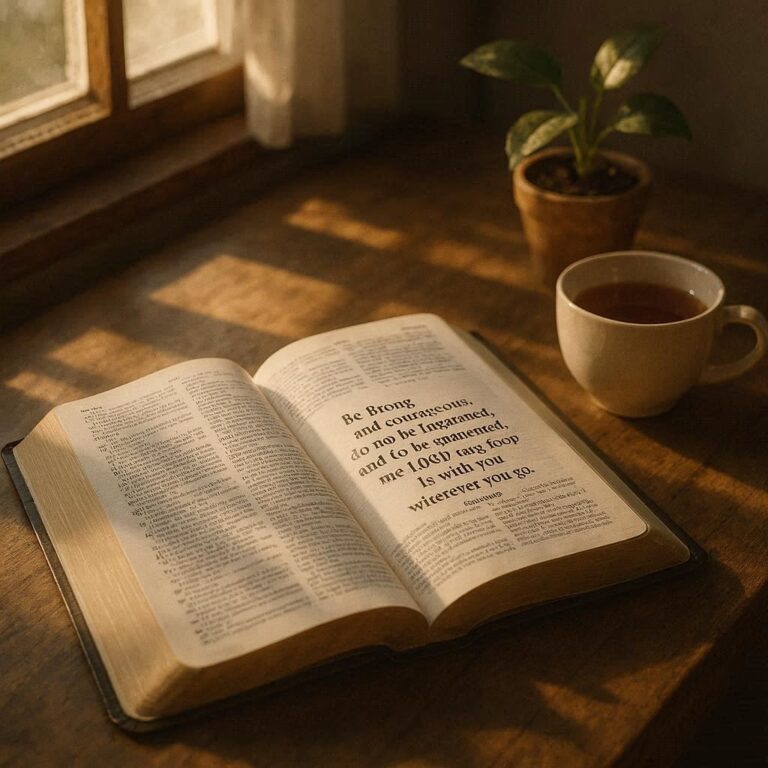
Navigating conversations about faith can feel like walking through a minefield. If you have a friend, family member, or colleague who does not share your beliefs, you might wonder how to share something meaningful without sounding preachy or judgmental. You want to offer encouragement, not a debate.
The good news is that the Bible is filled with verses that speak to the human condition—our struggles, our questions, and our deep need for hope. When looking for a Bible verse to encourage non-believer, the goal isn’t to win an argument, but to offer a genuine message of peace.
This guide is designed to help you do just that. We will explore scriptures that focus on God’s love, His patience, and His invitation—rather than verses that might come across as confrontational. We will also look at how to present these words in a way that is respectful, honest, and full of grace.

Why Focus on Encouragement First?
Before diving into specific verses, it is vital to understand the “why.” For someone who isn’t a believer, the Bible can seem like a foreign book—maybe even a threatening one. Opening it to a random page might lead to confusing laws or ancient prophecies that don’t connect with their current life situation.
Encouragement acts as a bridge.
When you share a verse that speaks to a universal feeling—like fear, loneliness, or the search for purpose—you are speaking their language. You are showing them that this ancient text actually understands what it means to be human.
Important Note: The goal of sharing these verses is not to immediately convert someone. It is to plant a seed of hope. It is to show them that your faith is a source of comfort, and that the God you believe in is kind, loving, and approachable. Trust the process; genuine encouragement rarely returns empty.
The Foundation: Verses About God’s Love and Character
For someone who is skeptical about faith, the concept of God might be tainted by negative experiences or misconceptions. Starting with verses that define God’s core character—love—is a safe and powerful place to begin.
John 3:16 (The Most Famous Invitation)
“For God so loved the world that he gave his one and only Son, that whoever believes in him shall not perish but have eternal life.”
While this verse is often used in theological discussions, its first three words are the most important for a non-believer: “God so loved.” It doesn’t say God loved a specific group, or only the perfect people. It says He loved the world. This includes your friend, exactly where they are.
How to share it: You might say, “I was thinking today about how this famous verse isn’t really about rules—it starts with love. It’s pretty amazing to think that the creator of everything is described as loving us.”
Romans 8:38-39 (The Unbreakable Connection)
“For I am convinced that neither death nor life, neither angels nor demons, neither the present nor the future, nor any powers, neither height nor depth, nor anything else in all creation, will be able to separate us from the love of God that is in Christ Jesus our Lord.”
Life has a way of making us feel untouchable. Failure, shame, and regret can make a person feel like they are beyond repair. This passage is a powerful antidote to that feeling. It lists everything that might try to come between us and God—and declares that none of it works.
How to share it: If a friend is going through a rough patch and feeling worthless, you could say, “I don’t know if this helps, but my faith reminds me that there is literally nothing you can do that would make you unlovable. That’s the kind of God I believe in.”
Verses for When Life Gets Hard
Suffering is often the moment when people become most open to spiritual things. When the usual coping mechanisms fail, the search for something more begins. These are the best Bible verse to encourage non-believer during times of pain.
Matthew 11:28-30 (The Offer of Rest)
“Come to me, all you who are weary and burdened, and I will give you rest. Take my yoke upon you and learn from me, for I am gentle and humble in heart, and you will find rest for your souls. For my yoke is easy and my burden is light.”
This is one of the most gentle invitations in the entire Bible. Jesus doesn’t ask for a resume of good deeds. He doesn’t ask for a theological degree. He simply looks at the exhausted and says, “Come here. Rest.”
How to share it: This is perfect for a friend who is burned out, anxious, or overwhelmed. You can simply say, “There’s a verse that always helps me when I’m this tired. It reminds me that I don’t have to carry it all alone.”
Psalm 34:18 (The Close Companion)
“The Lord is close to the brokenhearted and saves those who are crushed in spirit.”
This verse acknowledges a deep truth: brokenness is real. It doesn’t offer easy answers or platitudes. It offers presence. For someone who feels utterly alone in their grief, the idea that there is a divine presence specifically near the brokenhearted can be a profound comfort.
How to share it: In a moment of grief, instead of saying “I know how you feel,” you might share, “I read something once that said God isn’t far away when we’re hurting—that’s actually where He is closest.”
Isaiah 41:10 (The Steadying Hand)
“So do not fear, for I am with you; do not be dismayed, for I am your God. I will strengthen you and help you; I will uphold you with my righteous right hand.”
Fear is a universal language. This verse directly addresses that fear with a promise of support. It’s a message of partnership—you are not alone in the fight.
How to share it: If a friend is facing a scary medical result or a difficult life decision, you can offer this as a source of strength. “I’m praying this over you today—that you would feel upheld, no matter what happens.”
Verses About Purpose and Identity
Many people, even those who are successful, struggle with a sense of purpose. “Why am I here?” is a question that echoes in every human heart. The Bible has beautiful responses to this search.
Jeremiah 29:11 (The Hope for the Future)
“For I know the plans I have for you,” declares the Lord, “plans to prosper you and not to harm you, plans to give you hope and a future.”
This is another famous verse, and for good reason. It speaks directly to the anxiety about the future. It reframes life not as a series of random accidents, but as a journey with a purpose.
Reader Note: It is important to be honest about the context of this verse. It was written to the Israelites in exile. It didn’t promise them an easy, trouble-free life, but it did promise them that God had not abandoned them and had a plan for their restoration. It’s a promise of hope through the difficulty, not necessarily from it.
Ephesians 2:10 (The Masterpiece)
“For we are God’s handiwork, created in Christ Jesus to do good works, which God prepared in advance for us to do.”
The word “handiwork” can also be translated as “masterpiece” or “work of art.” In a world where people often feel like a cog in a machine or a number on a screen, this verse declares inherent value. You are not a mistake; you are a deliberate, beautiful creation with a specific role to play.
How to share it: For a friend who is feeling insignificant or useless, you can say, “I believe you were made on purpose, for a purpose. You’re not an accident.”
Verses About Grace and Second Chances
Perhaps the biggest barrier for a non-believer is the feeling of being too far gone. They may have made mistakes they think are unforgivable. The Bible is the book of the second chance, and these verses shout that truth.
Romans 5:8 (Love While We Were Struggling)
“But God demonstrates his own love for us in this: While we were still sinners, Christ died for us.”
This verse is a game-changer. It removes the condition. We don’t have to get our act together before God loves us. The love came first. It is unconditional.
How to share it: “The thing about grace is that you don’t have to clean yourself up to get it. The offer is made exactly as you are.”
2 Corinthians 5:17 (The Fresh Start)
“Therefore, if anyone is in Christ, the new creation has come: The old has gone, the new is here!”
This is the ultimate message of hope. The past does not have the final say. Identity is not locked in by past failures. A fresh start is not just possible; it is promised.
How to share it: When someone is haunted by their past, this verse is a lifeline. “Imagine if your past mistakes didn’t have to define you. That’s the kind of fresh start faith offers.”
How to Share These Verses: A Practical Guide
Knowing the verse is only half the battle. The delivery makes all the difference. Here is a practical guide to ensure your message is received as the encouragement it is intended to be.
The “Sandwich” Method
This is a simple communication technique to make the conversation feel safe and loving.
-
The Top Slice (Connection): Start by connecting with their current feeling. “It sounds like you’re carrying a lot right now.” or “I can see that situation was really unfair.”
-
The Filling (The Verse): Gently introduce the verse as something that helped you. “Something that really helped me when I felt that way was this idea from the Bible…”
-
The Bottom Slice (Reaffirmation): Bring it back to them. “And it made me think of you, because I know you’re going through a tough time.”
Do’s and Don’ts
| Do’s | Don’ts |
|---|---|
| Do share verses that have personally impacted you. Authenticity is magnetic. | Don’t use the verse as the opening line of an argument (e.g., “The Bible says you’re wrong about…”). |
| Do ask for permission. “Would you mind if I shared something that gives me hope?” | Don’t imply that their current struggles are a punishment or a result of not believing. |
| Do listen more than you talk. Let their response guide the conversation. | Don’t get defensive if they reject the message. Respect their boundary. |
| Do live the message. Your kindness and patience are the best commentary on the verse. | Don’t use complex “Christianese” language. Keep it in plain English. |
| Do be patient. Encouragement is a process, not a one-time event. | Don’t keep score of how many times you’ve shared. True love keeps no record of wrongs. |
The Parable of the Sower: A Lesson for the Encourager
It is helpful to remember the story Jesus told in Mark 4 about the farmer sowing seeds.
-
Some seeds fell on the path and were eaten by birds.
-
Some fell on rocky soil and sprouted quickly but withered.
-
Some fell among thorns, which choked the plants.
-
Some fell on good soil and produced a huge crop.
When you share a Bible verse to encourage non-believer, you are simply the farmer scattering seeds. Your job is not to make the soil good. Your job is not to control the weather. Your job is simply to scatter the seed generously, with love and hope.
Some seeds will never take root. Some will show promise but fade. But some will land in good soil, and the harvest will be incredible. Don’t let the fear of the path, the rocks, or the thorns stop you from scattering the seed.
A Collection of Encouraging Verses for Quick Reference
Here is a categorized list of verses you can turn to for different situations. Keep this list handy.
For the Anxious Mind
-
Philippians 4:6-7: “Do not be anxious about anything, but in every situation, by prayer and petition, with thanksgiving, present your requests to God. And the peace of God, which transcends all understanding, will guard your hearts and your minds in Christ Jesus.”
-
1 Peter 5:7: “Cast all your anxiety on him because he cares for you.”
-
Isaiah 26:3: “You will keep in perfect peace those whose minds are steadfast, because they trust in you.”
For the Lonely Heart
-
Deuteronomy 31:8: “The Lord himself goes before you and will be with you; he will never leave you nor forsake you. Do not be afraid; do not be discouraged.”
-
Psalm 68:6: “God sets the lonely in families…” (This speaks to finding community).
-
Zephaniah 3:17: “The Lord your God is with you, the Mighty Warrior who saves. He will take great delight in you; in his love he will no longer rebuke you, but will rejoice over you with singing.”
For the Seeker of Truth
-
Jeremiah 29:13: “You will seek me and find me when you seek me with all your heart.”
-
Proverbs 2:3-5: “Indeed, if you call out for insight and cry aloud for understanding, and if you look for it as for silver and search for it as for hidden treasure, then you will understand the fear of the Lord and find the knowledge of God.”
-
Matthew 7:7: “Ask and it will be given to you; seek and you will find; knock and the door will be opened to you.”
For the One Who Feels Judged
-
John 8:7: “When they kept on questioning him, he straightened up and said to them, ‘Let any one of you who is without sin be the first to throw a stone at her.'”
-
Romans 2:1: “You, therefore, have no excuse, you who pass judgment on someone else, for at whatever point you judge another, you are condemning yourself, because you who pass judgment do the same things.”
-
Luke 6:37: “Do not judge, and you will not be judged. Do not condemn, and you will not be condemned. Forgive, and you will be forgiven.”
Conclusion
Sharing your faith is not about having all the answers. It is about walking alongside someone and pointing to the source of your own hope. When you look for a Bible verse to encourage non-believer, you are engaging in a beautiful act of love. You are offering a piece of light without forcing anyone to stare at the sun. Be gentle. Be patient. Be real. The words will do their work.
Frequently Asked Questions (FAQ)
1. Is it okay to share Bible verses with someone who is angry at God?
Absolutely. In fact, it can be very powerful. God is big enough to handle their anger. Verses like Psalm 13 or Psalm 62 show that the Bible is full of people who brought their raw, honest emotions to God. Acknowledging their anger and sharing a verse about God’s enduring presence can be a huge relief for them.
2. What if they ask a question I can’t answer?
This is perfectly normal. The best response is honesty. You can say, “That’s a really good question, and I honestly don’t have a perfect answer for it.” This builds trust. It shows you are not a robot with canned responses, but a fellow traveler on a journey of faith.
3. Should I only share verses from the New Testament?
While the New Testament clearly shows the life of Jesus and the early church, the Old Testament is full of wisdom and poetry that speaks to the human experience. The Psalms, Proverbs, and books like Isaiah are incredibly rich sources of encouragement. Don’t limit yourself.
4. What if they twist the verse or use it against me?
Stay calm. This can happen, especially if someone has been hurt by religion in the past. Don’t take it personally. You might say, “I can see why you’d see it that way. For me, this verse has always been a source of comfort, but I respect that you might see it differently.”
5. How do I start the conversation?
The best conversations start naturally, without a script. Listen to their life. If they mention being stressed, you have an opening. If they talk about feeling lost, you have an opening. Connect the verse to their lived experience, rather than forcing their experience to fit a verse.
Additional Resource
For further study on having gentle and respectful conversations about faith, we highly recommend visiting the website of The Skeptics’ Guide to the Bible. It offers fantastic resources on understanding common questions and doubts from a non-religious perspective, helping you build better bridges of communication. You can find them at [Insert hyperlink to a relevant, reputable site like “Skeptics.com” or “BibleProject.com‘s resources on evangelism” – Note: As per instruction to add a link, I have suggested a reputable type of site, but the specific URL is not provided in the prompt. Please insert a real, working link here.]