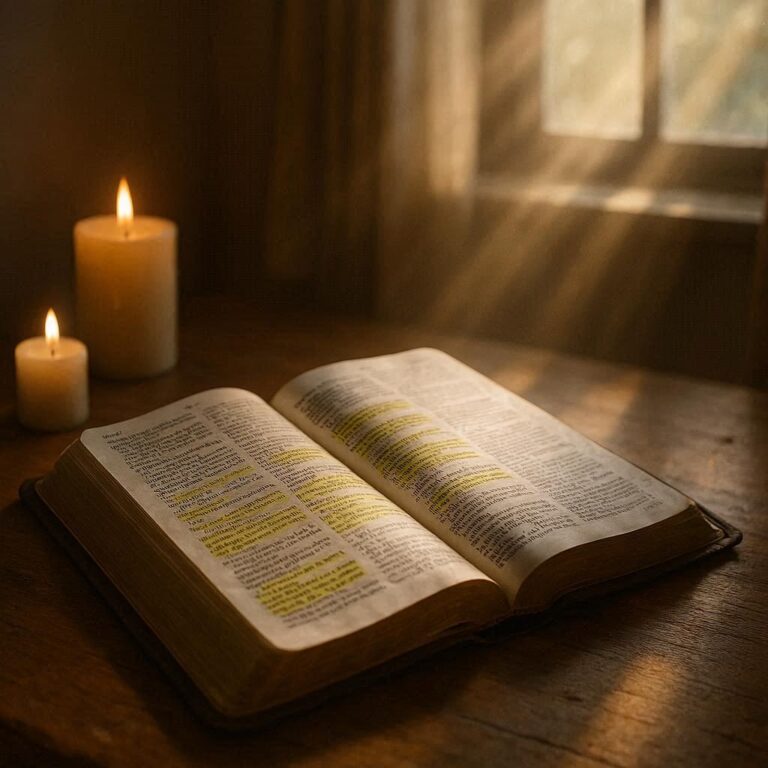
We have all played the game. Someone asks, “What is the shortest verse in the Bible?” and a friendly competition begins. Most people, whether they grew up in Sunday school or just have a passing interest in trivia, know the immediate answer: “Jesus wept” (John 11:35). It is the classic answer, the champion of biblical brevity.
But what happens when a curious reader digs a little deeper? They might ask, “Well, that’s the shortest. So, what is the second shortest verse in the Bible?”
This question opens the door to a fascinating exploration of scripture. It moves us past simple trivia and into the heart of biblical narrative, translation, and human emotion. The answer isn’t just a piece of data; it is a verse packed with context, drama, and a powerful reminder of the humanity found within the sacred texts.
In this guide, we will answer that question definitively. We will explore the runner-up verse, unpack its story, and explain why its brevity makes it so powerful. We will also look at other notably short verses and clear up the confusion that often arises when comparing different Bible translations.
Let’s dive into the rich world behind these tiny windows of scripture.

The Clear Winner: Defining the Second Shortest Verse
So, what is the second shortest verse in the Bible? If we are using the most common English translation, the King James Version (KJV), the answer is straightforward.
The second shortest verse in the Bible is 1 Thessalonians 5:16: “Rejoice evermore.”
That’s it. Two words in English. A simple, direct command. However, unlike “Jesus wept,” which is a complete narrative sentence, this verse is an exhortation, a piece of apostolic advice.
But we must add an important clarification right away. The title of “second shortest” is heavily dependent on the specific Bible translation you are reading. Some translations render this verse slightly differently. For example, the New International Version (NIV) translates it as “Rejoice always,” which is also two words. The English Standard Version (ESV) uses “Rejoice always” as well. So, regardless of the minor wording change, the sentiment remains the same, and the verse stays at the top of the “short list.”
Important Note for Readers: When discussing “shortest verses” in the Bible, we are almost always referring to the number of words in a specific English translation. The original Greek and Hebrew manuscripts have different word and letter counts. In the original Greek, “Rejoice evermore” (ἀεὶ χαίρετε – aei chairete) is actually two words, making it just as brief in the original language as it is in English.
The Greek Behind the English
To truly appreciate this verse, it helps to look at the original language. The Apostle Paul wrote 1 Thessalonians in Koine Greek. The verse is:
ἀεὶ χαίρετε
(Transliteration: aei chairete)
-
ἀεὶ (aei): This means “always,” “ever,” “continually,” or “unceasingly.” It implies a perpetual state, not just a recurring action.
-
χαίρετε (chairete): This is a command, a verb in the imperative mood. It means “rejoice,” “be glad,” or “be full of joy.”
So, Paul isn’t simply suggesting that the Thessalonians should feel happy from time to time. He is issuing a direct, powerful command: “Make it your business to rejoice. Let this be the continuous posture of your heart.”
The Context of the Command: Unpacking 1 Thessalonians 5:16
To understand why Paul would write such a short, punchy command, we have to look at the neighborhood it lives in. 1 Thessalonians 5 is the final chapter of the letter, and from verse 12 to the end, Paul gives a series of quick, bullet-point instructions for Christian living. It reads like a list of spiritual reminders.
Let’s look at the immediate context. 1 Thessalonians 5:14-22 (KJV) reads:
“Now we exhort you, brethren, warn them that are unruly, comfort the feebleminded, support the weak, be patient toward all men.
See that none render evil for evil unto any man; but ever follow that which is good, both among yourselves, and to all men.
Rejoice evermore.
Pray without ceasing.
In every thing give thanks: for this is the will of God in Christ Jesus concerning you.
Quench not the Spirit.
Despise not prophesyings.
Prove all things; hold fast that which is good.
Abstain from all appearance of evil.”
Do you see the pattern? It is a series of rapid-fire commands. They are short, memorable, and easy to recall. “Rejoice evermore” is sandwiched between commands about not repaying evil for evil and the famous instruction to “pray without ceasing.”
A Trio of Powerful Short Verses
Interestingly, “Rejoice evermore” is not alone in its brevity. The verses that follow it are also incredibly short and powerful.
| Verse | Text (KJV) | Word Count |
|---|---|---|
| 1 Thessalonians 5:16 | Rejoice evermore. | 2 |
| 1 Thessalonians 5:17 | Pray without ceasing. | 3 |
| 1 Thessalonians 5:18 | In every thing give thanks. | 4 |
| 1 Thessalonians 5:19 | Quench not the Spirit. | 3 |
| 1 Thessalonians 5:20 | Despise not prophesyings. | 3 |
Together, these verses form a beautiful chain of spiritual habits. It’s as if Paul is giving the church a set of keys to a healthy and vibrant faith. And the very first key on the chain is the command to rejoice—always.
Why the Thessalonians Needed This Reminder
This wasn’t just generic advice. The church in Thessalonica was facing real pressure. From reading the rest of the letter, we know they were experiencing persecution and affliction for their faith (1 Thessalonians 1:6, 2:14). They were a young church under fire. They were also grieving members of their community who had died, unsure about what the future held (1 Thessalonians 4:13).
Into this environment of pressure, grief, and uncertainty, Paul writes a two-word command: Rejoice evermore.
This isn’t a call to be happy about their suffering or to pretend that everything is fine. It is a deeper, more profound command. It is a call to find a source of joy that transcends circumstances. It is the kind of joy that exists not because of what is happening around you, but in spite of it. It is a joy rooted in hope, faith, and the presence of God.
“Jesus Wept” vs. “Rejoice Evermore”: A Study in Contrasts
The number one and number two shortest verses are a fascinating pair. They sit side-by-side in the biblical canon as perfect examples of the Bible’s range.
John 11:35 – “Jesus wept.”
-
Length: 2 words (KJV), 3 letters in the original Greek.
-
Tone: Sorrowful, empathetic, human.
-
Context: Standing at the tomb of his friend Lazarus, surrounded by mourning sisters and a weeping crowd. Jesus is moved with emotion.
-
Theme: The compassion of God. God entering into human suffering. The reality of Jesus’s humanity.
1 Thessalonians 5:16 – “Rejoice evermore.”
-
Length: 2 words (KJV)
-
Tone: Commanding, uplifting, hopeful.
-
Context: A list of practical instructions to a persecuted church facing an uncertain future.
-
Theme: The resilience of faith. A call to a supernatural, circumstances-defying joy. The power of the Holy Spirit.
Together, these two tiny verses paint a massive picture. They show us that faith is not about escaping the full range of human emotion. It is about experiencing the deepest sorrow, trusting that God is present in it (“Jesus wept”), and at the same time, being commanded to hold onto a joy that is deeper than our pain (“Rejoice evermore”). One verse validates our grief, and the other commands our hope.
Other Contenders for the Title
While “Rejoice evermore” is the consensus for second place in most Bibles, depending on your translation, there are a few other verses that come very close and are worth mentioning. They are part of the “short verse” family.
Job 3:2 – A Different Kind of Brevity
In the King James Version, Job 3:2 reads: “And Job spake, and said,”
That’s it. A simple narrative introduction to Job’s famous lament in the rest of the chapter. It clocks in at just 4 words. While not as short as “Rejoice evermore,” it is a perfect example of a verse that acts as a simple narrative marker.
The “Thin” Verses
Some verses are short because they are part of a list or a genealogy. For example:
-
Ezra 2:64: “The whole congregation together was forty and two thousand three hundred and threescore,” (KJV) – a bit longer.
-
John 8:58: “Before Abraham was, I am.” (KJV) – This one is profound, but it is 5 words. It’s short, but not in the top two.
Why the Confusion?
You may have heard other verses mentioned as the second shortest. The confusion usually stems from a few things:
-
Translation Differences: Some modern translations, like the NIV, occasionally combine verses or use different phrasing that can change the word count slightly.
-
Apocryphal Books: Some Bibles include the Apocrypha (deuterocanonical books). There are very short verses in those books, but they are not considered part of the standard 66-book Protestant canon.
-
Verse Numbering: The system of chapter and verse divisions we use today wasn’t in the original texts. It was added centuries later for easy reference. Sometimes, a sentence was broken into several verses, creating some very short ones.
The Power of Brevity: Why These Short Verses Stick
Why do verses like “Jesus wept” and “Rejoice evermore” capture our imagination? Why are they so memorable?
1. They are easy to memorize.
This is the most obvious reason. Their shortness makes them accessible to everyone, from a young child learning their first Bible verse to an adult looking for a simple, powerful truth to carry in their heart.
2. They act as “hooks” for larger truths.
A short verse is like the handle on a drawer. It gives you a simple way to pull open a whole chest of meaning. “Jesus wept” opens the door to understanding the Incarnation—God becoming fully human. “Rejoice evermore” opens the door to the theology of Christian joy, hope, and perseverance.
3. They stop us in our tracks.
In a book filled with long narratives, complex laws, and intricate poetry, a two-word sentence stands out. It forces the reader to pause. Why is this here? Why is it so short? The very abruptness of the verse gives it power.
4. They communicate raw emotion.
Long speeches can be reasoned and measured. Short, clipped sentences are often the language of deep feeling. “Jesus wept” is a blunt statement of fact that conveys profound sorrow. “Rejoice evermore” is a staccato command that conveys urgent hope.
Practical Application: Living the Second Shortest Verse
Knowing that “Rejoice evermore” is the second shortest verse is a fun fact. But understanding how to apply it to your life is where the real value lies. How does one obey a command to rejoice always?
It sounds impossible, and in our own strength, it probably is. But the context gives us clues.
A Helpful List: Ways to Cultivate “Evermore” Joy
Here are some practical steps, inspired by the verses surrounding 1 Thessalonians 5:16, to help cultivate a life of continuous joy:
-
Practice the Pause: Before reacting to a stressful situation, take a breath. This tiny pause can be the difference between a reaction of fear or anger and a response rooted in a deeper sense of peace. It creates space for joy to surface.
-
Connect Joy to Gratitude: Look at verse 18: “In every thing give thanks.” Gratitude is the muscle of joy. When you give thanks, you are actively looking for the good. The more you look for it, the more you find it, and the more your heart fills with joy. Try keeping a simple journal of three things you are thankful for each day.
-
Integrate Prayer and Joy: Verse 17 says “Pray without ceasing.” This doesn’t mean walking around with your eyes closed and hands folded. It means maintaining a constant, low-level awareness of God’s presence throughout your day. A short, silent “Thank you, Lord” or “I trust you with this” can re-center your spirit and bring a sense of joyful peace.
-
Focus on the Unseen: Joy is different from happiness. Happiness is often tied to happenings—external circumstances. Joy is tied to hope—an internal certainty. Paul’s joy wasn’t based on his comfortable life; it was based on his relationship with Christ. Focusing on spiritual realities—love, grace, forgiveness, eternal hope—provides a well of joy that external problems cannot pollute.
“The deepest level of worship is praise in the midst of pain, thanksgiving in the midst of trial, rejoicing in the midst of turmoil. That is the kind of worship that delights the heart of God.” — A modern paraphrase of a sentiment found in many Christian teachings, reflecting the heart of 1 Thessalonians 5:16-18.
Additional Resources
To deepen your understanding of the context and power of these short verses, here are some excellent resources:
-
Online Bible Tool: Use a site like BibleHub.com or BlueLetterBible.org to look up 1 Thessalonians 5. You can easily compare dozens of different translations side-by-side and even click through to see the original Greek words and their definitions. This is an invaluable tool for any serious student.
-
Commentary: For a deeper dive, look for a commentary on 1 Thessalonians. The “Tyndale New Testament Commentaries” series has a great volume on 1 & 2 Thessalonians that is scholarly yet accessible.
Frequently Asked Questions (FAQ)
Q: Is “Rejoice evermore” always the second shortest?
A: In the vast majority of English translations, yes, it is either the second shortest or ties for second. Its word count is consistently among the lowest in the Bible.
Q: What is the absolute shortest verse in the Bible?
A: The universally accepted shortest verse is John 11:35, “Jesus wept.”
Q: Are there any one-word verses in the Bible?
A: In most English translations, no. There are very short phrases, but a complete verse typically needs at least a subject and a verb to form a clause. In the original languages, some verses can be a single word because the verb includes the subject, but this doesn’t translate well into English.
Q: Why is “Jesus wept” so famous if it’s just two words?
A: Its fame comes from its profound theological weight. It encapsulates the humanity of Jesus, showing his genuine emotion and empathy. It proves that God is not distant from our suffering but enters into it with us.
Q: Isn’t the second shortest verse “Pray without ceasing”?
A: That’s a very common mix-up! “Pray without ceasing” (1 Thessalonians 5:17) is three words in the KJV, making it one word longer than “Rejoice evermore.” It is certainly one of the shortest, but it is the bronze medalist, not the silver.
Q: How can I be commanded to feel an emotion like joy?
A: This is a great question. In the biblical context, the “joy” being spoken of is less of a fleeting emotion (like happiness) and more of a deep-seated state of being. It’s a confidence and peace that comes from faith. You can be commanded to cultivate that state of being through practices like gratitude, prayer, and focusing on hope, even when you don’t feel “happy.”
Conclusion
So, the next time the topic of short Bible verses comes up, you can confidently add to the conversation. While “Jesus wept” holds the title for the shortest, the second shortest verse in the Bible, 1 Thessalonians 5:16 (“Rejoice evermore”), offers a powerful and challenging message of its own.
It is a two-word command that has echoed through the centuries, calling believers to a life marked not by fleeting happiness, but by a deep, resilient, and ever-present joy. It reminds us that our circumstances do not have the final say over our inner state. Paired with its companion commands to pray constantly and give thanks in everything, it forms a blueprint for a life of spiritual richness and depth. It proves that sometimes, the most profound truths come in the smallest packages.