It is one of those curious questions that pops into your head while reading the old stories: “How tall was Eve in the Bible?” We know she was the first woman, the mother of all living, and the partner of Adam in the Garden of Eden. But when we try to picture her, we often rely on famous paintings where she is depicted as a perfectly proportioned, idealized figure.
The truth is, if you open your Bible and search for a specific number—a height in cubits or inches—you will come up empty. The Bible does not provide a physical description of Eve. It doesn’t mention her hair color, her eye color, or her stature.
So, where does that leave us? While we cannot give you a specific number, we can explore this question from every possible angle. We will look at ancient texts, historical context, theological interpretations, and even scientific reasoning to build a comprehensive and realistic picture of what Eve might have looked like. This guide will help you understand why the Bible is silent on this detail and what that silence actually teaches us.
Let’s dive into the mystery of Eve’s height together.
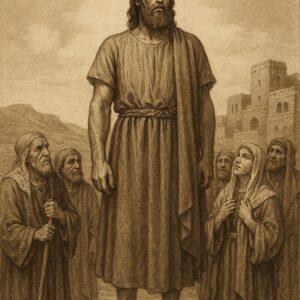
The Biblical Silence: Why We Aren’t Told
The most important thing to establish right away is that the Bible is not a biology textbook or a historical record in the modern sense. It is a theological document. Its purpose is to reveal God’s relationship with humanity, not to satisfy our curiosity about the physical appearance of its characters.
When we look at the creation account in Genesis, the focus is entirely on function and identity.
-
Adam is formed from the dust of the ground (adamah), connecting him directly to the earth.
-
Eve is called “woman” (ishshah) because she was taken out of man (ish). Later, Adam names her Eve (Chavvah), meaning “life” or “living,” because she would become the mother of all people.
The text is concerned with their roles, their relationship with God, their disobedience, and their consequences. Their height is irrelevant to the story. If God had wanted us to know how tall Eve was, He would have inspired the biblical author to include it. The absence of this detail is a clear signal that physical stature is not what makes a person significant in God’s eyes.
Common Misconceptions About Eve’s Size
Because the Bible doesn’t give us an answer, popular culture and folklore have stepped in to fill the gaps. It is helpful to address these myths so we can separate imagination from the biblical text.
Myth 1: Humans Were Once Giants
There is a persistent idea that early humans, including Adam and Eve, were enormous—perhaps 10 to 15 feet tall. This idea often comes from a misinterpretation of Genesis 6:4, which mentions the “Nephilim” on the earth before the flood. People see the word “giants” and assume all early humans were massive.
-
The Reality: The exact nature of the Nephilim is debated by scholars. They are described as “heroes of old, men of renown,” but the text does not say Adam or Eve were among them. Furthermore, the Bible describes other tall people later, like Goliath (who was about nine feet tall), and they are presented as unusual, not the norm.
Myth 2: They Were Perfect, Therefore Tall
In classical art, especially during the Renaissance, ideal human forms were often depicted as tall, athletic, and perfectly symmetrical. Because Adam and Eve were created perfect and without sin, artists painted them in this idealized image.
-
The Reality: This is an artistic convention, not a biblical truth. “Perfection” in the Garden of Eden refers to their moral state (innocence) and their unbroken relationship with God and creation. It has nothing to do with their physical measurements.
Myth 3: Based on a Single Cubit Measurement
Some people try to reverse-engineer a height based on the “cubit” used to build Noah’s Ark or the Tabernacle. They might assume that if a cubit was a certain length, then people must have been tall enough to make that measurement practical.
-
The Reality: A cubit was typically the length from a man’s elbow to the tip of his middle finger (about 18 inches or 45 centimeters). This is a relative measurement based on the human body, not an absolute standard. It doesn’t tell us how tall the people were; it just tells us they used their own bodies as measuring tools.
A Deeper Look: What the Text Actually Says About Eve
To understand Eve, we need to look at the words used to describe her creation. This gives us a better foundation than any guess about her height.
“Bone of My Bones and Flesh of My Flesh”
When Adam first sees Eve, he breaks into poetry. This is the first recorded human speech. He exclaims:
“This is now bone of my bones and flesh of my flesh; she shall be called ‘woman,’ for she was taken out of man.” (Genesis 2:23, NIV)
This is a powerful statement of identity and equality. Adam recognizes that she is like him—his equal counterpart. The phrase implies a physical and spiritual kinship. It suggests that in stature and form, she was a perfect match for him. If Adam was of average height for his time, Eve would have been similarly proportioned to be his “suitable helper” (Genesis 2:18).
The Curse and Physical Consequence
After the Fall, God pronounces judgments. To the woman, He says:
“I will make your pains in childbearing very severe; with painful labor you will give birth to children.” (Genesis 3:16, NIV)
This is the first mention of a physical process involving Eve’s body. It implies that her physiology, while created perfectly for birth, would now be subject to the pain and difficulty of a fallen world. Again, the focus is on function (childbearing) rather than form (height).
Theological Perspective: Why Eve’s Height Doesn’t Matter
If the goal is to write a comprehensive guide, we must address the theological “elephant in the room.” Why are we spending time on a question the Bible intentionally ignores?
The answer is that the question itself leads us to a deeper truth. By realizing the Bible doesn’t tell us how tall Eve was, we are forced to confront what it does tell us.
-
Humanity is made in the Image of God (Imago Dei): Genesis 1:27 states, “So God created mankind in his own image, in the image of God he created them; male and female he created them.” This is the most important statement about human identity. Our value, dignity, and worth come from being image-bearers. This has nothing to do with the physical.
-
Inner Qualities Over Outer Appearance: This theme runs throughout the entire Bible. When God chooses David to be king, He explicitly tells Samuel: “Do not consider his appearance or his height… The Lord does not look at the things people look at. People look at the outward appearance, but the Lord looks at the heart” (1 Samuel 16:7). If God doesn’t prioritize physical stature, perhaps we shouldn’t either.
Historical and Scientific Context: How Tall Were People Then?
While we cannot know Eve’s specific height, we can make an educated guess by looking at the historical and scientific evidence for human height in the ancient Near East, which is where the Garden of Eden is traditionally located.
What Paleoanthropology Tells Us
The Bible does not give us a specific date for creation, and views on the age of the earth vary widely. However, if we look at the general timeframe of the early Holocene epoch (roughly 10,000 years ago), when agriculture and settled communities began to emerge, we have skeletal remains to study.
-
Early Hunter-Gatherers: Were generally tall and lean, with good nutrition.
-
Early Farmers: Interestingly, with the advent of agriculture, average height actually decreased slightly due to less diverse diets and the spread of diseases in settled communities.
Average Heights in the Ancient World
Based on skeletal remains from the Levant and Mesopotamia (the Biblical world), here is a general estimate of average heights:
| Population Group | Estimated Average Male Height | Estimated Average Female Height |
|---|---|---|
| Early Neolithic Farmers | 5’5″ – 5’7″ (165 cm – 170 cm) | 5’0″ – 5’2″ (152 cm – 158 cm) |
| Bronze Age Near East | 5’4″ – 5’6″ (163 cm – 168 cm) | 5’0″ – 5’1″ (152 cm – 155 cm) |
| Iron Age (Biblical Israel) | 5’3″ – 5’5″ (160 cm – 165 cm) | 4’11” – 5’1″ (150 cm – 155 cm) |
<div class=”important-note”> <strong>Important Note:</strong> These are averages based on a limited number of skeletons. There was always natural variation. Some people were much taller, and some were much shorter. These figures are meant to provide a realistic context, not a definitive answer. </div>
If we assume Eve was a healthy, well-nourished adult living in the ideal conditions of the Garden (before the curse on the ground), she might have been on the taller end of the spectrum for ancient women. A reasonable, educated guess would place her height between 5’0″ and 5’4″ (152 cm – 163 cm).
What About Adam? Comparing Statures
Since we know Eve was created from Adam, their heights were likely proportional. If Adam was created as a fully-grown man, we can assume he was of average to above-average height for an ancient human.
Using the historical data above, a realistic estimate for Adam would be between 5’4″ and 5’8″ (163 cm – 173 cm). This would make a 5’2″ Eve a logical counterpart for him.
It is helpful to think of them as a normal, healthy couple. They were not giants, and they were not dwarfs. They were the archetypal human beings, likely representing the standard physical form from which all humanity would descend.
The Importance of Eve’s Legacy, Not Her Stature
Perhaps the most rewarding way to answer the question “How tall was Eve?” is to look at her legacy. Her physical height is unknown, but her spiritual and metaphorical stature in the biblical narrative is immense.
She is:
-
The Mother of All Living: Every human being who has ever lived can trace their lineage back to her.
-
The First Advocate for Family: After leaving the Garden, she is the one who recognizes God’s providence in the birth of her son Seth, saying, “God has granted me another child” (Genesis 4:25).
-
A Model of Hope: Despite the tragedy of the Fall and the murder of one son by another, Eve continued to live and bear children. Her story is one of survival and the continuation of God’s plan for humanity.
Her true “height” is measured by her pivotal role in the story of redemption—a story that ultimately points to Jesus Christ, who is referred to as the “last Adam” (1 Corinthians 15:45).
A Helpful List: What We Do Know About Eve
To balance our curiosity about her height, here is a list of things the Bible definitively tells us about Eve:
-
She was created by God: She was not born of a woman but was a direct, special creation of God.
-
She was the first woman: The template for all female humanity.
-
She was a suitable helper: Designed to be a perfect counterpart and partner for Adam.
-
She was a co-ruler of creation: Together with Adam, she was commanded to “fill the earth and subdue it” (Genesis 1:28).
-
She was a conversationalist: She spoke with the serpent, demonstrating her intellect and agency.
-
She was the first to sin: She ate the forbidden fruit, an act with monumental consequences.
-
She was a mother: She experienced the joy and pain of bringing new life into the world.
Conclusion: The Bigger Picture
In three lines, here is the truth about Eve’s height:
The Bible does not record Eve’s physical stature, as her spiritual significance far outweighs her physical appearance. By examining historical context, we can reasonably estimate she was of average height for an ancient woman, likely between 5’0″ and 5’4″. Ultimately, Eve’s legacy is not measured in feet or inches, but in her identity as the mother of all humanity and a key figure in God’s unfolding plan.
Frequently Asked Questions (FAQ)
1. Does the Bible say anywhere how tall Adam and Eve were?
No, the Bible contains no information whatsoever about the physical height of Adam or Eve. The text focuses entirely on their roles, relationships, and spiritual significance.
2. Were Adam and Eve giants?
There is no biblical evidence to suggest they were giants. The mention of giants (Nephilim) in Genesis 6 occurs much later and refers to a different group of people, not the first humans.
3. How tall was the average person in the Garden of Eden?
We cannot know for sure. However, based on the skeletal remains of people from the ancient Near East, the average female height was likely between 5’0″ and 5’2″. Given the ideal conditions of the Garden, Eve could have been slightly taller, perhaps up to 5’4″.
4. If we are all descendants of Eve, why are there tall and short people today?
Genetic variation is a natural part of human reproduction. Even from one set of parents, children can inherit different combinations of genes, leading to a wide range of heights. Over millennia, this natural variation, combined with nutrition and environmental factors, has produced the diverse range of human statures we see today.
5. Why is there so much art showing Eve as tall and slender?
This is a result of artistic and cultural ideals, particularly from the Renaissance period. Artists depicted biblical figures according to the standards of beauty and perfection of their own time, not based on any biblical description.