The question of “Who was the black disciple in the Bible?” is one that fascinates historians, theologians, and curious readers alike. While the Bible doesn’t categorize individuals by modern racial labels, it is rich with descriptions of people from diverse geographical backgrounds.
In this guide, we will explore the figures often identified as “the black disciple” or influential African figures in the early Christian movement.
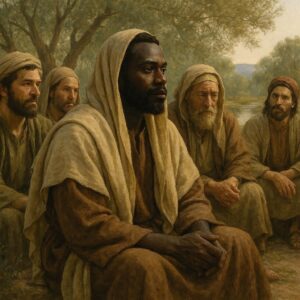
Understanding Race and Identity in the Biblical Context
To understand who might be considered a “black disciple,” we first have to look at the geography of the ancient world. The biblical narrative unfolds at the intersection of Asia, Europe, and Africa.
Early Christianity was not a Western or European religion; it was a Middle Eastern movement that spread rapidly into Northeast Africa. Therefore, many figures in the New Testament likely had complexions and ethnicities that we would describe today as people of color.
The Primary Candidate: Simeon Called Niger
When people ask about the “black disciple,” the person most frequently cited is Simeon, called Niger.
In the Book of Acts, specifically Acts 13:1, we find a list of prophets and teachers in the church at Antioch. One of them is “Simeon who was called Niger.”
Why is Simeon called “Niger”?
The word Niger is a Latin term that literally translates to “black.” In the Roman world, this nickname was often used to describe someone with a dark complexion or African heritage.
“In the church at Antioch there were prophets and teachers: Barnabas, Simeon called Niger, Lucius of Cyrene, Manaen… and Saul.” — Acts 13:1 (NIV)
Simeon’s Role in the Early Church
Simeon wasn’t just a face in the crowd. He was a leader, a teacher, and a prophet. He was one of the men responsible for laying hands on the Apostle Paul (Saul) and sending him off on his first missionary journey.
Other Notable African Figures in the New Testament
While Simeon is the most direct answer to the “black disciple” query, he isn’t the only significant person of African descent in the early Jesus movement.
1. Lucius of Cyrene
Mentioned in the same breath as Simeon in Acts 13, Lucius hailed from Cyrene. Cyrene was an ancient Greek and Roman city located in modern-day Libya. As an African, Lucius played a foundational role in the missionary efforts of the early church.
2. The Ethiopian Eunuch
One of the most famous conversions in the Bible is that of the Ethiopian Eunuch in Acts 8. He was a high-ranking official—the treasurer for the Candace (the Queen of the Ethiopians). While not one of the original twelve apostles, he is often considered the first “disciple” to take the Gospel back to the African continent.
3. Simon of Cyrene
During the crucifixion of Jesus, the Roman soldiers forced a man named Simon of Cyrene to carry the cross. Since Cyrene is in North Africa, many scholars believe Simon was of African descent. His sons, Alexander and Rufus, are later mentioned in the Epistles, suggesting the family became prominent members of the early Christian community.
Comparison of Key Figures
The following table compares the figures most often associated with African heritage in the New Testament:
| Figure | Origin | Biblical Reference | Role/Significance |
| Simeon (Niger) | Unspecified (Latin Name) | Acts 13:1 | Prophet and Teacher in Antioch |
| Lucius | Cyrene (Libya) | Acts 13:1 | Early Church Leader |
| The Eunuch | Ethiopia | Acts 8:26–40 | First African convert recorded in Acts |
| Simon | Cyrene (Libya) | Luke 23:26 | Carried the Cross of Jesus |
Why This Matters for Readers Today
Understanding the presence of African figures in the Bible is crucial for several reasons:
-
Diversity of the Gospel: It proves that the message of Jesus was global from the very beginning.
-
Historical Accuracy: It challenges the “Westernized” depictions of the Bible often seen in art and media.
-
Empowerment: It highlights the leadership roles that people of African descent held in the earliest stages of the Church.
Important Note for Readers: The Bible focuses more on a person’s faith and their “fruit” than their skin color. However, acknowledging the historical reality of these figures helps us appreciate the full scope of biblical history.
Summary of Findings
-
Simeon called Niger is the most likely candidate for the “black disciple” due to his Latin nickname meaning “black.”
-
North Africa (Cyrene) was a major hub for early Christians, producing leaders like Lucius and Simon.
-
The Ethiopian Eunuch represents the early spread of Christianity into Sub-Saharan Africa.
FAQ: Frequently Asked Questions
Was there a black apostle among the original twelve?
The Bible does not explicitly state the skin color of the original twelve apostles. However, they were all Middle Eastern Jews, meaning they likely had olive to brown skin. Simeon (Niger) was a “disciple” in the broader sense of being a leader in the early Church, though not one of the original twelve.
Where was Cyrene located?
Cyrene was located in modern-day Libya. It was a major intellectual and cultural center in North Africa during the Roman era.
What does the name “Niger” mean in the Bible?
It is a Latin word meaning “black.” It was used as a surname or nickname to distinguish Simeon from others with the same name.
Additional Resources
For those looking to dive deeper into the history of African presence in the Bible, we recommend the following resource:
Conclusion
This article explored the identity of Simeon called Niger and other African figures like Lucius of Cyrene and the Ethiopian Eunuch. We examined how their presence confirms the diverse, multi-ethnic roots of the early Christian Church. Ultimately, these figures prove that Africa played an indispensable role in the foundation of the faith.