The Bible is a sprawling narrative of faith, failure, redemption, and justice. At its heart lies a persistent, wrenching conflict: the struggle between oppression and liberation. If you’ve ever read stories of slavery in Egypt, exile in Babylon, or injustice faced by the prophets, you’ve likely asked a profound question: Who is the oppressor in the Bible?
The answer isn’t a simple list of villains. It’s a complex, layered exploration of power, sin, and systemic evil that moves from historical empires to spiritual forces, and even into the human heart. This guide will journey through the Scriptures to identify the faces of oppression and, more importantly, reveal the Bible’s powerful and consistent call for justice.
Understanding this theme isn’t just academic; it’s key to grasping the Bible’s core message of hope and rescue for a broken world.
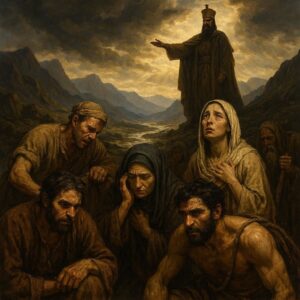
Understanding Oppression in a Biblical Context
Before naming names, we need to understand what the Bible means by “oppression.” It’s far more than occasional unfairness. Biblical oppression (lahats in Hebrew, katadynasteuō in Greek) implies a sustained, crushing injustice—the powerful systematically exploiting the vulnerable.
The oppressed are consistently identified as a sacred concern to God:
-
The Poor: Those without economic means or social safety nets.
-
The Foreigner/Stranger: Immigrants and outsiders without legal protection.
-
The Fatherless and Widow: Those without a male protector in a patriarchal society,极易受到经济 and legal abuse.
-
The Enslaved: Those stripped of autonomy and personhood.
A Foundational Principle: God’s Heart for Justice
“Learn to do right; seek justice. Defend the oppressed. Take up the cause of the fatherless; plead the case of the widow.” – Isaiah 1:17
This verse isn’t an outlier; it’s a drumbeat throughout Scripture. God identifies Himself as the ultimate defender of these vulnerable groups. Therefore, to oppress them is not just a social crime; it is direct rebellion against God’s character.
The Historical Oppressors: Nations and Empires
The most visible oppressors in the Bible are geopolitical powers. These empires subjugate God’s people and others, often serving as instruments of divine judgment, yet are themselves judged for their cruelty.
Ancient Egypt: The House of Bondage
The archetypal biblical oppressor. Egypt’s Pharaoh, fearing the growing Israelite population, enslaves them for centuries through forced, brutal labor (Exodus 1-2). This is state-sponsored, racially-targeted oppression designed to crush a people’s spirit.
-
Methods: Forced labor, genocide (ordering midwives to kill Hebrew boys), economic exploitation.
-
Divine Response: God hears the cry of the oppressed (Exodus 3:7-9). The ten plagues are a direct confrontation with Egypt’s gods and Pharaoh’s authority, culminating in the Exodus—the Bible’s definitive act of liberation.
The Babylonian Empire: The Destroyer of Jerusalem
If Egypt oppressed Israel’s body, Babylon attacked its soul. Under King Nebuchadnezzar, Babylon destroyed Jerusalem and Solomon’s Temple—the center of Jewish faith—and exiled its leading citizens (2 Kings 25). This was a psychological and spiritual oppression, creating a crisis of faith: “How can we sing the songs of the Lord in a foreign land?” (Psalm 137:4).
-
Methods: Military siege, destruction of cultural/religious centers, forced displacement (exile), cultural pressure to assimilate.
-
Divine Response: Prophets like Jeremiah explained Babylon as God’s tool for Judah’s correction, but also foretold Babylon’s ultimate downfall for its pride and violence (Jeremiah 50-51).
The Roman Empire: The Iron Heel in the New Testament
By the time of Jesus, Rome occupied Judea. Its oppression was bureaucratic, heavy-handed, and economically draining through taxation. While allowing some religious freedom, Rome maintained power through threat of crucifixion—a public, torturous death designed to terrorize subjects.
-
Methods: Military occupation, punitive taxation, brutal public executions, suppression of revolts.
-
Context in the New Testament: Jesus and the early church lived under this reality. Jesus’ command to “give back to Caesar what is Caesar’s” (Mark 12:17) acknowledged the political reality while asserting God’s ultimate claim. The book of Revelation uses vivid symbolism to critique the oppressive, idolatrous nature of Imperial Rome (“Babylon”).
Comparative Table of Major Historical Oppressors
| Oppressor | Primary Method of Oppression | Key Biblical Event | God’s Portrayed Response |
|---|---|---|---|
| Ancient Egypt | Enslavement & Genocide | The Exodus (Book of Exodus) | Liberator; Judges the oppressor’s gods. |
| Babylon | Exile & Cultural Destruction | The Fall of Jerusalem (2 Kings 25) | Uses them for judgment; Promises restoration and judges their pride. |
| Assyria | Military Terror & Deportation | Conquest of Northern Israel (2 Kings 17) | Instrument of judgment; Also judges their arrogance (Isaiah 10:5-19). |
| Roman Empire | Military Occupation & Taxation | Life of Jesus & Early Church | Calls for faithful witness; Ultimate judgment prophesied (Revelation). |
Internal and Societal Oppressors
Oppression wasn’t only an external force. The Bible is brutally honest about injustice within Israelite society, often condemned by the prophets.
Corrupt Kings and Rulers
Many kings of Israel and Judah, despite their covenant responsibility to ensure justice, became oppressors themselves. They consolidated power, overtaxed the people, and perverted justice.
-
King Ahab & Jezebel: The story of Naboth’s vineyard (1 Kings 21) is a perfect case study. The royal couple uses false testimony and judicial murder to steal a citizen’s ancestral land—a direct violation of God’s law.
-
Prophetic Condemnation: Prophets like Amos, Isaiah, and Micah relentlessly attacked leaders who “trample the poor” (Amos 5:11) and “turn justice into bitterness” (Amos 5:7).
The Wealthy and Powerful Elites
The prophets often targeted the rich who gained their wealth by exploiting the poor.
“Woe to those who… crush the needy… buying the poor with silver and the needy for a pair of sandals.” – Amos 8:4-6
This describes creating debt traps, manipulating markets, and corrupting the courts to seize the assets of the vulnerable.
Religious Leaders as Oppressors
In a shocking twist, those meant to guide people to God sometimes became oppressors. By Jesus’ time, some religious leaders were accused of:
-
Placing heavy legal burdens on people without offering help (Matthew 23:4).
-
Using piety for financial gain and social status.
-
Neglecting “the more important matters of the law—justice, mercy and faithfulness” (Matthew 23:23).
The Spiritual Dimension: The Ultimate Oppressor
The Bible reveals a layer of reality beyond the physical: a spiritual battle. Behind human systems of evil, there is a personal, spiritual force of oppression.
Satan: The Adversary
While not omnipresent or omnipotent like God, Satan is portrayed as a malevolent being whose goals are to steal, kill, destroy (John 10:10), and enslave humanity through sin and deception. He is the “ruler of this world” (John 12:31) in its current rebellious state, underpinning systems of hatred, injustice, and death.
Sin and Death as Oppressive Forces
The Apostle Paul personifies Sin and Death as tyrannical rulers from which humanity needs rescue.
“For the wages of sin is death…” – Romans 6:23
Humanity is in bondage to the power of sin (Romans 6-7), a condition that leads to death—the ultimate oppressor. The good news of the Gospel is that Jesus came to break this power.
The “Powers and Principalities”
Paul also references shadowy spiritual forces (“rulers,” “authorities,” “cosmic powers,” Ephesians 6:12). These may refer to demonic influences that can become embedded in institutions, ideologies, and systems, leading them to operate in oppressive, dehumanizing ways beyond the intentions of any single individual.
The Unexpected Twist: God’s People as Oppressors
One of the Bible’s most challenging themes is how easily the oppressed can become the oppressor. Liberated from Egypt, Israel was given laws (Leviticus 19, Deuteronomy 24) specifically designed to prevent them from replicating Egyptian oppression in their own society—commands to care for the poor, foreigner, orphan, and widow.
The prophets’ fury is often greatest when condemning Israel and Judah for failing in this very task. Their idolatry and social injustice were inseparable. Their oppression of the vulnerable within their gates was a sign they had forgotten their own story and their God.
Jesus Christ: The Liberator Against All Oppression
Jesus’ ministry is the ultimate answer to the question of oppression. He confronts it on every level:
-
Spiritual Oppression: He casts out demons, frees people from bondage to illness and mental torment, and announces forgiveness of sins.
-
Social & Religious Oppression: He touches the unclean, eats with sinners, honors the poor (Luke 6:20), and relentlessly challenges the religious hypocrisy that burdens people.
-
Physical Oppression: He heals diseases, feeds the hungry, and weeps with the grieving.
-
Political Oppression: While not leading a violent revolt, His proclamation of the “Kingdom of God” was a direct challenge to Caesar’s dominion. He submitted to the oppression of the cross to disarm the spiritual “powers and authorities” (Colossians 2:15) and defeat humanity’s ultimate oppressors: Sin and Death.
“The Spirit of the Lord is on me, because he has anointed me to proclaim good news to the poor. He has sent me to proclaim freedom for the prisoners and recovery of sight for the blind, to set the oppressed free…” – Luke 4:18 (Jesus quoting Isaiah 61)
In Jesus, God’s identity as Liberator becomes flesh and blood.
The Call to the People of God: Oppose Oppression
The biblical narrative doesn’t end with Jesus’ resurrection. The church is called to continue His ministry of liberation.
-
The Early Church shared possessions so “there were no needy persons among them” (Acts 4:34).
-
The Apostle James defines true religion as “to look after orphans and widows in their distress” and condemns favoritism toward the rich (James 1:27, 2:1-9).
-
The Ethical Call: Passages like Ephesians 5-6 and Colossians 3-4 transform household codes, calling for mutual submission and just treatment within the social structures of the time (e.g., masters to treat slaves justly, knowing they too have a Master in heaven).
The church is to be a community where the world’s patterns of oppression are broken by the practice of justice, mercy, and love.
Important Note for Readers: When applying these biblical themes to modern contexts, do so with wisdom, humility, and historical understanding. Seek to embody the Bible’s principles of justice and compassion, recognizing that all people, systems, and nations—including ourselves and our communities—are capable of both oppression and the pursuit of God’s justice.
Conclusion
The oppressor in the Bible wears many faces: from historical empires like Egypt and Babylon to corrupt kings and elites within society, and ultimately to the spiritual forces of Sin, Death, and the Devil. The Scriptures reveal that oppression is any power that crushes human dignity and exploits the vulnerable, and it stands in direct opposition to the character of a God who hears cries for justice. The Bible’s consistent narrative moves from identifying oppression to showcasing God as the ultimate Liberator, a mission fulfilled in Jesus Christ, who calls His followers to join in breaking every chain.
Frequently Asked Questions (FAQ)
Q: Does God ever side with the oppressor in the Bible?
A: God sometimes uses oppressive nations as an instrument to correct or judge His own people for their unfaithfulness and injustice (e.g., using Assyria against Israel). However, the Bible is clear that God does not approve of the oppressor’s motives or cruelty. Those nations are later held accountable for their own arrogance and excesses (see Isaiah 10:5-12).
Q: How should Christians respond to oppression today based on the Bible?
A: The biblical model involves multiple responses: 1. Compassionate Aid: Directly helping victims (Prov. 31:8-9). 2. Prophetic Advocacy: Speaking truth to power and raising awareness, as the prophets did. 3. Prayer: Seeking God’s justice and intervention. 4. Pursuing Justice: Working within systems for fair laws and practices (Micah 6:8). 5. Personal Examination: Ensuring we are not complicit in unjust systems.
Q: Is “oppression” only about physical violence and slavery?
A: No. The biblical concept is broader. It includes economic exploitation (withholding wages, predatory lending), legal corruption (denying the poor a fair trial), and social exclusion/mistreatment of the foreigner and outcast. Any systemic abuse of power to dehumanize and exploit falls under its scope.
Q: What’s the difference between oppression and suffering?
A: All oppression causes suffering, but not all suffering is oppression. Oppression specifically involves a moral agent—a person, group, or system—wielding power unjustly to cause that suffering. A natural disaster causes suffering, but not oppression. Enslavement or discriminatory laws cause suffering through oppression.
Additional Resources
To delve deeper into the themes of justice and oppression in the Bible, consider exploring this resource from the Bible Project: “Justice” Video Series. This visually engaging series provides an excellent overview of how the theme of justice is woven throughout the entire biblical story.