The Bible is a rich tapestry of history, faith, and profound human stories, and much of its depth is revealed through its characters. Their names are not merely labels; they often carry significant meanings, prophetic declarations, or commemorate divine encounters. Exploring these names opens a window into the cultural and spiritual world of the biblical texts.
In this guide, we will journey through an extensive list of Bible names beginning with the letter “I.” From towering prophets and patriarchs to lesser-known figures, each name holds a unique story. Whether you are choosing a name for a child, studying scripture, or simply curious about biblical history, this article serves as your definitive resource.
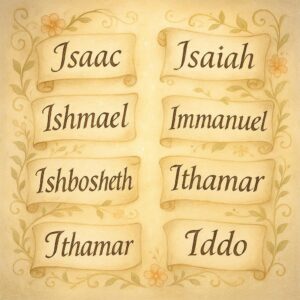
Understanding the Significance of Biblical Names
In ancient Hebrew culture, a name was deeply connected to a person’s identity, destiny, or circumstance. Parents often chose names that reflected their experiences, hopes, or divine messages received. For instance, a name might commemorate an event, express gratitude to God, or prophesy about the child’s future role.
“She will give birth to a son, and you are to give him the name Jesus, because he will save his people from their sins.” (Matthew 1:21)
This verse highlights the intentionality behind biblical naming. The name “Jesus” (Yeshua) means “The Lord saves,” directly speaking to his mission. Similarly, many names starting with ‘I’ (or the Hebrew equivalent ‘Y’, as in Hebrew many ‘I’ names begin with the letter Yod) carry such weighty meanings.
Common Elements in “I” Names
Many Hebrew names beginning with ‘I’ are theophoric, meaning they include a form of God’s name. A common prefix is “I” or “Yeh,” short for Yahweh (the Lord). For example:
-
Isaiah (Yeshayahu) means “Yahweh is salvation.”
-
Jeremiah (Yirmeyahu) means “Yahweh will raise.” (Note: In English, Jeremiah starts with ‘J,’ but in Hebrew, it follows the same pattern).
This pattern reminds us that the central narrative of the Bible is God’s relationship with humanity.
Major Biblical Figures with Names Starting With I
This section delves into the most prominent individuals whose names begin with the letter I, exploring their stories and the enduring legacy of their names.
Isaac: The Son of Promise
Meaning: “He laughs”
Biblical Reference: Genesis 17-28
Isaac is one of the great patriarchs of Israel, the long-awaited son born to Abraham and Sarah in their old age. His name forever recalls the laughter of disbelief (from Abraham and Sarah) that turned into the laughter of joy. His story is one of divine provision, from the miraculous birth to the dramatic episode where Abraham is called to sacrifice him, a test halted by God who provides a ram instead.
Isaac’s life, though quieter than his father’s or his son Jacob’s, is pivotal. He becomes the vessel through which the covenant promise passes. His name teaches us about God’s faithfulness in fulfilling promises against all odds.
Isaiah: The Prophet of Salvation
Meaning: “Yahweh is salvation”
Biblical Reference: The Book of Isaiah
Isaiah is one of the major prophets, whose book is a cornerstone of the Old Testament. His name perfectly encapsulates his message: a call to repentance and a glorious future hope of salvation through the coming Messiah. He served as a prophet to Judah for decades, delivering both stern warnings of judgment and breathtaking visions of restoration.
“Therefore the Lord himself will give you a sign: The virgin will conceive and give birth to a son, and will call him Immanuel.” (Isaiah 7:14)
This prophecy, fulfilled in Jesus Christ, is one of the most famous in scripture. Isaiah’s name and ministry remain central to understanding God’s plan of redemption.
Israel: The New Name for God’s People
Meaning: “He struggles with God”
Biblical Reference: Genesis 32:28
Originally named Jacob (“supplanter”), he received the name Israel after wrestling with God all night. This new name marked a profound transformation from a deceitful man to the father of a nation. The name Israel signifies a people chosen by God, with whom He engages in a persistent, covenant relationship.
The twelve tribes of Israel, his descendants, form the foundation of the Old Testament narrative. The name continues to hold immense historical, religious, and national significance today.
Ishmael: The Son of the Flesh
Meaning: “God hears”
Biblical Reference: Genesis 16, 17, 21
Ishmael was the firstborn son of Abraham, born to Hagar, Sarah’s maidservant. His name, given by the Angel of the Lord, commemorates God hearing Hagar’s despair in the wilderness. While not the child of the covenant promise, God nonetheless blessed Ishmael and promised to make him a great nation, often identified with Arab peoples.
Ishmael’s story is poignant, dealing with themes of human impatience, God’s compassion in difficult situations, and the complex dynamics of family conflict.
Comparative Table: Key Patriarchs and Prophets (Isaac, Ishmael, Isaiah)
| Feature | Isaac | Ishmael | Isaiah |
|---|---|---|---|
| Meaning of Name | He laughs | God hears | Yahweh is salvation |
| Parentage | Son of Abraham & Sarah | Son of Abraham & Hagar | Son of Amoz |
| Role | Patriarch, Son of Promise | Forefather of a nation | Prophet to Judah |
| Key Theme | Divine provision & covenant | God’s hearing in hardship | Judgment, hope, and Messiah |
| Key Scripture | Genesis 22 (The Binding) | Genesis 21:8-21 | Isaiah 53 (Suffering Servant) |
Comprehensive List of “I” Names from the Bible
Beyond the major figures, the Bible is filled with many other individuals whose names start with I. Here is an extensive list, categorized for clarity.
Male Names Starting With I
-
Ira: A chief officer under King David (2 Samuel 20:26). Meaning: “watchful.”
-
Ithamar: The youngest son of Aaron, who served as a priest (Exodus 6:23). Meaning: “land of palms.”
-
Igal: One of the twelve spies sent to explore Canaan (Numbers 13:7).
-
Iddo: A prophet and seer who wrote chronicles about King Solomon (2 Chronicles 9:29).
-
Immanuel: A prophetic name for the Messiah, meaning “God with us” (Isaiah 7:14).
-
Ithiel: A name mentioned in Proverbs 30:1. Meaning: “God is with me.”
-
Izhar: A Levite, grandfather of Korah (Exodus 6:18). Meaning: “oil, shine.”
-
Ishbak: A son of Abraham and Keturah (Genesis 25:2).
-
Ishmael: (See major figures above).
-
Ishvi: A son of Asher (Genesis 46:17).
Female Names Starting With I
-
Iscah: Mentioned as a daughter of Haran in Genesis 11:29. Some Jewish traditions identify her with Sarah.
-
Jezebel (Note: While English “J” comes from Hebrew “Izevel,” it is often listed under J). Meaning: “not exalted.”
-
Ishah: A general Hebrew word for “woman,” used in Genesis 2:23.
-
Irijah: A gatekeeper who arrested the prophet Jeremiah (Jeremiah 37:13). (Typically male, but included for completeness of the letter).
Important Note: There are notably few distinct female names beginning with ‘I’ in most English Bible translations. Many significant women have names starting with other letters (e.g., Ruth, Esther, Mary, Deborah).
Lesser-Known Figures and Their Stories
Delving into the stories of lesser-known individuals enriches our understanding of the Bible’s historical context.
Ithream: A Son of David
Ithream was the sixth son of David, born to his wife Eglah in Hebron (2 Samuel 3:5). While his personal story is not detailed, his mention highlights the extent of David’s family and the complex succession narrative that would eventually lead to Solomon taking the throne.
Ibzan: A Minor Judge from Bethlehem
Ibzan judged Israel for seven years after Jephthah (Judges 12:8-10). He is noted for having thirty sons and thirty daughters, whom he married outside his clan—a sign of wealth and influence in seeking alliances. His brief account shows the continuous, if sometimes uneventful, line of leadership in Israel before the monarchy.
Iconium: A Place, Not a Person
While not a person’s name, Iconium is a significant place in the New Testament. It was a city in Asia Minor where Paul and Barnabas preached boldly (Acts 14:1-7). The name is included here because readers often encounter it and may wonder about its significance as an “I” name in the biblical narrative.
The Legacy and Modern Usage of Biblical “I” Names
Many biblical “I” names have stood the test of time and remain popular today, carrying their ancient meanings into the modern world.
-
Isaac: Consistently popular. It conveys a sense of heritage, promise, and joy.
-
Isaiah: Has seen a significant rise in popularity in recent decades. Its beautiful meaning and association with a great prophet make it a powerful choice.
-
Israel: Used both as a first name and a national identity, it evokes strength, history, and faith.
-
Ira: An old-fashioned name that has vintage charm.
-
Immanuel: Often used in its variant “Emmanuel,” especially around Christmas, to celebrate the incarnation of Christ.
Helpful List: Choosing a Biblical “I” Name for Your Child
If you are considering a biblical name starting with I, ask yourself:
-
Meaning: Does the meaning resonate with you (e.g., “laughter,” “God hears,” “salvation”)?
-
Story: Are you inspired by the biblical character’s life and legacy?
-
Sound & Compatibility: How does the name flow with your surname and middle names?
-
Uniqueness: Are you looking for a well-known name (Isaiah) or a more distinctive one (Ibzan)?
Conclusion
Exploring Bible names that start with I takes us from the laughter of Isaac’s birth to the profound prophecies of Isaiah. These names are more than ancient identifiers; they are echoes of stories about promise, struggle, salvation, and divine faithfulness. Whether you encounter the patriarch Israel or the lesser-known judge Ibzan, each name adds a unique thread to the Bible’s magnificent tapestry, inviting us to deeper understanding and reflection.
Frequently Asked Questions (FAQ)
Q: What is the most popular Bible name starting with I today?
A: Isaiah is currently the most popular biblical “I” name for boys in many English-speaking countries, followed by Isaac.
Q: Are there any books of the Bible named after people starting with I?
A: Yes, the Book of Isaiah is named for the prophet Isaiah. The Book of Lamentations is also traditionally attributed to Jeremiah (which begins with the Hebrew letter Yod).
Q: Why are so many biblical “I” names for males?
A: The biblical narrative is largely androcentric, focusing on male lineages for historical and cultural reasons of the time. Female characters, while crucial, are often named less frequently.
Q: Is Immanuel a common first name?
A: The variant “Emmanuel” is more commonly used as a first name in many cultures, while “Immanuel” is often seen in theological or scholarly contexts. Both are beautiful names meaning “God with us.”
Additional Resources
For further study on biblical names and their meanings, we recommend visiting BibleGateway.com, which offers free online searchable scriptures and study tools, including name dictionaries and commentaries.