If you’ve arrived here searching for “Tribune Clavius in the Bible,” you likely have questions after watching the powerful film Risen or hearing the name in discussion. Your search for a clear, factual answer is understandable. The figure of a Roman tribune tasked with solving the mystery of the missing body of Jesus is compelling. However, the first and most crucial point to establish is this: Tribune Clavius is not a person found in the Bible.
He is a work of fiction, a brilliant narrative device created for the 2016 film Risen. The film uses him as our eyes and ears—a skeptical, weary Roman soldier plunged into the greatest mystery of the Christian faith. While Clavius himself isn’t biblical, his role, his world, and the events he investigates are deeply rooted in historical and biblical reality.
This article will serve as your definitive guide. We will explore the fascinating context of Clavius’s fictional role, examine the real historical and biblical backdrop of the crucifixion and resurrection narratives, and understand why this character resonates so deeply, even though he isn’t scripture.
Understanding the Fictional Tribune: Clavius from Risen
Before we delve into the biblical history, let’s clearly define the character that sparked the question.
The Role of Clavius in the Narrative
In Risen, Clavius is a high-ranking Roman military tribune stationed in Judea under Pontius Pilate. As Jerusalem boils over during Passover, Pilate assigns him a brutal and politically sensitive task: ensure the swift execution of the Yeshua (Jesus) problem and, subsequently, manage the fallout. When Yeshua’s body disappears from the sealed tomb, Pilate commands Clavius to find it before the rumor of a resurrection ignites further unrest.
Clavius is not a believer. He is a pragmatic, hardened career soldier, a man of logic and empire. His investigation—interviewing guards, chasing false leads, and finally encountering the risen Yeshua and his disciples—forms the spine of the story. He represents the ultimate skeptic on a journey from empirical doubt to life-altering faith.
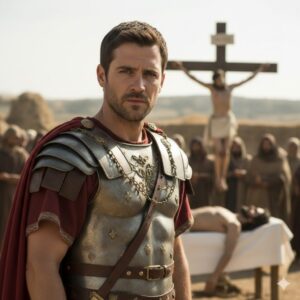
Why This Character Feels So “Real”
The genius of Clavius is his authenticity within the historical setting. The filmmakers meticulously built his character around verifiable realities:
-
His Military Rank: A “tribune” (tribunus militum) was a real, senior officer in a Roman legion, often of patrician class, commanding cohorts. A man like Clavius would absolutely be the one Pilate turned to for a sensitive security matter.
-
His World-Weariness: The film portrays the grim reality of Roman occupation—the violence, the political maneuvering, the cultural clashes. Clavius’s fatigue with “peacekeeping” in Judea is historically plausible.
-
His Investigative Role: The Roman administration was deeply concerned with civil order. A missing body that could fuel a rebellious movement would warrant an official inquiry.
So, while Clavius the individual is fictional, he is a perfectly plausible archetype—a Roman tribune who could have existed and been involved in the events following Calvary.
The Biblical & Historical Backdrop: The World of Clavius
To appreciate the story of Clavius, we must understand the real-world context in which his fictional investigation takes place. This is where history and scripture intersect.
Roman Rule in Judea: The Real Political Landscape
During the time of Jesus, Judea was a Roman province under the direct rule of a prefect (later procurator), the most famous being Pontius Pilate (ruled 26-36 AD). His primary duties were military command, financial administration, and jurisdiction in capital cases.
The Roman military presence, while not always a full legion, was significant. It included:
-
Auxiliary Cohorts: Non-citizen soldiers recruited from provinces (like Syria or Samaria), who made up most of the garrison.
-
The Praetorian Guard: Elite soldiers sometimes attached to important officials.
-
Officers like Tribunes: Roman citizens of high status commanding these units.
A tribune’s interaction with a provincial governor like Pilate, as depicted with Clavius, was standard procedure.
The Sanhedrin and the Pressure on Pilate
The Sanhedrin was the highest Jewish religious and legal council. The Gospels depict its leaders (like the High Priest Caiaphas) bringing Jesus to Pilate because, under Roman law, they lacked the authority to carry out a death sentence for the charge they sought: claiming to be “King of the Jews,” a political sedition against Rome (John 18:31).
Pilate’s famous hand-washing (Matthew 27:24) illustrates the political tightrope he walked: wanting to avoid a riot (Matthew 27:24) while finding no legal basis for the death penalty (John 18:38). The historical Pilate was known for his harshness and political missteps, making this scene entirely credible.
The Crucifixion: A Roman Procedure
The crucifixion of Jesus was a standard Roman execution method for slaves, rebels, and the worst criminals. It was a public, brutal spectacle designed to deter rebellion.
Key Historical & Biblical Details:
-
The Sentence: Pilate officially sentenced Jesus (Mark 15:15).
-
The Execution Squad: The Gospels use the Greek term stratión (Matthew 27:27), often translated as “band of soldiers.” This was likely a contubernium (a squad of 8 soldiers) from the auxiliary cohorts, led by a centurion.
-
The Role of the Centurion: This key officer oversaw the execution. After Jesus’s death, Matthew and Mark record the centurion’s profound declaration: “Truly this was the Son of God!” (Matthew 27:54, Mark 15:39).
This centurion is the closest biblical counterpart to the fictional Tribune Clavius—a Roman military man present at the crucifixion who attests to Jesus’s identity.
The Guard at the Tomb: Mystery and Controversy
The mystery Clavius investigates—the empty tomb—has its own biblical and historical intrigue.
-
Matthew’s Account: Only the Gospel of Matthew explicitly mentions a guard at the tomb. At the request of the chief priests, Pilate grants them a guard to secure the site (Matthew 27:62-66). After the resurrection, these guards report to the chief priests, who bribe them to say the disciples stole the body (Matthew 28:11-15).
-
Historical Plausibility: It is plausible that the Jewish authorities, fearing body-snatching, would request and receive a Roman guard (likely from the Temple police, which had some Roman oversight) or that Pilate would assign a small detail. The cover-up story Matthew mentions is exactly the kind of rumor a man like Clavius would be sent to confirm or dispel.
Comparison: Fictional Tribune vs. Biblical Figures
| Feature | Tribune Clavius (Fictional) | The Centurion at the Cross (Biblical) | Pontius Pilate (Historical/Biblical) |
|---|---|---|---|
| Role | Senior Military Investigator | Officer in charge of execution | Roman Prefect of Judea |
| Biblical Mention | None | Matthew 27:54, Mark 15:39, Luke 23:47 | All Four Gospels & historical records |
| Key Action | Investigates the empty tomb | Declares Jesus innocent/righteous (Luke), calls Him “Son of God” (Matt, Mark) | Authorizes the crucifixion |
| Arc | Journey from skepticism to faith | Immediate confession at the moment of death | Politically motivated, ambivalent |
The Core Mystery: The Empty Tomb and the Resurrection
This is the event that sets Clavius’s entire story in motion. What does the Bible actually say?
The Biblical Accounts of Easter Morning
All four Gospels agree on the core, historical fact: On the Sunday after the crucifixion, Jesus’s tomb was found empty by his female followers. The accounts vary in details (the number of angels, the precise order of visitors) but are unified on the empty tomb and the initial encounter with women.
-
Mary Magdalene’s Role: She is a constant in all accounts. In John’s Gospel, she is the first to see the risen Jesus, mistaking him for a gardener (John 20:11-18).
-
The Angelic Message: The messengers declare, “He is not here; he has risen, just as he said” (Matthew 28:6).
The Disciples’ Transformation: The Ultimate “Evidence”
For Clavius, and for any historical inquiry, the most compelling evidence is not the empty tomb alone, but the transformation of the disciples. The Gospels and the Book of Acts portray them as terrified, hiding individuals who, after encountering the risen Christ, become fearless proclaimers of his resurrection, willing to face imprisonment and death. This dramatic change is a historical datum that any investigator like Clavius would have to explain.
As New Testament scholar N.T. Wright has argued, within the Jewish worldview of the time, “resurrection” did not mean a vague spiritual survival. It meant a bodily return to life. The disciples’ sudden, unwavering insistence on exactly that—against all their own expectations—demands an explanation.
The Archaeological and Extrabiblical Evidence
While we have no direct archaeological evidence for the resurrection, archaeology illuminates Clavius’s world.
-
1st-Century Jewish Tombs: Excavations around Jerusalem confirm the type of tomb described in the Gospels—a rock-cut cave with a rolling stone door, exactly like the one Clavius would have inspected.
-
The Pilate Stone: Discovered in 1961, this inscription confirms the historicity of Pontius Pilate as the “Prefect of Judea,” grounding the political setting.
-
Roman Crucifixion Victim, Yehohanan: The 1968 discovery of the heel bone of a crucified man named Yehohanan in a Jerusalem ossuary provides grim, physical proof of Roman crucifixion practices in 1st-century Judea.
Note for Readers: Archaeology cannot prove or disprove a one-time miraculous event. What it does is consistently verify the cultural, political, and physical backdrop of the New Testament narratives, increasing our confidence that these stories are set in a real, historical world—the very world Tribune Clavius patrols.
Clavius and the Path to Faith: A Fictional Journey with Real Parallels
Clavius’s arc mirrors a classic journey from evidence to faith.
-
Empirical Investigation: He follows physical evidence (the missing body, the intact burial cloths).
-
Eyewitness Testimony: He interviews the guards and, crucially, the disciples.
-
Personal Encounter: The climax is his direct, tangible encounter with the risen Jesus—seeing the wounds, sharing a meal.
This mirrors the apostle Thomas’s story (John 20:24-29), who demanded physical proof before believing. Jesus provided it, then said, “Because you have seen me, you have believed; blessed are those who have not seen and yet have believed.” Clavius is a “Thomas figure” for a modern audience.
FAQ: Tribune Clavius and the Bible
Q1: Is Tribune Clavius mentioned anywhere in the Bible?
A: No. Tribune Clavius is a completely fictional character created for the film Risen. He does not appear in any biblical or historical text.
Q2: Who was the real Roman soldier at the crucifixion?
A: The Gospels mention a centurion who was in command of the execution detail. After Jesus’s death, he made a declaration of faith, saying, “Surely this man was the Son of God!” (Mark 15:39).
Q3: Did Pontius Pilate really order a guard for Jesus’s tomb?
A: The only biblical account of a guard is in the Gospel of Matthew (27:62-66; 28:11-15), where the Jewish chief priests ask Pilate for a guard, and he grants it. This guard later spread the story that the disciples stole the body.
Q4: What is the main value of the character Clavius for believers?
A: Clavius provides a fresh, investigative perspective on the resurrection story. He allows viewers to experience the shock, confusion, and ultimate awe of the events from the viewpoint of a complete outsider, strengthening the historical plausibility of the narrative for many.
Q5: Are there any other good historical films about this era?
A: Yes. For biblical setting, The Chosen series is excellent. For broader Roman context, Ben-Hur (1959) and Masada (1981 miniseries) depict Roman-Jewish tensions powerfully.
Conclusion
Tribune Clavius is a compelling fictional invention, a lens through which we can examine the historical bedrock of the Christian faith. While his name isn’t in scripture, his world is. His investigative journey highlights the core, testified facts of the empty tomb, the transformed disciples, and the persistent claim that has echoed for two millennia: that Jesus of Nazareth overcame death. The search for Clavius in the Bible ultimately leads us not to a man, but to the event he was created to investigate—the resurrection.
Additional Resource:
For a deep dive into the historical context of the New Testament, explore the articles and resources at the Biblical Archaeology Society.