Exploring the Bible’s vast tapestry of people reveals inspiring leaders, complex figures, and faithful servants whose stories shape the foundation of faith. While some names are household staples, others remain in the background, yet each holds valuable lessons. This guide focuses specifically on biblical characters whose names begin with the letter “K”. You’ll discover that many are kings, as the title “King” naturally produces several entries, but there are also prophets, apostles, and other significant individuals.
Understanding these characters isn’t just about listing names. It’s about delving into their historical context, their triumphs and failures, and the enduring spiritual truths their lives illustrate. Whether you’re preparing for a Bible study, writing a sermon, or simply satisfying personal curiosity, this comprehensive resource aims to be your definitive reference. We’ll move beyond simple summaries to provide a deep, contextual, and relatable look at these figures, helping you connect their ancient stories to modern life.
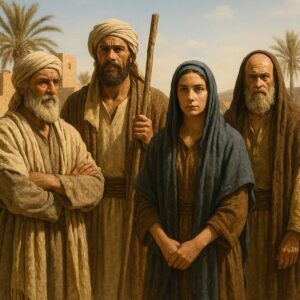
Why Study Biblical Characters?
Before we dive into our list, let’s consider the value of this study. The Bible is fundamentally a story about God’s relationship with humanity, told through the lives of people. By examining their journeys, we see reflections of our own—our struggles with doubt, our moments of courage, our moral failures, and our need for grace. These narratives teach through example, warning us against certain paths and encouraging us toward others. They make abstract theological concepts concrete and personal.
As the Apostle Paul wrote in Romans 15:4 (NIV): “For everything that was written in the past was written to teach us, so that through the endurance taught in the Scriptures and the encouragement they provide we might have hope.” The “everything” includes the lives of the people we’re about to meet.
Note for Readers: Biblical names originate from Hebrew, Aramaic, and Greek, so transliterations into English can vary. For example, “Cain” is sometimes transliterated with a “K” (Kain). We will focus on the most common English spellings used in major translations like the NIV, ESV, and KJV, acknowledging variations where they exist.
Major “K” Characters: Kings and Key Figures
This section covers the most prominent and frequently referenced characters whose names or titles begin with ‘K’.
King David: The Shepherd King
No list of “K” characters is complete without King David, Israel’s greatest king and the man after God’s own heart (Acts 13:22). His story, spanning from 1 Samuel 16 through 1 Kings 2, is one of the Bible’s most detailed and dramatic narratives.
-
Historical Context: David rose to prominence around 1000 BC, transitioning Israel from a tribal confederacy to a unified monarchy. He established Jerusalem as the political and religious capital.
-
Key Storylines: Anointed by Samuel while a young shepherd; defeats Goliath; deep friendship with Jonathan; pursued by King Saul; becomes king of Judah and later all Israel; brings the Ark to Jerusalem; commits adultery with Bathsheba and orchestrates Uriah’s death; faces family turmoil (Amnon, Absalom).
-
Spiritual Significance: David embodies a paradox of profound faith and deep moral failure. His psalms reveal a heart fully poured out to God in praise, lament, confession, and trust. His life demonstrates that God’s covenant and grace are not dependent on human perfection.
-
Key Verse: Psalm 51:10 (NIV) – “Create in me a pure heart, O God, and renew a steadfast spirit within me.” (A prayer after his sin with Bathsheba).
King Solomon: The Wise Builder
King Solomon, David’s son, succeeded him as king. His name means “peace,” and his reign (c. 970-930 BC) marked the zenith of Israel’s wealth, power, and territorial extent.
-
Historical Context: Solomon inherited a stable, expanded kingdom from David. His reign was characterized by unprecedented building projects, including the First Temple in Jerusalem, and international trade.
-
Key Storylines: Asks God for wisdom to govern; judges the two mothers with one living child; builds the Temple; his immense wealth and wisdom attract global attention (Queen of Sheba); his many foreign wives lead his heart astray to idolatry.
-
Spiritual Significance: Solomon represents the perils of blessing divorced from obedience. He started with divine wisdom but ended in compromise, showing that knowledge without a devoted heart leads to ruin. He is the primary author of Proverbs, Ecclesiastes, and Song of Songs.
-
Key Verse: Ecclesiastes 12:13 (NIV) – “Now all has been heard; here is the conclusion of the matter: Fear God and keep his commandments, for this is the duty of all mankind.”
King Saul: The Tragic First King
King Saul was the first king of Israel, anointed by the prophet Samuel. His story is a classic tragedy of disobedience and spiritual decline.
-
Historical Context: The people of Israel demanded a king “like all the other nations” (1 Samuel 8). Saul, from the tribe of Benjamin, was a tall, impressive man who initially displayed humility.
-
Key Storylines: Chosen as king; wins military victories; disobeys by offering a sacrifice himself instead of waiting for Samuel; spares King Agag and the Amalekite plunder against God’s command, leading to his rejection; descends into jealousy and madness, relentlessly pursuing David; consults a medium (the witch of Endor) before his death in battle.
-
Spiritual Significance: Saul’s life warns against valuing external appearance over heart obedience, fearing people more than God, and allowing pride and insecurity to erode one’s calling.
-
Key Verse: 1 Samuel 15:22 (NIV) – “But Samuel replied: ‘Does the Lord delight in burnt offerings and sacrifices as much as in obeying the Lord? To obey is better than sacrifice, and to heed is better than the fat of rams.'”
King Ahab & King Jehoram: Kings of the Northern Kingdom
Several kings of the northern kingdom of Israel (post-Solomon split) had names starting with ‘K’. Two significant ones are:
-
King Ahab: One of Israel’s most wicked kings. He married the Phoenician princess Jezebel, who promoted Baal worship and persecuted the prophets of Yahweh. His conflicts with the prophet Elijah (including the contest on Mount Carmel) are central to 1 Kings 16-22. His seizure of Naboth’s vineyard is a stark example of royal corruption.
-
King Jehoram (Joram): Son of Ahab, who reigned during the time of the prophets Elijah and Elisha. His story is intertwined with Elisha’s miracles and the wars against Aram (Syria). He was eventually killed by Jehu during the coup that overthrew the house of Ahab (2 Kings 9).
Kings of Judah: Hezekiah, Josiah, and Others
The southern kingdom of Judah also had notable ‘K’ kings, often contrasted with their evil predecessors.
-
King Hezekiah: One of Judah’s greatest reforming kings. He destroyed idolatrous sites, restored Temple worship, and famously trusted God when the Assyrian army besieged Jerusalem (2 Kings 18-20; 2 Chronicles 29-32). His prayer for healing and the sign of the sundial moving backward are key events.
-
King Josiah: Became king at age eight and initiated a sweeping religious revival after the Book of the Law was discovered in the Temple during repairs (2 Kings 22-23). His reign was a last period of faithfulness before Judah’s exile to Babylon.
Comparative Table: Kings of Israel & Judah Starting with ‘K’
| Name | Kingdom | Reference | Character Summary | Key Legacy |
|---|---|---|---|---|
| King Saul | United Israel | 1 Samuel 9-31 | Tragic, disobedient first king. | Rejected for disobedience; warning against pride. |
| King David | United Israel | 1 Samuel 16 – 1 Kings 2 | Shepherd, warrior, “man after God’s heart.” | Ideal king; covenant recipient; ancestor of Messiah. |
| King Solomon | United Israel | 1 Kings 1-11 | Wise king, builder of the Temple. | Peak of Israel’s wealth; wisdom turned to compromise. |
| King Ahab | Israel (North) | 1 Kings 16-22 | Notoriously wicked, influenced by Jezebel. | Epitome of idolatry and conflict with God’s prophets. |
| King Hezekiah | Judah (South) | 2 Kings 18-20 | Faithful reforming king. | Trusted God against Assyria; great religious reformer. |
| King Josiah | Judah (South) | 2 Kings 22-23 | Righteous king from a young age. | Launched revival based on rediscovered Law. |
New Testament “K” Characters
The New Testament, written primarily in Greek, introduces its own set of significant ‘K’ figures.
Kepha (Cephas/Peter): The Rock
While commonly known as Peter, his given Aramaic name was Kepha (or Cephas), which means “rock.” Jesus gave him this name, saying, “You are Peter (Petros), and on this rock (petra) I will build my church” (Matthew 16:18).
-
Role: Leader of the twelve apostles, a primary spokesman in Acts chapters 1-5 and 10-12, author of two epistles.
-
Key Moments: Walking on water; confession of Christ; denial of Jesus; restoration by Jesus (John 21); preaching at Pentecost; vision leading to Gentile inclusion (Cornelius).
-
Significance: Peter’s journey from impulsive fisherman to foundational church leader shows the transformative power of Christ’s grace and the possibility of redemption after failure.
The Apostle Paul’s Associates: Key ‘K’ Figures
Paul’s ministry was supported by a team of loyal coworkers. Two important ones were:
-
Krispus: The synagogue leader in Corinth who, with his entire household, believed in the Lord after Paul’s preaching (Acts 18:8). Paul mentions baptizing him personally (1 Corinthians 1:14).
-
Klaudios (Claudius) Lysias: The Roman tribune who rescued Paul from a mob in Jerusalem (Acts 21:31-36). He provided security and wrote a letter explaining Paul’s Roman citizenship to Governor Felix (Acts 23:26-30).
Lesser-Known but Significant “K” Characters
Beyond the kings and apostles, the Bible features other ‘K’ names that offer rich insights.
Keturah: Abraham’s Later Wife
After Sarah’s death, Abraham took another wife named Keturah (Genesis 25:1-4). She bore him six sons. Abraham gave them gifts but sent them away from Isaac, ensuring the covenant promise would pass through Isaac alone. Her descendants are considered various Arabian tribes.
Korah: The Rebellious Levite
Korah led a famous rebellion against the leadership of Moses and Aaron in the wilderness, claiming, “The whole community is holy” (Numbers 16). He was a Levite who desired the priestly office. His rebellion ended dramatically when the earth opened and swallowed him, his household, and his followers. His story serves as a severe warning against challenging God-appointed authority and seeking glory for oneself.
Kenan (Cainan): An Early Patriarch
Kenan (or Cainan) is listed in the genealogy from Adam to Noah (Genesis 5:9-14). He was the great-grandson of Adam and the father of Mahalalel. While no narrative is attached to him, his inclusion in the genealogy places him in the line of promise before the Flood.
Kish: Father of Saul
Kish, a Benjamite, is noted as a “man of standing” and, most importantly, the father of King Saul (1 Samuel 9:1-2). His lost donkeys led Saul to the prophet Samuel, setting in motion Saul’s anointing as king.
Helpful List: Other ‘K’ Figures for Further Study
-
Kadmiel: A Levite who returned from exile and helped oversee the rebuilding of the Temple (Ezra 2:40; Nehemiah 7:43).
-
Kareah: The father of Johanan, a military leader who remained in Judah after the Babylonian exile (2 Kings 25:23; Jeremiah 40-43).
-
Kolaiah: The father of the false prophet Ahab, who was condemned by Jeremiah (Jeremiah 29:21).
-
Kushaiah: A Levite assigned to Temple service during David’s organization (1 Chronicles 15:17).
FAQ: Bible Characters Starting With ‘K’
Q1: Is “King” considered part of the character’s name?
A: For the purpose of biblical lists and searches, yes. While “King” is a title, characters are universally referenced by it (e.g., King David, King Saul). It is the most common way to generate a list of ‘K’ characters from the Bible’s historical books.
Q2: Why are there so many kings on this list?
A: The historical narrative of the Old Testament from 1 Samuel onward is largely the story of the Israelite monarchy. The titles “King of Israel” and “King of Judah” naturally produce many entries. Their stories are central to understanding Israel’s history and relationship with God.
Q3: Are there any female Bible characters that start with K?
A: Directly named ones are very rare. Keturah (Abraham’s wife) is a primary example. Some lesser-known figures in genealogies or lists may exist, but they do not have developed narratives. Many women in the Bible are identified by their relationship (e.g., “the wife of…”) rather than a given name.
Q4: How do I pronounce names like “Kepha” or “Korah”?
A: Kepha is “KEE-fah” or “KEH-fah.” Korah is typically “KOR-uh” (with a long ‘o’). For accurate pronunciations, consider using an audio Bible or a reputable online biblical dictionary.
Q5: What is the most important lesson from studying these characters?
A: The collective witness of these lives—from David’s heartfelt repentance to Saul’s stubborn pride, from Solomon’s wisdom to Hezekiah’s trust—shows that God works through flawed humanity. It calls us not to idolize biblical heroes but to learn from their full journeys, recognizing our own need for grace and obedience.
Conclusion
This exploration of Bible characters starting with ‘K’ takes us from the throne rooms of mighty kings to the tents of patriarchs and the fledgling churches of the apostles. We see a spectrum of human experience: faith and failure, obedience and rebellion, wisdom and folly. Their stories are not ancient relics but living lessons, preserved to teach, warn, and encourage us in our own walks of faith. By studying them, we gain a deeper, more textured understanding of the Bible’s grand narrative of redemption.
Additional Resource: For deeper study, explore character profiles and historical context at reliable online resources like The Bible Project or academic databases such as BibleGateway for cross-referencing passages.