If you’ve ever read through the books of Deuteronomy or Isaiah and stumbled upon the name “Jeshurun,” you might have paused. It’s not a name like Abraham or David that we hear often. It sounds ancient, poetic, and carries a certain weight. Who—or what—is Jeshurun?
This isn’t a story about a forgotten hero or a minor character. Jeshurun is one of the Bible’s most profound and tender titles for the nation of Israel itself. It’s a name wrapped in intimacy and irony, capturing both God’s ideal for His people and their heartbreaking failure to live up to it. Understanding Jeshurun is like finding a key that unlocks a deeper layer of the biblical story: a story of chosenness, rebellion, and relentless, covenant-keeping love.
In this guide, we’ll explore the meaning, context, and powerful theology behind this unique name. We’ll move from its dictionary definition to its powerful placement in Scripture, revealing why this ancient poetic term still speaks volumes about identity, grace, and relationship today.
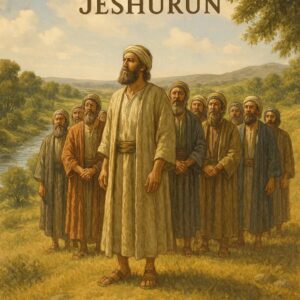
The Meaning and Origin of the Name Jeshurun
Let’s start with the basics. The name Jeshurun (יְשֻׁרוּן in Hebrew) is a poetic and formal title used exclusively for the nation of Israel. It appears only four times in the entire Bible, but each instance is loaded with significance.
Linguistic Roots: Scholars believe the name derives from the Hebrew root y-sh-r (יָשָׁר), which means “upright,” “just,” or “straight.” Think of it as pointing in the right direction—morally righteous and without deviation. Therefore, Jeshurun can be understood to mean “the upright one” or “the righteous people.”
It’s an endearing term, almost a pet name. But here’s the profound twist: God uses this name—“the upright one”—to address Israel at moments when they are anything but upright. This creates a powerful literary and theological tension. The name is both an ideal and an irony. It speaks of what Israel was called to be and what God, in His covenant love, still sees them as in their potential, despite their present failures.
Jeshurun in Context: The Four Key Passages
To truly grasp the weight of this name, we must see it in its biblical habitat. Each of its four appearances serves a distinct purpose in the unfolding story.
1. Deuteronomy 32:15 – The Song of Moses and the Warning
The first mention is in Moses’ epic farewell song, a prophetic poem warning of future rebellion.
“But Jeshurun grew fat and kicked; you grew fat, stout, and sleek; then he forsook God who made him and scoffed at the Rock of his salvation.” (Deuteronomy 32:15, ESV)
Context & Meaning: Here, “Jeshurun” is used ironically. Moses depicts Israel (Jeshurun, the “upright one”) in a future time of prosperity and security. Instead of remaining faithful, they “grew fat and kicked”—a vivid metaphor for an animal that, once well-fed, becomes unruly and rebels against its master. The name highlights the tragedy: the one called to righteousness abandons the very source of its righteousness.
2. Deuteronomy 33:5 – The Blessing of Moses and the King
Just one chapter later, as Moses blesses each tribe, he uses the name in a majestic, positive context.
“Thus the Lord became king in Jeshurun, when the heads of the people were gathered, all the tribes of Israel together.” (Deuteronomy 33:5, ESV)
Context & Meaning: This paints the ideal. “Jeshurun” here is the covenant community where God rightly reigns as king, united under His leadership. It’s a vision of Israel as it should be—a theocracy where God’s rule is acknowledged by a united, upright people.
3. Deuteronomy 33:26 – The God of Jeshurun
Moses concludes his blessing by extolling God’s uniqueness.
“There is none like God, O Jeshurun, who rides through the heavens to your help, through the skies in his majesty.” (Deuteronomy 33:26, ESV)
Context & Meaning: This is a direct, tender address. It’s a reminder to “the upright one” that their special identity is inseparably linked to the unmatched power and saving help of their God. Their righteousness is derivative, rooted in His character and actions.
4. Isaiah 44:2 – The Prophetic Promise of Restoration
Centuries later, the prophet Isaiah revives the name during the exile.
“Thus says the Lord who made you, who formed you from the womb and will help you: Fear not, O Jacob my servant, Jeshurun whom I have chosen.” (Isaiah 44:2, ESV)
Context & Meaning: This is the most grace-filled usage. Israel (here paralleled with “Jacob”) is in exile, the ultimate consequence of their “fat and kicking” rebellion. Yet God, through Isaiah, addresses them as “Jeshurun whom I have chosen.” The name becomes a promise. Their identity as the “upright one” is not based on their performance but on God’s unchosen, electing love that promises forgiveness and restoration.
The Duality of Jeshurun: Ideal vs. Reality
The power of the name Jeshurun lies in this duality. It’s a lens through which we see the entire biblical narrative of Israel.
| Aspect | The Ideal (Jeshurun’s Calling) | The Reality (Israel’s Failure) | God’s Response |
|---|---|---|---|
| Identity | The Upright, Righteous Nation | A stubborn and rebellious people | Covenant Reminder: “I have chosen you” (Isa 44:2) |
| Posture | Submissive to God as King (Deut 33:5) | “Grew fat and kicked” (Deut 32:15) | Prophetic Warning & Discipline |
| Relationship | Recipient of God’s saving help (Deut 33:26) | Forsaking the God who made them (Deut 32:15) | Promise of Restoration: “Fear not… I will help you” (Isa 44:2) |
This table shows the tension. Jeshurun is:
-
A Title of Honor: Denoting Israel’s unique, elected status.
-
A Measure of Failure: Highlighting the gap between calling and conduct.
-
A Testimony to Grace: Demonstrating that God’s commitment outlasts His people’s failure.
The Theological Significance of Jeshurun
Beyond historical labeling, the name Jeshurun teaches us deep truths about God’s character and His relationship with His people.
1. The Covenant Relationship is Based on Grace, Not Performance
God did not name Israel “Jeshurun” after they achieved moral perfection. He bestowed the name as part of their covenant identity. This mirrors the gospel: believers are declared righteous in Christ (called “Jeshurun”) while they are still being made righteous in practice. Our standing is secure based on God’s choice and Christ’s work, not our fluctuating obedience.
2. Privilege Bears Responsibility
The name carries an inherent expectation. To be called “the upright one” implies a life that reflects that uprightness. The warning in Deuteronomy 32:15 is stark: privilege (being chosen, blessed, and prospered) can lead to pride and apostasy if the heart forgets the source of those blessings. This is a timeless warning for any community of faith.
3. God’s Faithfulness Transcends Human Failure
The most beautiful thread is God’s unwavering commitment. Even when Jeshurun “scoffed at the Rock of his salvation,” God’s ultimate response, seen in Isaiah, is not disowning but redemption. He remains “the King in Jeshurun” and the “God of Jeshurun.” The relationship, though tested, is not annulled.
Important Note: The use of Jeshurun is profoundly corporate. It always refers to the collective nation of Israel, not to an individual. This reminds us that God’s story of redemption is worked out through a people, a community called to live rightly before Him and the world.
Jeshurun and the Modern Believer: Personal Applications
While “Jeshurun” is a name for ancient Israel, its theological resonance provides powerful lessons for anyone seeking to follow God today.
A Mirror for Self-Reflection: In our own spiritual journeys, we can ask: “Has my spiritual prosperity (‘growing fat’ on knowledge, comfort, or blessings) made me complacent or rebellious towards God’s authority?” The story of Jeshurun calls for humble self-examination.
An Anchor of Identity: When we feel like failures, the name reminds us that our primary identity is not “Sinner” but “Chosen One in Christ.” Like Israel in exile, we are addressed by a name that speaks of God’s ideal for us and His commitment to get us there.
A Call to Community: Jeshurun was a people. This challenges individualistic faith. We are called to be part of a community—a “new Israel” in Christ (Galatians 6:16)—that together strives to live uprightly, supports one another, and collectively acknowledges God as our King.
A Helpful List: Key Takeaways on Jeshurun
-
Meaning: “The upright one” or “the righteous people.”
-
Who it refers to: A poetic name for the nation of Israel.
-
Key Theme: The tension between God’s ideal for His people and their real-world failure.
-
Key Passages: Deuteronomy 32:15; 33:5, 26; Isaiah 44:2.
-
Main Lesson: God’s covenant love and chosenness are steadfast, based on His grace, not our perfect performance.
Conclusion: The Enduring Whisper of Grace
The name Jeshurun is a whisper of grace woven through Scripture. It captures the beautiful, tragic, and hopeful story of God’s people in a single word. It is a name that honors, warns, and ultimately restores, pointing beyond Israel’s failure to the faithfulness of the God who declares, “I have chosen you.” For the reader today, it remains a poignant reminder that our calling is a gift, our righteousness is from Him, and our hope is secured by His unwavering love.
Frequently Asked Questions (FAQ)
Q: Is Jeshurun another name for Jacob?
A: Indirectly, yes. Jacob’s name was changed to Israel, and the nation descended from him took that name. Jeshurun is a poetic synonym for that nation. In Isaiah 44:2, God addresses “Jacob my servant, Jeshurun whom I have chosen,” linking the patriarch, the people, and this special title together.
Q: Why is the name Jeshurun used so rarely in the Bible?
A: Its rarity adds to its impact. It’s reserved for highly poetic, solemn, or prophetic moments—Moses’ grand farewell song and Isaiah’s profound message of restoration. It’s a special term for special occasions, meant to make the audience stop and ponder its deep meaning.
Q: Can the term Jeshurun be applied to the Christian church today?
A: Theologically, there is a connection. The New Testament describes the church as the “Israel of God” (Galatians 6:16) and a “chosen race” (1 Peter 2:9). While we don’t directly adopt the name “Jeshurun,” the concept applies: we are a people called to be upright (holy), often fail, and are sustained solely by God’s electing grace in Christ. The lessons from Jeshurun’s story are directly applicable to the church.
Additional Resources for Further Study
For those wishing to dive deeper into the themes surrounding Jeshurun, the covenant, and biblical poetry, we recommend exploring reliable online Bible dictionaries and commentaries. A great place to start is the Bible Project’s Word Study videos, which visually explore key biblical themes and words in their scriptural context.