Have you ever felt a deep, quiet longing for a place of perfect peace and connection? In our noisy, fast-paced world, the idea of a sacred, inner refuge is powerfully appealing. This isn’t just a modern concept for meditation; it’s a profound spiritual reality deeply rooted in the Bible. The term “inner sanctum” evokes images of the most holy, secluded space—a place where the divine meets the human. But what does it truly mean from a biblical perspective?
This article will guide you through the rich, layered biblical meaning of the inner sanctum. We’ll travel from the physical structures of the ancient Tabernacle and Temple to the revolutionary New Testament truth that this sacred space now resides within every believer. This is more than history; it’s an invitation to understand and experience the profound closeness with God that is available to you today.
What is the Inner Sanctum? Beyond the Physical
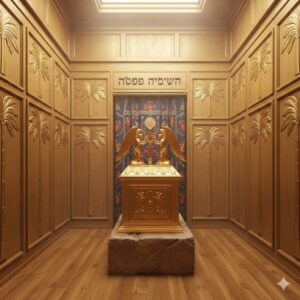
At its core, the “inner sanctum” refers to the innermost, most sacred chamber of a holy place. In a biblical context, it is directly synonymous with the Most Holy Place (or Holy of Holies). This was the epicenter of God’s manifested presence on Earth under the Old Covenant.
Think of it not just as a room, but as the ultimate symbol of:
-
God’s Holiness: His complete “other-ness,” purity, and majesty.
-
Divine Presence: Where His glory dwelled in a tangible way.
-
Restricted Access: Emphasizing that sin creates a barrier between humanity and God.
-
Atonement and Mediation: The place where blood was offered to cover sin and restore relationship.
This concept forms the backbone of understanding our relationship with God. Let’s begin by exploring its original, physical design.
The Blueprint of Heaven: The Tabernacle’s Most Holy Place
Before there was a stone temple, there was a tent—the Tabernacle. This mobile sanctuary, built under Moses’ direction (Exodus 25-40), was a detailed pattern of heavenly realities. Its very structure taught a progressive journey into God’s presence.
The Threefold Division: A Path to the Presence
The Tabernacle’s layout was a profound spiritual map:
-
The Outer Court: Accessible to all Israelites. Here, at the bronze altar, sacrifices for sin were made. It represents repentance and initial forgiveness.
-
The Holy Place: Accessible only to priests. It contained the lampstand (light), the table of showbread (sustenance), and the altar of incense (prayer). It represents service, fellowship, and worship.
-
The Most Holy Place (Inner Sanctum): Accessible only to the High Priest, once a year. Separated by a thick veil. It contained only the Ark of the Covenant, topped by the mercy seat. It represents the very presence of God.
Tabernacle Structure & Symbolism Table
| Area | Who Could Enter | Key Furniture | Spiritual Meaning | Modern Application |
|---|---|---|---|---|
| Outer Court | All Israelites | Bronze Altar, Laver | Repentance, Sacrifice, Cleansing | Acknowledging our need for forgiveness through Christ. |
| Holy Place | Priests only | Lampstand, Table of Showbread, Altar of Incense | Worship, Sustenance, Prayer, Illumination | Daily fellowship with God through prayer, His Word, and service. |
| Most Holy Place | High Priest only (Yearly) | Ark of the Covenant (Mercy Seat) | God’s Throne Room, Absolute Holiness, Atonement | The believer’s confident access to God’s presence through Jesus. |
The Ark and the Mercy Seat: Heart of the Sanctum
Within the inner sanctum, the Ark of the Covenant was not just a gold-covered box. It was the earthly throne of the God of Israel.
-
Contents: The stone tablets (God’s law), Aaron’s staff that budded (God’s chosen priesthood), and a jar of manna (God’s provision).
-
The Mercy Seat (Kapporeth): The solid gold lid atop the Ark. Here, on the Day of Atonement (Yom Kippur), the High Priest would sprinkle the blood of the sacrifice. This act “covered” the sins of the people, satisfying God’s justice. The mercy seat was where judgment and mercy met.
Key Insight: “The inner sanctum was not a place of dread for God’s people, but of awe. Its inaccessibility highlighted the severity of sin, while the ritual of the mercy seat spectacularly demonstrated God’s provision for reconciliation.”
The Temple in Jerusalem: A Fixed Dwelling
King Solomon’s Temple (1 Kings 6-8) replaced the mobile Tabernacle with a permanent, glorious structure. The principles remained identical, but the scale and splendor magnified the glory of the God who dwelled there.
-
The Veil: A massive, thick curtain reinforced the separation. Josephus, the first-century historian, notes it was likely 4 inches thick—emphasizing the impenetrable barrier sin created.
-
The Continued Ritual: The annual Day of Atonement ritual continued, a solemn reminder that the system was provisional, awaiting a final solution.
The Revolutionary Shift: From Stone Temple to Human Heart
The entire Old Testament system pointed forward. The prophets began to hint at a new, internal reality (Ezekiel 36:26-27; Jeremiah 31:33). This promise exploded into history with the life, death, and resurrection of Jesus Christ.
The Torn Veil: Access is Open
At the moment of Jesus’ death on the cross, the unthinkable happened: “And behold, the veil of the temple was torn in two from top to bottom” (Matthew 27:51).
This was not the work of human hands. It was a divine declaration:
-
The Old System was Fulfilled: Jesus was the final, perfect sacrifice. No more animal blood was needed.
-
Access was Granted: The barrier between God and humanity was removed for all who come through faith in Christ.
-
The Inner Sanctum was Relocated: The geographical center of worship was about to shift in a breathtaking way.
The Believer as Temple: The New Inner Sanctum
This is the central, glorious truth of the New Covenant. The physical inner sanctum was a shadow; the reality is spiritual and personal.
-
The Collective Temple: “Don’t you know that you yourselves are God’s temple and that God’s Spirit dwells in your midst?” (1 Corinthians 3:16). The church, the body of believers, is now the dwelling place of God.
-
The Individual Sanctum: “Do you not know that your bodies are temples of the Holy Spirit, who is in you, whom you have received from God?” (1 Corinthians 6:19). This is perhaps the most personal application: The Spirit of God takes up residence in the heart of every believer.
Old Covenant vs. New Covenant Access Table
| Feature | Old Covenant (Physical Temple) | New Covenant (Spiritual Reality) |
|---|---|---|
| Location of God’s Presence | In the Most Holy Place in Jerusalem. | In the heart of every believer through the Holy Spirit. |
| Primary Mediator | The human High Priest. | Jesus Christ, the eternal High Priest (Hebrews 4:14-16). |
| Frequency of Access | Once a year for one person. | Continually, with confidence, for every believer (Hebrews 10:19-22). |
| Basis of Access | The blood of bulls and goats (temporary covering). | The perfect, once-for-all blood of Christ (eternal redemption). |
| Barrier | A thick woven veil. | Removed and destroyed by Christ’s sacrifice. |
Living in the Reality: Your Inner Sanctum Today
Understanding this truth is one thing; living in its reality is another. How do we practically experience life as God’s inner sanctum?
1. Cultivate Awareness of His Presence
You are never alone. The Creator dwells within you. Practice the “awareness of God” in daily moments—while working, driving, or resting. This isn’t about a feeling, but a faith-based reality.
2. Prioritize Spiritual Hygiene
A physical temple was kept meticulously clean. Our inner sanctum requires cleansing through:
-
Confession: Regularly agreeing with God about sin (1 John 1:9).
-
Renewing the Mind: Filtering thoughts and inputs through God’s Word (Romans 12:2).
-
Guarding the Heart: Being mindful of what we allow to shape our affections (Proverbs 4:23).
3. Enter the Throne Room of Prayer
You have 24/7 access. The writer of Hebrews urges us to “approach God’s throne of grace with confidence” (Hebrews 4:16). Prayer is not sending a message to a distant God; it is communion with the God who indwells you.
4. Let Worship Be Your Atmosphere
The inner sanctum was a place of sheer devotion. Our lives are to be “living sacrifices, holy and pleasing to God—this is your true and proper worship” (Romans 12:1). Worship is a lifestyle, not just a song.
Important Note: “Living as God’s temple does not mean we become perfect or sinless in this life. It means we are being sanctified—set apart and made holy by His Spirit within us. The process involves daily surrender and cooperation with His work in us.”
Common Questions and Misconceptions
Q: Does “inner sanctum” mean I should seek a mystical, out-of-body experience?
A: No. While profound experiences can happen, the biblical focus is on a relational reality, not a mystical state. It’s about knowing God through Christ by the Spirit, which is grounded in faith, Scripture, and community.
Q: If God is in me, does that mean I am God?
A: Absolutely not. This is a crucial distinction. We are containers of God’s presence, not the source. We remain created beings, indwelt by our Creator. His presence sanctifies us; we do not become divine.
Q: How is this different from New Age or pantheistic ideas?
A: New Age thought often teaches that the divine is an impersonal force within everything (pantheism) or that we are all gods (panentheism). The biblical view is theistic: God is personal, distinct from His creation, and chooses to dwell in believers by grace as an act of relationship, not because we are inherently divine.
Q: What about times when I don’t “feel” God’s presence?
A: Feelings are fleeting; truth is constant. God’s indwelling is a promise based on His faithfulness and the finished work of Christ, not on our emotional state. Faith trusts the promise even in spiritual dryness (Psalm 42).
Conclusion: Your Invitation to Dwell
The biblical journey of the inner sanctum takes us from a forbidden room in an ancient tent to the stunning truth that, through Jesus, our very beings become the sacred dwelling place of God. We have moved from limited access to permanent residence, from a shadow to the substance. This is the heart of the Christian gospel: God’s desire is not just to be with us, but to be in us, transforming us from the inside out. The call is to recognize this holy reality, to tend to this sacred space within, and to live every day in the conscious, confident peace of His immediate presence.
Frequently Asked Questions (FAQ)
Q: Can I lose the Holy Spirit’s presence in my inner sanctum?
A: The New Testament teaches the doctrine of the security of the believer for those who are genuinely in Christ. The Holy Spirit is given as a “seal” and “deposit guaranteeing our inheritance” (Ephesians 1:13-14). While sin can grieve or quench the Spirit (Ephesians 4:30, 1 Thessalonians 5:19), disrupting fellowship, it does not evict Him. Restoration comes through repentance.
Q: How does corporate worship relate to my personal inner sanctum?
A: They are beautifully connected. When believers—each an individual temple of the Spirit—gather in worship, we collectively form a “spiritual house” (1 Peter 2:5). The corporate experience amplifies, encourages, and corrects our personal walk, and our personal devotion fuels authentic corporate worship.
Q: Are there practices that help me “enter” this inner spiritual reality?
A: Yes, often called spiritual disciplines. Key practices include:
-
Silent Meditation on Scripture: Letting God’s Word dwell in you richly.
-
Contemplative Prayer: Moving beyond requests to quiet, attentive communion.
-
Sabbath Rest: Creating space to cease striving and remember God’s lordship.
-
Journaling: Processing your spiritual journey and God’s faithfulness.
Q: What is the difference between my spirit and the Holy Spirit within me?
A: Your human spirit is the core of your being, your “inner self.” The Holy Spirit is the third Person of the Trinity. At salvation, the Holy Spirit unites with your human spirit (1 Corinthians 6:17), empowering, guiding, and transforming it. They are distinct but intimately joined.
Additional Resource
For a deeper dive into the symbolism of the Tabernacle and how it points to Christ, consider exploring this reliable theological resource: The Bible Project: “Tabernacle”. Their visual videos and readings provide excellent, accessible scholarship.