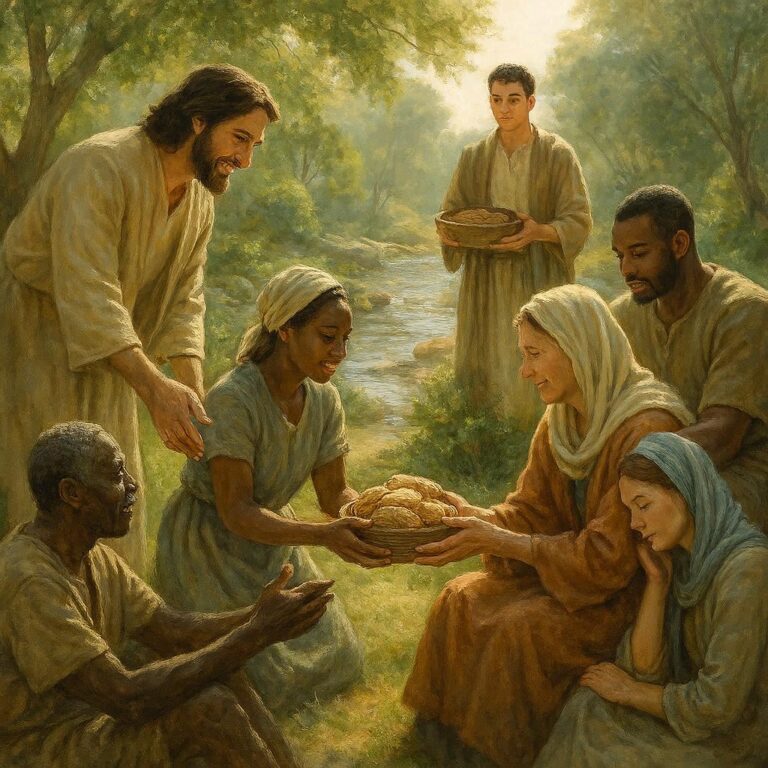
If you’ve spent any time in church or reading the Bible, you’ve heard the word “disciple.” It’s used for the twelve men who followed Jesus, for early Christians, and sometimes for believers today. But what does it actually mean? Is it just a fancy word for “student” or “follower”?
The biblical meaning of disciple is far richer, deeper, and more demanding than a casual label. It represents a lifelong commitment to a transformative relationship, embodying a specific way of life centered on Jesus Christ. To understand it is to understand the very heart of Christian calling.
This comprehensive guide will unpack the original context, the radical cost, the process of transformation, and the enduring mission wrapped up in this powerful word. By the end, you’ll have a clear picture of what discipleship meant in the first century and what it means for us today.

What is a Disciple? Unpacking the Original Meaning
To grasp the biblical concept, we must first travel back in time. The English word “disciple” comes from the Latin discipulus, meaning “learner” or “pupil.” However, in the New Testament, the Greek word used is μαθητής (mathētēs).
The Greek Context of Mathētēs
In ancient Greek culture, a mathētēs was more than a passive student absorbing information. This term described an apprentice who was devoted to a teacher (didaskalos or rabbi). The relationship was intimate and holistic. The disciple didn’t just learn the teacher’s ideas; they sought to imitate the teacher’s life, character, and skills. The goal was to become like the master, eventually carrying on his work and teachings.
The Jewish Context of a Talmid
In Jesus’ Jewish world, this concept was already deeply ingrained. A young man would become a talmid (disciple) to a rabbi. He would literally “follow” him—walking with him, serving him, and learning by observing every aspect of his life. The famous rabbinic saying was, “May you be covered in the dust of your rabbi,” meaning you followed so closely that the dust from his feet settled on you. The ultimate aim was not just knowledge (Torah) but embodied practice.
Jesus’ Revolutionary Twist
Jesus used this familiar framework but transformed it in crucial ways:
-
He Called Them: Typically, disciples chose their rabbi. Jesus, however, took the initiative with the authoritative call, “Follow me” (Matthew 4:19, Mark 2:14). This echoed God’s call to prophets like Elijah and Elisha.
-
He Was the Subject: Disciples of other rabbis debated the Torah. Jesus’ disciples were to learn Him—His person, His kingdom message, His way. He was the teaching.
-
The Goal was Replication: Jesus didn’t just train scholars; he trained missionaries and leaders who would replicate his ministry globally (Matthew 28:19-20).
“A student is not above the teacher, but everyone who is fully trained will be like their teacher.” – Luke 6:40 (NIV)
This verse captures the core: discipleship is a process of becoming like Jesus.
The Cost of Discipleship: Counting the Real Price
Jesus never hid the demands of following Him. He spoke openly about the cost, ensuring people made a conscious, informed decision. This contrasts sharply with some modern conceptions of a low-commitment faith.
Key Teachings on the Cost
Several passages starkly outline the price of being a disciple:
-
Luke 14:25-33: Jesus uses the metaphors of carrying a cross and counting the cost, like a builder planning a tower or a king going to war. Discipleship requires surrendering ultimate allegiance, even to family (v. 26), and one’s very life (v. 27).
-
Matthew 16:24-26: “Then Jesus told his disciples, ‘If anyone would come after me, let him deny himself and take up his cross and follow me.’” Self-denial, not self-fulfillment, is the starting point.
-
The Rich Young Ruler (Mark 10:17-27): Here, the cost was specific: selling possessions and giving to the poor. The man went away sad, showing that attachment to wealth can be incompatible with true discipleship.
What Does “Take Up Your Cross” Mean?
This wasn’t a metaphor for enduring a bad day. In the Roman world, the cross meant one thing: public, shameful, painful execution. To “take up your cross” meant to embrace a path of total surrender, a death sentence to your own will, ambitions, and ego. It signifies daily dying to self (1 Corinthians 15:31).
Modern Application: What Are We Asked to Surrender?
While we may not face physical martyrdom, the call to surrender is just as real:
-
Ultimate Control: Surrendering the right to direct our own lives.
-
Comfort & Security: Being willing to go where He leads, even if it’s uncomfortable or risky.
-
Reputation: Being identified with Christ, even when it’s unpopular.
-
Resources: Holding our time, money, and gifts with open hands for God’s use.
| Biblical Expression | What It Meant Then | Modern Application |
|---|---|---|
| “Deny himself” | Renounce personal ambitions as the central drive. | Reject a self-centered life; seek God’s will first. |
| “Take up his cross” | Embrace a path leading to death, shame, and sacrifice. | Daily surrender rights, comfort, and ego for Christ’s sake. |
| “Follow me” | Physically leave home/trade to travel with Jesus. | Align daily choices, ethics, and direction with Jesus’ teaching and example. |
| “Hate father and mother” | A hyperbolic way to say Jesus must have supreme loyalty. | Ensure no relationship or loyalty rivals our primary commitment to Christ. |
The Process of a Disciple: Transformation, Not Just Information
Discipleship isn’t a one-time decision; it’s a lifelong journey of transformation. The New Testament outlines a clear process.
The Call and Response
It begins with Jesus’ gracious call, met by a repentant and believing response (Mark 1:15). This is conversion—the birth of a disciple.
Key Components of the Discipleship Journey
-
Abiding in Christ (John 15:4-5): Jesus uses the vine and branches imagery. Fruitfulness—Christlike character and impact—comes from remaining connected to Him through prayer, Scripture, and obedience.
-
Learning and Obedience (Matthew 28:20): “…teaching them to obey everything I have commanded you.” Knowledge that doesn’t lead to obedience is dead. Disciples are learners who do.
-
Being With Him (Mark 3:14): Jesus appointed the Twelve “that they might be with him and that he might send them out…” Transformation happened in the context of intimate, shared life.
-
Spiritual Disciplines: Prayer, fasting, solitude, worship, and Scripture meditation are not legalistic duties but training exercises that shape the heart toward God.
The Role of the Holy Spirit
The disciple is not left alone to struggle. The Holy Spirit is the ultimate Teacher (John 14:26), Guide (John 16:13), and Sanctifier (Galatians 5:22-23) who empowers the transformation from within.
Marks of a True Disciple: How Do You Recognize One?
Jesus and the New Testament writers gave clear identifiers. These are the evidences of a life being genuinely transformed.
1. Love for Others (John 13:34-35)
“By this everyone will know that you are my disciples, if you love one another.”
This is the primary hallmark. It’s a self-sacrificial, practical, and visible love within the Christian community that testifies to the world.
2. Bearing Spiritual Fruit (John 15:8)
A disciple’s life will naturally produce the “fruit of the Spirit”: love, joy, peace, patience, kindness, goodness, faithfulness, gentleness, and self-control (Galatians 5:22-23). This is the evidence of abiding in Christ.
3. Obedience to Christ’s Commands (John 14:15, 21)
“Whoever has my commands and keeps them is the one who loves me.”
Love for Jesus is demonstrated through action, not just emotion. Obedience is the tangible expression of trust and loyalty.
4. Commitment to the Word (John 8:31)
“If you hold to my teaching, you are really my disciples.”
True disciples “continue” or “abide” in Jesus’ word. This means a steady, persevering engagement with Scripture, allowing it to shape beliefs and behavior.
5. A Heart for Mission (Matthew 28:19-20)
The Great Commission is given to disciples. A inward-focused faith is incomplete. True disciples, by nature, become disciple-makers, sharing the gospel and teaching others to follow Jesus.
Disciples vs. Apostles: Understanding the Key Difference
These terms are related but distinct. All apostles were disciples, but not all disciples were apostles.
| Aspect | Disciple (Mathētēs) | Apostle (Apostolos) |
|---|---|---|
| Meaning | Learner, apprentice, follower. | “Sent one,” emissary, commissioned delegate. |
| Scope | Broad term for any follower of Jesus. | Narrow term for a specific, authoritative role. |
| Primary Role | To learn from, imitate, and abide in Christ. | To be sent out with Christ’s authority to found and lead the church. |
| Identification | Based on relationship and commitment to Jesus. | Based on a specific calling/commission from Jesus (Mark 3:14; Acts 1:21-22). |
| Modern Equivalent | Every Christian believer. | The original Twelve and Paul; the foundational role is unique and unrepeatable. |
In short: Disciples are made through the call to follow. Apostles are chosen and sent for a unique foundational mission.
The Great Commission: The Disciple’s Mission
The journey of a disciple doesn’t end with personal transformation. It culminates in mission. Jesus’ final instructions, the Great Commission (Matthew 28:18-20), are the job description for every disciple.
Breaking Down Matthew 28:19-20
-
“Therefore go…” The mission is mobile, not stationary. It implies action.
-
“…make disciples of all nations…” This is the core command. The verb is “disciple” (mathēteusate). Our task is not just to get “decisions” but to foster complete followers of Jesus.
-
“…baptizing them…” This signifies the new disciple’s public identification with Christ and entry into the community.
-
“…and teaching them to obey everything I have commanded you.” Discipleship is a teaching-obedience cycle that lasts a lifetime.
-
“And surely I am with you always…” The mission is impossible in our own strength, but we go with the authority and presence of the risen King.
The Disciple-Making Cycle
This creates a beautiful, reproducible cycle:
-
I am a disciple (following, learning, being transformed).
-
I make disciples (investing in others, sharing the gospel, teaching).
-
I teach new disciples to make disciples (ensuring multiplication).
This is how the mission of Jesus advances from generation to generation.
Discipleship in the Modern Church: Applying the Ancient Call
How does this radical, first-century call translate to our context today?
Common Misconceptions
-
Misconception: A disciple is just a church member or someone who believes certain doctrines.
-
Reality: A disciple is an active, committed apprentice of Jesus in all of life.
-
Misconception: Discipleship is a weekly Bible study or program.
-
Reality: Discipleship is a holistic, relational process of life-on-life transformation.
Essential Elements for Modern Discipleship
-
Intentional Relationships: Like Jesus with the Twelve, modern discipleship thrives in the context of intentional, transparent relationships—mentoring, small groups, accountability partnerships.
-
Integrated Life: Discipleship isn’t a Sunday-only activity. It involves bringing Christ into our work, family, finances, and leisure.
-
Grace and Truth: Effective discipleship balances grace (acceptance, encouragement) and truth (honest challenge, biblical correction), just as Jesus did (John 1:14).
-
Multiplication Mindset: The goal is not to keep people dependent but to equip them to eventually disciple others (2 Timothy 2:2).
Important Note: Discipleship is messy. The original twelve disciples were slow to understand, argued about greatness, and one betrayed Jesus. The process requires patience, grace, and perseverance—from us and from God.
Practical First Steps for the Reader
-
Commit to Abiding: Start a daily practice of prayer and Scripture reading, not out of duty, but to “remain” in Christ.
-
Find a Community: You cannot be a disciple alone. Engage deeply in a local church community.
-
Seek a Guide: Look for a more mature Christian you can learn from—ask questions, share struggles.
-
Start Obeying: Identify one thing Jesus clearly commands (e.g., forgiveness, generosity, sharing faith) and take a step of obedience this week.
-
Invest in One: Begin praying for one person you can encourage in their faith journey.
Conclusion
The biblical meaning of disciple is an all-encompassing call to a transformative, lifelong apprenticeship to Jesus Christ. It begins with a costly surrender of self, unfolds through a process of abiding and obedience empowered by the Spirit, and is evidenced by love, fruitfulness, and a heart for God’s Word. Ultimately, it propels us into the mission of making other disciples. This is not a passive state but an active, relational journey of becoming like our Teacher and joining Him in His redemptive work in the world.
Frequently Asked Questions (FAQ)
Q: Can you be a Christian but not a disciple?
A: In the New Testament, the terms are essentially synonymous. To be a “Christian” (follower of Christ) is to be a “disciple” (learner/apprentice of Christ). However, one can profess faith (be a believer) while being stagnant or disobedient—a “carnal” Christian (1 Corinthians 3:1-3). The biblical ideal is that every believer actively engages in the discipleship journey.
Q: Was everyone who followed Jesus considered a disciple?
A: The Gospels describe concentric circles. The Twelve were the core disciples. A larger group of committed followers (including women like Mary Magdalene) were also called disciples (Luke 8:1-3). The crowds were often enthusiastic hearers, but Jesus distinguished them from those truly committed to his demanding way (John 6:60-66).
Q: How is discipleship different from spiritual growth?
A: They are deeply connected. Spiritual growth is the outcome; discipleship is the intentional process and relationship that facilitates that growth. Discipleship implies being taught and guided, not just growing automatically.
Q: What if I fail as a disciple? Did Peter fail?
A: Absolutely, Peter failed spectacularly by denying Jesus three times. Jesus’ response was restoration and recommissioning (John 21:15-19). Failure is part of the journey. God’s grace is sufficient, and discipleship is about getting back up, learning, and continuing to follow.
Q: Is discipleship primarily for new believers?
A: No, it’s for everyone. We never graduate from being disciples. Mature believers still need to abide, learn, and obey. They are simply at a different stage, often moving from being primarily taught to also teaching others.
Additional Resources
To continue your exploration of biblical discipleship, consider these reputable resources:
-
Book: The Cost of Discipleship by Dietrich Bonhoeffer. A classic and profound exploration of cheap vs. costly grace.
-
Book: Discipleship Essentials by Greg Ogden. A practical guide for small groups walking through the core truths of the faith.
-
Online Course: The “Discipleship” series on RightNow Media (if your church has a subscription) or courses from The Gospel Coalition.
-
Bible Study Plan: Use the “Discipleship” reading plan on the YouVersion Bible App.
-
Link: Explore the in-depth articles on discipleship and spiritual formation at The Billy Graham Center for Evangelism’s website: https://www.billygrahamcenter.com/ (Note: Always ensure you are referencing trusted, biblically-sound sources).