Have you ever felt a deep, irreconcilable divide? A conflict so fundamental it feels woven into the fabric of existence itself? The Bible has a specific and powerful word for this profound state of hostility: enmity. More than just anger or a temporary feud, the biblical meaning of enmity points to a deep-seated, spiritual opposition with eternal consequences. It’s the root of humanity’s greatest struggle and the key to understanding God’s grand story of redemption. In this comprehensive guide, we’ll explore this complex theme, tracing its origins, its devastating impact, and the divine solution that promises peace.
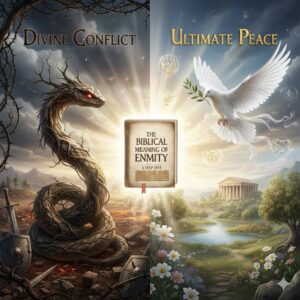
What is Enmity in the Bible? Defining the Divine Divide
At its core, the word enmity in Scripture signifies a state of active, mutual hostility and deep-seated opposition. It’s more than personal animosity; it’s a fundamental alignment against. The Hebrew word “eybah” and the Greek word “echthra” carry connotations of hatred and being an enemy. This isn’t a minor disagreement but a declared war between moral and spiritual forces.
“For the mind set on the flesh is death, but the mind set on the Spirit is life and peace, because the mind set on the flesh is hostile [echthra] toward God; for it does not subject itself to the law of God, for it is not even able to do so.” (Romans 8:7-8, NASB)
This verse highlights the sobering truth: enmity describes the natural posture of the sinful human heart toward a holy God. It is an active rebellion, an inability and unwillingness to submit. Understanding this term is crucial because it frames the entire human predicament and the necessity of a Savior.
Key Characteristics of Biblical Enmity:
-
Mutual and Active: It is often a two-way state of hostility.
-
Fundamental and Spiritual: It arises from core differences in nature and allegiance.
-
Moral in Nature: It is tied to sin, righteousness, and justice.
-
Cosmic in Scope: It can exist between individuals, humanity and God, and even spiritual forces.
The First Enmity: The Seed of Conflict in Eden
The concept of enmity enters the biblical narrative not as a vague idea, but with a solemn declaration in the wake of humanity’s first sin. After Adam and Eve disobeyed God by eating the forbidden fruit, God speaks words of consequence—and hope—to the serpent (Satan).
“And I will put enmity between you and the woman, and between your seed and her seed; He shall bruise you on the head, and you shall bruise him on the heel.” (Genesis 3:15)
This pivotal verse, often called the protoevangelium or “first gospel,” establishes the foundational enmity. Let’s break down its profound implications:
-
The Parties: God Himself establishes the enmity. It is divinely ordained.
-
The Sides: The serpent (Satan and the forces of evil) versus the woman (humanity, and ultimately, a specific lineage).
-
The “Seed”: This points to a collective offspring and a singular, ultimate Offspring—a prophecy fulfilled in Jesus Christ.
-
The Conflict: A ongoing, generational struggle between good and evil.
-
The Promise: A decisive, though costly, victory. The serpent will strike the heel (a painful but non-fatal wound), but the seed will crush the serpent’s head (a fatal blow).
This initial enmity explains the pervasive presence of conflict, suffering, and evil in our world. It is the spiritual root of all other hostilities.
The Two Realms of Enmity Established in Genesis 3:15
| Realm of Enmity | Description | Manifestation |
|---|---|---|
| Spiritual Realm | The core conflict between Satan/demonic forces and God’s purposes. | Temptation, spiritual deception, accusation, and the corruption of God’s good creation. |
| Human Realm | The outworking of this spiritual conflict within humanity and creation. | Personal sin, relational strife, violence, suffering, death, and humanity’s natural hostility toward God. |
Enmity Between Humanity and God: The Great Divide
The enmity declared in Eden quickly manifested as a chasm between God and His creation. The harmonious relationship was shattered. This is not a petty grudge on God’s part, but a necessary and just separation caused by sin’s violation of His holy nature.
The Apostle Paul systematically explains this state in his letters. He describes humanity in its natural state as “alienated from God” and “enemies in your mind because of your evil behavior” (Colossians 1:21). This enmity is our default condition.
Why does sin create enmity with God?
-
Holiness vs. Sin: God’s perfect, pure nature cannot coexist with sin. It is antithetical to His being.
-
Justice vs. Lawbreaking: God’s just nature requires that rebellion has consequences.
-
Love’s Response: Even God’s love cannot ignore what destroys the objects of His love. His opposition to sin is an act of love for His creation.
Important Note: It is critical to understand that God’s posture in this enmity is not one of spiteful hatred. It is the righteous opposition of a holy Creator to the destructive cancer of sin that has infected His creation and separated Him from the people He loves. The hostility is against the sin, not the sinner as an image-bearer, yet the consequence of that sin is separation.
The Enmity of the Law and the Flesh
The Mosaic Law, given to Israel, served to magnify and clarify this state of enmity. It was holy and good, but it acted as a spotlight on human inability.
“For the mind set on the flesh is hostile to God, for it does not submit to God’s law; indeed, it cannot.” (Romans 8:7)
The Law exposed the depth of our rebellion. It showed us what God required and, in doing so, revealed how far we fell short. It created a form of “enmity” by acting as a standard we could not meet, thus confirming our condemned state (Romans 7:7-13). This enmity is not the Law’s fault, but ours. Our sinful nature (the flesh) is inherently opposed to God’s perfect standard.
Christ Our Peace: Destroying the Enmity
This is the glorious turning point of the biblical story. The entire narrative moves toward the resolution of this foundational enmity. The promised “seed” from Genesis 3:15 arrives in the person of Jesus Christ, and His mission is to make peace.
How Jesus Addresses the Enmity:
-
As the Victor Over Satan: Through His sinless life, atoning death, and powerful resurrection, Jesus dealt the decisive, crushing blow to the head of the serpent (Colossians 2:15). He disarmed the spiritual powers that held humanity in bondage.
-
As the Reconciler Between God and Humanity: This is the heart of the gospel.
“But now in Christ Jesus you who once were far away have been brought near by the blood of Christ. For he himself is our peace, who has made the two groups one and has destroyed the barrier, the dividing wall of hostility [echthra]… He came and preached peace to you who were far away and peace to those who were near. For through him we both have access to the Father by one Spirit.” (Ephesians 2:13-14, 17-18)
Christ’s sacrifice on the cross satisfied God’s justice against sin. He took the full weight of the enmity upon Himself, absorbing the wrath that was rightfully ours. By faith in Him, we are reconciled—the hostility is ended, and peace is established.
-
As the Unifier of Divided Humanity: Paul specifically applies this to the Jew-Gentile divide in Ephesians, but the principle extends to all human divisions (race, class, gender). The enmity between people groups is rooted in the sin nature. In Christ, a new, unified humanity is created (Ephesians 2:15-16).
The Great Reconciliation: From Enmity to Peace
| State | Cause | Relationship to God | Human Condition |
|---|---|---|---|
| State of Enmity | Sin and rebellion. | Alienated, hostile, under wrath. | Spiritually dead, bound by flesh, in conflict. |
| Act of Reconciliation | The sacrificial death of Jesus Christ. | Wrath satisfied, justice fulfilled. | The price for sin is paid. |
| State of Peace | Received by grace through faith in Christ. | Justified, adopted, beloved children. | Spiritually alive, indwelt by the Spirit, called to ministry of reconciliation. |
Living in the “Already but Not Yet”: Present Peace and Ongoing Conflict
For the Christian, the ultimate enmity with God has been decisively dealt with. We have peace with God (Romans 5:1). However, we still live in a world under the curse and experience the lingering effects of the conflict.
-
The Inner Conflict: Even though our spirit is reconciled, we battle the residual “flesh” or sin nature (Galatians 5:17). This is not the enmity with God, but an internal struggle against the old patterns of the enemy’s territory within us.
-
The External Conflict: We face spiritual opposition from the world system and the devil, who is a defeated foe but still actively prowling (1 Peter 5:8). We also experience hostility from a world that remains in enmity with God (John 15:18-19).
-
The Call to Peacemaking: As recipients of peace, we are now ambassadors of reconciliation (2 Corinthians 5:18-20). We are called to proclaim the end of enmity and to live as agents of God’s peace in a fractured world, embodying the unity we have in Christ.
Conclusion
The biblical meaning of enmity reveals the profound spiritual war at the heart of human history: a divinely declared hostility between good and evil that fractured our relationship with God and each other. Yet, this sobering truth sets the stage for the Bible’s most glorious theme—reconciliation. Through the promised Seed, Jesus Christ, God Himself entered the conflict, absorbed its wrath on the cross, and emerged victorious, offering permanent peace to all who believe. While we feel the echoes of the battle, we live in the secure reality that the decisive victory is won, and we are called to live as restored children and peace-bearing ambassadors in a world yearning for reconciliation.
Frequently Asked Questions (FAQ)
Q1: Is enmity the same as hate?
A: While related, they are distinct. Hate is a strong emotion of aversion. Enmity is the state of being enemies, which may involve hate but is more foundational. It’s the condition of opposition that gives rise to hostile feelings and actions.
Q2: If God is love, how can He be at enmity with anyone?
A: God’s love and His holiness are inseparable. His opposition to sin (enmity) is actually an expression of His love for His creation and His commitment to justice. He loves the sinner so much that He provided a way to end the enmity—the sacrifice of His Son—so that the sinner could be saved from the destructive power of sin.
Q3: As a Christian, am I still at enmity with God when I sin?
A: No. Your positional relationship as a redeemed child is secure and based on Christ’s work, not your performance (Romans 8:1). However, unconfessed sin can create a fellowship barrier, hindering your closeness and communication with God. It is like a child who has disobeyed a loving parent; the familial bond remains, but the joyful fellowship is strained until it’s addressed (1 John 1:9).
Q4: What is the “enmity” that Christ abolished in Ephesians 2:14-16?
A: Primarily, it refers to the ceremonial and social division between Jews and Gentiles under the Mosaic Law, which acted as a barrier. By fulfilling the Law, Christ created one new humanity from the two, reconciling both groups to God through the cross, thus destroying the basis for that hostility.
Q5: How should the concept of enmity affect my daily life?
A: It should deepen your gratitude for the peace you have with God through Christ. It should make you vigilant against spiritual opposition and your own sinful flesh. Most importantly, it should compel you to be an agent of Christ’s reconciliation, sharing the gospel of peace and striving for unity within the body of Christ.